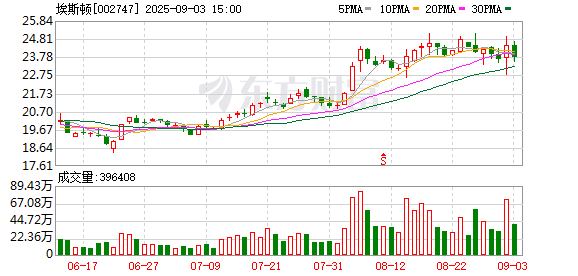
专用机器人

Search documents
何小鹏:当前没有AI泡沫,未来AI市场有着巨大机遇
Xin Lang Cai Jing· 2025-12-17 04:25
Core Viewpoint - The chairman of XPeng Motors, He Xiaopeng, believes that there is currently no AI bubble and that the future AI market holds immense opportunities [5][7]. Group 1: AI and Robotics Landscape - The U.S. is experiencing a surge in entrepreneurship in AI, biotechnology, and finance, with a significant focus on SaaS and physical AI robotics, leading to high valuations [2][9]. - In the robotics sector, U.S. companies tend to focus on models, while Chinese companies often start with joints and control systems [9]. - The competition in humanoid robots is expected to be dominated by major players, while specialized robots will see a multitude of competitors across various fields, creating numerous success opportunities [2][9]. Group 2: Physical AI Developments - The development of physical AI is anticipated to yield significant breakthroughs in the next three years, particularly in areas like autonomous driving and humanoid robots, which may rapidly advance from Level 1 to Level 4 capabilities [3][10]. - The pace of physical AI development may be slower than digital AI, but its impact on daily life is expected to be much greater [10]. Group 3: AI Bubble Discussion - Any technological era may experience localized bubbles, but this is part of the natural competitive process from chaos to order [4][10]. - The current stage of AI is viewed as being at the very beginning, with a potential for substantial societal transformation [4][10]. - Valuations in China are perceived as more reasonable compared to the higher valuations in the U.S., which tends to focus more on cutting-edge research rather than market applications [4][10]. Group 4: AGI Development - Current AI capabilities are primarily based on imitation learning and reinforcement learning, lacking true creativity [6][12]. - The realization of Artificial General Intelligence (AGI) will require advancements in multi-modal learning, world modeling, continuous learning, and long-term planning abilities, which are still several years away [6][12].

维尔利(300190.SZ)与PMEC达成战略合作 聚焦工业机器人技术领域
智通财经网· 2025-12-12 11:02
Group 1 - The core viewpoint of the announcement is the strategic partnership between the company and Primech Holdings Ltd. (PMEC) to develop innovative robotic solutions for high-risk, complex, and confined industrial environments [1] - The joint venture will be established in Singapore with a registered capital of 1 million Singapore dollars, where the company holds a 70% stake and PMEC holds a 30% stake [1] - The core business of the joint venture will focus on the research and development of specialized robots that are "three-dimensional, intelligent, and evolvable," along with related technical services [1] Group 2 - PMEC is a leading integrated facility service provider in Singapore, with a strong customer base across various sectors including airports, hospitals, and commercial complexes [2] - PMEC's subsidiary has successfully completed pilot testing and initial market development for its robotic business, demonstrating mature technology transfer capabilities [2] - The company will primarily be responsible for the scenario-based testing and implementation of the robots, focusing on applications in environmental projects and inspections in the petrochemical sector [2]


维尔利:与PMEC签署战略合作框架协议
Ge Long Hui· 2025-12-12 10:58
Group 1 - Company Weili (300190.SZ) signed a Strategic Cooperation Framework Agreement with Primech Holdings Ltd. (PMEC) to collaborate in the field of industrial robotics technology innovation, application promotion, and development of solutions for high-risk and complex industrial environments [1] - A joint venture company will be established in Singapore with a registered capital of 1 million Singapore dollars, where Weili holds 70% and PMEC holds 30% [1] - The core business of the joint venture will focus on the research and development of specialized robots that are "three-dimensional, intelligent, and evolvable," along with technology transformation and related services [1] Group 2 - PMEC is a leading integrated facility service provider in Singapore, with a strong customer base across various sectors including airports, hospitals, and commercial complexes [2] - PMEC's subsidiary has successfully completed pilot testing and initial market development for its robotics business, demonstrating stable and practical applications of its self-developed cleaning robots [2] - The collaboration will leverage PMEC's extensive experience in energy conservation and environmental protection, utilizing its operational data to validate and promote the application of the developed robotic products in existing projects, particularly in environmental and petrochemical inspection scenarios [2]
82位用户访谈结论:家用人形机器人或许还远
机器人大讲堂· 2025-09-05 13:59
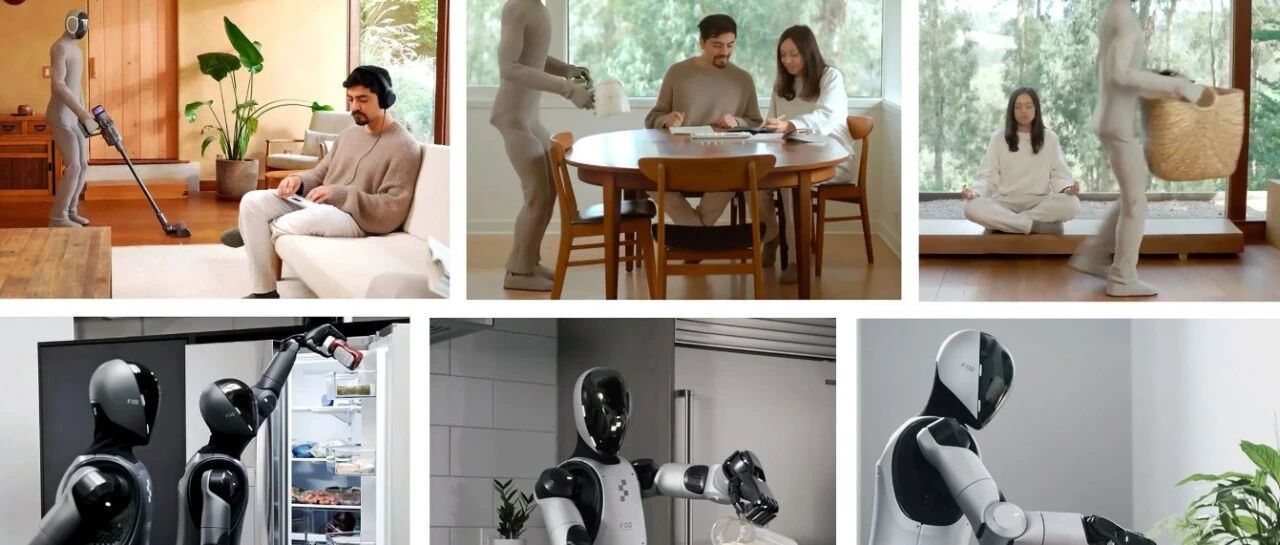
Core Viewpoint - The article discusses the emerging trend of humanoid robots entering households, highlighting both the excitement and skepticism surrounding this development. It emphasizes the need for a more user-centered approach in the design and deployment of household robots, as current trends may not align with user preferences and safety concerns [1][12]. Group 1: Expert Insights - Maya Cakmak, a professor at the University of Washington, expresses her concerns about the practicality of humanoid robots in homes, suggesting that non-humanoid robots may be more effective and user-friendly [3][4]. - Cakmak's research indicates a significant preference among users for specialized robots over humanoid ones, citing safety, privacy, and space concerns as primary reasons [6][8]. Group 2: User Preferences - A study involving 76 participants revealed that most preferred specialized robots for household tasks, associating humanoid robots with safety risks and privacy issues [6][7]. - Users expressed that specialized robots are perceived as safer, more private, and less intrusive compared to humanoid robots, which are often seen as bulky and unnecessary [6][11]. Group 3: Practicality vs. Design - The article highlights a critical contradiction in the industry: while companies pursue humanoid robots for their versatility, users may not require human-like features for effective assistance in household tasks [9][11]. - Cakmak argues that simpler, non-humanoid designs could fulfill most household needs without the complications associated with humanoid robots [11][12]. Group 4: Future Directions - The article concludes that the industry should focus more on user insights and practical applications rather than merely technological advancements. It suggests that companies should share user research data to better align product development with actual user needs [12][14].

埃斯顿:一般专用机器人需要根据客户实际应用场景进行定制开发
Zheng Quan Ri Bao· 2025-09-03 10:15
Group 1 - The company, Estun, stated on September 3 that its general-purpose robots need to be customized based on the actual application scenarios of customers [2]