
清洁机器人

Search documents
西部证券晨会纪要-20260330
Western Securities· 2026-03-30 02:44
Group 1: Jin Hui Jiu (金徽酒) - The company reported a revenue of 2.918 billion yuan in 2025, a decrease of 3.40% year-on-year, with a net profit of 354 million yuan, down 8.70% [6][7] - The company’s contract liabilities increased by 28.4% year-on-year to 820 million yuan, indicating a strong sales cash collection of 3.502 billion yuan, up 2.42% [6][8] - High-end product sales above 300 yuan increased by 25.21% to 709 million yuan, contributing to an improved product structure [7][8] Group 2: Jin Li Yong Ci (金力永磁) - The company achieved a total revenue of 7.718 billion yuan in 2025, a year-on-year increase of 14.11%, with a net profit of 706 million yuan, up 142.44% [10][11] - The main revenue source was from new energy vehicles and components, generating 3.941 billion yuan, a growth of 30.31% [11] - The company’s gross margin improved significantly to 21.18%, an increase of 10.05 percentage points year-on-year [10] Group 3: He Huang Yi Yao (和黄医药) - The company reported a revenue of 548.5 million USD in 2025, a decrease of 13%, with a net profit of 456.9 million USD [14][15] - The ATTC platform shows potential, with expected revenue growth of 14.9% to 8.34 billion USD by 2028 [16] - The company has a strong cash position and is focusing on international expansion [16] Group 4: Kai Li Yi Liao (开立医疗) - The company’s revenue for the first three quarters of 2025 was 1.459 billion yuan, a year-on-year increase of 4.37% [18][19] - New product lines are driving growth, with significant increases in sales for minimally invasive surgical products [19][20] - The company is expected to achieve EPS of 0.34, 0.82, and 1.07 yuan for 2025, 2026, and 2027 respectively [20] Group 5: Yi Hai Guo Ji (颐海国际) - The company reported a revenue of 6.613 billion yuan in 2025, a slight increase of 1.12%, with a net profit of 854 million yuan, up 15.49% [22][23] - The overseas market showed strong growth, with third-party overseas sales increasing by 45.4% [23] - The company’s gross margin improved to 32.7%, an increase of 1.5 percentage points year-on-year [24] Group 6: Hai Tian Wei Ye (海天味业) - The company achieved a revenue of 28.87 billion yuan in 2025, a year-on-year increase of 7.3%, with a net profit of 7.04 billion yuan, up 11% [26][27] - The company’s three main product categories saw stable pricing trends, with soy sauce revenue increasing by 8.5% [27][28] - The gross margin improved to 40.22%, an increase of 3.2 percentage points year-on-year [28] Group 7: Hai Er Zhi Jia (海尔智家) - The company reported a revenue of 302.3 billion yuan in 2025, a year-on-year increase of 5.7%, with a net profit of 19.6 billion yuan, up 4.4% [30][31] - The company announced a dividend payout ratio of 55%, an increase of 7 percentage points year-on-year [31] - The company is focusing on AI and smart home innovations, aiming to lead in the smart household sector [31] Group 8: Xing Ye Zheng Quan (兴业证券) - The company achieved a revenue of 11.841 billion yuan in 2025, a year-on-year increase of 21%, with a net profit of 2.87 billion yuan, up 32.6% [33][34] - The brokerage business saw a significant increase in market share, with trading volumes reaching 13.74 trillion yuan, up 81.4% [34] - The company’s asset management scale expanded, with public fund sizes growing by 15% [34] Group 9: Dong Fang Zheng Quan (东方证券) - The company reported a revenue of 15.358 billion yuan in 2025, a year-on-year increase of 26.2%, with a net profit of 5.634 billion yuan, up 68.2% [37][38] - The asset management business showed positive growth, with a significant increase in client accounts [38] - The company completed 15 A-share equity financing projects, ranking 7th in the industry [38] Group 10: Hua Xin Jian Cai (华新建材) - The company achieved a revenue of 35.348 billion yuan in 2025, a year-on-year increase of 3.31%, with a net profit of 2.853 billion yuan, up 18.09% [41][42] - The overseas business contributed significantly, with overseas sales increasing by 25.3% [42] - The company’s gross margin improved to 30.22%, an increase of 5.53 percentage points year-on-year [43] Group 11: Xi Bu Kuang Ye (西部矿业) - The company reported a revenue of 61.69 billion yuan in 2025, a year-on-year increase of 23.3%, with a net profit of 3.64 billion yuan, up 24.3% [45][46] - The company’s copper production decreased by 5.65%, while zinc and lead production increased significantly [46] - The company is expanding its resource reserves, with new exploration projects underway [46][47] Group 12: Shen Huo Gu Fen (神火股份) - The company achieved a revenue of 41.241 billion yuan in 2025, a year-on-year increase of 7.47%, with a net profit of 4.005 billion yuan, down 7% [49] - The electrolytic aluminum business performed well, with production increasing by 8.95% [49] - The company’s gross margin improved to 23.36%, an increase of 2.13 percentage points year-on-year [49]





海尔智家去年营收首破3000亿元,家电行业在存量竞争中加速洗牌
Di Yi Cai Jing· 2026-03-26 14:54
Core Viewpoint - The home appliance industry is experiencing a divergence in performance among listed companies, with leading firms becoming stronger amid increasing uncertainties such as trade tariffs and rising costs [1] Company Performance - Haier Smart Home (600690.SH) reported its revenue for 2025 exceeded 300 billion yuan, reaching 302.347 billion yuan, a year-on-year increase of 5.715% [3] - The net profit attributable to shareholders was 19.553 billion yuan, reflecting a year-on-year growth of 4.39% [3] - The net cash flow from operating activities was 26.003 billion yuan, and the company proposed a dividend of 8.867 yuan per 10 shares, totaling 8.248 billion yuan [3] Market Trends - According to AVC, the retail sales of all home appliance categories (excluding 3C) in China for 2025 were 893.1 billion yuan, a year-on-year decline of 4.3%, with the second half of the year seeing a 16% drop [3] - The "silver economy" is creating new opportunities in the aging population segment for home appliances [3] - Euromonitor data indicates a stable global home appliance market with structural differentiation, where developed markets remain stable while emerging markets show strong growth [3] Product Performance - Haier's air conditioning and water appliance segments saw revenue growth of around 10%, while refrigerator, washing machine, and kitchen appliance segments experienced stable growth [3] - Domestic revenue for Haier was 146 billion yuan, up 3.05% year-on-year, while overseas revenue reached 154.5 billion yuan, growing 8.15% [3] Strategic Initiatives - Haier is developing three growth curves: traditional white goods, HVAC (heating, ventilation, and air conditioning), and the aging industry, while seizing opportunities in globalization and smart technology [4] - The company has established new production facilities for air conditioners in Thailand and water heaters in Russia, focusing on regional depth, multi-point layout, and self-control in its globalization strategy [5] - Haier is integrating home appliances with robotics, showcasing various robots at AWE, including companion, cleaning, and household robots, along with aging-friendly products [5] Competitive Landscape - In contrast to leading companies like Haier, smaller kitchen appliance firms faced performance challenges, with Joyoung Co., Ltd. (002242.SZ) reporting a revenue decline of 7.23% to 8.2 billion yuan and a net profit drop of 3.85% to 118 million yuan [5] - Joyoung is working to optimize its product structure amid intensified competition in the home appliance market, focusing on high-end products and expanding into new categories [5]



百年匠心智慧怡居,松下以全场景生态亮相2026AWE
Xin Lang Cai Jing· 2026-03-15 03:38
Core Insights - The 2026 China Household Appliances and Consumer Electronics Expo (AWE) commenced in Shanghai, with Panasonic showcasing its theme "Centennial Craftsmanship for a Comfortable Home" [1] - Panasonic aims to integrate space aesthetics with health living concepts, presenting an immersive smart home exhibition area [1] Group 1: Product Innovations - Panasonic's flagship home appliance series, the Himalaya series, draws inspiration from the Himalayan mountain range, merging natural aesthetics with modern industrial design [3] - The white appliance series targets young professionals, featuring a slim embedded design and three core technologies for intelligent coordination of temperature, humidity, and light [5] - The Panasonic Xtra series addresses the needs of young consumers with innovative features and emotional design, including a health-focused rice cooker that avoids coating risks [8] Group 2: Kitchen Ecosystem - Panasonic emphasizes the "Good Pot, Good Rice, Good Water" concept in its kitchen small appliances, quantifying it as "Good Rice = 50% Good Rice + 20% Good Water + 30% Good Pot" [9] - The new Norway Sea 600 series refrigerator is designed for seafood storage, featuring independent cooling cycles and ultra-low temperature rapid cooling technology [13] - The ALPHA G5 washing machine introduces a unique "four-tub" design, providing a comprehensive laundry solution [13] Group 3: Personal Care and Smart Technology - The personal care section highlights the L690U shaver and the EH-NC80 hair dryer, which utilizes advanced technology for a superior grooming experience [19] - Panasonic's smart technology includes a cleaning robot that offers a hands-free experience and a climate station that maintains optimal living conditions [22] - The exhibition features a full range of products, including imaging, audio, and massage equipment, showcasing Panasonic's comprehensive ecosystem [25] Group 4: Marketing and Engagement - Panasonic created an integrated online and offline interactive experience during the expo, including product launches and live streaming to engage a wider audience [25] - The company emphasizes its commitment to innovation and local adaptation in the Chinese market, aiming to enhance its home ecosystem with sustainable products and services [25]

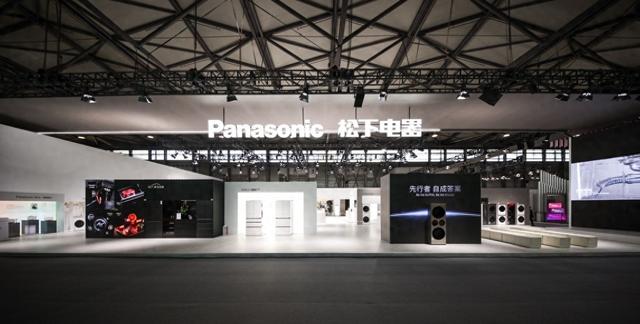
松下参展AWE2026,演绎“怡居生态先行者”新范式
Cai Jing Wang· 2026-03-13 00:00
Group 1: Core Themes - Panasonic showcased its commitment to creating an immersive smart living experience at the 2026 AWE, emphasizing the integration of space aesthetics and health living concepts [1] - The company aims to redefine the boundaries between home appliances and home decor through its flagship Himalayan series, which combines natural elements with modern industrial aesthetics [2] - The Panasonic Xtra series targets young consumers with innovative features and emotional design, addressing their specific needs and preferences [3] Group 2: Product Innovations - Panasonic's kitchen ecosystem focuses on the formula "good rice = 50% good rice + 20% good water + 30% good pot," highlighting the importance of quality ingredients and cookware in meal preparation [4] - The new Norwegian Sea 600 series refrigerator is designed for optimal seafood storage, featuring independent cooling cycles and ultra-low temperature rapid cooling technology [5] - The ALPHA G5 washing machine introduces a unique "4-in-1" design, providing a comprehensive laundry solution that caters to various fabric care needs [5] Group 3: Health and Personal Care - The beauty and personal care section emphasizes health and refined experiences, with products like the L690U shaver and EH-NC80 hair dryer designed for optimal performance and user satisfaction [6][7] - The hair dryer utilizes advanced technology to provide deep nourishment while drying hair quickly, showcasing Panasonic's focus on quality personal care [7] Group 4: Smart Technology Integration - Panasonic integrates cutting-edge technology into everyday life, offering products like a cleaning robot that features hot water cleaning and an automatic water supply station for convenience [8] - The company also presented a range of products, including air conditioning, residential equipment, and bathroom products, to demonstrate its comprehensive ecosystem for smart living [8] Group 5: Marketing and Engagement Strategies - Panasonic created a multi-dimensional interactive experience during the exhibition, combining online and offline activities to engage audiences and promote its products [9] - The company aims to lead the home appliance industry by providing innovative solutions and enhancing the quality of life for families through localized innovations [9]
机器人成我国外贸新标签
机器人大讲堂· 2026-03-08 04:04
Core Viewpoint - The article emphasizes the transformation of China's foreign trade landscape, highlighting the rise of high-end intelligent and green low-carbon products, particularly robots, as new identifiers of Chinese manufacturing [1][3]. Group 1: Export Growth and Market Diversification - China's industrial robot exports are projected to grow by 48.7% in 2025, surpassing imports for the first time, establishing China as a net exporter of industrial robots [3]. - The shift from traditional exports (clothing, furniture, home appliances) to new categories (electric vehicles, lithium batteries, photovoltaic products) signifies a leap in China's manufacturing capabilities [3][25]. - The diversification of trade partners, with over 51.9% of trade now involving countries along the Belt and Road Initiative, enhances the resilience of China's foreign trade [10]. Group 2: Robotics Industry Developments - By 2026, Chinese companies are expected to dominate the global humanoid robot market, accounting for 86.9% of the market share, with Zhiyuan leading at 39% [5]. - The introduction of specific tax codes for robots aims to better reflect the industry's status and support targeted policy initiatives, facilitating high-quality development and international openness [7][8]. - The collaborative robots segment is experiencing significant growth, driven by ease of installation and flexibility, particularly in new applications like electric vehicle manufacturing [8]. Group 3: Supply Chain and Globalization - The globalization of supply chains and core component manufacturers is crucial for the sustained growth of the robotics industry, with companies showcasing advanced collaborative capabilities at international exhibitions [17]. - Chinese supply chain firms are embedding core technologies into global industrial ecosystems, with notable successes in international markets [18]. - Investments in Thailand by five Chinese companies to produce humanoid robot components highlight the strategic moves to enhance production capabilities and meet global demand [20]. Group 4: Future Outlook and Challenges - The future of Chinese robotics in international markets is promising, with projections indicating a shipment of 62,500 humanoid robots by 2026 and a compound annual growth rate of 85% for global intelligent robots by 2035 [22]. - Compliance with diverse international regulations poses a significant challenge for Chinese companies seeking to expand overseas [24]. - Localized operations and understanding customer needs are essential for long-term success in foreign markets, as evidenced by adjustments made by companies after market research [24].

以旧换新政策加力,春节消费潜能持续释放
Xiangcai Securities· 2026-03-02 01:46
Investment Rating - The industry investment rating is maintained at "Overweight" [2] Core Insights - The home appliance industry has shown a relative return of 12.0% over the past 12 months, with an absolute return of 21.1% [3] - The industry has a low valuation with a PE ratio of 15.33, ranking 28th among 31 industries, indicating potential for upward movement [5] - The "old-for-new" policy has been strengthened, leading to a 21.7% year-on-year increase in sales of six categories of home appliances and four categories of digital products during the Spring Festival holiday [6] Summary by Sections Industry Performance - The home appliance industry experienced a decline of 0.42% this week, ranking 26th among its peers, while the CSI 300 index rose by 1.08% [4][9] - Over the past month, the industry gained 1.02%, ranking 20th, and has a year-to-date increase of 0.04%, ranking 27th [9] Valuation Analysis - The PE ratio of the home appliance industry is 15.33, compared to the CSI 300 index's 13.41, with a valuation percentile of 34.2% [5][26] - The industry is positioned at a historical low valuation, enhancing its investment attractiveness [5] Consumer Trends - The Spring Festival is a significant period for appliance upgrades, with a reported 510.6 million units sold during the holiday, reflecting strong consumer demand [6] Investment Recommendations - Focus on leading white goods companies with strong R&D capabilities, stable market positions, low valuations, and high dividend yields [7] - Identify niche sectors that can leverage new products and technologies to create demand, such as smart projectors and cleaning robots [7] - Monitor component manufacturers with strong R&D capabilities in response to the trend of replacing copper with aluminum due to rising copper prices [7] - Pay attention to "hidden champion" companies in the small appliance sector [7][56]




Tennant(TNC) - 2025 Q4 - Earnings Call Transcript
2026-02-24 16:02
Financial Data and Key Metrics Changes - In Q4 2025, Tennant reported a GAAP net loss of $4.4 million, compared to a net income of $6.6 million in the prior year period [21] - Full year 2025 GAAP net income was $43.8 million, down from $83.7 million in 2024, primarily impacted by a 6.5% decrease in net sales and a contraction in gross margin [21][22] - Adjusted EBITDA for Q4 2025 was $25.6 million, a decrease of $21.8 million from the prior year, including an estimated $22 million negative impact from ERP implementation [26] - Full year 2025 adjusted EBITDA was $167.4 million, a decrease of $41.4 million from the prior year, with an adjusted EBITDA margin of 13.9%, down 230 basis points from the previous year [29] Business Line Data and Key Metrics Changes - Orders were reduced by approximately $15 million due to ERP challenges, impacting parts, consumables, and equipment sales [9] - Equipment sales declined 11.6% year-over-year, while service grew 4.7% and parts and consumables were modestly higher [28] - The Americas experienced a 22.3% organic sales decline, primarily due to the ERP implementation impact, while EMEA saw a 5.1% increase in organic sales [25] Market Data and Key Metrics Changes - EMEA grew 5.1% year-over-year, supported by price realization and steady commercial execution across multiple markets [13] - APAC returned to improved performance late in the year, with growth in Australia and India offsetting softer demands in parts of East Asia [13] - The Americas faced volume declines influenced by the prior year's backlog reduction and softer industrial demand [28] Company Strategy and Development Direction - The company is focusing on restoring full operating capability in North America and driving efficiency improvements post-ERP transition [17] - A dedicated TNC Robotics group was launched to accelerate the adoption and scaling of autonomous robotic cleaning solutions, aiming for $250 million in AMR revenue by 2028 [15][16] - The company remains committed to disciplined capital allocation, including share repurchases and dividends, while pursuing strategic acquisition opportunities [14][33] Management's Comments on Operating Environment and Future Outlook - Management acknowledged the significant impact of the ERP transition on operations and customer relationships, emphasizing a commitment to recovery and stabilization [41] - The company expects challenges associated with the ERP transition to ease through the first half of 2026, with a focus on productivity improvements [17][35] - Management expressed confidence in the fundamentals of the business, highlighting strong global execution and a healthy balance sheet [41] Other Important Information - The company invested approximately $98 million in the ERP program since 2023, with expectations for 2026 spending to exceed $20 million due to additional stabilization needs [11] - The company recorded an incremental accrued expense of $6 million related to a legal contingency for an intellectual property dispute, which does not impact product sales [24] Q&A Session Summary Question: Is the ERP system stable as of now? - Management indicated that the system is stable in terms of core processes, with ongoing efforts to improve efficiency and stability [46][47] Question: What is the outlook for the $30 million sales impact from the ERP issues? - Management stated that approximately half of the $30 million impact is considered unrecoverable, with $15 million in backlog [48][51] Question: What are the objectives for the TNC Robotics group in FY 2026? - The group aims to accelerate product development, improve adoption efficiency, and generate demand, targeting $250 million in sales by 2028 [56][58][62] Question: How will gross margins progress through 2026? - Management expects Q1 gross margins to be comparable to Q4 2025, with anticipated year-over-year gross margin expansion as operations stabilize [63][64]

机器人产业以强劲势头迎来“开门红” 马年新春增添十足科技年味
Yang Shi Wang· 2026-02-21 09:49
Group 1 - The 2026 Spring Festival Gala showcased robots, highlighting the growing interest in the robotics industry and its applications in entertainment and public services [1][3] - The popularity of offline experience centers has surged, with some locations experiencing ticket shortages due to high demand from visitors wanting to interact with robots [3][4] - The newly opened 6S stores offer six core functions: display, sales, rental, maintenance, training, and comprehensive solutions, enhancing customer engagement through interactive experiences [4] Group 2 - During the Spring Festival, robotics companies are seizing market opportunities, launching new products, and ramping up production to meet strong demand across various categories, including household and commercial robots [4][6] - A new commercial-grade robot has been developed to meet increasing service demands, with teams working to optimize performance and accelerate production during the holiday period [6][10] - The robotics industry is experiencing a "New Year opening red" with robust growth, reflecting the vitality of the smart equipment sector [4] Group 3 - The integration of robots into daily life has expanded, with significant growth in rental orders during the Spring Festival, indicating a shift towards new consumption models [12][13] - Data from a rental service platform shows a nearly 70% increase in orders during the holiday, with entertainment performances accounting for 34% and commercial marketing for 31% of the total [15] - The booming Spring Festival consumer market is facilitating the adoption of flexible business models, allowing more small cities and commercial entities to utilize smart robots [17]


(新春见闻)科技融入生活 AI打开中国民众新春消费新空间
Xin Lang Cai Jing· 2026-02-14 08:16
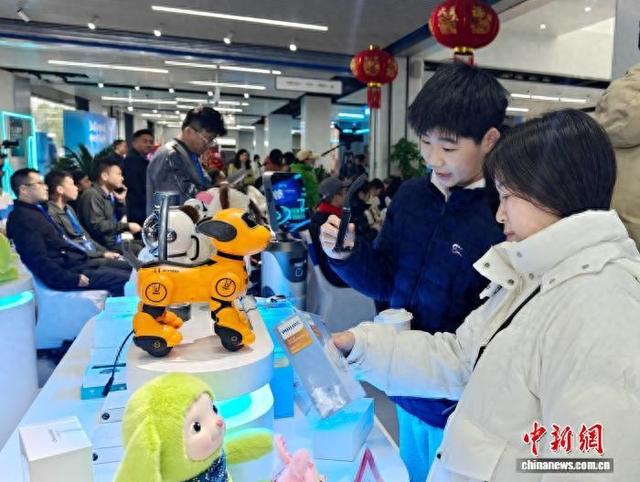
Core Viewpoint - The integration of AI technology into daily life is driving a new growth point in China's consumer market during the Spring Festival, with a notable increase in the purchase of various smart robots and AI products [1][3][4]. Group 1: Consumer Trends - Consumers are increasingly purchasing smart toys, chess-playing robots, and health-monitoring robots tailored for different age groups, reflecting diverse gifting needs for the New Year [3][4]. - The demand for AI consumer products is being fueled by modern family needs for interaction, companionship, and social engagement, leading to a surge in sales of AI devices [3][4]. - Online platforms are capitalizing on the Spring Festival shopping surge, with promotions like JD's "AI Toy Family Pack" targeting various consumer scenarios [3][6]. Group 2: Product Offerings - Popular products include caregiving robots with emergency call features, AI pet companions for children, and smart cooking appliances that generate seasonal health recipes [3][4]. - At the Silver Age New Year Goods Festival, items like mite-removing robots and AI mattresses that monitor health metrics are becoming popular choices for gifting [3][4]. - The trend of renting or purchasing cleaning robots is emerging among younger consumers to alleviate household chores [4]. Group 3: Market Dynamics - The Spring Festival has accelerated AI consumption in county regions, with nearly half of AI orders originating from these areas, indicating a shift in consumer behavior [6]. - The convenience of AI-driven services, such as ordering food through voice commands, is becoming a new way of shopping during the festive season [6].
今年春节流行“AI年货”
Huan Qiu Wang· 2026-02-11 22:51
Core Viewpoint - The upcoming Chinese New Year is expected to drive significant consumer spending, particularly in AI-related products, as companies like Alibaba and Tencent engage in a competitive marketing push to attract users through innovative applications and technology [1][5]. Group 1: AI Product Sales Surge - Sales of AI toys and other tech-related products have seen a dramatic increase during the Chinese New Year shopping season, with JD.com reporting nearly a threefold increase in sales of AI toys and robots since the start of the New Year shopping festival [3][4]. - AI glasses have experienced a sales surge of over 700%, while smart robots saw an 88% year-on-year increase in transactions during the same period [4]. - The introduction of AI glasses into the national subsidy program has made them more affordable, further boosting sales among consumers [2]. Group 2: Marketing Strategies and Consumer Engagement - Major tech companies are launching "AI red envelope" campaigns to attract users, with Tencent and Alibaba investing heavily in these initiatives, totaling at least 4.5 billion yuan in marketing efforts [5][6]. - The campaigns aim to replicate the success of previous marketing strategies that popularized mobile payment systems, leveraging AI applications to create new user engagement opportunities [5][6]. - Companies are focusing on enhancing user experience, particularly for older demographics, by simplifying interactions with AI technology [8]. Group 3: Emerging Consumer Trends - There is a notable trend of younger consumers purchasing or renting cleaning robots, referred to as "cyber nannies," indicating a shift towards automation in household chores [7]. - The demand for smart home appliances, such as window-cleaning robots and vacuum cleaners, has surged, with some products seeing order volumes increase by over 376% compared to the previous year [7]. - Companies are also adapting AI applications to better serve older users, allowing them to interact with technology in familiar contexts without needing extensive training [8]. Group 4: Future Growth Potential - Experts suggest that the deepening application of AI technology could be a key driver for expanding domestic demand, with potential new business models emerging from AI innovations [8]. - The AI industry is still in a rapid growth phase, and while it shows promise, it has yet to achieve widespread economic impact comparable to the early internet economy [8].



