
中华牌香烟

Search documents
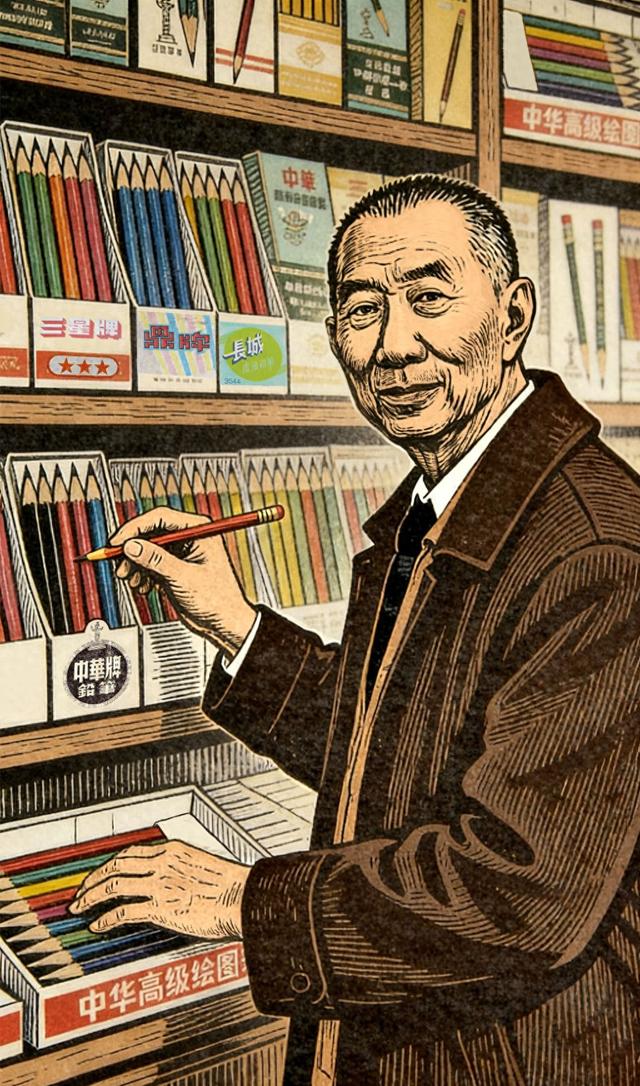
徐鸣谈中国民族铅笔制造业史
Xin Lang Cai Jing· 2026-01-18 01:56
Core Viewpoint - The article discusses the history and development of China's pencil manufacturing industry, highlighting the establishment of the China Standard National Pencil Factory (Zhongqian) in 1935 as a significant milestone and the contributions of key figures like Wu Gengmei to the industry [2][12][14]. Group 1: Historical Development - The China Standard National Pencil Factory, established in 1935, is recognized as the first fully capable pencil manufacturing enterprise in China, producing all components of pencils [2][12]. - The origins of the pencil industry in China trace back to the late Qing Dynasty, with early reports of pencils appearing in publications as early as 1881 [11]. - The introduction of modern pencil manufacturing techniques in Japan around the same time as in China, with the establishment of the Masaki Pencil Manufacturing Company in 1887, marked a significant development in the region [10][11]. Group 2: Key Figures - Wu Gengmei is portrayed as a pivotal figure in the Chinese pencil industry, known for his patriotic spirit and commitment to establishing a national pencil manufacturing capability [12][14]. - Wu's early life and education, including his involvement in student movements, shaped his vision for the pencil industry as a means of national revival [12][14]. - Despite challenges, Wu Gengmei's leadership and innovative approaches, such as producing pencils entirely from domestic materials, set a foundation for the industry [16][18]. Group 3: Industry Challenges and Resilience - The outbreak of the Second Sino-Japanese War in 1937 forced many factories, including Zhongqian, to relocate inland to avoid Japanese occupation, demonstrating the industry's resilience [17][20]. - The relocation process was fraught with difficulties, including transportation challenges and the threat of air raids, yet the factory managed to resume operations in Wuhan by the end of 1937 [21][23]. - The internal conflicts among the founding members of Zhongqian, particularly between Wu Gengmei, Guo Zichun, and Zhang Weishi, highlight the pressures faced by the industry during wartime [27][28]. Group 4: Product Development and Innovation - The introduction of the "Chinese" brand 101 advanced drawing pencil in 1954 marked a significant achievement in domestic pencil production, aimed at reducing reliance on imported products [38][40]. - The development of the "Chinese" brand pencil involved extensive research and innovation to meet consumer demands for quality, leading to a successful launch that resonated with national pride [38][40]. - The article also notes the evolution of pencil designs, including the incorporation of traditional Chinese motifs, reflecting a blend of cultural identity and modern manufacturing [40]. Group 5: Future Directions - The pencil manufacturing industry faces challenges related to sustainability and resource availability, as the materials used are non-renewable [42]. - Despite being labeled a sunset industry, the demand for pencils remains, with applications extending beyond education to fields like aerospace [42]. - The successful development of a domestic space pen for Chinese astronauts illustrates the industry's potential for innovation and adaptation in modern contexts [42].

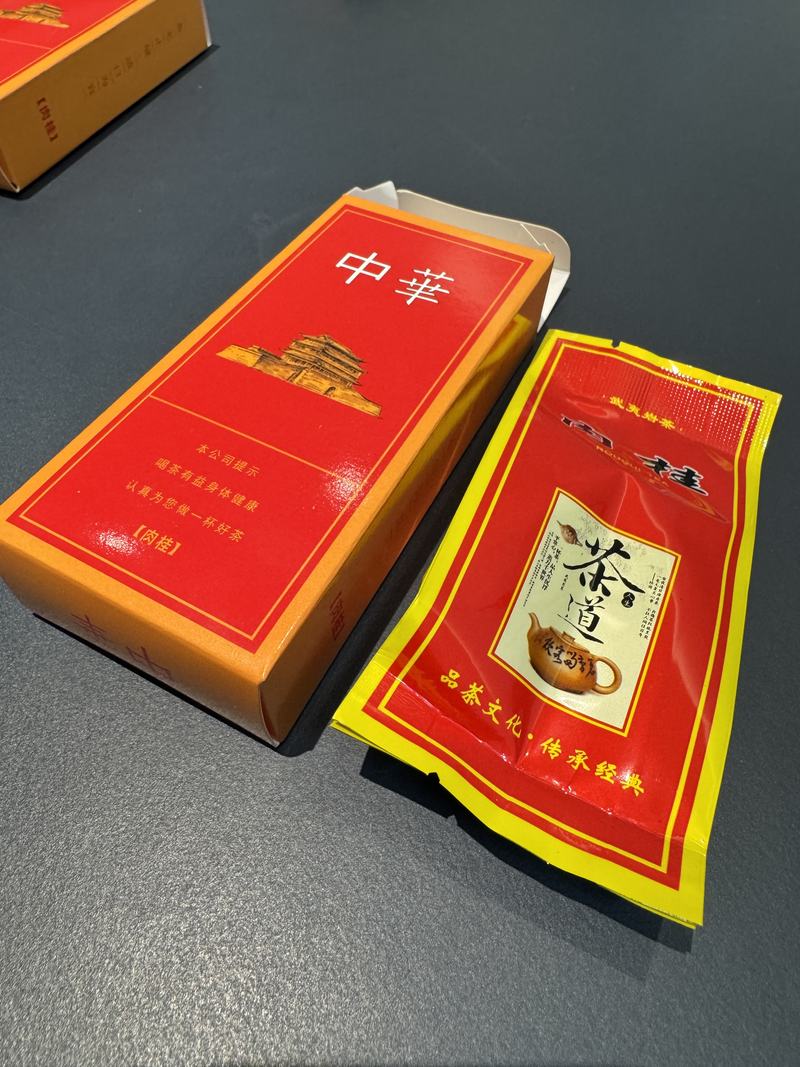
10块钱买一条“中华”?低价茶打擦边球仿香烟售卖
Xin Jing Bao· 2025-06-15 07:28
Core Viewpoint - The article highlights the issue of tea products being sold in packaging that closely resembles well-known cigarette brands, particularly "中华" (Zhonghua), which raises concerns about consumer deception and potential legal violations related to trademark infringement and misleading advertising [8][20][21]. Group 1: Product Description and Consumer Experience - The tea products are packaged in boxes that mimic the appearance of cigarette brands like "中华," "荷花," and "南京," with prices around 10 yuan or 9.9 yuan per package [4][6][19]. - Consumers have reported confusion and disappointment upon receiving the products, as they expected cigarettes but received tea instead, leading to negative reviews and claims of being misled [4][10][15]. - The tea quality has been criticized, with industry experts stating that the products do not meet the standards of the advertised types, such as "肉桂" (Rougui) and "大红袍" (Da Hong Pao) [22][24]. Group 2: Legal and Regulatory Concerns - Selling cigarettes online is illegal under Chinese law, and the use of similar packaging for tea products may constitute trademark infringement and unfair competition [8][20][21]. - The packaging of the tea products is argued to infringe on the trademark rights of "中华" cigarettes, as the design and branding are closely associated with the well-known cigarette brand [20][21]. - Legal experts suggest that the tea products' packaging could mislead consumers and harm the reputation of the "中华" brand, potentially leading to legal action [20][21]. Group 3: Market Implications - The article indicates a growing trend of using deceptive marketing practices in the tea industry, where low-quality products are sold at low prices, often misleading consumers [22][24]. - The presence of such products in the market raises concerns about consumer protection and the integrity of e-commerce platforms, as they may facilitate the sale of counterfeit or substandard goods [22][24]. - The situation reflects broader issues within the tea industry regarding quality control and the need for better regulation to protect consumers from misleading practices [22][24].
海南通报6起违规吃喝、违规收受礼品礼金典型问题
Zhong Yang Ji Wei Guo Jia Jian Wei Wang Zhan· 2025-05-24 10:16
Core Points - The article reports on the disciplinary actions taken against several officials for violations related to accepting gifts and hosting banquets that could influence their official duties [1][2][3][4][5] Summary by Relevant Sections Violations and Disciplinary Actions - Lin Youzhi, former deputy director of Sanya Municipal People's Congress, received gifts including Moutai liquor and Huawei phones from 2016 to 2019, and was expelled from the party and public office in December 2024 [1] - Wu Qifang, a second-level researcher at the Provincial Forestry Bureau, accepted gifts such as Moutai liquor and Chinese cigarettes in 2024, receiving a serious warning in April 2025 [1] - Long Shuhua, former first-level researcher at Haikou Natural Resources and Planning Bureau, received supermarket shopping cards and Moutai liquor from 2013 to 2022, expelled from the party in November 2024 [2] - Zhou Zhijian, former member of the Party Leadership Group of Chengmai County Science and Technology Association, accepted banquets and gifts from 2020 to 2021, expelled from the party in January 2025 [3] - Guo Xing, former manager of Qionghai Water Company, received gifts including cordyceps and ginseng from 2019 to 2021, expelled from the party in February 2025 [4] - Wang Fuhai, former head of the Environmental Sanitation Management Station in Lingao County, received gifts and hosted banquets from 2016 to 2020, expelled from the party in November 2024 [4]