中证偏股型基金指数

Search documents
压岁钱如何打理呢:取之于娃,用之于娃|第434期精品课程
银行螺丝钉· 2026-03-12 04:01
Core Viewpoint - Financial literacy education for children should start early to maximize the benefits of compound interest and wealth accumulation over time [4][67]. Group 1: Importance of Early Financial Education - Financial literacy is a well-discussed topic, and it is beneficial for children to be exposed to basic financial knowledge as early as possible [4]. - The earlier children start investing, the greater the wealth accumulation difference will be later in life, particularly after the age of 34 [9][10]. Group 2: Case Studies on Financial Education - The Davis family emphasizes teaching children about investment and finance from a young age, including practical experiences and dedicated investment accounts [12][15]. - Warren Buffett was exposed to financial concepts early, engaging in activities like selling gum and learning about stock investments by age 12 [19][23]. Group 3: Stages of Financial Education - Financial education can be divided into four stages based on age: 1. Ages 0-2: Establishing object permanence, which is foundational for understanding investments [24][26]. 2. Ages 2-7: Developing good spending habits and understanding the value of money [30][34]. 3. Ages 7-11: Understanding interest and the concept of money generating more money [35][38]. 4. Ages 11 to adulthood: Grasping compound interest and business logic, enabling more complex financial decisions [39][40]. Group 4: Planning for Children's Red Packets - For children's red packets, a long-term investment plan is recommended, with annual contributions from received red packets [48][66]. - In a low market valuation phase (4-5 stars), investing in stock assets is advisable, while in a moderate phase (3 stars), transitioning to bond assets is suggested [49][55]. - "Fixed income plus" products are currently suitable for investment, combining low-risk bonds with higher-risk assets for better returns [56][60]. Group 5: Upgraded Investment Plans - Parents can enhance children's investment plans by matching their contributions to encourage long-term commitment [63]. - Children can withdraw up to 4% of their accumulated red packet investments as pocket money, fostering good saving and spending habits [66].


中证指数公司:1月科创100指数上涨13.83% 黄金股票指数上涨48.4%
智通财经网· 2026-02-11 12:12
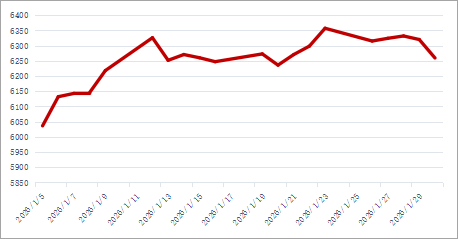
Capital Market Performance - In January, the CSI All Share Index closed at 6,259.18 points, up by 5.75% [2] - Major A-share market indices generally rose, with the Sci-Tech Innovation 100 Index increasing by 13.83% [4] - The CSI All Share primary industry indices showed mixed results, with the Materials Index rising by 18.10% [6] - The Gold Mining, CS Precious Metals, and Gold Stocks Indices increased by 50.17%, 49.22%, and 48.40% respectively [8] Trading Volume and Activity - Total trading volume for Shanghai stocks reached 259,873.65 million yuan, up by 45.70% from the previous month [15] - Shenzhen stocks totaled 343,595.69 million yuan, an increase of 37.16% [15] - The average daily trading volume for Shanghai stocks was 12,993.68 million yuan, up by 67.55% [15] - The average daily trading volume for Shenzhen stocks was 17,179.78 million yuan, up by 57.73% [15] Index and Fund Management - As of the end of January 2026, the China Securities Index Company published a total of 2,836 indices, including 1,800 stock indices [20] - The total scale of funds tracking indices managed by the China Securities Index Company reached 46,640 billion yuan, with 25,516 domestic fund products [26] - In January, 37 new fund products tracking indices managed by the China Securities Index Company were established, raising a total of 20.1 billion yuan [31] Index Revisions - One index was revised in January, changing the name from "CSI Hong Kong 300 Financial Services Index" to "CSI Stock Connect Financial Services Index" [22][25]
「踏空」很难受,该怎么办呢?
银行螺丝钉· 2025-08-13 07:48
Core Viewpoint - The article discusses the concept of "missing out" on market gains, emphasizing that for ordinary investors, missing out is not a risk, while losing money is the real concern [2][10]. Group 1: Fund Managers' Perspective - For fund managers, missing out on market gains poses a significant risk, as it can lead to underperformance compared to the market, resulting in investor dissatisfaction and a substantial decrease in fund size [4][6]. - A decline in fund size directly impacts the management fees collected by fund companies, leading to reduced revenue [5]. - To mitigate this risk, many fund managers opt to maintain a high stock allocation consistently, aiming for excess returns through careful stock selection [7][8]. Group 2: Ordinary Investors' Perspective - Ordinary investors face different circumstances; they do not receive rewards for taking on greater risks, and aggressive investment strategies do not guarantee higher returns [11][14]. - Ordinary investors often need to liquidate assets for cash flow to meet living expenses, which can be problematic during market downturns [15][16]. - Unlike fund managers, who focus on relative performance against other funds, ordinary investors should prioritize absolute returns to ensure each investment is profitable and does not negatively impact their purchasing power [20][17]. Group 3: Investment Strategy - The article emphasizes the importance of investing during undervalued market phases to minimize potential losses [21][23]. - It highlights that purchasing high-quality assets at lower valuations can lead to higher long-term returns while reducing risk [22][23]. - As of August 12, 2025, the market is still considered relatively cheap, presenting an opportunity for investors to accumulate quality assets [26].