中证全指指数

Search documents
中证指数公司:1月科创100指数上涨13.83% 黄金股票指数上涨48.4%
智通财经网· 2026-02-11 12:12
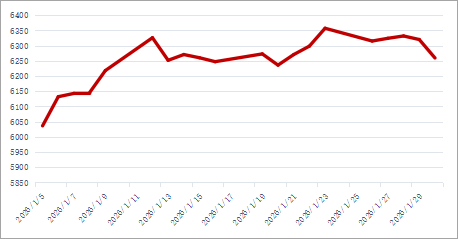
Capital Market Performance - In January, the CSI All Share Index closed at 6,259.18 points, up by 5.75% [2] - Major A-share market indices generally rose, with the Sci-Tech Innovation 100 Index increasing by 13.83% [4] - The CSI All Share primary industry indices showed mixed results, with the Materials Index rising by 18.10% [6] - The Gold Mining, CS Precious Metals, and Gold Stocks Indices increased by 50.17%, 49.22%, and 48.40% respectively [8] Trading Volume and Activity - Total trading volume for Shanghai stocks reached 259,873.65 million yuan, up by 45.70% from the previous month [15] - Shenzhen stocks totaled 343,595.69 million yuan, an increase of 37.16% [15] - The average daily trading volume for Shanghai stocks was 12,993.68 million yuan, up by 67.55% [15] - The average daily trading volume for Shenzhen stocks was 17,179.78 million yuan, up by 57.73% [15] Index and Fund Management - As of the end of January 2026, the China Securities Index Company published a total of 2,836 indices, including 1,800 stock indices [20] - The total scale of funds tracking indices managed by the China Securities Index Company reached 46,640 billion yuan, with 25,516 domestic fund products [26] - In January, 37 new fund products tracking indices managed by the China Securities Index Company were established, raising a total of 20.1 billion yuan [31] Index Revisions - One index was revised in January, changing the name from "CSI Hong Kong 300 Financial Services Index" to "CSI Stock Connect Financial Services Index" [22][25]

中证指数公司:2025年12月A股市场主要规模及综合指数普遍上涨 中证500指数上涨6.17%
智通财经网· 2026-01-16 12:59
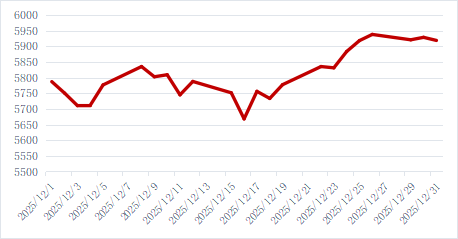
Capital Market Performance - The CSI All Share Index closed at 5,919.12 points in December, marking a 3.25% increase [2] - Major A-share market indices generally rose, with the CSI 500 Index increasing by 6.17% [4] - The CSI All Share primary industry indices showed mixed results, with the materials index rising by 10.72% [6] Thematic Indices - The satellite industry index surged by 42.46%, the satellite navigation index increased by 28.42%, and the general aviation index rose by 25.36% in December [8] Style and Dividend Indices - Major style indices saw widespread increases, with the 800 Growth Index and the 500 Growth Index rising by 7.05% and 6.01%, respectively [11] - Dividend indices had mixed results, with the dividend growth index up by 2.77% and the private enterprise dividend index up by 1.58% [11] Cross-Border and Offshore Indices - Major cross-border and offshore indices experienced slight declines, with the mainland enterprise index and the Hong Kong Stock Connect 50 index down by 0.53% and 0.56%, respectively [11] Fixed Income Indices - The CSI All Bond Index rose by 0.13% in December [13] - The performance of various bond indices varied, with the CSI Government Bond Index down by 0.45% and the CSI Corporate Bond Index up by 0.13% [14] Fund Index Performance - The CSI Equity Fund Index increased by 2.81% in December [15] Trading Activity - Total trading volume for Shanghai stocks reached 178,366.96 million yuan, up by 10.34% from the previous month [17] - Shenzhen stocks had a total trading volume of 250,516.12 million yuan, marking a 14.94% increase [17] - The average daily trading amount for Shanghai stocks was 7,755.09 million yuan, down by 4.06% [17] Index Publication Overview - As of December 2025, the China Securities Index Company published a total of 2,827 indices, including 1,800 stock indices, which account for 64% of the total [25]
金融工程专题:宏观因子的周期轮动与资产配置
BOHAI SECURITIES· 2025-12-30 09:53
Quantitative Models and Construction Methods 1. Model Name: HP Filter - **Model Construction Idea**: The HP filter is used to decompose a time series into trend and cyclical components, aiming to remove long-term trends and short-term noise from macroeconomic factors[10][9] - **Model Construction Process**: The HP filter solves the following optimization problem to balance trend smoothness and data fit: $$\operatorname*{min}\left\{\sum_{t=1}^{T}(y_{t}-g_{t})^{2}+\lambda\sum_{t=2}^{T-1}[(g_{t+1}-g_{t})-(g_{t}-g_{t-1})]^{2}\right\}$$ - \(y_t\): Original time series data - \(g_t\): Trend component - \(\lambda\): Smoothing parameter, where larger \(\lambda\) results in a smoother trend In this report, a larger \(\lambda\) is used to remove long-term trends, and a smaller \(\lambda\) is applied to filter out noise, resulting in a mid-cycle series for further analysis[10] - **Model Evaluation**: The HP filter aligns with classical macroeconomic analysis frameworks but suffers from endpoint bias and cannot identify different frequency cycles[3][42] 2. Model Name: Fourier Transform - **Model Construction Idea**: Fourier Transform decomposes a time series into a combination of sine waves with different frequencies, amplitudes, and phases, enabling the identification of dominant cycles in macroeconomic data[25][26] - **Model Construction Process**: The Fourier Transform is defined as: $$F(f)=\int_{-\infty}^{\infty}f(x)e^{-i2\pi f(x)}\,\mathrm{d}x$$ - \(f(x)\): Time series data - \(F(f)\): Frequency domain representation Since most macroeconomic data are non-stationary, the HP filter is first applied to remove long-term trends, producing a stationary series. The Fourier Transform is then used to extract the main cycles and fit the periodic series[25][26] - **Model Evaluation**: Suitable for analyzing historical data and identifying economic cycle patterns, but assumes constant periodic structures over time, which may reduce short-term fit[3][42] 3. Model Name: Hybrid Filtering - **Model Construction Idea**: Combines the strengths of HP filtering and Fourier Transform to achieve both extrapolation capability and flexibility in cycle fitting[42] - **Model Construction Process**: - Apply Fourier Transform to identify periodic patterns in macroeconomic data - Use HP filtering to observe short-term trends in macroeconomic factors - Combine the results to create a series that retains both periodicity and trend information[42] - **Model Evaluation**: Balances the advantages of both methods, providing better adaptability for macroeconomic data analysis[42] 4. Model Name: Merrill Lynch Clock Model - **Model Construction Idea**: Divides the economic cycle into four phases based on economic growth and inflation, using PMI YoY growth as a proxy for economic growth and PPI YoY growth for inflation[68][72] - **Model Construction Process**: - Recovery: PMI YoY up, PPI YoY down → 60% stocks, 40% bonds - Expansion: PMI YoY up, PPI YoY up → 60% commodities, 40% stocks - Stagflation: PMI YoY down, PPI YoY up → 60% cash, 40% commodities - Recession: PMI YoY down, PPI YoY down → 60% bonds, 40% cash[72] - **Model Evaluation**: Achieves higher returns and Sharpe ratio compared to a balanced allocation model, with a monthly win rate of 56.49%[68][70] 5. Model Name: Monetary-Credit Model - **Model Construction Idea**: Adapts the Merrill Lynch Clock for the Chinese market by focusing on monetary and credit conditions, using M2 YoY growth for monetary policy and social financing YoY growth for credit conditions[76] - **Model Construction Process**: - Loose Monetary & Loose Credit: M2 YoY up, social financing YoY up → 60% stocks, 40% commodities - Tight Monetary & Loose Credit: M2 YoY down, social financing YoY up → 60% commodities, 40% stocks - Tight Monetary & Tight Credit: M2 YoY down, social financing YoY down → 60% cash, 40% bonds - Loose Monetary & Tight Credit: M2 YoY up, social financing YoY down → 60% bonds, 40% stocks[76] - **Model Evaluation**: Slightly lower annualized returns than the Merrill Lynch Clock but demonstrates more stable excess returns since 2020[76][85] --- Model Backtesting Results 1. HP Filter - **Annualized Excess Return**: 1.43%-3.16% for stock index timing[57][58] - **Annualized Excess Return**: 4.84%-9.91% for stock-bond timing[60][61] 2. Fourier Transform - **Core Cycle**: Identified a 38-44 month cycle across all macroeconomic factors, suggesting a 3-4 year mid-cycle pattern[26][83] 3. Merrill Lynch Clock Model - **Annualized Return**: 11.71% - **Annualized Excess Return**: 5.82% - **Sharpe Ratio**: 1.037 - **Monthly Win Rate**: 56.49%[68][70] 4. Monetary-Credit Model - **Annualized Return**: 9.93% - **Annualized Excess Return**: 4.04% - **Sharpe Ratio**: 0.589 - **Monthly Win Rate**: 56.90%[76][79] --- Quantitative Factors and Construction Methods 1. Factor Name: PMI YoY Growth - **Construction Idea**: Represents economic growth trends[9][83] - **Construction Process**: Derived from the year-over-year growth rate of the Purchasing Managers' Index (PMI)[9][83] 2. Factor Name: PPI YoY Growth - **Construction Idea**: Represents inflation trends[9][83] - **Construction Process**: Derived from the year-over-year growth rate of the Producer Price Index (PPI)[9][83] 3. Factor Name: M1 YoY Growth - **Construction Idea**: Reflects changes in narrow money supply[9][83] - **Construction Process**: Derived from the year-over-year growth rate of M1[9][83] 4. Factor Name: M2 YoY Growth - **Construction Idea**: Reflects changes in broad money supply[9][83] - **Construction Process**: Derived from the year-over-year growth rate of M2[9][83] 5. Factor Name: Social Financing YoY Growth - **Construction Idea**: Represents credit supply conditions[9][83] - **Construction Process**: Derived from the year-over-year growth rate of total social financing[9][83] 6. Factor Name: 1-Year Treasury Yield YoY Difference - **Construction Idea**: Reflects interest rate trends[9][83] - **Construction Process**: Calculated as the year-over-year difference in 1-year treasury yields[9][83] 7. Factor Name: Industrial Production YoY Growth - **Construction Idea**: Represents industrial output trends[9][83] - **Construction Process**: Derived from the year-over-year growth rate of industrial production[9][83] 8. Factor Name: Corporate Profit YoY Growth - **Construction Idea**: Reflects corporate profitability trends[9][83] - **Construction Process**: Derived from the year-over-year growth rate of corporate profits[9][83] --- Factor Backtesting Results Stock Index Timing - **Annualized Excess Return**: 1.43%-3.16% for factors like M1 YoY, PPI YoY, and PMI YoY[57][58] Stock-Bond Timing - **Annualized Excess Return**: 4.84%-9.91% for factors like M1 YoY, PPI YoY, and PMI YoY[60][61]
A股市场快照:宽基指数每日投资动态-20251023
Jianghai Securities· 2025-10-23 08:57
- The report provides a snapshot of the performance of broad-based indices in the A-share market, highlighting daily, weekly, monthly, and yearly changes in index returns, with the highest annual return observed for the ChiNext Index at 42.85%[10][11][13] - It compares indices against their moving averages (MA5, MA10, MA20, MA60, MA120, MA250) and their 250-day high and low levels, showing that all indices remain above their 5-day moving averages, except the CSI 2000, which fell below its 10-day moving average[13][14] - The turnover rate and trading volume share are analyzed, with CSI 2000 having the highest turnover rate at 3.56, while the CSI 300 accounts for the largest trading volume share at 26.89%[16][17] - Daily return distributions are examined, revealing that the ChiNext Index has the largest negative skewness and kurtosis deviation, while the CSI 300 has the smallest[23][24] - Risk premium analysis is conducted using the 10-year government bond yield as the risk-free rate, showing that the CSI 1000 and CSI 2000 have higher volatility in risk premiums compared to other indices[26][27][30] - PE-TTM ratios are evaluated as valuation metrics, with CSI 500 and CSI All Index showing the highest 5-year percentile values at 98.18% and 97.44%, respectively, while the ChiNext Index has the lowest at 58.51%[38][41][42] - Dividend yield analysis indicates that the ChiNext Index and CSI 1000 have the highest 5-year historical percentile values at 69.42% and 46.2%, respectively, while CSI 2000 and CSI 500 have the lowest at 20.25% and 16.28%[46][51][52] - The report also tracks the percentage of stocks trading below their net asset value (break-net ratio), with the highest ratio observed for the SSE 50 at 18.0% and the lowest for the ChiNext Index at 1.0%[53]
【博道基金】指数+油站 | 不想只赚市场平均?指数增强助你“多赚一点”
Zheng Quan Shi Bao Wang· 2025-09-18 03:19
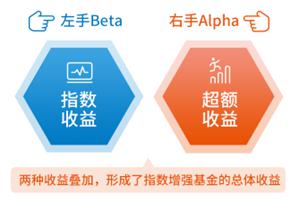
Core Viewpoint - Index-enhanced funds are designed to provide a balance between the ease of index investing and the potential for higher returns than the market average [1] Group 1: Mechanism of Index-Enhanced Funds - Index-enhanced funds aim to achieve returns that exceed a specific index through a combination of active management and quantitative strategies, seeking to outperform the index by losing less in downturns and gaining more in upturns [2] - The returns of index-enhanced funds can be divided into two components: β returns (market returns) and α returns (excess returns) [3] Group 2: Performance Data - Historical data indicates that index-enhanced products have consistently outperformed the index, achieving significant excess returns over time [4] - From 2010 to 2024, the average return of the CSI 300 enhanced funds has consistently surpassed that of the CSI 300 index, with a cumulative excess return exceeding 67% [5][6] Group 3: Market Context - The potential for obtaining excess returns in the A-share market is greater compared to overseas markets, primarily due to a higher proportion of individual investors in China, leading to more significant valuation fluctuations [7] - Given the current market conditions, index-enhanced products may be more suitable for ordinary investors seeking excess returns compared to passive index products [7]
指增基金快速增长,国金中证全指指增基金顺势发行
Zhong Guo Zheng Quan Bao· 2025-09-01 05:19
Group 1 - The A-share market is experiencing a new round of upward momentum, with the Shanghai Composite Index showing a year-to-date increase of 15.1% as of August 29 [1] - The Guojin CSI All Share Index Enhanced Fund will be launched on September 1, 2025, aiming to provide a comprehensive investment tool that aligns with the characteristics of the CSI All Share Index [1][2] - The CSI All Share Index reflects the overall performance of various market-cap stocks in the A-share market, offering a broader coverage compared to typical broad-based indices [2] Group 2 - The macroeconomic environment is stabilizing, and policy support is increasing, contributing to the overall recovery of the A-share market [2] - The CSI All Share Index is suitable for capturing diverse investment opportunities due to its comprehensive market coverage and ability to adapt to changing market trends [2] - The index's diversified structure is expected to lower decision-making costs and facilitate balanced industry allocation for long-term investors [2] Group 3 - The quantitative strategy employed by the fund aims to achieve excess returns while maintaining a balance with tracking error, maximizing the information ratio [4] - The investment team will utilize advanced technologies such as big data analysis and artificial intelligence to dynamically adjust the investment portfolio according to market conditions [4] Group 4 - The index-enhanced fund segment is experiencing rapid growth, with 180 new funds established in 2023, surpassing the total of 101 funds created in 2024 [5] - The average excess return for 519 index-enhanced funds this year is 3.87%, with 37 funds achieving excess returns greater than 10% [5] - The index-enhanced funds are seen as valuable for investors looking to capture market beta returns while also seeking alpha opportunities during market fluctuations [5] Group 5 - Guojin Fund has a well-established quantitative investment team with a strong background in mathematics and finance, contributing to the success of its quantitative products [6] - The launch of the Guojin CSI All Share Index Enhanced Fund is a significant addition to Guojin Fund's quantitative product line, enhancing investment options for investors [6] - The company plans to continue optimizing investment strategies and models in the quantitative investment field to provide high-quality investment tools [6]
中证全指指数上涨0.61%,前十大权重包含长江电力等
Jin Rong Jie· 2025-08-06 11:40
Group 1 - The core viewpoint of the news is the performance of the CSI All Share Index, which has shown significant growth over the past month, three months, and year-to-date [1] - The CSI All Share Index increased by 0.61% to 5272.08 points, with a trading volume of 17128.12 billion yuan [1] - The index has risen by 5.45% in the last month, 12.28% in the last three months, and 10.30% year-to-date [1] Group 2 - The CSI All Share Index is composed of stocks and depositary receipts from the Shanghai, Shenzhen, and Beijing stock exchanges, reflecting the overall performance of listed companies in these markets [1] - The top ten weighted stocks in the CSI All Share Index include Kweichow Moutai (1.89%), CATL (1.48%), China Ping An (1.34%), and others [1] - The industry composition of the index shows that industrials account for 22.72%, information technology for 16.76%, and financials for 14.15%, among others [2] - The index samples are adjusted semi-annually, with adjustments occurring on the next trading day after the second Friday of June and December [2]