乳木果护手霜

Search documents
“护手霜爱马仕”重新申请上市
Sou Hu Cai Jing· 2026-01-22 23:35
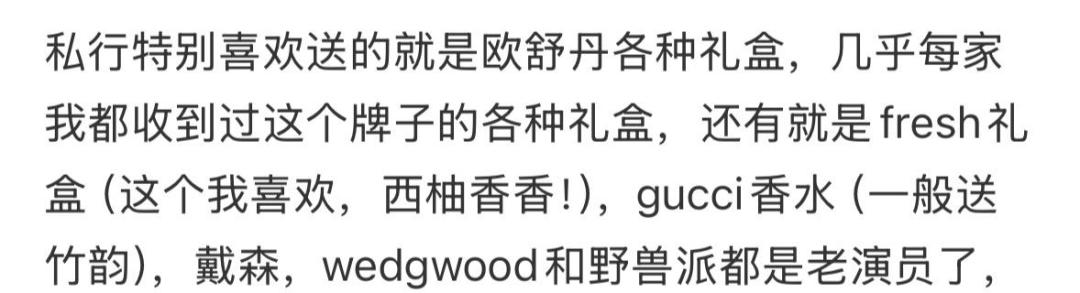
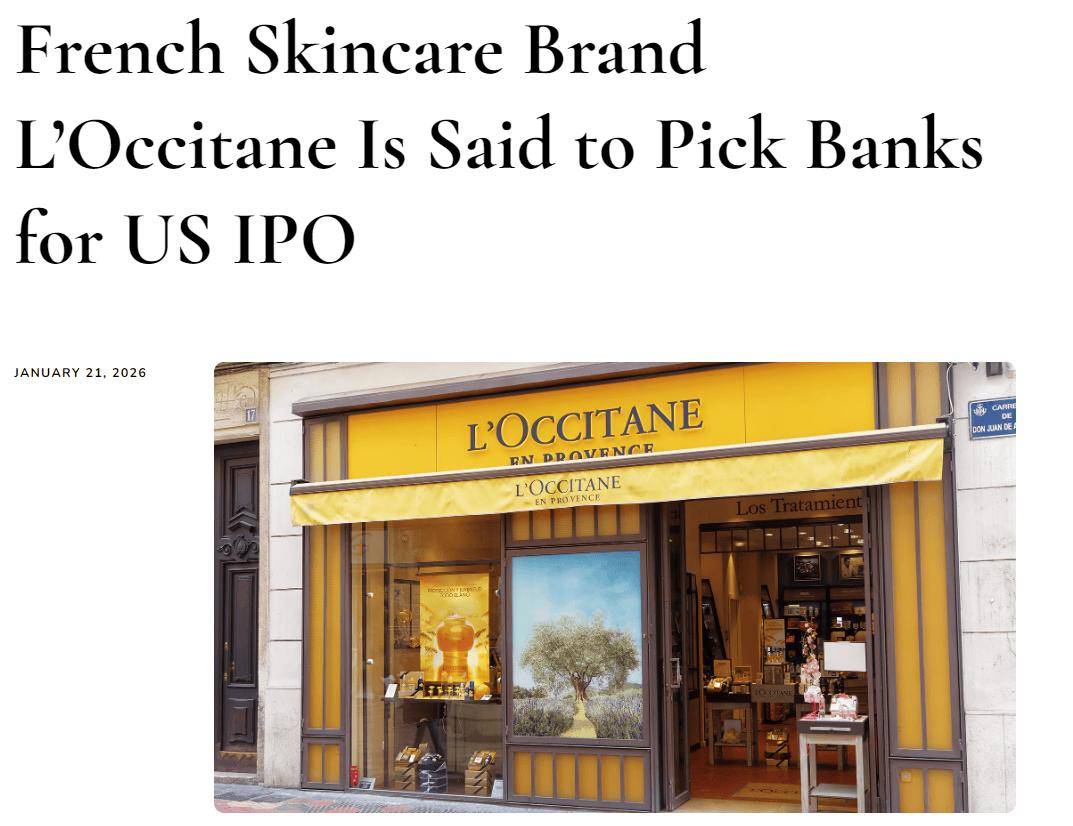
Core Insights - L'Occitane Groupe, known for its iconic hand cream, is planning to return to the capital market with an IPO in the US after being privatized in Hong Kong in 2024 [2][5][14] - The company aims to leverage the current recovery in capital markets to achieve a higher valuation through its upcoming IPO [5][15] Company Overview - Founded in 1976 by Olivier Baussan, L'Occitane is a high-end personal care brand based in Provence, France, focusing on natural plant-based products [6][9] - The brand's flagship product, the shea butter hand cream, is often referred to as the "Hermès of hand creams," achieving sales of one unit every four seconds [6][9] Market Position and Strategy - L'Occitane has expanded its brand portfolio to include Melvita, ELEMIS, and Sol de Janeiro, with products available in 90 countries [8][9] - The company has historically relied on a combination of star products, international market expansion, and strategic acquisitions to grow its business [9][13] Financial Performance - The company reported a revenue of €2.8 billion (approximately ¥228.02 billion) for the fiscal year 2025, reflecting an 11.7% year-on-year growth, although growth rates have slowed compared to previous years [16][18] - The brand's largest market is now the US, which has seen its sales share increase from 14.1% to 27.2%, while the Chinese market's share has declined from 18.4% to 12.9% [14][18] Challenges and Developments - L'Occitane faces significant challenges, including declining sales in China, leadership changes, and difficulties with brand acquisitions [14][15][20] - The company has initiated a restructuring of its leadership and has made strategic decisions, such as selling the Grown Alchemist brand for €28.35 million (approximately ¥2.17 billion) [14][15] Future Outlook - The upcoming IPO is seen as a potential opportunity for L'Occitane to raise funds and enhance operational efficiency, but the company must address its channel shortcomings and competitive positioning in the market [23]

“借厕出圈”!有品牌把德基网红厕所变成了快闪空间
Yang Zi Wan Bao Wang· 2026-01-13 10:30
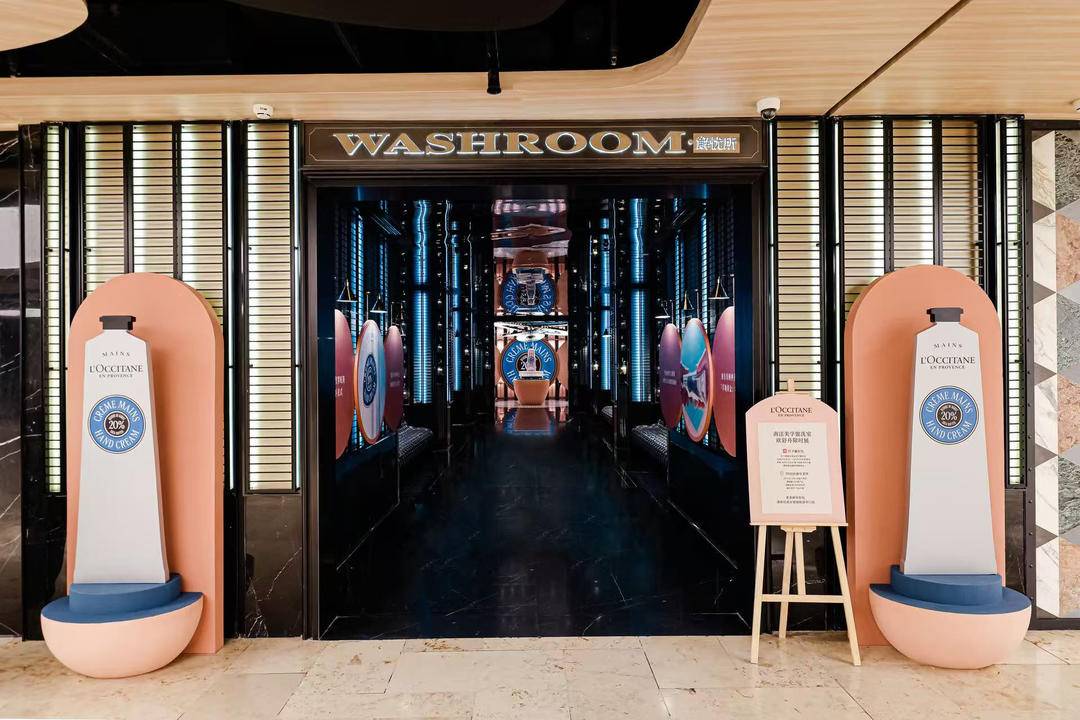
Core Insights - The article highlights a transformative trend in high-end commercial spaces, exemplified by Nanjing's Deji Plaza, where luxury brands are creatively utilizing unconventional spaces, such as a popular restroom, to enhance brand storytelling and consumer engagement [1][2]. Group 1: Brand and Consumer Engagement - L'Occitane has transformed a restroom in Deji Plaza into a limited-time "South France Hand Care Aesthetic Space," aligning with the brand's 50th anniversary and emphasizing experiential marketing [7][10]. - The restroom, dubbed the "Hermès of toilets," has become a must-visit attraction in Nanjing, showcasing the innovative approach of Deji Plaza to create high-traffic brand display areas [2][6]. - The space allows consumers to experience upgraded products like the shea butter hand cream and new plant-based hand wash, turning a brief visit into an immersive brand experience [3][8]. Group 2: Commercial Strategy and Market Position - Deji Plaza is projected to achieve sales of approximately 24.5 billion yuan in 2024, solidifying its status as the world's top-performing single shopping mall [5]. - The mall's success is attributed to its transformation from a traditional shopping venue to a multifaceted space that integrates art, commerce, and experiential elements, appealing to a diverse consumer base [5][10]. - The strategic use of public spaces, including art exhibitions and interactive installations, enhances the overall shopping experience and fosters deeper brand connections [5][10]. Group 3: Industry Trends - The rise of experiential retail is evident as brands seek to create unique content and experiences that resonate with younger consumers, moving beyond traditional retail formats [10]. - Other commercial entities, like Nanjing Water City, have successfully attracted Gen Z consumers by incorporating popular culture elements, indicating a broader industry shift towards innovative consumer engagement strategies [10].
开店超80家的穷鬼超市鼻祖,在革“贵妇美妆”的命
36氪未来消费· 2026-01-08 08:43
Core Viewpoint - The article discusses the emergence of supermarket beauty brands, particularly ALDI's Lacura, which offers high-quality skincare products at significantly lower prices compared to luxury brands, thus reshaping consumer purchasing behavior in the beauty industry [4][20]. Group 1: Product Launch and Market Response - Lacura's caviar essence series was launched in October 2025 and quickly gained popularity on social media, with related topics reaching over 10 million views [4]. - The pricing strategy of Lacura is a key factor in its success, with products priced between 14.9 yuan and 49.9 yuan, making them accessible compared to luxury brands like La Prairie, which charges nearly 5000 yuan for a single cream [5][6]. Group 2: Consumer Behavior and Market Dynamics - The shift in consumer perception is evident, as 74% of beauty consumers believe that there is no significant difference in effectiveness between affordable and high-end products, especially among younger demographics [12]. - Social media plays a crucial role in shaping consumer behavior, with users sharing reviews and experiences of affordable skincare products, leading to a perception that choosing high-cost alternatives is less rational [13]. Group 3: Retail Strategy and Competitive Advantage - Supermarket beauty brands like Lacura benefit from a different consumer psychology, where trust is placed in the retailer rather than the brand itself, leveraging the retailer's reputation for quality [14]. - The operational model of supermarket beauty brands allows for lower marketing and channel costs, enabling them to offer products at prices that traditional brands cannot match [18][19]. Group 4: Industry Transformation - The success of Lacura signifies a shift in the beauty market narrative, where the focus has moved from brand-driven stories to retailer-driven strategies, allowing products to be presented at prices that require minimal consumer deliberation [20][21].

品牌怎么做高端高价?靠这招毛利率高达80%
3 6 Ke· 2025-09-15 09:21
Core Insights - The article emphasizes the importance of profit in business, highlighting that many companies are now realizing that profitability is crucial for attracting investors and sustaining growth [1] - It introduces L'Occitane as a case study of a brand that successfully transformed from a fast-moving consumer goods (FMCG) company to a luxury brand in China, achieving a consistent gross margin above 80% since its entry in 2005 [1][5] Group 1: Brand Strategy - L'Occitane's entry into the Chinese market was marked by a strategic positioning in high-end shopping districts, adjacent to luxury brands like LV and Gucci, which helped establish its premium image [6] - The brand utilized a narrative around Provence culture and natural ingredients, particularly shea butter, to create a compelling story that resonated with Chinese consumers [3][6] - L'Occitane's pricing strategy included high price points for its products, with hand creams starting at 200 RMB, reinforcing its luxury positioning [6] Group 2: Unique Sales Channels - The brand's success is attributed to its innovative use of "high-end special channels," which include partnerships with private banks, luxury hotels, and high-end gift markets, allowing it to reach affluent consumers without direct competition in traditional retail [22][24] - L'Occitane's products are integrated into various high-end settings, such as luxury hotels and banks, enhancing brand visibility and consumer perception of quality [22][23] - The brand has also ventured into unique markets, such as medical supplies, where its products are used in high-end medical equipment, showcasing its versatility and broad appeal [28] Group 3: Lessons for Other Brands - The article suggests that other brands can learn from L'Occitane's approach to building a high-end brand image through strategic channel selection and storytelling [29] - It highlights the importance of timing in entering high-end channels, advocating for early engagement to establish strong partnerships [30] - The concept of creating a "closed loop" between brand image and sales channels is emphasized, where every channel serves both branding and sales purposes [32]