互联网宽带接入

Search documents
每周股票复盘:中国联通(600050)税目调整致税率升至9%
Sou Hu Cai Jing· 2026-02-07 17:20
Group 1 - China Unicom's stock closed at 4.84 yuan on February 6, 2026, down 5.28% from 5.11 yuan the previous week, reaching a near one-year low [1] - The company's current market capitalization is 151.32 billion yuan, ranking 3rd in the telecommunications services sector and 119th among all A-shares [1] - The highest intraday price for the week was 5.0 yuan on February 2, and the lowest was 4.78 yuan on February 3 [1] Group 2 - The Ministry of Finance and the State Taxation Administration announced an adjustment in the VAT tax category for telecommunications services, increasing the tax rate from 6% to 9% effective January 1, 2026, which will impact the company's revenue and profits [1] - China Structural Adjustment Fund Co., Ltd. reduced its holdings by 336,542,934 shares, bringing its ownership down to 5.00% of the total shares outstanding [1][3]

互联网增值服务未加税,误传致股价波动,实际仅基础电信服务税率上调
Sou Hu Cai Jing· 2026-02-04 02:11
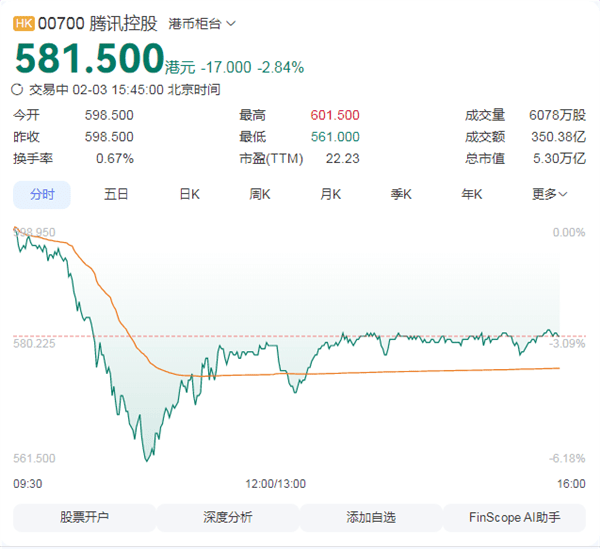
Core Viewpoint - The recent rumors regarding the increase of value-added tax (VAT) on internet value-added services stem from a misunderstanding of new tax regulations, which only affect basic telecommunications services and do not extend to other internet companies like Tencent [2][3] Group 1: Tax Regulation Changes - Starting from 2026, the VAT rate for basic telecommunications services, such as internet broadband access provided by companies like China Mobile, China Unicom, and China Telecom, will increase from 6% to 9% [2] - The adjustment is a targeted policy and does not apply to other types of enterprises, clarifying the boundaries of the new tax regulations [2] Group 2: Misinterpretation of Tax Applicability - The erroneous extrapolation of the tax adjustment to internet platform companies like Tencent has led to the misconception of an "internet value-added service tax increase" [2] - Tencent's primary business activities, including online gaming, social platform operations, cloud services, and digital content distribution, fall under the categories of value-added telecommunications services or sales of intangible assets, which remain subject to the 6% VAT rate without any increase [2][3] Group 3: VAT Structure Stability - The statutory VAT rates in China remain at three levels: 13%, 9%, and 6%, with the applicable objects and policy framework remaining stable and unchanged [4]





A股剧烈分化!贵金属板块大跌超10%,电网设备板块逆势涨停潮,白酒股再度拉升
Jin Rong Jie· 2026-02-02 03:06
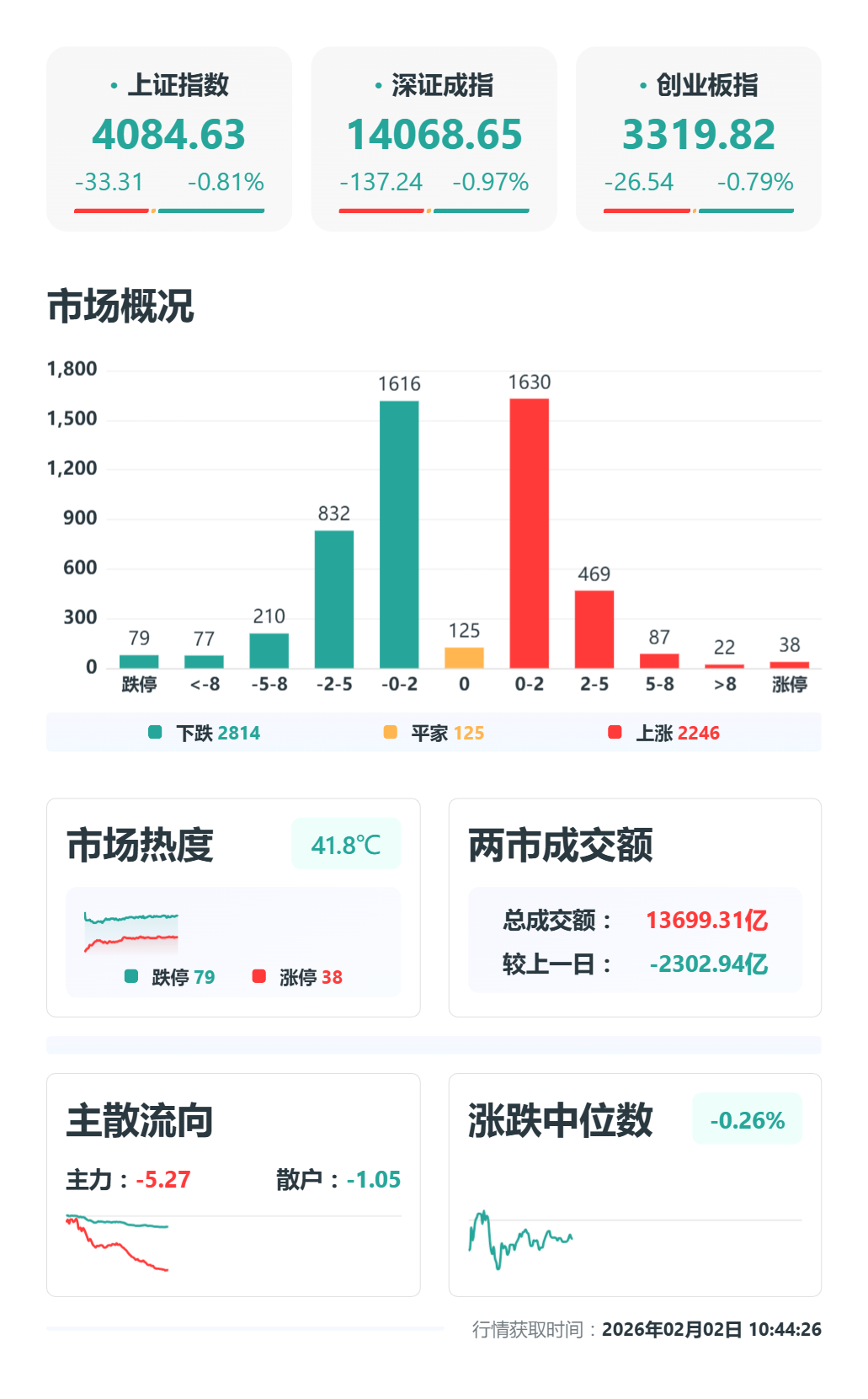
Market Overview - The market is experiencing a narrow fluctuation, with the Shanghai Composite Index down 0.81% at 4084.63 points, the Shenzhen Component Index down 0.97% at 14068.65 points, and the ChiNext Index down 0.79% at 3319.82 points. The total trading volume in both markets is 13699.31 billion yuan, a decrease of over 230 billion yuan compared to the same time the previous trading day, with more than 2800 stocks declining across the market [1]. Sector Performance - The performance of sectors shows a clear divergence, with the non-ferrous metals and oil & petrochemical sectors continuing to decline. In contrast, sectors such as high-voltage power transmission, liquor, beverages, and smart grids are performing actively. The non-ferrous metals sector has the most significant decline, with over 30 stocks hitting the daily limit down, and precious metals dropping over 10% [6][9]. - Specific stocks like Xiaocheng Technology hit the daily limit down at 15.08%, while major stocks like Shandong Gold and Jiangxi Copper also faced significant declines [6][7]. Precious Metals and Non-Ferrous Metals - The capital market is showing a linkage effect, with futures for precious and non-ferrous metals experiencing sharp declines. Silver futures dropped by 17%, gold by over 14%, and tin futures also hit the limit down. In the spot market, gold and silver initially rebounded but then fell again, with gold down over 6% and silver nearly 8% [7][8]. - Analysts from Huatai Securities suggest that the recent downturn may be triggered by the confirmation of a new Federal Reserve chairman, increased margin requirements by domestic and international futures exchanges, and concerns over the sustainability of AI tech stock revenues. They note that the crowded positions in the non-ferrous metals sector, particularly silver, have reached extreme historical levels [8]. Oil & Petrochemical Sector - The oil and petrochemical sector also saw declines, with companies like Zhongman Petroleum and Zhun Oil hitting the daily limit down. This is closely related to the significant drop in international crude oil prices due to geopolitical tensions involving Iran [9]. Telecommunications Sector - The three major telecommunications operators collectively declined over 4% in early trading. This follows an announcement from the Ministry of Finance and the State Taxation Administration regarding an increase in the VAT rate for certain telecommunications services from 6% to 9%, which will impact company revenues and profits [10]. Liquor Sector - In contrast to the declining cyclical stocks, the liquor sector saw a resurgence, with stocks like Shui Jing Fang and Huangtai Liquor hitting the daily limit up. Kweichow Moutai rose over 4%, reaching a peak of 1458.58 yuan per share. Analysts indicate that the liquor sector has adjusted for about five years and is currently at a historical low in terms of valuation and institutional positions [11][12]. Electric Power Equipment Sector - The electric power equipment sector is experiencing a surge, with stocks like Yinen Electric and Shuangjie Electric hitting the daily limit up. This is attributed to the global explosion in AI computing power infrastructure, with many transformer factories operating at full capacity [13][14].