人民币跨境结算

Search documents
美国债务逼近38万亿,多国转向人民币结算,去美元化能实现吗
Sou Hu Cai Jing· 2025-11-27 08:08
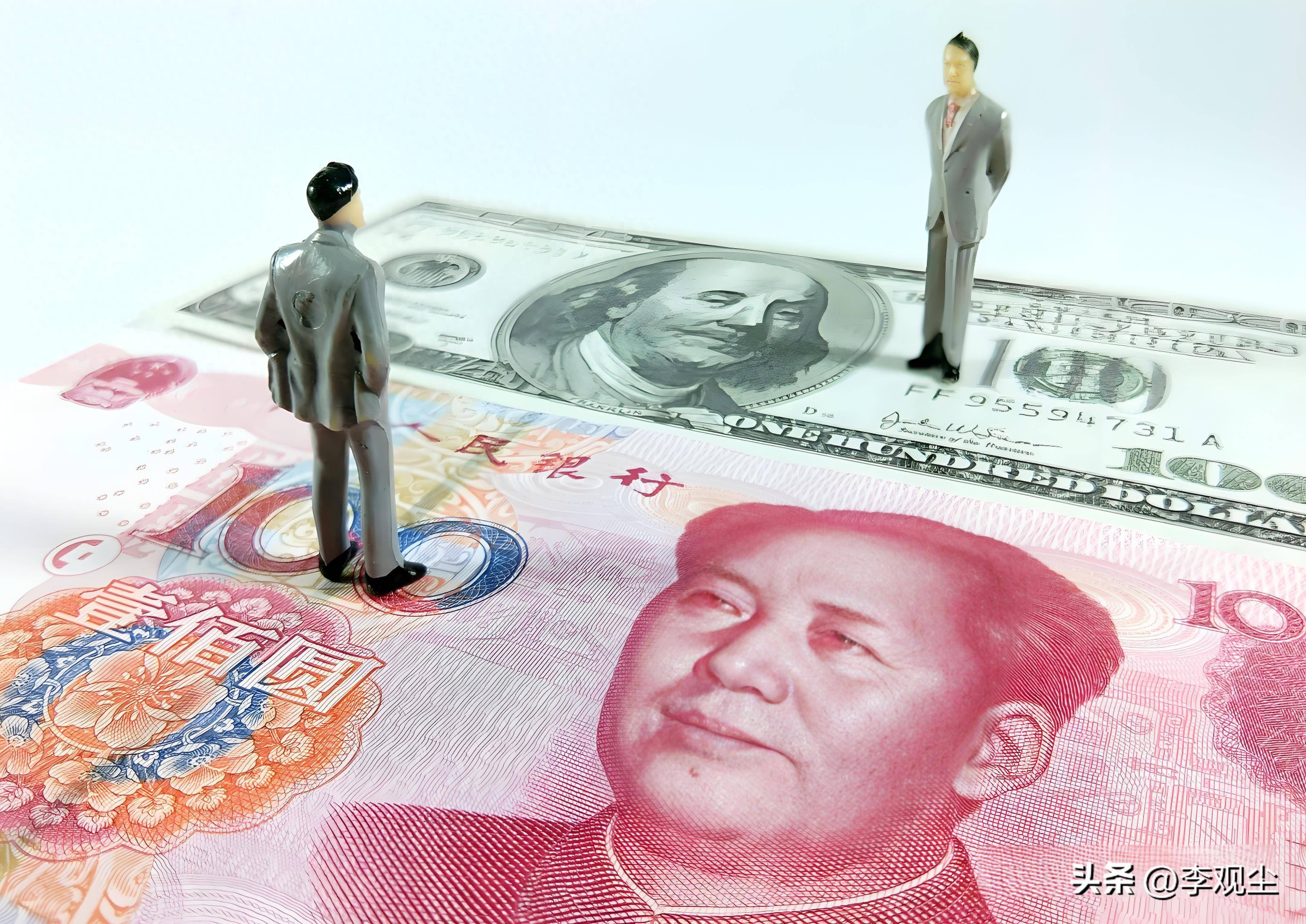
Group 1: U.S. Debt and Dollar Dominance - The U.S. national debt has reached nearly $38 trillion, marking a historical high and indicating a deep crisis within the dollar hegemony system [3][5] - The U.S. has relied on a "borrow new to pay old" debt cycle, supported by the dollar's status as the global reserve currency, allowing it to transfer debt risks globally [5][7] - Major creditors like China and Japan have been reducing their holdings of U.S. debt, leading to a declining share of U.S. debt held by global central banks, raising concerns about debt sustainability [5][9] Group 2: Challenges Faced by the U.S. Federal Reserve - The high debt levels force the Federal Reserve into a dilemma between raising interest rates to attract funds and risking global financial market instability, or injecting liquidity which could devalue the dollar [7][9] - The U.S. has weaponized the dollar, undermining its neutral role in the global economy, which has prompted countries to reconsider their reliance on the dollar [7][9] Group 3: Rise of Renminbi Settlement - The trend towards Renminbi (RMB) cross-border settlement is accelerating, driven by practical interests rather than a direct challenge to dollar dominance [9][10] - China, as the largest trading nation, has established RMB settlement with over 120 countries, enhancing trade efficiency and reducing reliance on the dollar [10][12] - The share of RMB in trade settlements among ASEAN countries has increased from less than 1% to over 10%, reflecting growing recognition of RMB's stability and inclusiveness [12][14] Group 4: Future of De-dollarization - While the dollar will maintain its dominant position in the short term, the global monetary system is expected to diversify in the long run, with the RMB becoming a significant player [16][18] - Over 90% of global foreign exchange transactions are still dollar-denominated, and the dollar remains the primary currency for key commodities, making its complete replacement unlikely in the near future [16][18] - The de-dollarization process is irreversible, with more countries adopting bilateral trade agreements in local currencies and increasing their foreign reserves in currencies like RMB, Euro, and Yen [18][20]

中油资本与安永联合发布《中国能源金融发展报告(2025)》, 首次系统性勾勒中国能源金融全产业链图景
Di Yi Cai Jing· 2025-11-17 08:58
Core Insights - The integration of energy and finance is becoming a key driver for China's modernization amid the global energy landscape transformation and the advancement of the "dual carbon" strategy [3] - The "China Energy Finance Development Report (2025)" was jointly released by China National Petroleum Corporation Capital and Ernst & Young, providing a comprehensive analysis of the energy finance market in China [3] Group 1: Energy Finance Role and Structure - Energy finance has evolved from being a "service provider" to a "multi-dimensional enabler," supporting energy security and green transformation [4][6] - The financing structure is diversifying, moving away from reliance on traditional credit, with new financing tools emerging [8] - In 2024, the new financing products in energy finance reached 6.7 trillion yuan, with a total scale of 42.9 trillion yuan, representing 19% and 26% of the overall market, respectively [6] Group 2: Cross-Border Settlement and Industry Focus - The rise of RMB cross-border settlement is establishing energy trade as a new engine for internationalization, with the direct cross-border settlement amount reaching 13.9 trillion yuan in 2024 [9] - The electricity sector has become the main financing player in the energy system, accounting for 74% of the new financing in energy listed companies in 2024 [15] Group 3: Traditional Energy Giants and Hydrogen Financing - Traditional oil and gas giants are transforming into key bridges for energy transition, with green bond balances in the oil and gas sector reaching 32.5 billion yuan in 2024 [18] - The hydrogen financing ecosystem is taking shape, with government-led and market-driven dynamics, resulting in over 6.5 billion yuan in cumulative financing for hydrogen enterprises by 2024 [22] Group 4: Nuclear Fusion and Carbon Market Development - China's nuclear fusion industry is advancing towards commercialization, with a goal to achieve the world's first fusion power demonstration by 2027, supported by a dual-driven funding system [24] - The carbon market is becoming more active, with a trading volume of 18.1 billion yuan in 2024, and green electricity trading has seen a compound growth rate of 200% since 2021 [27] Group 5: Energy Listed Companies and Financial Innovation - Energy listed companies are showing a significant increase in new financing, with a growth rate of 10.5%, indicating their leading position in the market [29] - The report outlines a new paradigm of energy finance that emphasizes "industry-specific strategies," showcasing successful models from various energy capital platforms [30] Conclusion - The future of energy finance in China is expected to create new opportunities through continuous innovation and technological transformation, evolving from traditional service models to deep collaborative roles [31]


人民币论坛在斯里兰卡举行
Xin Hua Wang· 2025-10-30 08:47
Core Viewpoint - The forum held in Colombo focused on the significance of expanding the use of the Renminbi (RMB) in Sri Lanka, emphasizing its potential to enhance financial cooperation and facilitate trade and investment [1] Group 1: RMB Usage and Economic Impact - The use of RMB in Sri Lanka is expected to diversify foreign exchange reserves, reduce exchange rate risks, and provide a more stable and cost-effective settlement channel, thereby enhancing macroeconomic resilience [1] - Establishing a direct RMB settlement mechanism will effectively lower transaction costs and mitigate exchange rate volatility risks, offering businesses more stable and efficient financial services [1] - The cross-border use of RMB will aid Sri Lanka in achieving trade diversification, enriching foreign exchange funding sources, and improving the resilience of its financial system [1] Group 2: Financial Cooperation and Future Directions - Participants at the forum emphasized the need to continue improving financial cooperation mechanisms, expand the scale of local currency settlements, and promote bilateral financial connectivity [1] - Strengthening financial support for economic and trade exchanges between China and Sri Lanka is seen as crucial for both countries [1]
【环球财经】人民币论坛在斯里兰卡首都科伦坡举行
Xin Hua Cai Jing· 2025-10-30 06:13
Core Points - The forum held in Colombo focused on promoting the internationalization of the Renminbi (RMB) and enhancing China-Sri Lanka economic cooperation [1][2] - The Chinese ambassador emphasized that the internationalization of the RMB is a market-driven process that reflects China's deeper integration into the global division of labor [1] - The Sri Lankan central bank governor noted the RMB's rising status as the fourth largest international payment currency, highlighting its importance in reducing transaction costs and exchange rate risks [1][2] Group 1 - The forum attracted nearly 300 representatives from Sri Lankan government departments, commercial banks, and the business community [1] - The RMB's functions in cross-border trade settlement, reserve currency, and investment tools have been expanding, particularly in energy, finance, and infrastructure [1] - Establishing a direct RMB settlement mechanism will provide more stable and efficient financial services for enterprises [1][2] Group 2 - The president of the Bank of China Research Institute discussed the evolving trends in the international monetary system and the special value of RMB cross-border usage [2] - The current economic recovery in Sri Lanka is supported by growing China-Sri Lanka trade and investment cooperation, with expanding applications of the RMB in trade, investment, and tourism [2] - Participants at the forum emphasized the need to improve financial cooperation mechanisms and expand local currency settlement to provide robust financial support for bilateral trade [2]
中国银行举办柬埔寨工业园区人民币业务论坛
Zhong Guo Xin Wen Wang· 2025-09-19 14:15
Core Insights - The forum organized by the Bank of China in Phnom Penh focused on the opportunities for RMB internationalization and bilateral currency settlement between China and Cambodia [2][3] - The event attracted over a hundred representatives from various economic zones in Cambodia, highlighting the strong growth in bilateral trade and investment [2] Group 1: RMB Internationalization and Financial Services - The forum provided in-depth analysis of current international financial market interest rates and exchange rates, emphasizing the importance of RMB internationalization [2] - The Bank of China introduced its comprehensive financial service system, which includes RMB cross-border settlement, financing, currency exchange, and personal financial products [3] - The Bank of China in Phnom Penh has been authorized by the National Bank of Cambodia to act as the cross-border QR code payment clearing bank and by the People's Bank of China to serve as the RMB clearing bank in Cambodia [3] Group 2: Bilateral Trade and Investment Growth - China has been Cambodia's largest trading partner for 13 consecutive years, with bilateral trade reaching nearly $12.7 billion from January to August 2023, a 26% year-on-year increase [2] - Cambodia attracted $7.2 billion in investment during the first eight months of 2023, with over half coming from China [2] - The cooperation between China and Cambodia includes the establishment of multiple industrial parks, with the Sihanoukville Economic Zone being a model project under the Belt and Road Initiative [2]

央行上海总部:将继续顺应市场需求,大力推进人民币跨境使用
Sou Hu Cai Jing· 2025-07-24 07:11
Core Insights - Shanghai's foreign economic activities remained robust in the first half of 2025, with total foreign income and expenditure reaching $2.77 trillion, a year-on-year increase of 19% [2] - The cross-border RMB settlement volume in Shanghai continued to grow, totaling 16.2 trillion yuan, up 15% year-on-year, accounting for 46.5% of the national total [2] Group 1: Foreign Trade and Investment - The revenue from goods trade in Shanghai increased by 21% year-on-year, demonstrating resilience amid external pressures [3] - Shanghai's exports to ASEAN and Belt and Road countries accounted for 16% and 42% of total exports, respectively, with year-on-year growth of 24% and 20% [3] - Foreign investors have shown increased interest in RMB assets, with net foreign investment in domestic stocks turning from outflow to inflow since May [3][4] Group 2: Currency and Risk Management - The foreign exchange hedging ratio in Shanghai rose to 42.2%, an increase of 4.7 percentage points year-on-year, indicating enhanced awareness and capability among enterprises regarding currency risk [4] - The volume of cross-border RMB settlements under current accounts grew by 19%, with significant increases in various sectors, including a 55% rise in shipping companies' RMB settlements [5] Group 3: RMB Internationalization - The cross-border RMB business volume with ASEAN countries increased by 10.7%, and with RCEP countries by 7.5%, reflecting the effectiveness of RMB in providing cross-border financial services [5][6] - RMB loans to overseas markets grew by 36%, and cross-border RMB settlements for securities investment rose by 16% [6]