
企业债券融资

Search documents
信贷开门红偏弱,春节后投融资景气度受关注
Di Yi Cai Jing· 2026-02-24 05:25
Core Viewpoint - The January financial data indicates a "good start" for social financing in 2026, supported by government and corporate bonds, despite overall weak credit issuance, with new RMB loans in January falling short of the previous year's figures [1][2]. Group 1: Credit Performance - In January, new RMB loans amounted to 4.71 trillion yuan, lower than 5.13 trillion yuan in January 2025, reflecting a year-on-year decrease in social financing of 317.8 billion yuan [2][3]. - The trend of loan pre-positioning is strengthening, with January loans accounting for 22%, 27%, and 32% of annual credit issuance from 2023 to 2025, respectively [2]. - The corporate sector saw a decrease in medium to long-term loans by approximately 280 billion yuan and a reduction in bill discounts by about 360 billion yuan, indicating a shift towards balanced lending practices [1][3]. Group 2: Residential Sector Insights - Residential loans increased by 456.5 billion yuan, with short-term loans rising by 1.1 trillion yuan, while medium to long-term loans decreased by 1.47 trillion yuan [8]. - The real estate market's slow recovery and early repayments are major factors affecting residential loan growth, with January's property sales down 18.9% year-on-year [8][9]. - Short-term loans are seen as a critical indicator for consumer recovery, with their growth attributed to low base effects, holiday influences, and new subsidy policies [8][9]. Group 3: Market Dynamics and Future Outlook - Analysts suggest that the demand for credit post-Spring Festival will be crucial for both corporate and residential sectors, with expectations of continued monitoring of credit structure and volume in February and March [5][7]. - The reduction in bill financing by 873.9 billion yuan indicates banks are reallocating resources towards general loans, reflecting a shift away from aggressive credit growth [7]. - The overall sentiment in the corporate sector remains cautious, with expectations of credit growth being tempered by high base effects and regulatory influences [3][6].
3482亿元社会融资增量!辽宁金融实力拉满!
Sou Hu Cai Jing· 2026-01-30 15:17
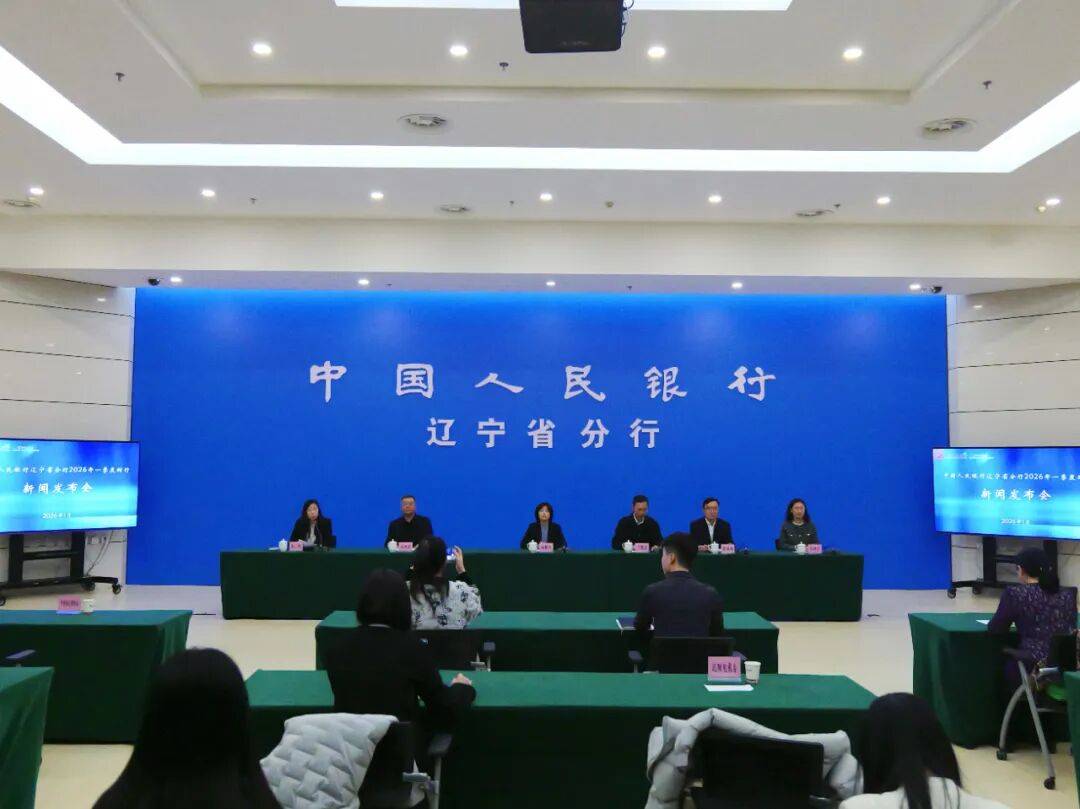
Core Viewpoint - The People's Bank of China Liaoning Branch reported a positive trend in financial operations for 2025, highlighting significant growth in various financial metrics and strong support for the real economy [2]. Financial Growth - The total social financing in Liaoning Province increased by 348.2 billion yuan in 2025, marking the highest level for the same period in nearly seven years [2]. - New corporate bond financing reached 37.3 billion yuan, the highest in nearly nine years [2]. - The balance of RMB loans amounted to 5.32 trillion yuan, with an increase of 121.9 billion yuan from the beginning of the year, the highest in three years [2]. Corporate Loans - The balance of loans to enterprises reached 3.87 trillion yuan by the end of 2025, with new loans totaling 153.8 billion yuan, the highest since 2021 [2]. - This growth provided substantial financial support for corporate operations [2]. Household Loans - The balance of household operating loans reached 336.5 billion yuan by the end of 2025, showing a year-on-year growth of 14.94%, which is 8.58 percentage points higher than the previous year [2]. - New household operating loans amounted to 43.7 billion yuan, the highest in nearly ten years, increasing by 26.4 billion yuan compared to 2024 [2]. Key Sector Loans - Loans in key sectors, referred to as the "Five Major Articles," totaled 1.71 trillion yuan by the end of November, with a year-on-year growth of 12.1%, surpassing the overall loan growth rate [3]. - Specific sectors such as agriculture, infrastructure, and healthcare saw significant loan increases, with respective growths of 8.2 billion yuan, 21.2 billion yuan, and 4.4 billion yuan [3]. Deposit Growth - The balance of RMB deposits in Liaoning Province reached 8.72 trillion yuan by the end of December, with an increase of 317 billion yuan from the beginning of the year [3]. - Household deposits and non-financial enterprise deposits were 6.62 trillion yuan and 1 trillion yuan, respectively [3]. Technology Loans - As of November 2025, the balance of technology loans was 818.5 billion yuan, with a year-on-year growth of 7.6%, exceeding the overall loan growth rate [6]. - The number of enterprises receiving loans reached 18,359, an increase of 771 from the previous year [6]. - Loans to technology-oriented small and medium-sized enterprises and "specialized, refined, and innovative" small and medium-sized enterprises grew by 25.22% and 19.98%, respectively [6].

中信建投期货:1月16日宏观早报
Xin Lang Cai Jing· 2026-01-16 01:19
Core Insights - The social financing scale in December 2025 increased by 22,080 billion yuan, lower than the previous value of 24,888 billion yuan and above the expected increase of 18,153 billion yuan [1][3] - New RMB loans amounted to 9,100 billion yuan, significantly higher than the previous month's increase of 3,900 billion yuan and above the expected increase of 6,794 billion yuan [1][3] - The year-on-year growth of RMB loans remained stable at 6.4%, while M2 and M1 showed growth rates of 8.5% and 3.8% respectively [1][3] Social Financing Data - December's social financing increment maintained a high growth rate, with an increase of 22,080 billion yuan, which is 12,180 billion yuan more than the same month last year [1][3] - The performance of off-balance-sheet financing, including entrusted loans and trust loans, showed stability, with increases of 327 billion yuan and 529 billion yuan respectively, while bank acceptance bills decreased by 162 billion yuan [1][3] - Government bond issuance saw a significant decline, with a year-on-year decrease of 10,702 billion yuan, attributed to a high base from the previous year [1][3] Loan and Deposit Trends - In December, corporate bond financing reached 1,524 billion yuan, an increase of 1,683 billion yuan year-on-year, while domestic stock financing for non-financial enterprises was 560 billion yuan, up by 76 billion yuan [1][3] - The total amount of new RMB loans in December was 9,100 billion yuan, which is 800 billion yuan less than the same month last year, indicating potential capital outflows from the stock market [1][3] - Resident and non-financial enterprise deposits increased by 25,800 billion yuan and 12,200 billion yuan respectively, showing significant month-on-month growth [1][3] Monetary Supply and Liquidity - M2 growth in December was 8.5%, which is a 0.5 percentage point increase from the previous month [1][3] - The M1-M2 differential expanded to -4.7%, indicating a contraction in monetary liquidity, although the overall monetary policy remains accommodative [1][3] - Fiscal deposits decreased by 13,821 billion yuan, suggesting potential preemptive fiscal measures for 2026 [1][3]

