
伊朗重油

Search documents
特朗普抢5000万桶原油,想逼中国买单,可中国连一桶都不肯买了
Sou Hu Cai Jing· 2026-01-13 02:07
Core Viewpoint - The article discusses the failed attempt by the Trump administration to sell seized Venezuelan oil to China, highlighting China's strategic refusal based on market logic and its strong energy security. Group 1: U.S. Actions and Expectations - The Trump administration aimed to control Venezuelan oil resources, announcing possession of 50 million barrels to sell to China, the world's largest oil importer [1][4] - The U.S. believed that China's dependency on Venezuelan oil would force Chinese refiners to accept U.S. pricing rules [4] Group 2: China's Response - Chinese buyers canceled all orders for the seized oil, rejecting the U.S. offer entirely [7] - The price increase from $15 to $13 per barrel due to U.S. intervention was a critical factor in China's decision to refuse the oil [10] - China's refusal was based on a well-considered strategy, as they had ample oil reserves, with 82 million barrels waiting to be unloaded near Malaysia [12] Group 3: Energy Security and Strategy - By the end of 2025, China's strategic and commercial oil reserves are projected to reach 1.2 to 1.3 billion barrels, significantly exceeding the International Energy Agency's recommended safety line [16] - The establishment of a legal framework for strategic oil reserves and the construction of new storage facilities indicate China's long-term energy security strategy [17] - China's diversified oil import network includes major suppliers like Saudi Arabia, Iran, and Russia, making Venezuelan oil less critical [17][19] Group 4: Market Dynamics and Implications - The refusal to purchase Venezuelan oil reflects a shift in market dynamics, where buyers have the power to choose suppliers, undermining U.S. threats [19] - The decision to reject the oil may lead to short-term challenges for Chinese refineries but is seen as a necessary step towards upgrading and diversifying supply sources [21] - China's energy transition, with a significant increase in electric vehicle sales, indicates a structural decrease in oil dependency [23] Group 5: U.S. Consequences - The U.S. strategy backfired, leading to operational challenges in Venezuela, including a 25% reduction in oil production due to logistical issues [27] - The inability to sell the seized oil has become a symbol of the failure of U.S. geopolitical maneuvers, highlighting the limitations of using oil as a political tool [27][30] - China's strong stance against unilateral sanctions and bullying tactics reflects a broader shift in global power dynamics [28][30]

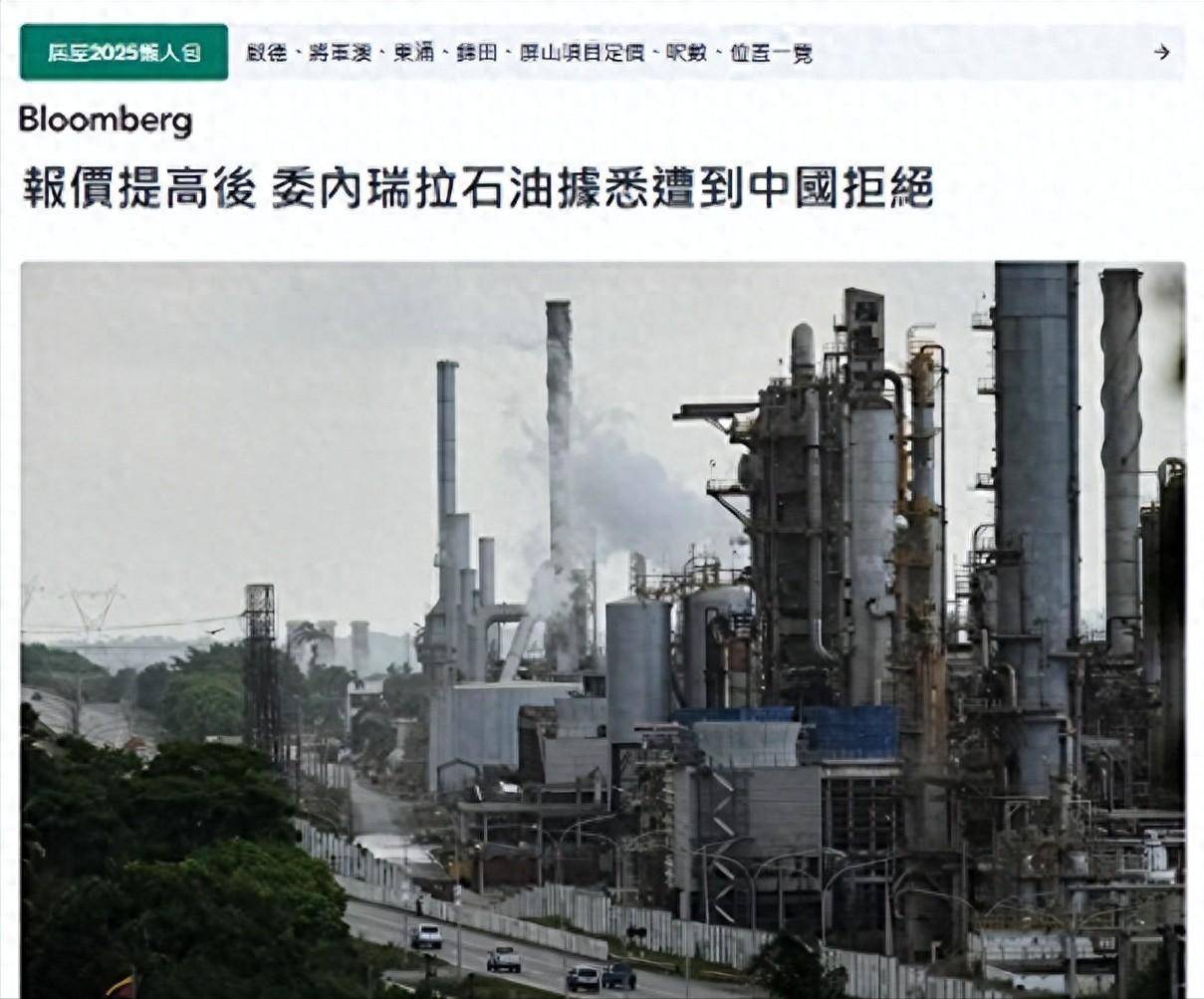
美媒:特朗普的算盘空了,委内瑞拉的高价油,中国连一桶都不肯买
Sou Hu Cai Jing· 2026-01-11 11:17
Core Viewpoint - The U.S. strategy to impose sanctions and military actions on Venezuela's oil resources has backfired, revealing the limitations of political intervention in market dynamics, as China successfully diversified its oil sources and reduced reliance on Venezuelan oil [2][5][15]. Group 1: U.S. Sanctions and Political Actions - After taking office in January 2025, the Trump administration tightened policies against Venezuela, including revoking Chevron's exemptions and threatening tariffs on countries buying Venezuelan oil [5]. - The sanctions aimed to cut off Venezuela's revenue by targeting China, which accounted for over 80% of Venezuela's oil exports in 2025 [5]. - The U.S. expected that sanctions would force China to pay higher prices for Venezuelan oil, but China had sufficient reserves and alternative sources to mitigate the impact [8][10]. Group 2: China's Response and Market Dynamics - As sanctions escalated, logistical disruptions led to increased shipping costs, prompting Chinese buyers to reject higher-priced Venezuelan oil [8][10]. - By March 2025, China's imports of Venezuelan oil sharply declined as they turned to more stable sources like Iran and Russia, which offered discounts of around $10 per barrel [10][12]. - China's oil imports from Venezuela dropped to only 4.5% of total imports, demonstrating its ability to adapt and maintain energy security through diversified sourcing [12][14]. Group 3: Impact of Military Actions - In January 2026, U.S. special forces captured Venezuelan leaders, leading to a temporary agreement for Venezuela to supply oil to the U.S. [12]. - The Brent crude oil price fell below $70 due to the influx of Venezuelan oil, but China's reliance on this source remained limited [12][14]. - The U.S. aimed to revitalize Venezuela's oil industry, but significant investment and time would be required to restore production levels [12][17]. Group 4: Market Realities and Future Outlook - The U.S. strategy underestimated China's oil reserve capacity and its ability to pivot to other suppliers, resulting in Venezuela's production cuts benefiting China [15][17]. - The ongoing military actions and sanctions have led to a chaotic transitional period in Venezuela, with the market ultimately dictating the energy landscape rather than political maneuvers [17]. - The shift in trade flows and the resilience of China's energy strategy highlight the limitations of U.S. political interventions in the oil market [17].
资深原油专家交流
2026-01-04 15:35
Summary of Key Points from the Conference Call Industry Overview - The conference call primarily discusses the **oil market**, focusing on the impact of **Venezuela's geopolitical situation** on global oil supply and demand dynamics. Core Insights and Arguments - **Venezuela's Oil Production**: Venezuela's current oil production is approximately **800,000 to 1,000,000 barrels per day**, with exports expected to be around **700,000 barrels per day** by November 2025, predominantly to China. The U.S. sanctions have significantly impacted these figures, especially after the seizure of a Venezuelan oil tanker on **December 9, 2025** [3][4][5]. - **Potential Increase in Production**: If U.S. sanctions are lifted and sufficient diluent supply is provided, Venezuela's oil production could increase by **400,000 barrels per day** to **1,200,000 to 1,400,000 barrels per day** within **3 to 6 months**, which would have a substantial effect on the global oil balance for 2026 [3][4][5]. - **Global Oil Supply Outlook for 2026**: The global oil market is expected to face a **daily surplus of 1,000,000 barrels**, with an overall surplus rate exceeding **2,000,000 to 2,500,000 barrels per day** due to new projects in Brazil, Guyana, and Argentina [5][8]. - **Impact of CPC Pipeline Damage**: The destruction of the SPM2 point of the CPC pipeline has reduced current export volumes to about **1,000,000 barrels per day**. The anticipated launch of SPM3 in January 2026 could increase supply, potentially negatively impacting Brent crude prices [10]. - **Short-term vs Long-term Supply Dynamics**: In the short term, the reduction of **500,000 barrels per day** from Venezuela has limited impact due to existing inventory levels. However, the long-term outlook remains concerning due to potential oversupply if sanctions are lifted and production resumes [5][15]. Additional Important Insights - **Refinery Alternatives in China**: In the absence of Venezuelan oil, Chinese refineries may turn to Iranian heavy oil or Canadian Cold Lake as substitutes, but this would significantly increase costs, potentially by **400-450 RMB per ton** [6]. - **Geopolitical Risks**: The call highlights the risks associated with geopolitical tensions, particularly regarding Iran and Venezuela, which could disrupt global oil supply chains and affect market stability [11][12]. - **Price Predictions**: The outlook for oil prices in the first half of 2026 is pessimistic, with expectations of downward pressure due to high supply levels. However, the second half of 2026 may see improvements as seasonal demand increases and supply stabilizes [14][18]. - **Impact on Chinese Refineries**: The long-term effects of Venezuela's situation on Chinese refineries are expected to be negative, as they may lose access to low-cost asphalt raw materials, regardless of whether Venezuela resumes exports [15]. Conclusion - The conference call provides a comprehensive overview of the current and future state of the oil market, emphasizing the significant influence of geopolitical factors, particularly the situation in Venezuela, on global supply and pricing dynamics. Investors are advised to closely monitor these developments to make informed decisions.