休闲度假产品

Search documents
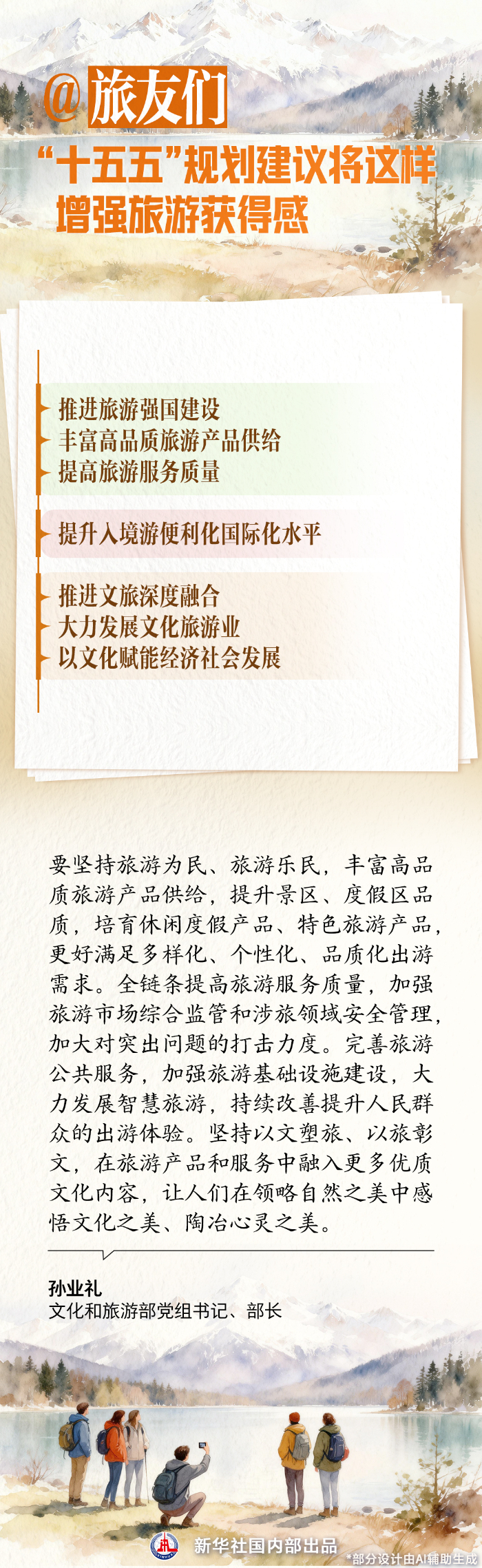
@旅友们,“十五五”规划建议将这样增强旅游获得感
Xin Hua Wang· 2025-12-29 06:14
Core Viewpoint - The article emphasizes the importance of enhancing the quality and diversity of tourism products and services in order to build a strong tourism nation and improve the overall travel experience for citizens [3][4]. Group 1: Tourism Development Strategies - The focus is on enriching high-quality tourism product supply and improving the quality of scenic spots and resorts to better meet diverse and personalized travel demands [4]. - There is a call for comprehensive improvement in tourism service quality, including strengthening market regulation and safety management in the tourism sector [4]. - The development of smart tourism and enhancement of public tourism services are highlighted as essential for improving the travel experience for the public [4]. Group 2: Cultural Integration in Tourism - The integration of culture into tourism products and services is emphasized, aiming to allow people to appreciate both natural beauty and cultural richness [4]. - The article advocates for deepening the fusion of culture and tourism, promoting cultural tourism as a means to empower economic and social development [3].

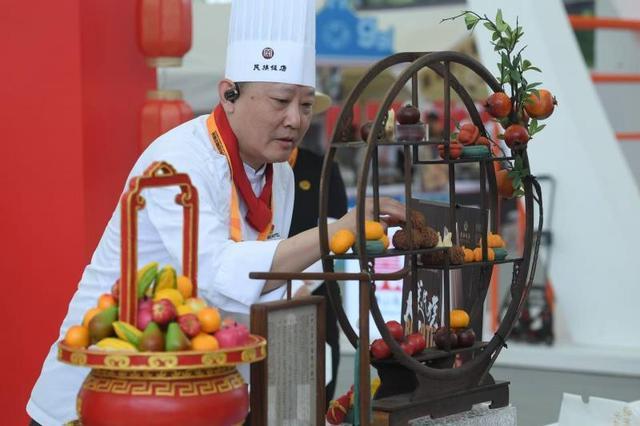
服贸会现场再现国宴摆台中的“北京服务”
Xin Jing Bao· 2025-09-13 04:45
Group 1 - The Beijing Service theme exhibition at the 2025 China International Service Trade Fair showcases the successful cases of Shoulu Group during the Asian Winter Games, emphasizing the quality of "Beijing Service" [2][3] - Shoulu Group presents over 20 brands from 11 subsidiaries, highlighting various products and services including traditional brands, fine dining, creative cultural products, accommodation, and business travel [2][5] - The exhibition features an interactive experience area with unique offerings from various brands, enhancing audience engagement and showcasing the integration of culture and tourism [5] Group 2 - The 11th pavilion serves as a vibrant experiential area for cultural and tourism services, allowing visitors to gain a more intuitive understanding of the development of cultural tourism integration [3][5] - Each brand booth in the cultural tourism exhibition area is equipped with a "2025 Shoulu Wonderful Life Festival - Online Life Festival" sticker, enabling consumers to enjoy on-site services and online discounts [5]

未来10年,很多赚钱商机都藏在这些新兴产业里
创业家· 2025-07-11 10:07
Core Viewpoint - The article draws parallels between Japan's economic stagnation over the past three decades and China's current economic challenges, suggesting that China can learn valuable lessons from Japan's experience [4][5][6]. Group 1: Consumption Trends - Japan's economic stagnation has led to a shift in consumer attitudes, moving towards minimalism and low-desire consumption, which aligns with global trends of resource scarcity [5][6]. - The four stages of Japanese consumption identified by Miura Nobuyuki include homogenized consumption, differentiated consumption, rational minimalism, and spiritual consumption, indicating a transition towards valuing experiences over brand prestige [7][8]. - The emergence of the "one-person economy" reflects changing social dynamics and consumer preferences, emphasizing individual fulfillment and lifestyle choices [9]. Group 2: Aging Population and Wealth Distribution - Japan's aging population holds a significant portion of national wealth, with over 50% of national assets owned by individuals aged 60 and above, mirroring trends in China [15][17]. - The increasing percentage of elderly individuals in China, projected to reach 30% by 2035, raises questions about how to cater to this affluent and leisure-seeking demographic [18][19]. - The concept of "M-shaped society" describes the polarization of the middle class in Japan, a trend that is also observable in China, where a significant portion of the population is classified as low-income [20][22]. Group 3: Tourism and Leisure Industry - Japan's tourism sector has thrived during economic downturns, driven by a national strategy that recognizes the value of tourism for economic growth and national branding [26][33]. - Various successful tourism models in Japan include theme parks, leisure resorts, and cultural tourism, which have adapted to consumer preferences for unique experiences [27][29][30]. - The integration of traditional culture and modern tourism practices has created a vibrant tourism industry, with events and festivals attracting both domestic and international visitors [31][32]. Group 4: Future Consumption Trends - The article suggests that China is transitioning between the second and third consumption eras, with early signs of the fourth consumption era emerging, characterized by a focus on experience and personal satisfaction [11][12]. - The changing economic landscape necessitates a shift from rapid profit-driven models to those that prioritize creativity, emotional connection, and consumer-centric values [38][40]. - The upcoming seminar on Japanese consumption strategies aims to provide insights into adapting these lessons for the Chinese market, emphasizing the importance of understanding evolving consumer needs [41][42].