
光储充系统

Search documents
全球智慧充电行业增长驱动因素和发展趋势分析报告
Sou Hu Cai Jing· 2026-01-06 08:41
Core Insights - The smart charging industry is experiencing rapid growth driven by the increasing adoption of electric vehicles and the need for efficient energy management solutions [6][7][8]. Group 1: Smart Charging Overview - Smart charging integrates intelligent scheduling and digital management to optimize charging networks and collaborate with energy systems, enhancing operational efficiency and user experience [3]. - The traditional charging model faces challenges such as insufficient grid capacity and low operational efficiency, which smart charging solutions aim to address through AI and smart management platforms [3][4]. Group 2: Industry Value Chain Analysis - The upstream segment includes suppliers of charging components, power electronics, energy storage systems, communication modules, and AI algorithm platforms, providing essential hardware and technology [4]. - The midstream focuses on smart charging solution providers, integrating hardware and energy management technologies to create high-value solutions [4]. - The downstream participants consist of charging station operators and electric vehicle owners, benefiting from centralized management and efficient charging services [4]. Group 3: Market Size Analysis - The global electric vehicle charging station count is projected to grow from approximately 4.6 million in 2020 to about 25.3 million by 2024, with a compound annual growth rate (CAGR) of around 53.4% [5]. - The smart charging industry market size is expected to increase from about $2.4 billion in 2020 to approximately $10.4 billion by 2024, with a CAGR of about 44.0% [5]. - By 2030, the market size is anticipated to reach around $50.4 billion, driven by the increasing penetration of electric vehicles and the integration of AI in energy management [5]. Group 4: Growth Drivers and Trends - The rapid proliferation of new energy vehicles is the primary driver for the expansion of the smart charging industry, with global sales expected to rise from approximately 3.2 million in 2020 to about 19 million by 2024 [7]. - Government policies are accelerating the development of smart charging infrastructure, with initiatives in China and the U.S. aimed at enhancing charging network capabilities and standards [8][9]. - The integration of photovoltaic generation and energy storage systems into smart charging solutions is addressing challenges related to grid capacity and operational costs [10]. Group 5: AI and Service Innovation - Leading smart charging solution providers are leveraging AI to create integrated decision-making systems that optimize charging demand and energy supply [11]. - The smart management platform is evolving into a core service innovation tool, enabling diverse functionalities such as dynamic pricing and fleet management [11].

普洛斯与西门子达成战略合作
Zheng Quan Ri Bao Wang· 2025-10-29 13:10
Core Insights - ProLogis and Siemens have signed a strategic cooperation agreement to explore innovative pilot projects for smart logistics parks, leveraging Siemens' technology in automation, digitalization, and energy management alongside ProLogis' extensive logistics infrastructure network [1] Group 1: Strategic Cooperation - The partnership aims to create scalable and replicable smart zero-carbon solutions to enhance operational efficiency and competitiveness for logistics park clients [1] - This collaboration deepens the long-term relationship between ProLogis and Siemens, enhancing ProLogis' "space x ecosystem" service capabilities to create greater value for clients [1] Group 2: Technological Integration - ProLogis will work with Siemens to provide practical core automation equipment and logistics solutions for clients within logistics parks, including logistics electrical control systems and AGV scheduling platforms [1] - Siemens' proven carbon management platform, energy storage and charging systems, and microgrid operation management solutions will support logistics park clients in accelerating their green transformation [1] Group 3: Carbon Standards Development - The two companies will expand their cooperation around the construction of "zero-carbon logistics park standards," jointly developing carbon emission standards and technical specifications applicable to logistics parks [1] - A regular communication mechanism will be established to explore innovative business models for smart logistics and the integration of industrial control with logistics control [1]
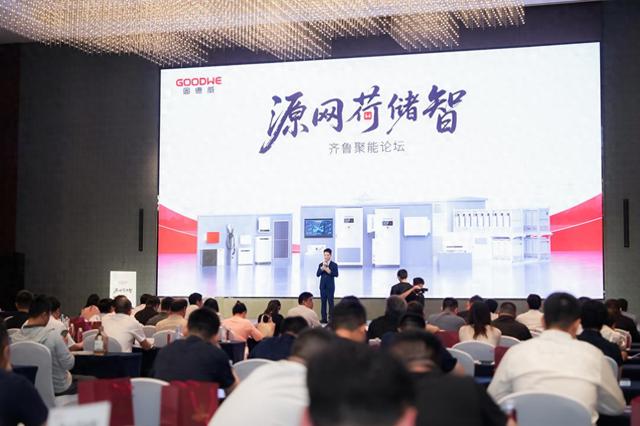
“源网荷储智”:固德威能源转型的企业破局尝试
Xin Hua She· 2025-05-23 05:28
Core Insights - The forum held on May 20 in Jinan focused on energy transformation, highlighting the advancements in energy management systems and the integration of renewable energy sources [1][6]. Group 1: Technological Advancements - The ESA261kWh energy storage system introduced by the company features a power output of 125kW and a capacity of 261kWh, with a size 30% smaller than competitors, showcasing its role as the "nerve center" of energy management [6]. - The AI algorithms integrated into the system can predict photovoltaic output and load fluctuations 15 minutes in advance, enabling coordinated dispatch of multiple storage units [6]. - The company emphasizes that it is not merely selling hardware but building the infrastructure for an energy internet [6]. Group 2: Market Dynamics - The energy storage sector is transitioning from "price speculation" to "value reconstruction," with data indicating a more than 25% decline in storage profitability following optimized time-of-use pricing in Jiangsu and Hubei [8]. - The company’s "光储直柔" system has increased the green electricity self-sufficiency rate from 20% to 75% in a food processing plant, reducing electricity costs by 40% [8]. - The path for photovoltaic companies to transition to energy storage is becoming clearer, with a proposed "three-step" strategy focusing on technology integration, scenario innovation, and data-driven ecological collaboration [8]. Group 3: Collaborative Ecosystem - Collaborations with financial and technological partners are reshaping the energy ecosystem, combining technical expertise, capital, and practical applications [9]. - The integration of resources from city investment companies, financial institutions, and the company is driving the transformation of industrial enterprises towards energy storage solutions [9]. - The company's WE platform has reached its 1000th commercial user, indicating the formation of a new energy ecosystem where users act as both consumers and regulators of energy [9]. Group 4: Future Directions - The company emphasizes the importance of building adaptive capabilities in response to market fluctuations, which is reflected in the design of its commercial energy storage systems and virtual power plant pricing models [10]. - The underlying logic of energy transition involves both technological innovation and ecological collaboration, aiming for a system that enhances efficiency, optimizes costs, and improves ecological outcomes [10][11].

银河电子(002519) - 002519银河电子2024年年度报告业绩说明会
2025-05-09 09:22
Financial Performance - In 2024, the company reported a net loss of over 600 million due to significant contract price refund and impairment provisions related to its subsidiary, Tongzhi Electromechanical [1][2] - Accounts receivable increased by 8.60% compared to the beginning of the year, primarily due to reduced collection from Tongzhi Electromechanical [5][6] - The first quarter of 2025 continued to show pressure with losses attributed to decreased military product revenue and a lack of large payments received in the previous year [7][8] Future Development Plans - The company plans to enhance its military technology support equipment and expand its business scope and sales scale in the intelligent special equipment sector [14][15] - In the renewable energy sector, the focus will be on energy storage, charging piles, and lightweight precision components, with an emphasis on talent acquisition and sales team development [14][4] - The company aims to strengthen internal management and implement a responsibility system to improve operational quality and achieve annual targets [14][3] Market Expansion Strategies - The company intends to leverage its existing digital television terminal business to develop various terminal devices related to digital economy infrastructure [4] - Specific strategies for expanding the intelligent special equipment business include enhancing technical capabilities and improving product quality to meet military standards [9][10] Research and Development - The company emphasizes continuous investment in R&D, with a focus on innovative technologies and a dedicated team of over 300 researchers [10][11] - Plans to explore new technologies in renewable energy, artificial intelligence, and satellite communication to drive future growth [11] Financial Stability - As of the end of the first quarter of 2025, the company reported cash and cash equivalents of 470 million and trading financial assets of 560 million, indicating manageable liquidity risks [12]
