全自动咖啡机

Search documents
2026,谁会成为餐饮业的“超级链接者”?
Sou Hu Cai Jing· 2026-01-24 02:11
Core Insights - The Chinese meat consumption landscape is evolving, with pork consumption expected to reach 58 million tons by 2025, reflecting a growth rate of 1.5% from 2024, primarily due to declining consumer willingness and slower recovery in dining consumption [2] - Beef and poultry consumption are on the rise, with beef gaining popularity due to its high protein and low-fat content, while chicken remains favored for its economic and nutritional advantages [3][4] - The meat supply chain is undergoing significant changes driven by market forces and policy adjustments, with a notable decline in the breeding sow population and a potential recovery in pork prices by Q3 2026 [5] Industry Trends - The integration of smart technology in the food supply chain is advancing, with automation being implemented across various stages from farming to restaurant operations, driven by rising labor costs [7][9] - The average monthly salary for restaurant staff has increased, with waitstaff and chefs earning approximately 4,851 yuan and 6,696 yuan respectively as of Q3 2025, prompting a shift towards automation to manage costs [8] - Companies are increasingly adopting intelligent devices to enhance operational efficiency, with the cost of automation technology decreasing significantly over the past five years [9][10] Supply Chain Transparency - Food safety and traceability are becoming critical competitive factors in the restaurant industry, with leading brands implementing comprehensive transparency measures to build consumer trust [12][14] - The trend towards transparency is pushing the industry to establish new benchmarks, as consumers begin to demand visibility into the supply chain from other restaurants [14][16] - Technological advancements in traceability, such as blockchain and IoT, are expected to lower costs and make these systems accessible to smaller enterprises, potentially leading to a future where every food item has a digital identity [16][17] Conclusion - The competitive landscape of the Chinese restaurant industry is shifting towards supply chain resilience, data transparency, and operational efficiency, which will be crucial for long-term sustainability [17]


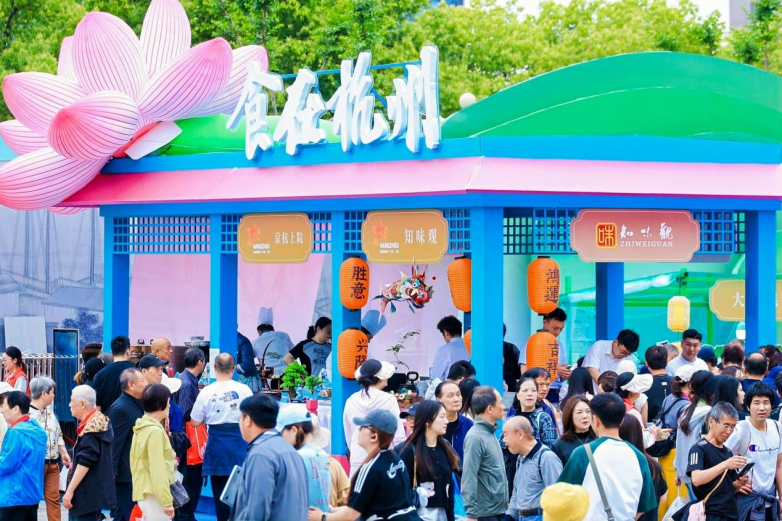
千年运河润宋韵 百味杭城展风华
Zhong Guo Shi Pin Wang· 2025-04-30 07:15
Core Insights - The "Taste of Zhejiang" food festival successfully showcased Hangzhou cuisine, integrating Song Dynasty culture and attracting significant consumer participation [1][9] Group 1: Event Overview - The event took place from April 24 to 28, 2025, at Wulin Square, marking the third consecutive year of the festival [1] - This year's theme revolved around the Grand Canal, featuring diverse activities such as exhibitions, performances, competitions, and sales [1][3] Group 2: Culinary Highlights - The festival highlighted various local delicacies, with popular items including the Southern Mizu's big buns, which sold over 1,000 daily, and the new internet-famous Wang Rishun's freshly made pancakes [4] - Unique dishes like the vodka crayfish and the matcha ice cream from Yuhang became trendy, with daily sales exceeding 10,000 yuan [4] Group 3: Technological Integration - The event incorporated technology into traditional cuisine, featuring innovations like smart sugar painting robots and 3D-printed chocolates to attract younger audiences [6] - The launch of the "2024 Top Ten Hangzhou Dishes" showcased a blend of traditional and modern culinary techniques [6] Group 4: Economic Impact - The festival attracted over 350,000 visitors, generating nearly 1.5 million yuan in on-site transactions across 12 districts [9] - Direct consumer spending surpassed 27 million yuan, contributing to a 45% year-on-year increase in surrounding commercial activity [9] Group 5: Strategic Development - The event served as a platform for promoting the "New Six Famous" initiative, focusing on cultivating leading restaurants and chefs in Hangzhou [11] - The integration of cultural, commercial, and tourism elements aims to enhance the internationalization and standardization of Hangzhou cuisine [11]