公益宝贝

Search documents
从李亚鹏嫣然医院到大企业,可持续公益到底有多难?阿里、腾讯、万科、宁德时代等巨头给出不同模式
Mei Ri Jing Ji Xin Wen· 2026-02-01 05:54
Core Viewpoint - The article discusses the challenges and strategies of corporate philanthropy in China, highlighting the need for sustainable models that integrate social responsibility into business operations. It emphasizes that relying solely on a few individuals for charitable efforts is not sustainable in the long run [1][2]. Group 1: Corporate Philanthropy Models - Five main types of corporate philanthropy are identified among the top 50 companies in China: 1. **Participation by Everyone**: Companies like Tencent encourage public involvement through low-barrier donation options, such as the "Fenfen Donation" program, which has engaged 400 million users by the end of 2024 [2][3]. 2. **Technical or Industrial Support**: Companies like CATL engage in rural revitalization through initiatives that support local agriculture, such as the "I Have an Acre of Land" program, which has reclaimed 280 acres of wasteland [3][4]. 3. **Establishment of Charitable Trusts/Funds**: Many companies, including Vanke, have set up foundations that have collectively invested over 1 billion yuan in various social causes by the end of 2024 [4]. 4. **Creating Charity IPs**: Notable examples include Ping An's Hope Primary Schools, which have supported over 31,000 students and trained over 20,000 rural teachers [4][5]. 5. **Direct Charitable Donations**: This straightforward approach remains a primary method for many companies, although it is seen as less sustainable [4][5]. Group 2: Sustainability of Philanthropic Models - Among the five models, "Technical or Industrial Support" is considered the most sustainable, as it aligns social needs with business capabilities, allowing for a synergy between social and commercial value [5][6]. - Establishing charitable trusts or funds is also viewed as sustainable, as it allows for independent management of social issues, facilitating long-term planning [5][6]. - The "Participation by Everyone" model enhances brand image and is well-suited for platform companies like Tencent, while the "Charity IP" model maximizes brand benefits [5][6]. Group 3: Challenges in Corporate Philanthropy - Companies face significant challenges in creating sustainable philanthropic models, including the need for strategic integration of philanthropy into business operations and the establishment of a culture that promotes ongoing participation [11][12]. - The lack of dedicated personnel in many corporate foundations raises concerns about the effectiveness and management of charitable initiatives [8][9]. - A comprehensive approach to philanthropy is necessary, requiring professional management processes and a clear understanding of social issues to ensure long-term impact [12][13]. Group 4: Financial Contributions and Impact - In 2024, corporate donations accounted for 983 billion yuan, representing 74.21% of total charitable contributions in China, underscoring the critical role of businesses in philanthropy [8]. - Notable large donations include BYD's commitment of 3 billion yuan to education and significant stock donations from individuals supporting educational institutions [8][9]. - The article highlights the diverse forms of donations, including cash, stocks, and services, reflecting a growing trend in corporate philanthropy [8].





闲鱼再亮相联合国气候大会,数字化赋能让减碳成为每个人的日常
Yang Zi Wan Bao Wang· 2025-11-20 10:39
Core Insights - The 30th United Nations Climate Change Conference (COP30) was held in Belém, Brazil, where Xianyu showcased its digital empowerment in the circulation of idle goods, reporting that 7 million idle items are posted daily on its platform, with a 30% year-on-year increase in daily transaction volume [1][3]. Group 1: Digital Empowerment and AI Integration - Xianyu's Public Affairs Director, Tong Shuting, highlighted that approximately two-thirds of global carbon emissions are related to household consumption, making it crucial to reduce carbon emissions on the consumption side. The trading and reuse of idle goods can significantly mitigate resource and energy consumption associated with new product manufacturing [3]. - The integration of AI technology has lowered the barriers for ordinary people to participate in idle trading, with features like AI publishing and AI intelligent management addressing sellers' concerns about posting items and managing sales. AI tools such as "AI Smart Search" and "AI Market Trends" alleviate buyers' worries about selection and pricing [3]. - The AI capabilities have led to a 10% increase in the sales of newly listed items on the same day, enhancing the efficiency of idle goods transactions by addressing the non-standardization of items and the non-professionalism of both buyers and sellers [3]. Group 2: Sustainable and Engaging Participation Mechanisms - Xianyu has developed a sustainable and engaging green participation mechanism by embedding philanthropy into idle trading. The "Charity Baby" feature allows users to select donation proportions and projects when posting idle items, resulting in over 3.91 million yuan donated from 3.85 million charity items posted by approximately 5.6 million users over two years [4]. - The collaboration with Ant Forest introduced the "Magical Fish Pond," which converts users' green behaviors in idle trading into measurable green energy, generating nearly 1,400 tons of green energy in just two months, equivalent to planting 7,700 saxaul trees [7]. - The "Give Goods Society" initiative, launched in partnership with Alibaba Public Welfare and the China Environmental Protection Foundation, facilitates precise matching of idle goods to those in need, with over 90% of users claiming two or more charitable needs since its launch [7]. Group 3: Long-term Goals and Climate Action - This year marks Xianyu's third participation in the UN Climate Conference, aiming to enable every individual to easily engage in climate action through its "SEED" carbon reduction model and advanced AI technology. The company aspires to help society reduce carbon emissions by 55 million tons by 2030, allowing more people to participate in idle circulation with zero barriers [8].

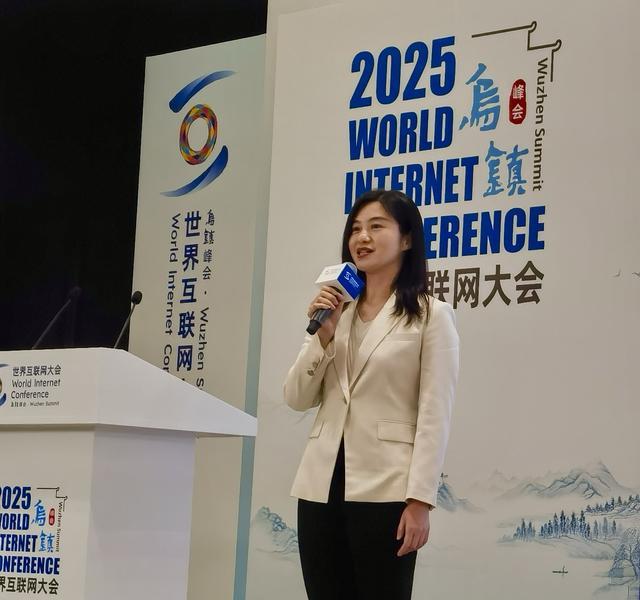
世界互联网大会:阿里公益宣布明年少年云“AI云教室”将超400间
Huan Qiu Wang Zi Xun· 2025-11-06 07:24
Core Viewpoint - Alibaba's public welfare initiative aims to bridge the digital education gap in rural areas by establishing over 400 "AI Cloud Classrooms" by 2026, enhancing access to quality education for children and youth in underdeveloped regions [1][3]. Group 1: AI Cloud Classrooms Initiative - Alibaba announced plans to build more than 400 AI Cloud Classrooms in rural areas by 2026, continuing its investment in educational resources [1]. - The "Youth Cloud Learning Program," initiated in 2021, utilizes advanced cloud computing and AI technologies to create digital learning environments [3]. - As of now, over 300 AI Cloud Classrooms have been established across 25 provinces, benefiting more than 300,000 rural teachers and students [3]. Group 2: Educational Impact and Recognition - The AI Cloud Classrooms have reportedly improved students' information literacy and sparked their interest and creativity in learning [3]. - The "Youth Cloud" project received the "2025 Global Smart Education Innovation Award (Practical Innovation)," distinguishing itself among over a hundred global projects [3]. Group 3: Broader Educational Initiatives - Alibaba's "Orange Point Classmate" platform offers free access to a curriculum in AI, digital commerce, and cloud computing, attracting over 550,000 young learners globally [5]. - The platform has launched 337 courses, with over 10,000 students achieving employment or entrepreneurial transitions [5]. - The "Orange Point Classmate" initiative has developed AI interview functionalities to assist students in understanding their skills relative to job requirements [5].
马云最新发声!下一个十年......
券商中国· 2025-03-04 01:25
Core Viewpoint - The article highlights the significance of Alibaba's commitment to public welfare over the past decade, emphasizing the impact of employee-driven initiatives and the integration of technology in addressing social issues [2][7][8]. Group 1: Awards and Initiatives - The 2025 Alibaba Public Welfare List was announced, featuring 13 awarded projects including "Lemon Baby Care Action," "Xianyu Public Welfare Baby," and "Ele.me 'Elderly Meal' Digital Community Service" [1]. - The "Ant Forest" project has successfully planted 548 million trees over eight years, symbolizing public participation in environmental protection [4]. - The "Reunion System," developed in collaboration with the Ministry of Public Security, has helped recover 5,132 missing children since its launch [4]. Group 2: Employee Engagement - Since 2015, Alibaba has fostered a culture of employee involvement in public welfare, with over 300 "Happiness Groups" formed, comprising 171,123 volunteers who contributed 3,508,227.9 hours of service [5]. - The initiative "Three Hours of Public Welfare" encourages employees to dedicate at least three hours annually to volunteer work, reflecting a long-term commitment to social responsibility [2][4]. Group 3: Technological Integration - Alibaba has increasingly utilized technology to tackle social issues, as seen in the "Elderly Meal" service, which enhances connections between delivery personnel and elderly customers [7]. - The AI-driven multi-cancer early screening project has successfully identified 393 cases of cancerous changes through free screenings in grassroots hospitals [7]. Group 4: Sustainability and Impact - The "Public Welfare Baby" project on the Taobao platform has operated for nearly 20 years, with 1.6 billion online public welfare products and over 600 million donations benefiting 60 million people [8]. - Alibaba's leadership emphasizes the importance of sustainable projects and the integration of public welfare into business operations to enhance overall impact [8].