军大衣

Search documents
双十一卖不动了?23年销售额1.13万亿,24年1.44万亿,25年太意外
Sou Hu Cai Jing· 2025-11-18 15:42
Core Insights - The 2025 Double Eleven shopping festival experienced a significant increase in total transaction volume, reaching 1.6 trillion yuan, up from 1.44 trillion yuan the previous year, despite a noticeable decline in consumer engagement and enthusiasm [1][19]. Group 1: Consumer Behavior Changes - The current consumer mindset reflects a shift towards rational consumption, with 72% of consumers prioritizing practical value over price discounts during this year's event [3][5]. - Consumers are increasingly willing to invest in durable and high-quality products rather than opting for cheaper, low-quality items, indicating a growing preference for long-term value [5][15]. - The complexity of promotional rules and the extended duration of sales events have led to consumer fatigue, with over 60% of respondents opting out due to cumbersome processes [7][9]. Group 2: Platform Strategies - E-commerce platforms are evolving their strategies from "invitation-based purchasing" to "intelligent guidance," utilizing AI for personalized shopping experiences [9][15]. - The integration of online and offline shopping experiences has become more pronounced, with physical stores promoting online discounts, contributing to over 20% of sales during the event [11][15]. - Platforms are investing significantly in service enhancements, with a 40% increase in service-related expenditures compared to the previous year, marking a transition from price competition to value competition [15][17]. Group 3: Market Evolution - The regulatory environment has improved, with measures against unfair practices like "price inflation" and "data discrimination," ensuring a more transparent market [17]. - The transformation of the Double Eleven event from a simple promotional activity to a foundational element of the commercial ecosystem reflects its maturation, with sales growing from tens of millions in 2009 to trillions today [17][19]. - The case of Sangpo Village illustrates the challenges faced by traditional e-commerce models in adapting to the current consumer landscape, highlighting the need for businesses to evolve [13][15].


一年五千亿,河北电商凭啥打败义乌,成了价格屠夫?北方黑马崛起
Sou Hu Cai Jing· 2025-11-03 21:05
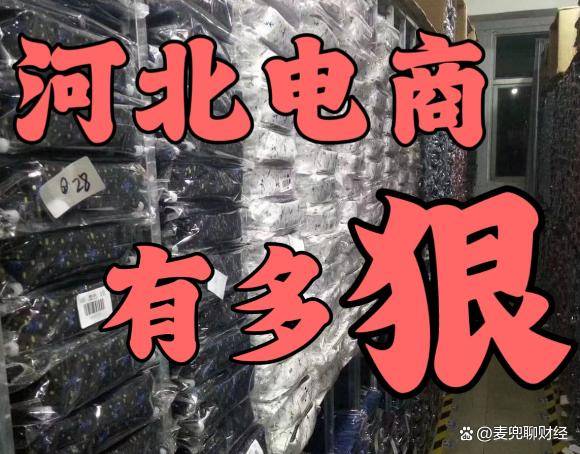
Core Insights - A quiet revolution in e-commerce is taking place in Hebei, redefining competition rules with astonishingly low prices [1][3] - Hebei's online retail sales reached 4940.7 billion yuan in 2024, growing by 8.8%, nearing the 5000 billion mark [3] - The province has become the fourth largest in express delivery volume, completing 17.3 billion packages in the first two months of 2024, with a year-on-year growth of 41.8% [3] E-commerce Growth - Hebei's e-commerce growth is evident in the online retail sales of physical goods, which reached 4405.4 billion yuan in 2024, a 7.1% increase [5] - Cross-border e-commerce in Hebei saw a remarkable growth rate of 31.9% last year, with significant increases in key areas like Xiong'an New Area and Caofeidian Comprehensive Bonded Zone [5] Industrial Clusters - Hebei boasts 333 county-level industrial clusters, with 17 recognized as characteristic industrial clusters by the Ministry of Industry and Information Technology, ranking second in the nation [7] - The province is home to major production bases, such as Baoding, known as the "World Capital of Bags," producing 1 billion bags annually, accounting for about 30% of national output [7] Cost Control Advantages - Hebei's core competitive advantage lies in extreme cost control, with production costs minimized through low rent and labor costs [9][11] - Many factories are converted from residential buildings, resulting in zero or minimal rent, and labor costs are significantly lower than in other regions [9] Pricing Strategy - The cost advantages translate into lower pricing for end products, with significant price differences compared to southern counterparts [13] - For example, a bottle of iced tea priced at 4 yuan in supermarkets can be produced in Hebei for just 0.85 yuan [13] Grassroots Business Models - The operational model in Hebei is characterized by a grassroots approach, with many businesses adopting a "low margin, high volume" strategy [14] - Some merchants use loss-leader pricing to attract customers, selling products at a loss to gain market share [16] Logistics Network - Hebei has established over 1200 county and township e-commerce logistics stations, achieving a coverage rate of 92% [11] - The province's logistics network, supported by major transit centers, enhances delivery efficiency and reduces shipping costs [11]
河北跨境电商,“卷”出圈了!
Sou Hu Cai Jing· 2025-10-09 04:06
Core Viewpoint - The article highlights the rapid rise of Hebei province in the cross-border e-commerce sector, showcasing its unique strategies and competitive advantages that have allowed it to thrive amidst fierce competition from established regions like Guangdong and Zhejiang [2][12]. Group 1: Industry Growth and Statistics - Hebei's total foreign trade import and export value is projected to reach 615 billion yuan in 2024, with a year-on-year growth of 5.5%. The cross-border e-commerce import and export value is expected to grow by 56.2%, significantly outpacing the national average [2]. - In the first half of 2025, Hebei's foreign trade import and export value reached 290.29 billion yuan, with nearly 18,000 foreign trade enterprises, marking a year-on-year increase of 14.2% [5]. - The textile industry in Hebei, particularly in the Jinzhou textile industrial belt, generated a revenue of 14.715 billion yuan in 2024, reflecting a year-on-year growth of 10.5% [16]. Group 2: Unique Strategies of Hebei Enterprises - Hebei enterprises are leveraging a "卷文化" (competitive culture) to identify and sell products that others overlook, such as the steel shovels from Huating Zhonghui, which achieved sales of 24 million yuan in 2024 [6][8]. - Companies like Dongfei Textile have successfully adapted to market demands by innovating their product offerings, resulting in a sales increase to over 50 million yuan in 2024, doubling from the previous year [8]. - The low-cost production model in Hebei allows companies to maintain profitability while offering competitive prices, with many products being sold at significantly lower prices than competitors [14][22]. Group 3: Supportive Policies and Infrastructure - Hebei's government has implemented multiple policies to support the development of cross-border e-commerce, including the "Ten Policies to Support Cross-Border E-Commerce Development" in 2023, aimed at fostering industry growth [12]. - The province's geographical advantages, such as proximity to major ports like Tianjin and Qinhuangdao, enhance logistics efficiency and reduce transportation costs, further benefiting cross-border e-commerce operations [15]. - The establishment of cross-border e-commerce industrial parks in cities like Shijiazhuang has facilitated the growth of various industries, including textiles and biomedicine, contributing to the overall success of Hebei's e-commerce sector [16][20]. Group 4: Challenges and Future Directions - Despite the rapid growth, Hebei faces challenges in transitioning from a low-cost model to a brand-oriented approach, with many products lacking brand recognition and relying heavily on price competition [22][25]. - The emergence of successful case studies, such as Ming Shang De, which transitioned from OEM to building its own brands, indicates a potential pathway for other Hebei enterprises to follow [25]. - The future of Hebei's cross-border e-commerce is poised for transformation, moving from a focus on low prices to establishing a reputation for quality and brand identity in the global market [26].

重走抗战路,一定要去一趟宝鸡!
Zhong Guo Xin Wen Wang· 2025-08-05 07:59
Group 1 - Baoji, known as the birthplace of Zhou and Qin civilization, has a rich history in bronze production and is home to significant historical artifacts like the Stone Drum [2][4] - The city has a resilient spirit, nurturing generations of hardworking people, and has been a vital industrial hub, especially during the Anti-Japanese War [4][7] - During the war, many patriotic industrial enterprises relocated to Baoji, establishing factories that supported the front lines and contributed to a significant industrial narrative of "saving the nation through industry" [7][9] Group 2 - The Changleyuan Anti-Japanese Industrial Site in Baoji contains four historical relics, including the largest "cave factory" from the war period, showcasing the region's industrial heritage [9][11] - In 1938, as Japanese forces advanced, 15 enterprises, including the Shinxin Spinning Factory, relocated to Baoji, forming the "Qinbao Ten-Mile Industrial Zone," which accounted for 20.56% of national industrial enterprises at that time [11][20] - The cave factory produced 432,000 pieces of cotton cloth and 64,000 tons of cotton yarn, significantly supporting the war effort [20][22] Group 3 - The relocation of industries to Baoji brought advanced management concepts and production equipment, which helped the local economy grow [22][24] - By 1951, the Shinxin Spinning Factory contributed to the development of the Northwest's industrial landscape by sending managers and technicians to various factories [24][26] - Today, Baoji has transformed into a major industrial city, particularly in the automotive and titanium materials sectors, with a projected automotive industry output value of 60 billion yuan in 2024 [29][35] Group 4 - Baoji is recognized as "China's Titanium Valley," hosting over 600 titanium enterprises, and its titanium industry ranks first globally, with products used in various high-tech fields [37][38] - The city is actively developing emerging industries and has become a significant production base for mid-to-high-end CNC machine tools, emphasizing green development and environmental protection [38][40] - The Changleyuan Anti-Japanese Industrial Site stands as a testament to the resilience and innovative spirit of the Chinese people, symbolizing the enduring industrial legacy of Baoji [42]