
农产品质量安全承诺达标合格证

Search documents
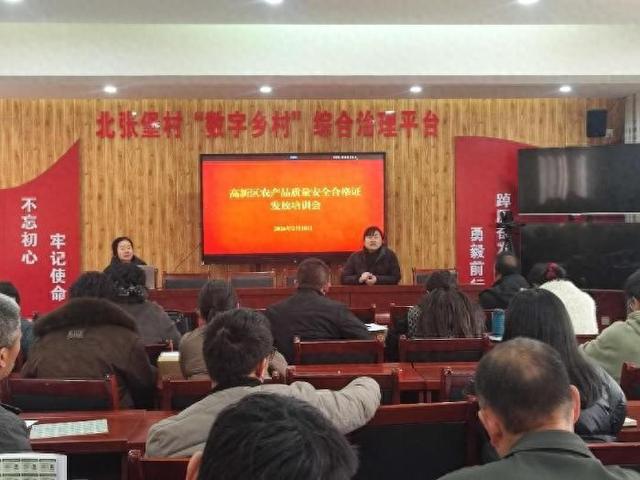
西安高新区召开农产品质量安全承诺达标合格证发放会议
Zhong Guo Xin Wen Wang· 2026-02-11 11:13
Group 1 - The meeting held on February 10 focused on the issuance of agricultural product quality safety commitment certificates in the North Zhangbao Village of Xi'an High-tech Zone [1] - A total of 10 coding machines and 160,000 paper commitment certificates were distributed during the meeting, attended by 50 representatives from agricultural street offices and planting bases [1][3] - The meeting included training on the operation of the certification coding machines and the process for activating and issuing paper certificates, promoting the implementation of the management measures for agricultural product quality safety commitment certificates [3] Group 2 - To date, the High-tech Zone has distributed a total of 8 large commitment certificate coding machines to agricultural street offices, 22 small handheld coding machines to large-scale farmers, and 400,000 paper commitment certificates to small-scale farmers [5]


新版“身份证”筑牢农产品安全防线
Ke Ji Ri Bao· 2026-02-03 01:28
Core Points - The Ministry of Agriculture and Rural Affairs has officially implemented the "Management Measures for the Quality Safety Commitment Certificate of Agricultural Products," introducing a new quality safety commitment certificate for agricultural products [1][2] - The new certificate system is a significant innovation aimed at ensuring agricultural product quality safety in response to new requirements and circumstances [1] - The revised Agricultural Product Quality Safety Law of 2022 mandates the establishment of the certificate system, requiring agricultural producers and cooperatives to issue and retain these certificates [1] Summary by Sections Certificate System Implementation - The new certificate system replaces the previous trial phase, which had limited binding power and was voluntary [1] - Agricultural producers and cooperatives are now required to issue certificates based on quality safety control or testing results [1] - Entities involved in the purchase of agricultural products must collect and retain the certificates issued by producers, and must reissue certificates if they mix or repackage the products [1] Standardization and Regulation - The previous system lacked a unified national certificate template, leading to varied designs by local agricultural departments [2] - The new measures specify that the certificate must include details such as commitment items, basis for commitment, product name, quantity, origin, issuance date, and contact information [2] - The Ministry will promote electronic certificates and phase out manually filled ones [2] Compliance and Enforcement - The new measures detail five specific violations related to the issuance, collection, and retention of certificates, with penalties including education, correction orders, or fines [2] - Violations will be recorded in credit records, with measures for both incentives for compliance and penalties for non-compliance [2] - The certificate serves not only as a quality safety "identity card" but also as a "pass" for standardization and branding in the agricultural industry [2]
农产品为何启用新版“身份证”
Jing Ji Ri Bao· 2026-02-02 22:13
Core Viewpoint - The introduction of the new agricultural product quality safety commitment certificate serves as a "ID card" for agricultural products, enhancing quality awareness and brand consciousness among producers, and promoting green production technology to improve product quality from the source [1][3]. Group 1: Certificate Implementation - The new agricultural product quality safety commitment certificate will be fully implemented starting February 1, providing essential information such as product name, origin, issuance time, and contact details [1]. - The certificate is a proof that the agricultural products sold have not used banned pesticides or veterinary drugs, and that the residues of conventional pesticides and veterinary drugs are within safe limits [1][2]. - The management of agricultural product quality safety involves both the Ministry of Agriculture and Rural Affairs and market regulatory departments, focusing on source control and market control respectively [1]. Group 2: Responsibilities and Regulations - Agricultural producers and cooperatives are required to issue the quality commitment certificate, while those involved in the purchase of agricultural products must collect and retain these certificates [2]. - The revised Agricultural Product Quality Safety Law, effective from 2023, has increased penalties for violations, while also considering the realities of small farmers by imposing lighter penalties [2]. - The principle of "who produces, who is responsible; who sells, who is accountable" is emphasized in the new regulations [2]. Group 3: Quality Assurance and Consumer Trust - Consumers tend to trust agricultural products sold by chain supermarkets more due to better information disclosure and traceability systems [3]. - The certificate system aims to enhance the traceability of products and accountability of producers, aligning with the development of technology-driven, green, quality, and brand agriculture [3]. - While the certificate indicates a commitment to quality, it does not guarantee that products are free from safety risks, highlighting the need for robust testing and traceability systems [3]. Group 4: Current Status and Future Goals - The quality awareness among agricultural producers has improved, with the national monitoring pass rate for agricultural product quality safety remaining above 97% for several years, aiming for 98% by 2025 [4]. - Despite improvements, there are still quality safety risks, and even a 1% non-compliance rate can represent a significant number of products given the large volume of agricultural output [4]. - Both producers and regulatory bodies must take responsibility to ensure the effective implementation of the certificate system, safeguarding food safety for consumers [4].
今起 农产品全面启用新版“身份证”
Xin Lang Cai Jing· 2026-01-31 18:30
Core Viewpoint - The new "identity card" for agricultural products, known as the Agricultural Product Quality Safety Commitment Certificate, will be fully implemented starting February 1, 2026, ensuring that all major agricultural products have a quality safety proof [6]. Group 1: Regulatory Framework - The new regulations encompass a wide range of agricultural products, including vegetables, fruits, tea leaves, livestock, poultry, eggs, and aquaculture products [3]. - Producers are required to commit that their products do not contain banned pesticides, veterinary drugs, or other compounds, and that residues of conventional pesticides and veterinary drugs do not exceed standards [4][7]. - Agricultural production enterprises and cooperatives must issue quality certificates for each production batch and retain records for at least six months, while farmers are encouraged to do the same [4][7]. Group 2: Compliance and Enforcement - Buyers must collect the quality certificate before purchasing products; failure to do so will result in the inability to acquire the products [4][7]. - Online sales of agricultural products must also include the quality certificate, with encouragement to display it prominently on sales pages [5][9]. - Non-compliance with the certificate issuance and retention will lead to penalties ranging from 100 to 1,000 yuan, and such violations will be recorded in credit histories, affecting future business operations [9]. Group 3: Information Transparency - The quality certificate will include essential information such as product name, quantity, origin, issuance date, and contact details, which can be displayed on packaging [7]. - The use of QR codes is encouraged for easy access to comprehensive product information, enhancing transparency from farm to table [6][7]. Group 4: Accountability and Market Impact - The new system shifts the responsibility of product safety from a default assumption to an active commitment by producers, aligning with the principle of "whoever produces is responsible; whoever sells is accountable" [11]. - The quality certificate serves as a legal guarantee of responsibility, increasing the costs and risks for non-compliant producers, thereby promoting higher standards and potentially leading to market elimination of poor-quality producers [11].
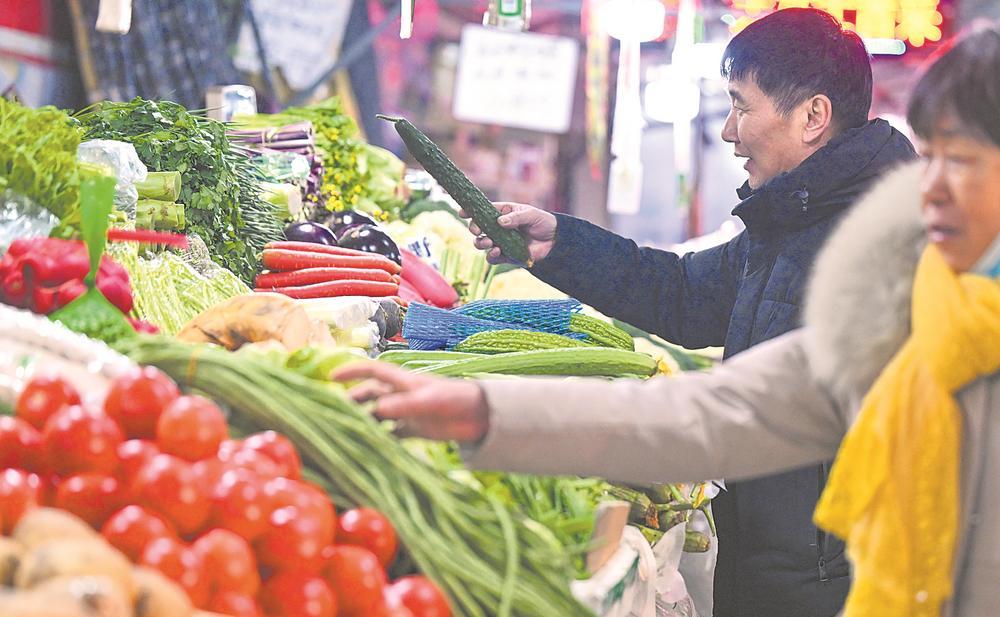
2月1日起,我国农产品将全面启用新版“身份证”
Bei Jing Shang Bao· 2026-01-31 08:48
Core Viewpoint - Starting from February 1, 2026, China will implement a new "identity card" for agricultural products, known as the Agricultural Product Quality Safety Commitment Certificate, which will provide quality safety proof for all listed fruits, livestock, and aquatic products [1][2] Group 1: Regulatory Changes - The Ministry of Agriculture and Rural Affairs has issued the management measures for the Agricultural Product Quality Safety Commitment Certificate, which will be mandatory for all agricultural products [1] - The new regulations require producers to ensure that their products do not contain banned pesticides, veterinary drugs, or other harmful substances, and that residues of conventional pesticides and veterinary drugs do not exceed limits [1] Group 2: Responsibilities and Compliance - Agricultural producers and cooperatives are responsible for ensuring product quality and must maintain production records and strengthen quality control throughout the production process [2] - Failure to issue, collect, or retain the quality certificates as required will result in criticism and a deadline for correction, with fines ranging from 100 to 1,000 yuan for non-compliance [2] - Non-compliance will also be recorded in credit records, affecting the reputation and future development of the producers [2]
我国农产品将全面启用新版“身份证”——农产品质量安全承诺达标合格证
Yang Shi Xin Wen· 2026-01-31 06:25
Core Viewpoint - The new "Quality Safety Commitment Certificate" for agricultural products will be implemented in China starting February 1, 2026, ensuring that every listed agricultural product has a quality safety proof [1]. Group 1: Certificate Overview - The Quality Safety Commitment Certificate is a proof issued by agricultural producers, cooperatives, and purchasing units based on quality control and testing results [3]. - Producers must commit that their products do not use banned pesticides or veterinary drugs, and that residues of conventional pesticides and veterinary drugs do not exceed standards [3]. - The management scope includes major agricultural products such as vegetables, fruits, tea leaves, livestock, eggs, and aquaculture products [3]. Group 2: Responsibilities and Compliance - Agricultural producers and cooperatives are responsible for ensuring product quality and maintaining production records, while purchasers must collect and retain the certificates [5]. - Online sales of agricultural products must also include the Quality Safety Commitment Certificate, with encouragement to display it prominently on sales pages [6]. - Failure to issue, collect, or retain the certificates will result in penalties ranging from 100 to 1,000 yuan, and violations will be recorded in credit histories [7]. Group 3: Legal Implications - The certificate serves as a legal responsibility guarantee, meaning producers cannot evade responsibility for non-compliance by claiming ignorance [10]. - The new system shifts the safety assurance from a default assumption to an active commitment, aligning with the principle of accountability in agricultural production and sales [10]. - The certificate acts as a catalyst for quality improvement, rewarding compliant producers with market trust and better prices while increasing risks for non-compliant ones [10].