农林植保机

Search documents
低空装备产值达520亿,工信部明确下阶段发展思路
Di Yi Cai Jing· 2025-11-30 09:37
Core Viewpoint - The low-altitude economy is rapidly emerging as a new trillion-level industry, with significant growth potential and opportunities driven by technological integration and policy support [1][3]. Industry Development - The 2025 Low Altitude Equipment Industry Innovation Development Conference will be held in Ordos, Inner Mongolia, focusing on the theme "Intelligent Leadership in Low Altitude, Equipment for the Future" [1]. - The Ministry of Industry and Information Technology (MIIT) reports that the low-altitude equipment industry is expected to achieve an output value of approximately 52 billion yuan in 2024, with an average annual growth rate of over 10% during the 14th Five-Year Plan period [1][3]. - As of now, there are 977 registered companies in the civil unmanned aerial vehicle (UAV) information system, with 3,222 products filed, and over 489,000 UAVs have received flight approval [1]. Market Size and Future Projections - The low-altitude economy market size is projected to reach 1.5 trillion yuan in 2023 and is expected to exceed 2 trillion yuan by 2030 [3]. - The low-altitude equipment industry serves as the material and technical foundation for developing the low-altitude economy, representing a crucial direction for fostering new productive forces and economic growth [3]. Policy and Strategic Initiatives - The MIIT emphasizes the need for top-level design, focusing on intelligent, green, and integrated development to build a modern low-altitude equipment industry system [3]. - Key technologies such as aviation power batteries and flight control systems will be prioritized, with efforts to cultivate specialized and innovative enterprises [3][4]. Regional Development and Applications - Guangdong province leads in low-altitude economic development, with a market size exceeding 100 billion yuan and over 15,000 related enterprises [5]. - Inner Mongolia has introduced several policy documents to promote low-altitude economic development, aiming to create integrated industrial development in manufacturing, flying, and service sectors [6]. Research and Development - The conference released five research reports, including a technical roadmap for low-altitude aircraft power batteries and a development path for low-altitude intelligent networking systems [6]. - The development path for low-altitude intelligent networking emphasizes a systematic approach to ensure safety and capability mapping, facilitating scalable development in the low-altitude economy [6].

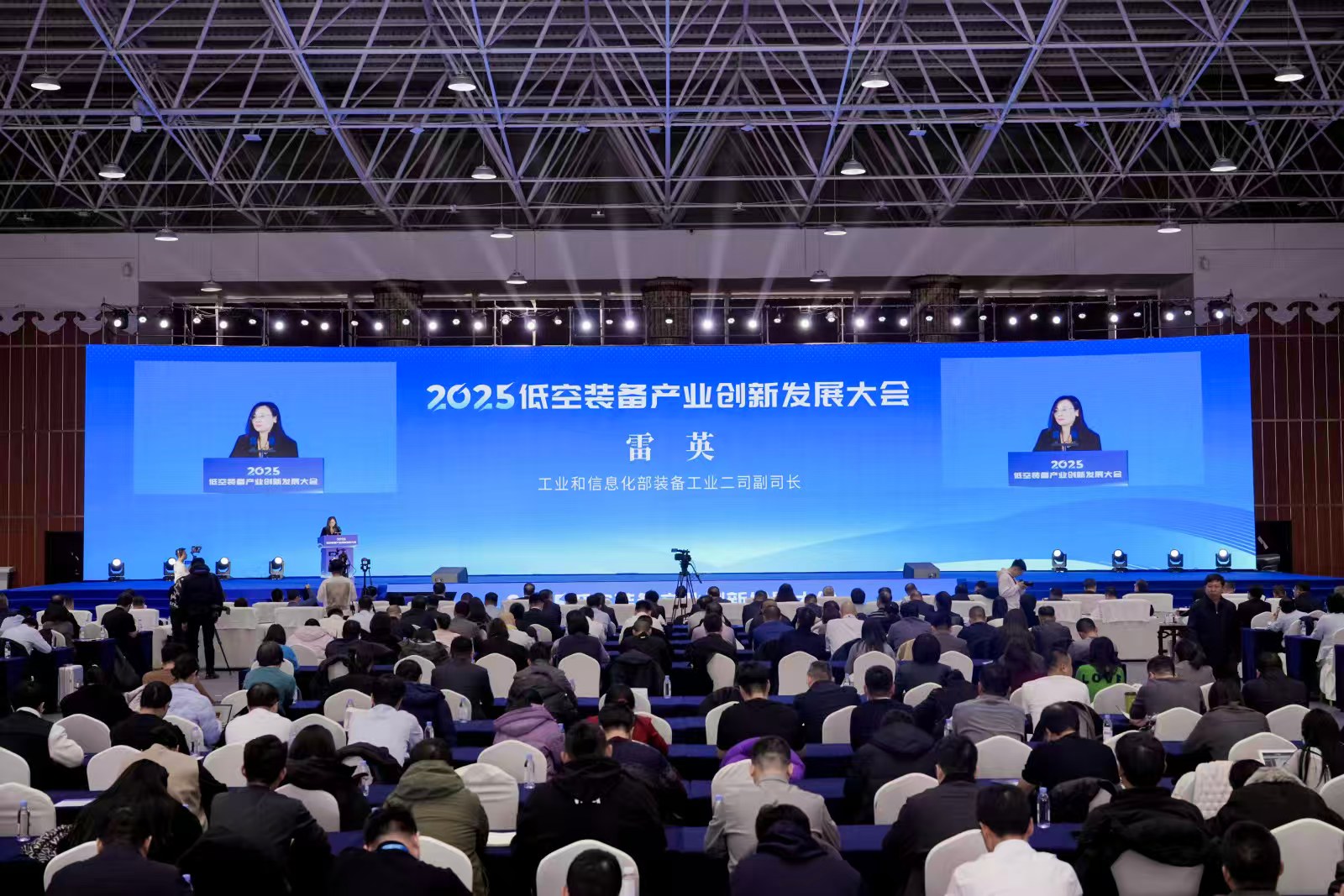
新技术融合带来新机遇 我国低空装备产业发展展现巨大潜力
Yang Shi Wang· 2025-11-30 04:07
Core Viewpoint - China is set to promote the safe and healthy development of the low-altitude equipment industry, enhancing its development path across multiple levels as part of the "14th Five-Year Plan" [1] Group 1: Industry Development - The 2025 Low Altitude Equipment Industry Innovation Development Conference in Inner Mongolia released five research reports, including a roadmap for power battery technology and a development path for low-altitude intelligent networking systems [3] - The energy density of mass-produced power battery systems is expected to reach 220-250 watt-hours per kilogram by 2025 and to exceed 330-400 watt-hours per kilogram by 2030 [3] - A framework for the low-altitude equipment industry standard system has been proposed, covering seven areas including low-altitude aircraft and infrastructure [3] Group 2: Technological Integration - The integration of new energy and next-generation information technology with the low-altitude equipment industry is accelerating, presenting new opportunities and showcasing significant potential for development [5] - Key technologies such as aviation power batteries and flight control systems will be the focus, along with safety operation technologies like low-altitude intelligent networking [9] Group 3: Strategic Initiatives - The Ministry of Industry and Information Technology plans to strengthen top-level design, focusing on intelligent, green, and integrated development to enrich the product spectrum of low-altitude equipment [7] - There will be an emphasis on building a high-level industrial supply chain and cultivating advanced industrial clusters to support the high-quality development of the low-altitude economy [7] - The approach will prioritize logistics transportation, agricultural operations, emergency rescue, and short-distance passenger transport, with a phased implementation strategy for applications like cargo drones and agricultural protection machines [9]
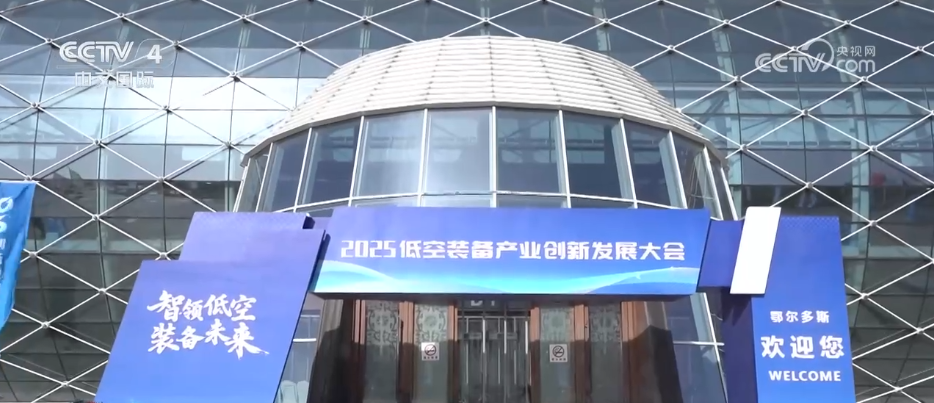
我国将稳妥推动低空装备产业安全健康发展 “多点发力”完善发展路径
Yang Shi Wang· 2025-11-30 02:48
Core Insights - China is set to promote the safe and healthy development of the low-altitude equipment industry, focusing on multiple aspects to improve the development path of the industry [1][3] Group 1: Industry Development Plans - The Ministry of Industry and Information Technology (MIIT) has released several research reports, including a roadmap for power battery technology for low-altitude aircraft, aiming for energy density of 220-250 Wh/kg by 2025 and 330-400 Wh/kg by 2030 [1] - A framework for the standard system of the low-altitude equipment industry has been proposed, covering seven areas including low-altitude aircraft, infrastructure, and test flights [1] Group 2: Technological Integration and Opportunities - The integration of new energy and next-generation information technology with the low-altitude equipment industry is creating new opportunities, indicating a positive development trend and significant potential for the industry [3] Group 3: Strategic Focus and Goals - The MIIT plans to enhance top-level design with a focus on intelligence, greenness, and integration, aiming to enrich the product spectrum of low-altitude equipment and build a high-level industrial and supply chain [5] - Key technologies such as aviation power batteries and flight control systems will be prioritized, along with the promotion of application demonstrations for low-altitude equipment in logistics, agricultural operations, emergency rescue, and short-distance passenger transport [7]

刚刚,利好来了!万亿市场沸腾!
Sou Hu Cai Jing· 2025-11-23 08:07
Core Insights - The low-altitude economy in China is experiencing robust growth, with projections indicating a market size of 1.5 trillion yuan by 2025 and potentially exceeding 2 trillion yuan by 2030 [1][3]. Group 1: Market Growth and Projections - The low-altitude economy is recognized as a strategic emerging industry, transitioning from a technology catch-up phase to a leading position in certain areas [3]. - The rapid expansion of the industry is supported by significant breakthroughs in low-altitude equipment, with 969 companies registered in the civil unmanned aerial vehicle product information system and over 478,000 aircraft [3][5]. - The low-altitude logistics sector is particularly dynamic, with over 140 new low-altitude logistics routes expected to open in 2024, leading to an estimated 48 billion orders in the instant delivery sector [3]. Group 2: Policy Support and Infrastructure Development - The Ministry of Industry and Information Technology (MIIT) is actively promoting the development of the civil aviation and low-altitude equipment industries, emphasizing the importance of infrastructure and resource utilization [2][6]. - Recent government measures encourage private investment in low-altitude economic infrastructure and aim to optimize policies for satellite communication and commercial space projects [7]. - The MIIT is focusing on enhancing the technological innovation capabilities of the industry and fostering collaboration across the supply chain [6][8]. Group 3: Challenges and Strategic Initiatives - Despite the growth, the low-altitude economy faces challenges related to infrastructure layout, airspace resource utilization, and the need for innovative business models [4]. - The government is implementing a comprehensive approach to address these challenges, including infrastructure development, airspace optimization, and ecosystem integration [4][8]. - The MIIT aims to cultivate specialized enterprises and enhance regional collaboration to strengthen the low-altitude industry's overall capabilities [4][6].
刚刚,利好来了!万亿市场沸腾!
券商中国· 2025-11-23 07:47
Core Viewpoint - The low-altitude economy in China is experiencing strong growth, with projections indicating a market size of 1.5 trillion yuan by 2025 and potentially exceeding 2 trillion yuan by 2030 [1][3]. Group 1: Industry Growth and Projections - The low-altitude economy is recognized as a strategic emerging industry, transitioning from a technology catch-up phase to a leading position in certain areas [3]. - The rapid expansion of the industry is supported by significant breakthroughs in low-altitude equipment, with 969 companies registered in the civil unmanned aerial vehicle product information system and over 478 million units [3][6]. - The low-altitude logistics sector is particularly dynamic, with over 140 new low-altitude logistics routes expected to open in 2024 and an order volume of 48 billion in the instant delivery industry [3]. Group 2: Policy Support and Infrastructure Development - The Ministry of Industry and Information Technology (MIIT) is actively promoting the development of the civil aviation and low-altitude equipment industries, emphasizing the importance of infrastructure and commercial model innovation [2][4]. - Recent government measures encourage private investment in low-altitude economic infrastructure and support the establishment of application scenarios across various sectors [8]. - The MIIT aims to enhance the collaborative development of the low-altitude industry by focusing on key enterprises and products, fostering innovation, and integrating new technologies [9]. Group 3: Challenges and Strategic Initiatives - Despite the growth potential, the low-altitude economy faces challenges such as infrastructure layout, airspace resource utilization, and talent shortages [4]. - The government is implementing a multi-faceted approach to overcome these challenges, including infrastructure prioritization, airspace optimization, and ecosystem development [4][8]. - The MIIT is also focusing on typical application scenarios like emergency rescue, logistics, and agricultural protection to promote sustainable business models in low-altitude equipment [7].