低空装备产业

Search documents
青海质量强省建设跑出“加速度”
Xin Lang Cai Jing· 2026-02-08 18:30
Group 1 - The core viewpoint of the articles highlights Qinghai's commitment to high-quality development during the "14th Five-Year Plan" period, emphasizing the establishment of a robust quality infrastructure and improved intellectual property protection [1][2] - Qinghai has innovatively promoted a "1+7+N" national quality infrastructure service system, establishing various testing centers and certification systems to enhance quality across key industries such as renewable energy and low-altitude equipment [1] - The province has achieved significant growth in intellectual property, with patent authorizations increasing from 19,200 at the end of the "13th Five-Year Plan" to 43,700, and trademark registrations rising from 48,500 to 88,900 [2] Group 2 - Qinghai has built a national quality inspection center for Tibetan carpets and raw materials, as well as a one-stop service platform for salt chemical quality infrastructure, enhancing the province's quality assurance capabilities [1] - The establishment of the Hong Kong STC laboratory in Qinghai has facilitated 70 local products, including rainbow trout and goji berries, to gain access to international markets [1] - The province is accelerating the construction of geographical indication protection demonstration areas for products like "Mutual Qingke Wine" and has included "Tibetan Carpets" and "Yushu Cordyceps" in the first batch of national geographical indication protection product guidance catalog [2]
“十四五”低空装备产业产值年均增超10%,产品总数超529万架
Sou Hu Cai Jing· 2026-01-04 01:40
Core Insights - The low-altitude equipment industry in China is experiencing significant growth, with an annual output value growth rate exceeding 10% during the 14th Five-Year Plan period [1][3] - By December 30, 2025, there will be 1,081 registered companies in the low-altitude equipment sector, with 3,623 types of products and a total of over 5.29 million units [1] Group 1: Industry Growth - The low-altitude equipment industry is expanding rapidly, with a consistent annual growth rate of over 10% [1] - As of the end of 2025, there are expected to be 1,081 registered companies and over 5.29 million low-altitude equipment units [1] Group 2: Product Development and Applications - Substantial breakthroughs have been made in the research and application of products, with over 70 domestic equipment types achieving airworthiness certification during the 14th Five-Year Plan [3] - In the drone sector, 18 civil drones have received airworthiness approval, while nearly 30 ton-class drones and around 70 electric vertical takeoff and landing aircraft are in development [3] - The application scenarios for low-altitude equipment are expanding from traditional aviation operations and flight training to agriculture, logistics, and emergency rescue [3] Group 3: Market Trends and Future Outlook - The number of agricultural drones in China has surpassed 200,000, with an annual operational area exceeding 40 million acres [3] - Looking ahead to the 15th Five-Year Plan, the industry aims to accelerate technological innovation and improve industrial standards while promoting innovative applications of low-altitude equipment [3]


“十四五”期间 我国低空装备产业产值年均增速10%以上
Yang Shi Xin Wen· 2026-01-04 00:04
Core Insights - The low-altitude equipment industry in China is expanding rapidly, with an average annual growth rate of over 10% during the 14th Five-Year Plan period [1] - The variety and quantity of low-altitude equipment products are increasing, with over 70 domestic models certified for airworthiness and 18 civil drones approved for operation [1] - The application scenarios for low-altitude equipment are diversifying, moving beyond traditional aviation tasks to include agriculture, logistics, and emergency rescue [3] Industry Growth - By December 30, 2025, 1,081 companies have registered, with 3,623 products recorded and over 5.29 million units [1] - The agricultural drone fleet in China exceeds 200,000 units, covering over 40 million acres annually [3] Future Directions - The industry aims to accelerate technological innovation and enhance safety foundations during the 15th Five-Year Plan period [3] - There will be a focus on integrating technological and industrial innovations, exploring sustainable business models tailored to specific scenarios [5]
低空装备产值达520亿,工信部明确下阶段发展思路
Di Yi Cai Jing· 2025-11-30 09:37
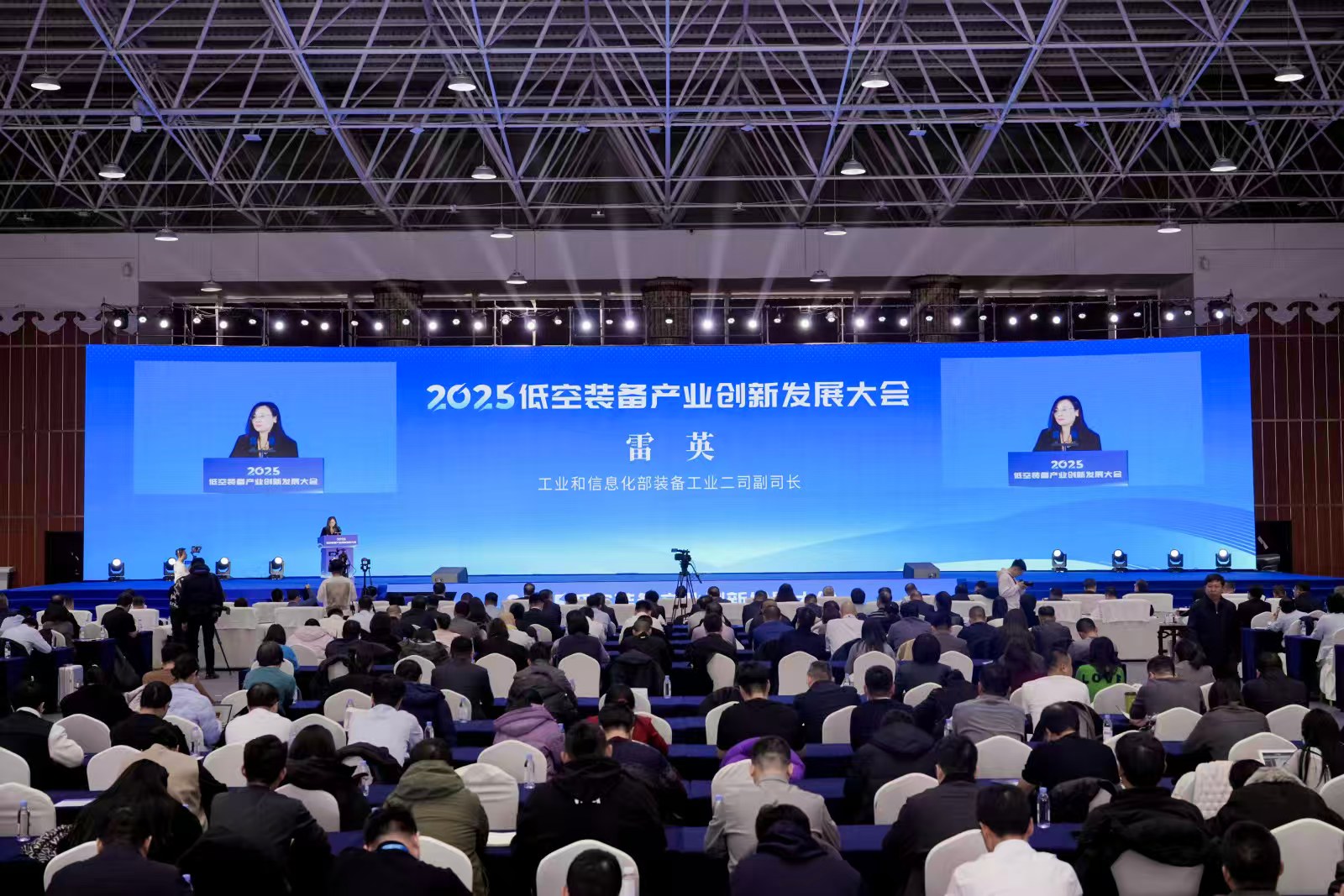
Core Viewpoint - The low-altitude economy is rapidly emerging as a new trillion-level industry, with significant growth potential and opportunities driven by technological integration and policy support [1][3]. Industry Development - The 2025 Low Altitude Equipment Industry Innovation Development Conference will be held in Ordos, Inner Mongolia, focusing on the theme "Intelligent Leadership in Low Altitude, Equipment for the Future" [1]. - The Ministry of Industry and Information Technology (MIIT) reports that the low-altitude equipment industry is expected to achieve an output value of approximately 52 billion yuan in 2024, with an average annual growth rate of over 10% during the 14th Five-Year Plan period [1][3]. - As of now, there are 977 registered companies in the civil unmanned aerial vehicle (UAV) information system, with 3,222 products filed, and over 489,000 UAVs have received flight approval [1]. Market Size and Future Projections - The low-altitude economy market size is projected to reach 1.5 trillion yuan in 2023 and is expected to exceed 2 trillion yuan by 2030 [3]. - The low-altitude equipment industry serves as the material and technical foundation for developing the low-altitude economy, representing a crucial direction for fostering new productive forces and economic growth [3]. Policy and Strategic Initiatives - The MIIT emphasizes the need for top-level design, focusing on intelligent, green, and integrated development to build a modern low-altitude equipment industry system [3]. - Key technologies such as aviation power batteries and flight control systems will be prioritized, with efforts to cultivate specialized and innovative enterprises [3][4]. Regional Development and Applications - Guangdong province leads in low-altitude economic development, with a market size exceeding 100 billion yuan and over 15,000 related enterprises [5]. - Inner Mongolia has introduced several policy documents to promote low-altitude economic development, aiming to create integrated industrial development in manufacturing, flying, and service sectors [6]. Research and Development - The conference released five research reports, including a technical roadmap for low-altitude aircraft power batteries and a development path for low-altitude intelligent networking systems [6]. - The development path for low-altitude intelligent networking emphasizes a systematic approach to ensure safety and capability mapping, facilitating scalable development in the low-altitude economy [6].
工信部:我国低空装备产业展现出巨大潜力
Bei Ke Cai Jing· 2025-11-28 13:41
Core Insights - The low-altitude equipment industry in China is experiencing significant growth and potential due to the integration of new energy and information technologies [1][2] - The Ministry of Industry and Information Technology (MIIT) plans to enhance top-level design focusing on intelligence, greenness, and integration to support the development of the low-altitude economy [1] - The 20th Central Committee of the Communist Party has emphasized the acceleration of low-altitude economic development as part of the national strategy [1] Industry Developments - The 2025 Low Altitude Equipment Industry Innovation Development Conference highlighted the importance of establishing a high-level industrial supply chain and promoting application demonstrations tailored to local conditions [1] - Discussions at the conference included the construction of a low-altitude intelligent network standard system and the exploration of paths for commercializing low-altitude applications [1][2] - The Inner Mongolia Autonomous Region is positioning low-altitude economy as a key area for industrial transformation, implementing policies to develop a comprehensive low-altitude industry [2]
业内人士热议低空装备产业创新 因地制宜推动应用示范
Shang Hai Zheng Quan Bao· 2025-11-28 13:29
Core Insights - The 2025 Low Altitude Equipment Industry Innovation Development Conference was held in Ordos, Inner Mongolia, focusing on the systematic and intelligent development of the low-altitude equipment industry [1] - The conference aimed to create a platform for policy release, industry collaboration, technological innovation, and application promotion, fostering consensus and gathering strength for the development of the low-altitude equipment industry [1] Group 1 - The conference was organized by the Equipment Industry Development Center of the Ministry of Industry and Information Technology, with support from the Ordos Municipal Government and the Inner Mongolia Autonomous Region's Industrial and Information Technology Department [1] - The theme of the conference was "Intelligent Leadership in Low Altitude, Shaping the Future of Equipment," highlighting the integration of new energy and information technology with the low-altitude equipment industry [1] - The Deputy Director of the Equipment Industry Development Center emphasized the need for top-level design, focusing on intelligence, greenness, and integration to enhance the product spectrum and build a high-level industrial supply chain [1] Group 2 - A keynote report was delivered by the former Deputy Director of the Civil Aviation Administration of China, discussing high-level safety guarantees for the quality development of the low-altitude industry [2] - The Ordos Municipal Government released the "Ordos Low Altitude Economic Application Scenario White Paper," outlining local support policies to create a favorable environment for low-altitude industry development [2] - A strategic cooperation agreement was signed between the Equipment Industry Development Center and the Ordos Municipal Government to deepen collaboration in low-altitude industry development [2] Group 3 - The conference included a financing matchmaking event for low-altitude economic projects, with participation from multiple financial investment institutions to support excellent projects [3] - The event featured a closed-loop model of "industry promotion—enterprise response—project roadshow—capital docking" to facilitate precise matching between supply and demand [3] - Five research outcomes were released, including development paths and trends for low-altitude intelligent networking systems and standard systems for low-altitude equipment [2]
视频丨今年我国低空经济市场规模预计将达1.5万亿元
Yang Shi Xin Wen Ke Hu Duan· 2025-11-24 00:35
Core Viewpoint - The low-altitude economy in China is experiencing rapid growth, with projections indicating a market size of 1.5 trillion yuan by 2025 and over 2 trillion yuan by 2030, marking a significant transition from catching up to leading in certain areas [1][6]. Group 1: Market Growth and Projections - The low-altitude economy is expected to reach a market size of 1.5 trillion yuan by 2025 and is projected to exceed 2 trillion yuan by 2030, indicating strong growth trends [1]. - The civil aviation product output is anticipated to surpass 160 billion yuan in 2024, reflecting a year-on-year growth of 23.6% [3]. Group 2: Industry Development and Infrastructure - There are currently 969 registered companies in the civil unmanned aerial vehicle sector, with 3,191 products recorded and over 478,000 units [4]. - Significant advancements in low-altitude logistics are noted, with over 140 new low-altitude logistics routes established in 2024 and an order volume of 48 billion in the instant delivery sector [6]. Group 3: Regional Development and New Business Models - Cities like Shenzhen, Chengdu, and Nanchang are developing low-altitude industry clusters, fostering new business models in areas such as drone logistics, manned travel, and low-altitude tourism [8]. - The low-altitude economy is seen as a crucial driver for regional coordinated development and industrial upgrades, supported by improved airspace management and infrastructure [8]. Group 4: Challenges and Strategic Initiatives - The low-altitude economy faces challenges including infrastructure layout, airspace resource utilization, innovation in business models, and talent acquisition [9][13]. - The government is enhancing pilot projects and systematic layouts to address challenges in infrastructure and business models, aiming for a transition from "point demonstration" to "scale landing" [15]. - The focus is on deepening the cluster development of the aviation industry, fostering specialized enterprises, and enhancing supply chain capabilities and digital production levels [17].

今年我国低空经济市场规模预计将达1.5万亿元
Yang Shi Xin Wen· 2025-11-23 03:01
Core Insights - The low-altitude economy is recognized as a strategic emerging industry in China, experiencing rapid development and transitioning from a technology catch-up phase to a key leadership role in certain areas [1] - The market size of China's low-altitude economy is projected to reach 1.5 trillion yuan by 2025 and is expected to exceed 2 trillion yuan by 2030, indicating strong growth momentum in the industry [1] Industry Development - The rapid expansion of the industry is supported by significant breakthroughs in low-altitude equipment, with 969 companies registered in the civil unmanned aerial vehicle product information system, and 3,191 types of products recorded, totaling over 478 million units [1] - The world's first four-seat electric aircraft has received a type certificate from the Civil Aviation Administration of China, marking a milestone in the industry [1]
超400万台!我国低空装备向“新”向“智”按下发展“加速键”
Yang Shi Wang· 2025-08-30 02:12
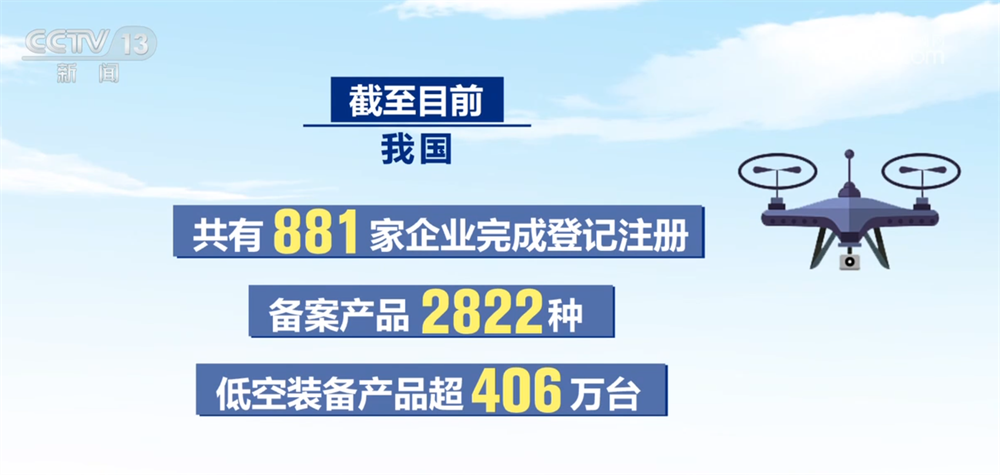
Core Insights - The low-altitude equipment industry in China is experiencing rapid development, with over 4 million units of low-altitude equipment produced, showcasing advancements in unmanned, electric, and intelligent technologies [1][4]. Industry Overview - As of now, there are 881 registered companies in the low-altitude equipment sector, with 2,822 types of products and over 406 million units of low-altitude equipment [1]. - Approximately 1,400 companies are involved in the manufacturing of low-altitude equipment, indicating a growing industrial scale and improved supply capabilities [4]. Technological Development - The industry is focusing on technological innovation, particularly in unmanned, electric, and intelligent equipment, with ongoing research on nearly 30 types of ton-class drones and around 70 electric vertical take-off and landing aircraft [1][6]. - The establishment of a safety design system and reliability assurance system for low-altitude equipment is a priority to enhance the resilience and safety of the supply chain [6]. Regional Development - Xinjiang is leveraging its application scenarios and airspace resources to develop a large-scale drone production line, aiming to create new models for low-altitude logistics and agricultural protection [6].