分付

Search documents
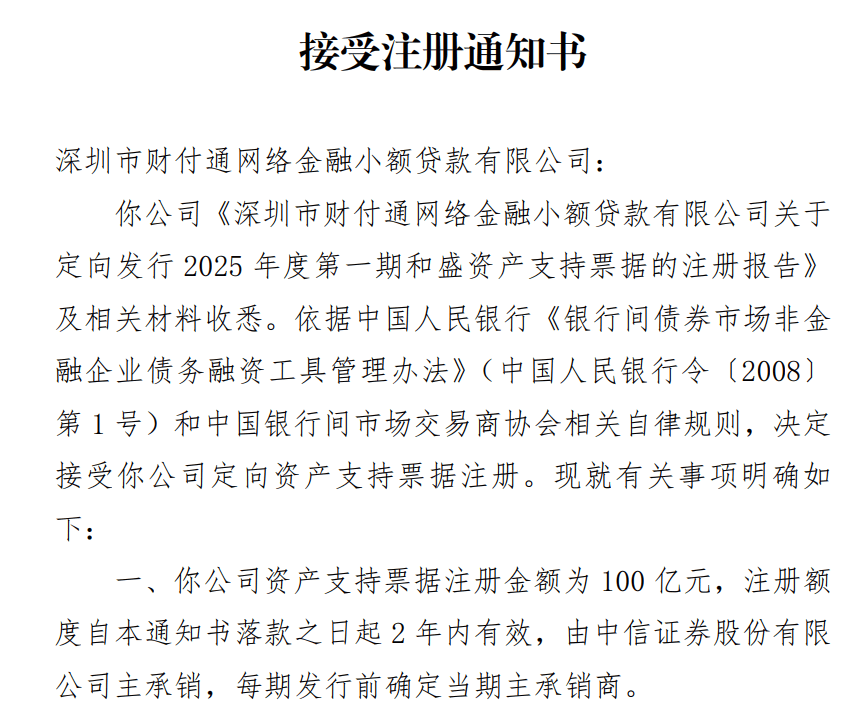
100亿!财付通小贷再获大额融资
Sou Hu Cai Jing· 2025-12-30 01:44
Group 1 - The main financing methods for Tencent's microloan company, WeChat Pay Microloan, are the issuance of Asset-Backed Securities (ABS) and Asset-Backed Notes (ABN) products, with a total of 450 billion yuan in ABN products registered over the past two years and over 200 billion yuan issued this year [2] - WeChat Pay Microloan was established in October 2013 and is primarily owned by Tencent Holdings, with a registered capital increase from 10.5 billion yuan to 15 billion yuan in November this year, making it the second largest in the industry after Douyin's Zhongrong Microloan at 19 billion yuan [2] - The main product under Tencent is "Fenfu," which started a limited rollout in 2020 and is still invitation-only, with a loan balance expected to reach approximately 120 billion yuan by the end of June 2025 [2] Group 2 - As of June 30, 2025, WeChat Pay Microloan's total assets were 15.355 billion yuan, a decrease of 5.52% from the beginning of the year [3] - In the first half of 2024, WeChat Pay Microloan achieved revenue of 662 million yuan, a year-on-year increase of 30.2%, while net profit was 6.8 million yuan, a year-on-year decrease of 56.38%, indicating a situation of increasing revenue but declining profit [3]


腾讯给“分付”备了百亿“弹药”
3 6 Ke· 2025-12-15 04:03
Core Viewpoint - Tencent's subsidiary, Shenzhen Financial Payment Network Small Loan Co., Ltd. (referred to as "Financial Payment Small Loan"), has received regulatory approval for a capital increase of 4.5 billion yuan, raising its registered capital to 15 billion yuan, marking a 50-fold increase over five years through six rounds of capital increases [1][4]. Group 1: Capital Increase and Regulatory Impact - The increase in registered capital allows Financial Payment Small Loan to leverage a maximum of 750 billion yuan in lending capacity based on the regulatory "1+4" financing leverage rule [1]. - Following the capital increase, Financial Payment Small Loan ranks second among national online small loan institutions, only behind ByteDance's Zhongrong Small Loan Co., Ltd., which has a registered capital of 19 billion yuan [2]. - The capital increase trend among internet small loan companies is driven by both regulatory logic and business needs, with 12 companies having registered capital exceeding 5 billion yuan as of July 2025 [2]. Group 2: Regulatory Framework - The regulatory framework for online small loans has evolved since the draft of the "Interim Measures for the Management of Online Small Loan Business" was released in November 2020, establishing a capital requirement of 5 billion yuan for cross-provincial operations [4]. - The new regulations, effective January 2025, focus on business norms and regional management, tightening requirements for the capital contribution ratio in joint loans with banks to a minimum of 30% [4]. Group 3: Product Development and Market Position - Financial Payment Small Loan offers two main products: "Fenfu," which allows for flexible repayment with a daily interest rate of 0.04%, and "Fengqi," which is designed for larger payments with fixed repayment terms [5][6]. - The "Fenfu" product has evolved from a consumption credit service to a cash loan service, allowing withdrawals to bank accounts, thus broadening its product offerings [7][8]. - As of June 2024, the loan balance for Financial Payment Small Loan was approximately 12.9 billion yuan, while the loan balance for WeChat's "Fenfu" reached 120 billion yuan by June 2025 [7]. Group 4: Financial Ecosystem and Performance - Tencent's financial ecosystem includes WeBank, which has become a significant profit contributor, with a net profit of 10.9 billion yuan in 2024, surpassing the combined net profits of 18 other private banks [9]. - The financial technology and enterprise services segment contributed 168.6 billion yuan in revenue in the first three quarters of 2025, becoming the second-largest revenue pillar for Tencent [11]. - The gross margin for the financial technology and enterprise services segment improved from 28% in 2020 to 50% in the third quarter of 2025, indicating a positive shift in revenue structure [10].
5年6次增资,腾讯财付通小贷注册资本飙至150亿
Huan Qiu Lao Hu Cai Jing· 2025-11-25 09:11
Core Viewpoint - Shenzhen's local financial management bureau has approved a new round of capital increase for Tencent's financial subsidiary, increasing its registered capital from 10.526 billion yuan to 15 billion yuan, making it the second-largest in the micro-lending industry by registered capital [1][2] Group 1: Company Overview - Tencent's financial subsidiary, Shenzhen Financial Payment Network Microloan Co., Ltd. (Financial Payment Microloan), was established in October 2013 and is controlled by Ma Huateng [2] - The company offers small loans and internet loans, with main products including "WeChat Pay Later" and "WeChat Installment" [2] Group 2: Capital Increase Details - The recent capital increase involved an injection of approximately 4.474 billion yuan, with Tencent's subsidiaries contributing 4.25 billion yuan and 224 million yuan respectively [1] - Following this capital increase, the shareholding structure remains unchanged, with Shenzhen Tencent Network holding 95% and Shenzhen Tencent Computer holding 5% [1] Group 3: Industry Context - Since 2020, Financial Payment Microloan has completed six rounds of capital increases, reflecting the impact of financial regulations on the micro-lending industry [2] - The number of micro-lending companies in China has significantly decreased, from 8,910 at the end of 2015 to 4,863 by the end of September 2025, indicating a trend of industry consolidation [3]
5年6次增资至150亿,腾讯财付通小贷跻身全国第二,尾部玩家陆续离场
3 6 Ke· 2025-11-24 10:14
Core Viewpoint - Shenzhen's local financial management bureau approved the capital increase of Tencent's financial subsidiary, increasing its registered capital from 10.526 billion to 15 billion yuan, marking the sixth capital increase since 2020 [1][2]. Group 1: Company Overview - Tencent's financial subsidiary, Caifutong Xiaolai, was established in October 2013 and is primarily engaged in small loans and internet loans, with key products including "Fenfu" and "Fenqi" [2]. - The company has undergone multiple capital increases, with the latest increase being from 10.526 billion to 15 billion yuan, ranking second among online small loan institutions in China [1][2]. - The ownership structure remains unchanged post-increase, with Shenzhen Tencent Network Company holding 95% and Shenzhen Tencent Computer Systems Company holding 5% [1]. Group 2: Financial Performance - Caifutong Xiaolai's revenue has fluctuated, reporting revenues of 1.716 billion yuan in 2022, 1.810 billion yuan in 2023, and an estimated 1.135 billion yuan in 2024, with net profits of 32 million, 143 million, and 225 million yuan respectively [3][4]. - In the first half of 2025, the company achieved a revenue of 662 million yuan and a net profit of 68 million yuan [4]. Group 3: Industry Context - The small loan industry is experiencing a significant reshuffle, with regulatory changes leading to a decrease in the number of small loan companies from a peak of 8,910 in 2015 to 4,863 by September 2025 [5][6]. - Regulatory measures have increased the capital requirements for small loan companies, prompting some to exit the market while others, like Caifutong Xiaolai, continue to increase capital to meet compliance [6][7]. - The entry of large tech companies into the small loan sector has intensified competition, pushing smaller firms out due to their limited capital and higher financing costs [7].
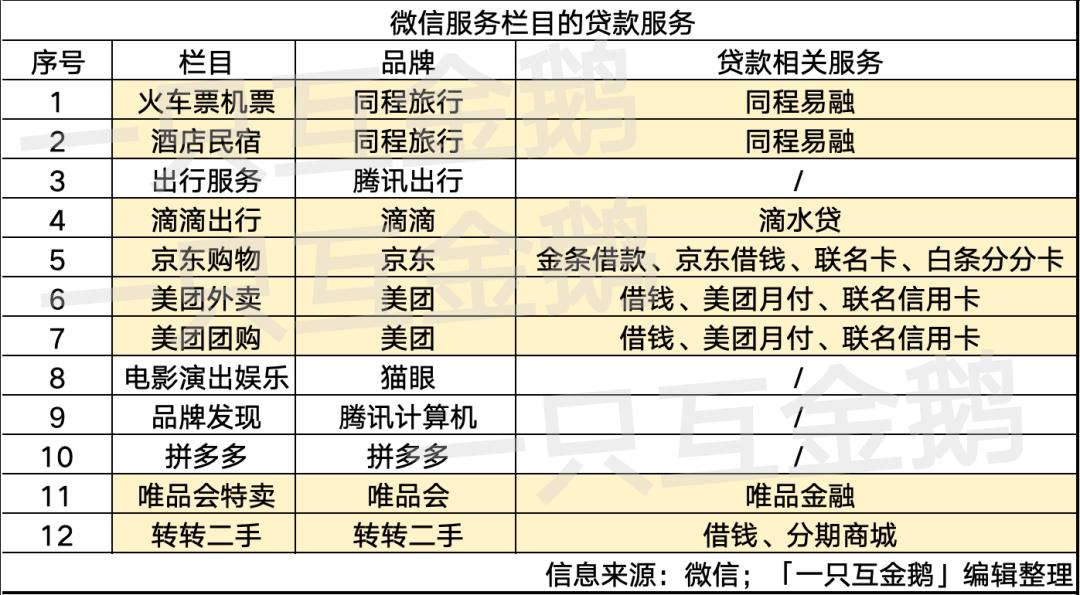
坐拥微信服务亿级流量入口,「同程旅行」想发力借钱服务
3 6 Ke· 2025-06-17 04:02
Core Viewpoint - The article discusses the integration of lending services within WeChat, particularly focusing on the "Tongcheng Yirong" product by Tongcheng Travel, which leverages WeChat's massive user base for consumer loans. Group 1: User Experience and Accessibility - Accessing the "Fenfu" product under Tencent's payment service requires four clicks within WeChat [1][2] - The process to obtain a credit limit for "Fenfu" involves multiple steps including face recognition and agreement to terms [3] - Despite the complexity of uploading identification, the integration within WeChat provides a superior user experience compared to other products [5][6] Group 2: Market Position and User Base - Tongcheng Travel's lending service is prominently featured in WeChat's service section, with a fixed entry point that attracts significant user attention [11][12] - WeChat's combined monthly active accounts reached 1.402 billion, with over 1 billion users in mainland China likely to see the lending service [16] - In Q1 2023, Tongcheng Travel reported an average of 238 million monthly active users from WeChat, contributing to 83.3% of its active user base [16][17] Group 3: Lending Products and Partnerships - "Tongcheng Yirong" offers various loan products, including a personal consumption loan with a maximum limit of 300,000 yuan, in collaboration with multiple licensed financial institutions [20] - The service also includes car and house equity loans, with the latter offering up to 30 million yuan at an annual interest rate starting from 2.8% [25] - The partnerships for these loans involve several financing and leasing companies, indicating a broader network for loan distribution [22][30] Group 4: Business Model and Strategy - The lending service operates on a low-cost user acquisition model, utilizing WeChat's inherent traffic without significant marketing expenses [18][19] - The structure of "Tongcheng Yirong" suggests a focus on light operational models, primarily directing traffic to other financial products rather than heavy capital investment [35][36] - The integration within WeChat allows for a unique competitive advantage in customer acquisition compared to other lending platforms [37]