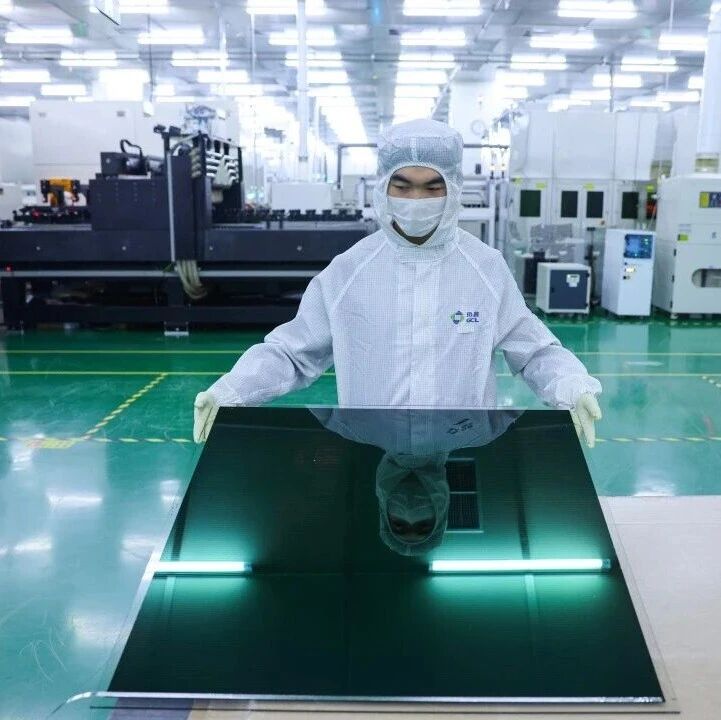
分布式光伏组件

Search documents
大摩闭门会:中东变局对中国意味着什么
2026-03-30 05:13
Summary of Key Points from the Conference Call Industry and Company Focus - The conference primarily discusses the impact of the Middle East conflict on global asset allocation and China's policy responses, with a focus on various sectors including energy, technology, and consumer goods [1][2][3]. Core Insights and Arguments 1. **Global Asset Reassessment**: The macro team has downgraded ratings across major asset classes due to the ongoing Middle East conflict, affecting stocks, bonds, and commodities [1]. 2. **China's Inflation Outlook**: Recent inflation in China has prompted a new forecast for re-inflation paths, highlighting the potential for either healthy or unhealthy inflation driven by rising commodity prices [2][17]. 3. **Impact on Internet Sector**: Major Chinese internet companies reported weak earnings, reflecting a lack of confidence in the domestic market amid internal competition and low consumer demand [3][19]. 4. **Energy Security Concerns**: The conflict has heightened the focus on energy security, with potential implications for China's market share in green technology and energy-related equipment [3][5]. 5. **Oil Price Projections**: Various scenarios for oil prices were discussed, with estimates ranging from $80 to $180 per barrel depending on geopolitical developments and production capacity recovery [7][39]. 6. **Central Bank Responses**: Central banks face challenges in responding to high oil prices, with potential for delayed interest rate cuts or even increases to combat inflation [8][9][10]. 7. **Asian Market Vulnerability**: Countries in Asia, particularly those heavily reliant on oil imports, are experiencing significant economic stress, with governments scrambling to manage rising fuel costs [11][12]. 8. **China's Economic Resilience**: Despite high oil import dependency, China's relative economic resilience is attributed to its strategic oil reserves and diverse energy supply [35][36]. 9. **Investment Strategy Adjustments**: The macro team has shifted its investment strategy, recommending a cautious approach with a focus on cash and government bonds, while downgrading equities due to increased geopolitical risks [30][33][34]. 10. **Consumer Demand and Structural Issues**: The current inflation is characterized as supply-driven rather than demand-driven, indicating that consumer demand remains weak and may not support a robust economic recovery [54][55]. Other Important but Potentially Overlooked Content 1. **Social Security Reforms**: The need for reforms in social security to boost consumer spending was emphasized, with current measures seen as insufficient [25][28]. 2. **Long-term Economic Projections**: Predictions indicate that China's global export market share could rise to 17% by 2030, reflecting ongoing competitiveness in manufacturing and technology [22]. 3. **Sector-Specific Performance**: Historical data suggests that certain sectors, such as materials and IT, may outperform during inflationary periods, while real estate and traditional consumer sectors are likely to underperform [48][49]. 4. **Market Sentiment and Risk Perception**: There is a noted shift in market sentiment, with investors becoming more risk-averse in light of geopolitical tensions and economic uncertainties [30][31]. This summary encapsulates the key points discussed in the conference call, providing insights into the implications of the Middle East conflict on global markets and China's economic landscape.
国内光伏组件报价大涨
2 1 Shi Ji Jing Ji Bao Dao· 2026-02-12 07:05
Group 1 - The core point of the article is the significant increase in solar module prices in China, with recent bidding results showing prices exceeding 1 yuan/W for the first time in years [1] - The bidding for Huadian Group's 8GW solar module procurement included two segments: 6GW of N-type high-efficiency modules at an average price of 0.8831 yuan/W and 2GW of N-type conventional modules at an average price of 0.8438 yuan/W [1] - Longi Green Energy reported that high-power (670W) module prices have surpassed 1 yuan/W, indicating a broader trend of rising component prices in the market [1][2] Group 2 - Aiko Solar indicated that their domestic module prices are nearing 0.9 yuan/W, while overseas prices exceed 1 yuan/W, reflecting the overall price increase in the industry [2] - Several companies noted that the recent rise in silver prices is a major factor driving the increase in module prices [3] - According to the China Photovoltaic Industry Association, the average all-in cost of mainstream photovoltaic products varies with silver prices, with costs at 0.783 yuan/W, 0.824 yuan/W, and 0.866 yuan/W at silver prices of 15,000 yuan/kg, 20,000 yuan/kg, and 25,000 yuan/kg respectively [3]



组件成交均价涨不动了!机构这样看一季度市场
Di Yi Cai Jing· 2026-02-06 09:04
Group 1 - The average price of TOPCon solar modules in the domestic market remained stable at 0.739 yuan per watt over the past week, indicating a halt in the price surge that had been ongoing for half a month [1] - In January, the price increase was driven by rising silver prices, leading to significant price hikes from major module manufacturers, with some companies raising prices three times in a month, reaching nearly 1 yuan per watt, a notable increase from around 0.6 yuan per watt in mid-2025 [1] - The price range for distributed solar modules was reported between 0.8 yuan per watt and 0.88 yuan per watt, with actual transaction prices between 0.75 yuan per watt and 0.8 yuan per watt; the average price for TOPCon modules in overseas projects was approximately 0.096 USD per watt [1] Group 2 - In the context of weakening domestic market demand, it is anticipated that the shipment of module products in the first quarter will primarily focus on overseas markets, as domestic project order execution is gradually declining [2] - The visibility of new orders in the domestic market is limited, and the seasonal demand is weak, leading to a cautious procurement attitude among buyers [2] - According to industry forecasts, the new installed capacity of solar power in China for 2026 is expected to be between 180 GW and 240 GW, which represents a decline compared to the 315.07 GW added in 2025 [2]
银价推涨光伏组件报价,下游企业承压涨价至近1元/瓦
第一财经· 2026-02-01 05:21
Core Viewpoint - The price of TOPCon photovoltaic modules has been raised again, with the average domestic price reaching 0.739 yuan/watt, influenced by rising silver prices and increased production costs [3][4]. Price Trends - The current price range for distributed photovoltaic modules in China is between 0.8 yuan/watt and 0.88 yuan/watt, with actual transaction prices between 0.75 yuan/watt and 0.8 yuan/watt [3]. - Leading integrated module companies, such as Trina Solar, have raised their component prices three times this month, with a price range set between 0.88 yuan/watt and 0.92 yuan/watt [3]. Cost Influences - As of January 28, the silver price exceeded 29,000 yuan/kg, an increase of over 6,000 yuan compared to the previous week, leading to a corresponding rise in battery costs by 0.05 yuan/watt [4]. - The willingness of companies to raise prices has increased due to significant cost hikes, with initial quotes expected to be above 0.8 yuan/watt [4]. Market Dynamics - Despite the price increases, the sustainability of this price rise and actual transaction conditions remain uncertain as the Chinese market approaches the Spring Festival, with a noted decrease in project installations and purchasing volumes [5]. - The market is currently experiencing a cautious purchasing attitude due to seasonal demand fatigue, with a decline in the execution of existing ground project orders and limited visibility for new orders [5].