利巴韦林颗粒(新博林)

Search documents
亏损超10亿,创新药龙头百利天恒“闯关”
阿尔法工场研究院· 2026-03-02 11:32
以下文章来源于侃见财经 ,作者侃见财经 侃见财经 . 看见不一样的财经! 导语:创新药的BD阶段已过,业绩兑现将成为未来药企的主流方向。 2月27日,一则亏损的业绩快报,将"创新药明星股"百利天恒推向了风口浪尖。 2024年,百利天恒通过iza-bren的知识产权授权,获得了8亿美元的不可撤销、不可抵扣首付 款,这让其2024年业绩实现扭亏为盈。 但值得注意的是,2025年iza-bren知识产权授权的里程碑付款骤降至2.5亿美元,这也导致公司 业绩出现了较大幅度波动。 实际上,尽管市场对百利天恒"成为世界级MNC"寄予厚望,但从目前来看,这条道路并不平坦。 一方面,创新药研发本就是如同无底洞一般的"金钱游戏"。创始人朱义曾提到,要支撑公司成为 入门级MNC,至少需要10亿美元的资金储备。从现金储备角度来看,截至2025年三季度末,百 利天恒货币资金为60.86亿元,虽然资金体量不小,但对于创新药研发而言,资金压力依旧存 在。另一方面,随着竞争加剧,辉瑞、罗氏等医药巨头开始主动收缩战线,头部跨国药企相关支 出若出现缩减,对依赖BD预期的药企而言,并非好事。 从资本市场角度来看,BD风口已过,市场对创新药企业开 ...


亏损超10亿!千亿创新药龙头百利天恒,“闯关”之路还在继续
Xin Lang Cai Jing· 2026-02-28 01:49
Core Viewpoint - The performance of innovative drug companies is shifting from the business development (BD) phase to revenue realization, as exemplified by the recent financial report of Baili Tianheng, which revealed significant losses and declining revenues [2][18]. Financial Performance - In the fiscal year 2025, Baili Tianheng reported revenues of 2.52 billion yuan, a decrease of 56.72% year-on-year, and a net loss of 1.051 billion yuan, an increase of 128.34% year-on-year [3][19]. - The company's total assets increased by 60.40% to 114.48 billion yuan, while the equity attributable to shareholders rose by 70.46% to 66.24 billion yuan [3][19]. - The basic earnings per share dropped to -2.54 yuan from 9.25 yuan, reflecting a decline of 127.46% [3][19]. Business Model and Strategy - Baili Tianheng's operations are primarily focused on the drug Iza-bren, which has generated significant revenue through intellectual property licensing, including an upfront payment of 800 million USD in 2024 [4][20]. - The company is heavily reliant on Iza-bren, with 91.57% of its revenue in 2024 coming from this product, raising concerns about operational risks due to over-dependence on a single product [12][28]. - The transition from traditional generic drugs to innovative drug development is seen as a high-risk strategy, with the founder emphasizing the need for substantial funding to support this shift [10][29]. Market Position and Competition - Baili Tianheng's stock has seen a decline of approximately 35% from its historical peak, with a market capitalization loss of nearly 60 billion yuan [5][21]. - The company faces increasing competition in the innovative drug market, particularly in the ADC (antibody-drug conjugate) sector, where established players like AstraZeneca have a strong foothold [31][32]. - The domestic market for innovative drugs is becoming increasingly competitive, with many companies entering the same therapeutic areas, leading to a saturated environment [32]. Future Outlook - Despite current challenges, Baili Tianheng is still viewed as a promising player in the innovative drug sector, with aspirations to become a world-class multinational corporation (MNC) [29][32]. - The company must accelerate the commercialization of its core products to maintain investor confidence and market position, as evidenced by the inclusion of Iza-bren in breakthrough therapy designations by regulatory authorities [32].
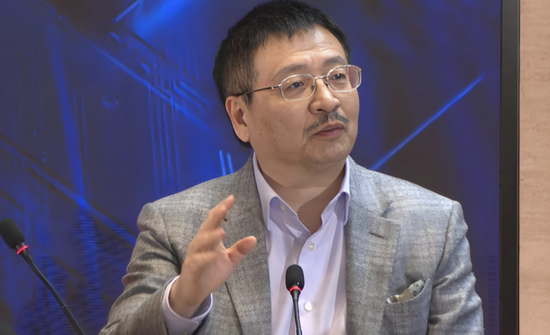
62岁“霸总”,每周做药100小时,坐拥千亿市值|36氪专访
3 6 Ke· 2025-08-28 02:36
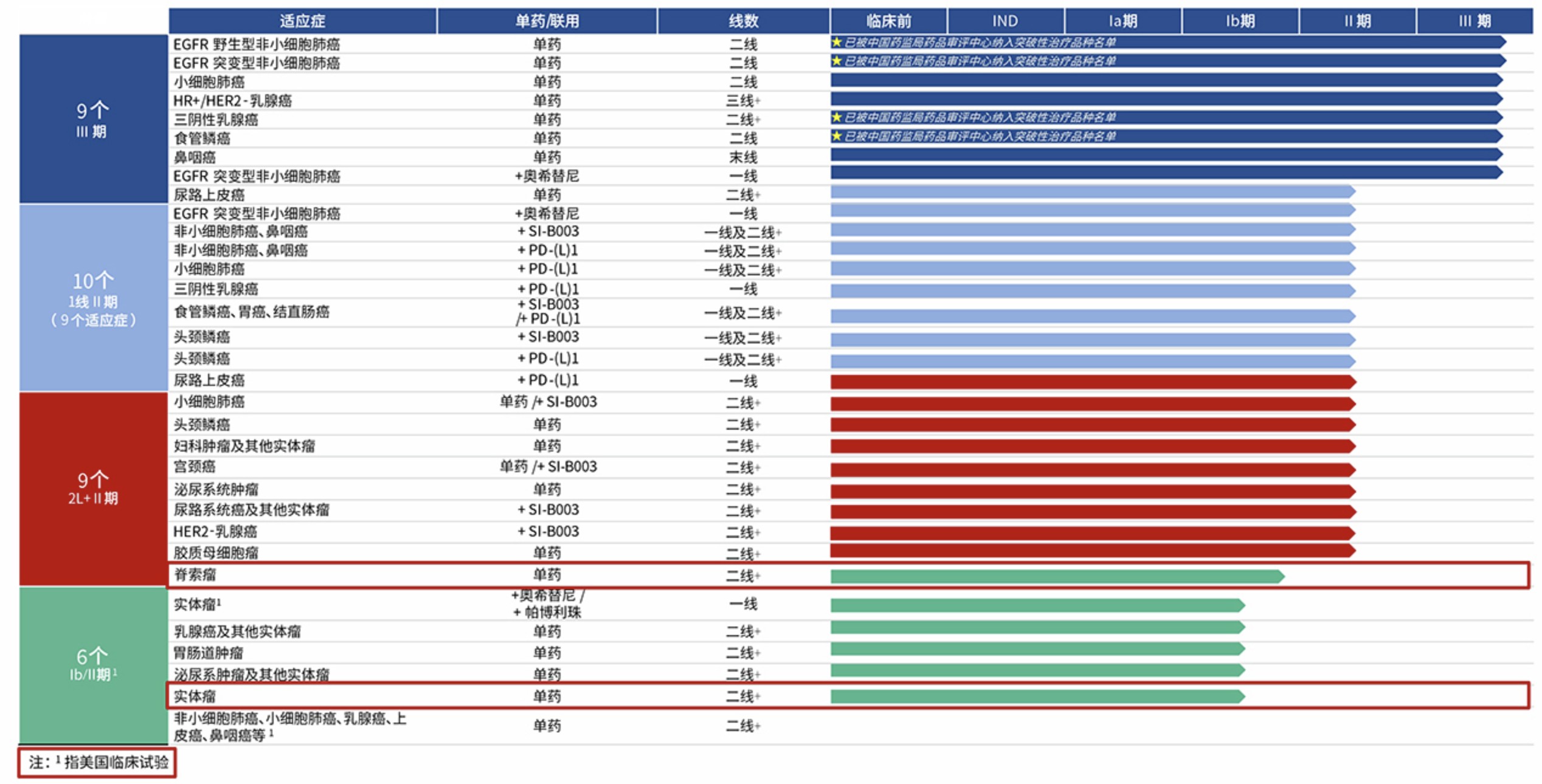
Core Viewpoint - The article highlights the journey and ambitions of Zhu Yi, the founder of Baili Tianheng, emphasizing the company's transition from a generic drug business to a leading innovator in the pharmaceutical industry, with a focus on developing innovative cancer therapies and aiming to become a multinational corporation (MNC) within five years [1][4][36]. Company Development - Zhu Yi has maintained a rigorous work schedule since 2014, focusing on the company's clinical projects and data analysis, which has contributed to Baili Tianheng's market value exceeding 100 billion RMB [1][4]. - The company transitioned from a generic drug business to innovative drug development, with significant milestones including a $8 billion licensing deal for its cancer drug BL-B01D1 with Bristol-Myers Squibb (BMS) [2][4]. - Baili Tianheng has become the third innovative drug company in A-shares to surpass a market value of 100 billion RMB, recently securing a nearly 4 billion RMB private placement [4][41]. Innovation and Research - The company has 14 innovative drugs in clinical stages, with BL-B01D1 being the only EGFR×HER3 bispecific ADC in Phase III trials globally, targeting various cancers [26][30]. - The focus on ADC (antibody-drug conjugates) is highlighted as a key strategy for attacking tumors effectively [31]. Business Strategy - Zhu Yi emphasizes a disciplined approach to business development (BD), advocating for high-value deals and maintaining a strong internal structure to support innovative projects [7][8]. - The company plans to expand its commercial team significantly, aiming for 2000-3000 personnel in the first year of commercialization for BL-B01D1, while reducing its generic drug sales team [28]. Financial Strategy - Baili Tianheng is actively seeking funding to support its ambitious plans, including a recent 4 billion RMB private placement and potential future funding from BMS [41]. - The company acknowledges the high costs associated with overseas clinical trials compared to domestic ones, necessitating additional funding [40]. Future Goals - Zhu Yi aims for Baili Tianheng to establish itself as a multinational corporation within five years, focusing on building capabilities in global clinical development and commercialization [5][36][37]. - The company is committed to maintaining a high level of operational efficiency and innovation, with a focus on leveraging advanced technologies and methodologies in drug development [33][34].
62岁「霸总」,每周做药100小时,坐拥千亿市值|36氪专访
36氪· 2025-08-27 11:28
Core Viewpoint - The company aims to become an "entry-level multinational pharmaceutical company" within five years, focusing on innovation and global expansion [2][7][47]. Group 1: Company Background and Development - The company, founded by Zhu Yi in 1996, initially focused on generic drugs and gradually shifted towards innovative drug development, using profits from generics to fund R&D [4][5]. - In 2023, the company made headlines by licensing its innovative cancer drug BL-B01D1 to Bristol-Myers Squibb for a total deal value of $8.4 billion, marking a significant milestone in its growth [4][6]. - The company has achieved a market capitalization exceeding 100 billion RMB, becoming the third innovative drug company in A-shares to reach this milestone [6]. Group 2: Strategic Goals and Future Plans - The company aims to establish itself as a multinational corporation (MNC) by enhancing its global clinical development and commercialization capabilities, with a target to build a team of 2,000 for overseas operations by 2028 [49][50]. - The focus will be on developing a robust pipeline of innovative drugs, with 14 candidates currently in clinical stages, including BL-B01D1, which is in Phase III trials for multiple cancer types [40][36]. - The company plans to streamline its generic drug operations, reducing its sales team from over 10,000 to around 200-300, reallocating resources to support innovative drug commercialization [38]. Group 3: Operational Efficiency and Management - The company emphasizes high operational efficiency and cost control, leveraging China's relatively low-cost clinical resources to maintain a competitive edge [22][19]. - A flat organizational structure is maintained to enhance communication and decision-making speed, with a focus on hands-on management [24][25]. - The company has cultivated a culture of high performance, encouraging a merit-based system where employees are rewarded based on their contributions [28]. Group 4: Innovation and R&D Focus - The company is committed to advancing antibody-drug conjugates (ADCs) as a key area of innovation, aiming to develop effective treatments for various cancers [41]. - The R&D strategy is characterized by a closed-loop system that integrates data collection, clinical development, and manufacturing capabilities, ensuring a seamless transition from lab to market [40]. Group 5: Financial Strategy and Funding - The company has recently completed a nearly 4 billion RMB private placement to support its growth initiatives and is exploring additional funding avenues, including potential future listings [53][52]. - The anticipated costs for overseas clinical trials are significantly higher than domestic trials, necessitating strategic financial planning to secure the required capital [51].