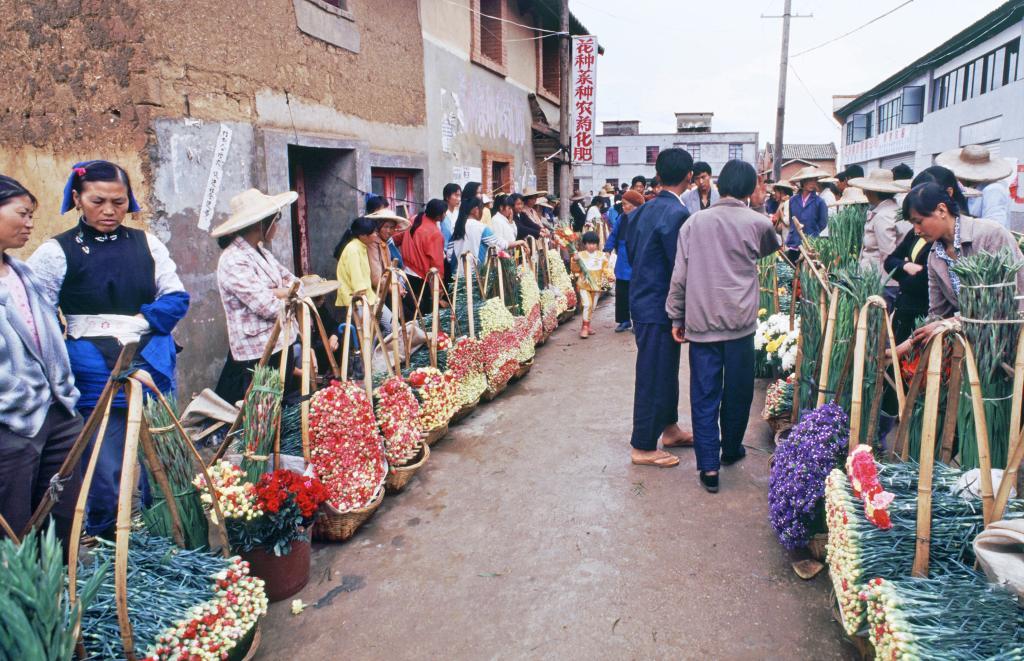
剑兰

Search documents
新春走基层 | 鲜花产业催旺“美丽经济”
Guang Xi Ri Bao· 2026-02-16 03:46
Core Insights - The flower cultivation industry in Guiping City is experiencing significant growth, with a focus on various flower species such as roses, lilies, and gladiolus, contributing to local economic development [1][2][3] Group 1: Industry Growth - Guiping City has expanded its fresh-cut flower planting area from 415 acres in 2024 to 5,397 acres at the beginning of this year, indicating a substantial increase in production capacity [2] - The city hosted its first special investment promotion conference for the fresh-cut flower industry in 2025, resulting in 10 signed projects with a total investment of 294.4 million yuan [2] - The annual production of fresh-cut flowers reached 80 million stems, generating a revenue of 56 million yuan and creating job opportunities for over 600 local residents [2] Group 2: Economic Impact - The flower industry is described as a "beautiful economy" that has become a distinctive industry for enriching the local population and strengthening villages [3] - The Tianhe Flower Garden in Longfu Village is currently at its peak production, with an average wholesale price of 2 to 3 yuan per stem, primarily supplying flower shops and wholesalers in nearby cities [1] - The local climate and sandy soil conditions are particularly favorable for high-quality flower cultivation, meeting the demands of high-end markets [2]
要美丽更要幸福!看“美丽产业”如何变身“幸福产业”
Ren Min Ri Bao· 2025-12-19 23:42
Core Insights - The flower industry in Yunnan, particularly in Kunming, is thriving due to a complete industrial chain from seed research to market circulation, with approximately 70% of China's fresh-cut flowers originating from this region [1][2] - The development of the flower industry is supported by government initiatives aimed at enhancing the entire industrial chain, focusing on both beauty and the well-being of the community [1][3] Group 1: Industry Development - The flower industry in Yunnan has seen significant advancements in self-reliance, with the introduction of over a thousand domestically cultivated "Chinese-style" rose varieties, reducing dependency on imported species and associated patent fees [2] - Technological innovations in agriculture, such as automated environmental control systems and soilless cultivation, have improved flower quality and yield, allowing for a more efficient production process [2][3] Group 2: Economic Impact - The flower industry has created substantial employment opportunities, with direct employment reaching 380,000 and indirect employment exceeding 1 million, contributing to the economic uplift of local communities [3] - The integration of various agricultural sectors, including flowers, coffee, and tea, is enhancing rural revitalization and establishing a robust industrial foundation for sustainable economic growth [3][4]
让“美丽产业”成为“幸福产业”(现场评论)
Ren Min Ri Bao· 2025-12-17 22:11
Core Insights - The "beautiful industry" in Yunnan is expanding its industrial chain and increasing added value, contributing to ecological economics that promotes green prosperity and urban-rural integration [1][3] Industry Development - The flower industry in Yunnan benefits from a complete chain from seed research, technological planting, to market circulation, with approximately 70% of fresh-cut flowers in China sourced from Yunnan [1] - The introduction of over a thousand self-bred "Chinese style" rose varieties in May 2025 marks a significant step towards reducing reliance on imported varieties and enhancing local production capabilities [2] - Technological advancements in agriculture, such as automated environmental control systems and soilless cultivation, are improving flower quality and yield, thus driving modernization in the agricultural sector [2] Economic Impact - In 2024, Yunnan's fresh-cut flower production reached 20.6 billion stems, employing 380,000 people directly and over 1 million indirectly, showcasing the industry's role in poverty alleviation and economic growth [3] - The integration of various agricultural products, such as flowers, coffee, and tea, is strengthening the foundation for rural revitalization and enhancing the overall economic landscape in Yunnan [3][4]
全国人均10枝,云南鲜花为何依然被卡脖子?
3 6 Ke· 2025-09-15 23:37
Core Insights - The Dou Nan flower market in Kunming has achieved significant growth, reaching a transaction volume of 14.1 billion stems in 2024, nearing the world leader, the Netherlands' Aalsmeer market, which has a volume of 20 billion stems [1][25] - Despite the impressive volume, Dou Nan still faces challenges in achieving "world first" status due to reliance on foreign flower varieties and the associated costs [2][10] Group 1: Industry Position and Growth - Dou Nan's geographical advantages contribute to its status as a leading flower market in Asia, with 46,500 of its 70,000 residents engaged in the flower industry [3][4] - The market has seen a "double hundred" milestone in 2022, with both transaction volume and value exceeding 10 billion [5] - The market's rapid growth is juxtaposed with the challenges of being locked into the lower end of the value chain due to dependence on foreign varieties [28][29] Group 2: Challenges and Dependency - Dou Nan's flower market is heavily reliant on foreign flower varieties, with 85% of its flowers being foreign species, which limits its position in the global value chain [10][23] - The historical context shows that the Chinese flower industry started late and has struggled to establish a competitive gene pool, leading to a dependency on imported seeds [11][12] - The costs associated with foreign seed patents create a financial burden for local farmers, who must pay both for the seeds and a percentage of their sales as royalties [16][17] Group 3: Innovation and Future Prospects - There is a growing recognition of the need for independent innovation within the industry, with initiatives aimed at developing local varieties and reducing dependency on foreign patents [30][31] - Recent policy changes and funding initiatives, such as the establishment of a special fund for flower breeding, aim to support local innovation and protect intellectual property [34][35] - The market share of domestic varieties has increased from nearly zero in 2002 to 15% currently, with expectations to reach 50% by 2030 [39]