
医药制品

Search documents
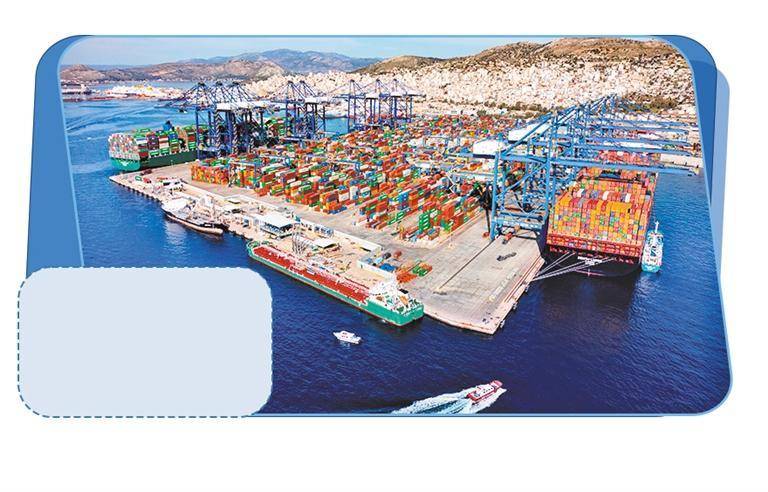
希腊积极应对贸易逆差扩大
Sou Hu Cai Jing· 2026-02-23 22:37
Core Insights - Greece's trade deficit expanded to €3.6 billion in December 2025, the largest monthly deficit since November 2022, driven primarily by a mismatch in the growth rates of imports and exports [2][4] Group 1: Trade Deficit and Import Dynamics - The increase in Greece's trade deficit is mainly attributed to a 1.5% year-on-year growth in imports, reaching €7.7 billion in December 2025 [2] - Imports from EU member states saw a significant increase of 9.1%, highlighting Greece's reliance on the EU market for industrial goods, energy products, and high-tech intermediate goods [2][4] - In contrast, imports from non-EU countries decreased by 7.9%, which somewhat mitigated the overall import growth [2] Group 2: Export Performance - Greece's exports reached €4.1 billion in December 2025, reflecting a modest year-on-year growth of 0.7%, significantly lower than the import growth rate [3] - Exports to EU countries performed well, with an 11.8% increase, particularly in agricultural products, food processing, pharmaceuticals, and light industrial goods [3] - However, exports to non-EU countries fell by 11.5%, indicating a structural imbalance in Greece's export market [3] Group 3: Structural Issues and Government Response - Economists point out that the trade deficit's expansion is due to both short-term factors, such as increased demand for imports due to EU economic recovery, and long-term structural issues, including a weak manufacturing base and reliance on low-value exports [4][5] - The Greek government is signaling policy adjustments to attract foreign investment and enhance domestic production capabilities, particularly in manufacturing and high-tech industries [5] - Initiatives to support businesses in expanding into non-EU markets and promoting industry upgrades are seen as crucial for long-term economic recovery and reducing import dependency [5]

“中国贸易转移”叙事背后的欧盟焦虑(国金宏观厉梦颖)
雪涛宏观笔记· 2026-02-01 00:33
Core Viewpoint - The EU's narrative around "trade transfer" and "overcapacity" reflects its geopolitical pressures rather than purely trade issues, indicating a need to protect the legitimate rights of Chinese enterprises in the EU for broader cooperation [2][36]. Summary by Sections 1. Substance of China-EU Trade Beyond "Trade Transfer" - In the first eleven months of 2025, China's exports to the EU reached $291.78 billion, marking an 8.4% year-on-year increase, surpassing the trade surplus with the US for the first time [4]. - The main components of China's exports to the EU are industrial machinery and electrical equipment, accounting for over 45% of total exports, with significant growth driven by automation and specialized equipment [7][10]. - Exports of industrial robots surged over 200%, reflecting the EU's manufacturing automation needs, while exports of lithium-ion batteries grew by 39.6%, indicating a strong demand for energy transition [9][10]. - The narrative of "trade transfer" does not align with the actual trade structure, as the growth is not solely driven by low-priced end products but rather by high-tech industrial goods that meet EU demands [5][22]. 2. EU's Anxiety Under "Trade Transfer" Narrative - The EU's frequent references to "trade transfer" stem from its geopolitical anxieties, as it finds itself in a vulnerable position amid US-China tensions, lacking sufficient strategic buffers [23][36]. - The EU is shifting its policy focus towards "security-first competitiveness," emphasizing the need for re-industrialization and enhancing its industrial capabilities in critical technologies [24][29]. - The EU's strategy includes building a sovereign industrial system in key areas such as AI, semiconductors, and clean technologies, while also addressing the competitive pressures from Chinese manufacturing [26][27]. 3. Potential Cooperation Space in China-EU Trade - The EU's updated economic security strategy aims to systematically manage risks while maintaining an open framework for cooperation, particularly in engineering and technology sectors [29][33]. - Cooperation opportunities exist in areas like energy transition equipment and manufacturing automation, where Chinese firms can contribute without transferring control [32][33]. - The EU is open to "value-added" investments from China that enhance local industrial capabilities, provided they do not merely focus on ownership or market share expansion [33].

做强开放枢纽 畅通国际循环 去年兰州市外贸进出口总值达143亿元
Xin Lang Cai Jing· 2026-01-27 01:13
Core Insights - The total value of foreign trade imports and exports in Lanzhou reached 14.3 billion yuan in 2025, marking a year-on-year increase of 49.1% and accounting for 20% of the province's total trade value [1][2] - The city has successfully implemented several firsts in the province, including the first bonded leasing of construction machinery and the first import of gold processing, contributing to a diversified foreign trade landscape [1][2] Group 1 - The total foreign trade value in Lanzhou for the year was 14.3 billion yuan, with exports at 9.65 billion yuan and imports at 4.64 billion yuan [1] - The Lanzhou New Area Comprehensive Bonded Zone reported a foreign trade value of 7.486 billion yuan, a 140% increase year-on-year, while cross-border e-commerce transactions doubled [1] - Six categories of products in the import and export sectors exceeded 100 million yuan, showcasing a multi-faceted growth in foreign trade [1] Group 2 - Policies for stabilizing foreign trade and promoting high-quality development of cross-border e-commerce have been introduced, shifting from a passive to an active service approach [2] - The foreign trade reach of Lanzhou expanded to 148 countries and regions, with trade with 116 Belt and Road countries amounting to 8.49 billion yuan, a 22% increase [2] - The city aims to strengthen its position as a core node in the Belt and Road Initiative, enhancing service systems and promoting deep integration of trade and production [2]