
再工业化

Search documents
如何穿越市场波动?徐志敏王康宁李岳最新交流,直面当前市场最热议五大话题……
聪明投资者· 2026-03-30 03:33
Group 1 - The core theme of re-industrialization is a long-term trend, with AI accelerating this process [22] - The domestic internet giants are viewed positively in terms of AI applications, as they have accumulated vast amounts of data and customer bases [35] - The investment strategy should focus on avoiding FOMO (Fear of Missing Out) and instead look for solid companies that can withstand market volatility [40][82] Group 2 - The real estate market is expected to stabilize or see a reduced decline, which will likely lead to a recovery in consumer spending [90] - The consumption sector is undergoing a transformation, with new consumer demands emerging, such as spiritual and self-care consumption [97] - Companies with strong business models in the consumer sector are becoming increasingly attractive, especially as valuations have returned to reasonable levels [84][90] Group 3 - The concept of "HALO assets" is discussed, indicating that not all assets will benefit from the AI revolution, and a focus on intangible assets like R&D and brand value is essential [49][120] - The investment landscape is shifting, with a focus on upstream sectors benefiting from re-industrialization and technological infrastructure investments [20][44] - The impact of geopolitical tensions, such as the US-Iran conflict, is creating uncertainty, but companies with strong fundamentals are expected to navigate these challenges effectively [60][75] Group 4 - The trend of Chinese companies going global is seen as a natural progression, with a focus on manufacturing capabilities and brand strength [100][106] - The investment strategy should prioritize companies that have a competitive edge in international markets, particularly in manufacturing and technology [107][110] - Caution is advised regarding companies heavily reliant on the domestic market, as their growth potential may be limited [107]


周观点:短期泛能源防守,长期中国资产进攻-20260308
Huafu Securities· 2026-03-08 10:47
Group 1 - The report indicates that the U.S. is currently experiencing a phase of loose monetary policy but tight credit conditions, with a strong dollar being a method for short-term resolution [2][3] - Geopolitical conflicts are expected to drive up oil prices in the medium term, benefiting the U.S. with strong dollar and capital inflows, although the weakening military strength of the U.S. may harm dollar credibility [3][10] - In the short to medium term, the report suggests allocating investments towards broad energy dividends and U.S. capital goods inflation, while recommending an increase in insurance and leading Chinese heavy asset stocks once the dollar begins to depreciate [3][10] Group 2 - The report highlights a significant downturn in the U.S. employment market, with February's non-farm payrolls showing a decrease of 92,000 jobs, contrasting sharply with market expectations of an increase of approximately 55,000 jobs [8][12] - The report notes that job losses are widespread across various sectors, including education, healthcare, and construction, indicating a broader economic slowdown [9][12] - The report emphasizes that the weakening non-farm employment data has raised expectations for interest rate cuts, while the U.S. maintains a loose monetary policy despite a contraction in commercial credit [10]
强美元之下大类资产逻辑与美国的核心诉求
2026-03-06 02:02
Summary of Key Points from Conference Call Records Industry or Company Involved - The discussion primarily revolves around the implications of a strong US dollar, geopolitical conflicts, and their impact on various industries, particularly manufacturing, energy, and technology sectors. Core Insights and Arguments 1. **Strong Dollar Dynamics**: The strong dollar is primarily driven by capital returning to the US due to geopolitical conflicts rather than a robust economic foundation. This situation aims to suppress demand in non-US economies to inject demand into the US economy [1][2] 2. **AI's Limited Support for Dollar**: AI is viewed as a deflationary supply expansion that lacks the ability to generate sustained monopoly profits, leading to a potential decline in the US's return on equity (ROE) and, consequently, the strength of the dollar [1][4] 3. **Energy Security Constraints**: Energy prices are rising, which will squeeze production profits in manufacturing economies like Europe and Japan. China is noted to have relatively stronger resilience against these shocks [1][7] 4. **Reindustrialization Strategy**: The US is moving towards a "state capitalism" model, focusing on expanding domestic production capabilities in sectors like energy and military, driven by security narratives [1][4][12] 5. **Asset Allocation Strategy**: In a strong dollar phase, risk appetite decreases, with a preference for traditional industrial stocks over tech stocks. Commodities, particularly energy and self-sufficient energy sources in China, are viewed positively [1][16] 6. **Gold as an Indicator**: Gold's performance is seen as a barometer for dollar strength. A scenario of "strong dollar, weak gold" indicates a concentration of risk capital in dollar assets, benefiting the US in geopolitical conflicts [1][9] 7. **Weak Dollar Implications**: A weak dollar typically reflects accumulated credit and debt issues, leading to a narrative of "de-dollarization" and driving up gold and other safe-haven assets [3] 8. **Geopolitical Conflict Effects**: Geopolitical tensions are expected to disrupt energy supply chains, particularly affecting oil and light oil, with significant impacts on manufacturing economies reliant on energy imports [6][7] 9. **Investment Shifts**: The US is expected to shift investments from AI to reindustrialization, focusing on energy and military sectors, as the returns on AI investments are anticipated to decline [11][13] 10. **Market Dynamics**: The current market environment is characterized by a high-interest rate climate, which may negatively impact capital returns and equity valuations, particularly for tech-heavy indices like NASDAQ [14] Other Important but Potentially Overlooked Content 1. **Military and Economic Strategy**: The US may increasingly rely on military and geopolitical strategies to stimulate domestic demand and manage economic pressures, indicating a shift from traditional economic policies [4][10] 2. **Long-term Dollar Weakness**: There is a belief that the strong dollar is not sustainable long-term, with expectations of a future shift towards a weaker dollar and a stronger renminbi [2] 3. **Investment in Energy Infrastructure**: The focus on energy infrastructure is critical, with significant capital needed for sectors like electricity, oil, and gas, which are essential for reindustrialization efforts [13] 4. **Global Order Changes**: The existing global production order is weakening, with more countries willing to impose export restrictions, reflecting a decline in the effectiveness of US economic sanctions [5][10] 5. **Future Dollar Trends**: The potential for the dollar to weaken again post-reindustrialization is acknowledged, with the need for the US to stabilize its domestic economy through strategic investments [16]
稀土只是前菜?2030中国制造要吞45%全球份额!美国再工业化梦碎?
Sou Hu Cai Jing· 2026-02-26 22:45
Core Insights - China's manufacturing share is projected to rise to 45% by 2030, a sevenfold increase from 6% in 2000, according to a UN report [1] - China dominates global industrial production, with 60% of new energy vehicles, 80% of solar panels, and 90% of rare earth elements produced domestically [1] - The shift in global manufacturing dynamics indicates that while the West focuses on re-industrialization, China has already established a comprehensive industrial base across 41 categories [1][3] Group 1 - The United States' manufacturing share has decreased from 25% to 11%, while Japan and Germany are also experiencing declines [3] - China employs 1.8 million industrial workers, accounting for 40% of the global workforce in manufacturing, with factories operating 24/7 [3] - The density of industrial robots in China is rapidly approaching that of Japan, indicating a shift towards automation [3] Group 2 - China's control over rare earth elements is not merely a strategic move but a protective measure for its domestic industry, with strict export controls in place [3] - The U.S. has responded to China's rare earth policies with tariffs, but negotiations have led to agreements that still require reliance on Chinese supplies [3] - The European Union is heavily dependent on China for rare earth materials, with 90% of its supply chain controlled by China, leading to significant production challenges [3] Group 3 - The anticipated 45% manufacturing share for China is seen as a new starting point rather than a final goal, with potential implications for global supply chains [4] - The ongoing geopolitical tensions, such as the Russia-Ukraine conflict, have not disrupted European industrial chains, highlighting China's critical role in global manufacturing [4] - The debate continues on whether China's dominance will spur Western innovation or if global cooperation is the solution, but data suggests that the U.S. re-industrialization efforts may depend on China's willingness to share its market share [4]

南财v快评:机器人们该起来打工了
2 1 Shi Ji Jing Ji Bao Dao· 2026-02-26 08:03
Core Viewpoint - The article emphasizes the importance of the "coordinated development" of manufacturing and service industries in Guangdong, highlighting the need for integration to enhance competitiveness and achieve high-quality growth [1][2]. Group 1: Manufacturing Industry - Guangdong has historically been known as the "world's factory," with manufacturing serving as a crucial foundation for its economy [1]. - The manufacturing sector is evolving beyond traditional roles, incorporating robotics and AI into production lines, which necessitates a focus on soft skills such as R&D, digital technology, and financial support [1]. - The province boasts all 31 categories of manufacturing industries and has led the nation in revenue from industrial enterprises for several consecutive years [2]. Group 2: Service Industry - The service industry is increasingly intertwined with manufacturing, as seen in examples like the integration of high-tech products into traditional markets, which stimulates consumer demand [1]. - Guangdong's service sector has consistently outperformed the national average in value-added contributions for 41 years, indicating a strong service industry foundation [2]. - The article suggests that without addressing the service sector's shortcomings, Guangdong risks remaining in the lower end of the value chain [2]. Group 3: Strategic Importance - The theme of coordinated development is framed as a necessary path for Guangdong's industrial growth, likening it to a mandatory question rather than a choice [2]. - The global trend of "re-industrialization" in countries like the U.S., Germany, and Japan underscores the urgency for Guangdong to enhance the integration of manufacturing and services [2]. - The article calls for a sense of urgency and action to maximize the potential of this "new engine" of coordinated development, aiming for tangible benefits in everyday life [2].

联合国报告:稀土不过小试牛刀,2030中国将焊死美国再工业化大门
Sou Hu Cai Jing· 2026-02-26 06:47
Group 1 - The core finding of the UNIDO report indicates that China's manufacturing value added accounts for 31.6% of the global total, surpassing the combined share of the EU and the US [2] - By 2030, China's manufacturing share is projected to rise to 45%, suggesting that nearly half of the world's industrial capacity will be concentrated in China [2][11] - The report emphasizes China's leading position in supply chain integrity and technological innovation, based on a decade of global industrial data analysis [2] Group 2 - The US manufacturing share has declined from 25% in 2000 to 11% in 2024, while Japan's share fell from 11% to 5%, and Germany's from 8% to 3% [4] - The global supply chain heavily relies on China for raw materials and intermediate products, with 40% to 60% of industrial raw materials sourced from China [4][11] - The US government's efforts to stimulate domestic semiconductor and electric vehicle industries through significant investments have shown limited effectiveness due to challenges in processing technology and cost control [4] Group 3 - China controls 90% of the global rare earth supply, not only in terms of production but also in refining and manufacturing technology [7] - The US, despite having domestic mineral resources, only accounts for 1% of global rare earth processing capacity, with companies like MP Materials producing limited quantities [7] - China's annual production of rare earths reaches 300,000 tons, benefiting from large-scale automated production where labor costs constitute only 20% of total costs [9] Group 4 - The report warns that the implementation of rare earth export controls highlights the vulnerability of Western industries in their supply chains, particularly for green energy technologies [9][13] - If the rare earth controls expand, the costs of European photovoltaic projects could increase by 25% [9] - The report suggests that the automation and technological advancements in China have shifted the competitive landscape, making it difficult for Western countries to catch up [15] Group 5 - The shift in global manufacturing dynamics is expected to impact geopolitical strategies, as evidenced by the Western military production shortages during the Russia-Ukraine conflict [17] - The report indicates that if China's industrial advantages continue to grow, Western re-industrialization efforts will face significant barriers, including cost competitiveness and supply chain dependencies [17] - China's leadership in Industry 4.0, with a 90% coverage of 5G base stations, far exceeds the West's 60%, providing a solid foundation for smart manufacturing [17] Group 6 - Industrial employment in China exceeds 180 million, accounting for 40% of the global total, which supports the domestic economy and influences global markets through exports [19] - The future of global industry will depend on conversion efficiency, where China has already established a leading position [19] - The report metaphorically describes the closing of the door on US re-industrialization due to concerns over supply chain monopolies [20] Group 7 - The US is attempting to establish critical mineral reserves through the "Project Vault" initiative, investing $12 billion, but this may only alleviate short-term risks [22] - European automotive companies are increasing joint ventures with China by 10% to mitigate supply chain pressures, yet overall dependency remains high [23] - China's export structure shows that high-tech products now account for 55%, with the server industry exceeding 400 billion RMB, indicating a more balanced global division of labor [23] Group 8 - China has gained a comprehensive lead in industrial capabilities, including the establishment of international industrial standards, which increases compliance costs for Western companies [25] - The report highlights that this is not merely a matter of blocking but a natural outcome of market dynamics, where automated production has made efficiency a core competitive advantage [25]

APi (APG) - 2025 Q4 - Earnings Call Transcript
2026-02-25 14:30
Financial Data and Key Metrics Changes - Reported net revenues for Q4 2025 were $2.12 billion, a 13.8% increase from $1.86 billion in the prior year period, with organic growth of 11.1% [14] - Adjusted EBITDA for Q4 2025 increased by 21.9%, with an adjusted EBITDA margin of 13.9%, representing a 90 basis point increase compared to the prior year [15] - Full year 2025 adjusted free cash flow was $836 million, up $168 million from the previous year, with a conversion rate of 80% [19] Business Line Data and Key Metrics Changes - In the Safety Services segment, Q4 revenues were $1.42 billion, a 10.6% increase, with organic growth of 6.6% driven by inspection, service, and monitoring revenues [16] - Specialty Services reported Q4 revenues of $695 million, a 20.7% increase, with segment earnings margin at 11.9%, representing a 170 basis point increase [18] - The company increased the percentage of revenue from inspection, service, and monitoring from 40% in 2021 to 54% in 2025 [6] Market Data and Key Metrics Changes - The backlog as of the end of 2025 was over $4 billion, indicating strong demand across various end markets [30] - Data centers represented approximately 8% of total revenue by the end of 2025, expected to grow to about 10% in 2026 [44] Company Strategy and Development Direction - The company aims for long-term financial targets of $10 billion in net revenues by 2028, with a focus on mid-single-digit organic growth and a 16%+ adjusted EBITDA margin [13] - The company continues to prioritize M&A, having completed 14 acquisitions in 2025, and sees a robust pipeline for future opportunities in fire-life safety and electronic security [11][47] - The company is committed to enhancing its procurement and technology investments to support margin expansion [75] Management's Comments on Operating Environment and Future Outlook - Management expressed confidence in the resilience of the business, noting that 54% of revenue comes from recurring inspection service and monitoring, which provides stability regardless of macroeconomic conditions [95] - The company anticipates continued strong demand in 2026, driven by robust project opportunities in data centers and advanced manufacturing [31][90] Other Important Information - The company has been recognized as a military-friendly employer for 2026, emphasizing its commitment to providing opportunities for veterans [5] - The company will celebrate its 100-year anniversary in 2026, reflecting on its legacy and commitment to community support [12] Q&A Session Summary Question: Revenue guidance and market conditions - Management indicated that the revenue guidance reflects high single-digit growth in inspection service and monitoring, with low single-digit growth in project work, influenced by strong backlog and market conditions [28][30] Question: Adjusted EBITDA margins - Management does not expect material changes in tariffs to impact the business and anticipates enhanced gross margins from project-related work, particularly in data centers [36][38] Question: Data center opportunity contribution - Data centers contributed approximately 8% of revenue in 2025 and are expected to grow to 10% in 2026, with strong margins due to limited competition [44] Question: M&A pipeline - The M&A pipeline remains robust, with opportunities in North America and internationally, particularly in fire-life safety and elevator services [46] Question: Project demand assumptions - Management acknowledged that the guidance reflects conservatism due to early-year uncertainties and potential for strong project demand [78] Question: Industrial economy exposure - Management believes the business is well-insulated from macroeconomic fluctuations, with a strong focus on recurring revenue streams [95][96] Question: Heavy vs. light industrial market outlook - The company is positioned to benefit from complex end markets, with a focus on heavy industrial projects like data centers, while also growing its light industrial inspection and service business [105][107]

美教授想不通:我们对中国具备优势,咋不用呢?
Xin Lang Cai Jing· 2026-02-25 04:36
Core Viewpoint - The article discusses the competitive disadvantage of the U.S. manufacturing sector compared to China, emphasizing that while the U.S. leads in AI research, it lags in applying this technology to industrial productivity [1][2]. Group 1: U.S. Manufacturing Challenges - The core issue for U.S. manufacturing productivity is the failure to convert AI advancements into industrial applications, unlike China, which has effectively integrated automation and AI into its production processes [1][6]. - U.S. policies have focused too heavily on research and trade protection, neglecting the need for digital transformation in traditional factories and workforce training [1][3]. Group 2: China's Manufacturing Advantage - China has established over 30,000 smart factories, with more than half of the world's new industrial robots expected to be deployed there by 2024 [6]. - The production efficiency in Chinese factories, such as those of Geely and Midea, has significantly surpassed that of their U.S. counterparts due to the extensive use of AI and automation [6][7]. Group 3: Recommendations for U.S. Policy - U.S. decision-makers are urged to shift their focus from protectionist measures to supporting digital infrastructure and technology application to enhance re-industrialization efforts [3][10]. - The article suggests that the U.S. should invest in upgrading old equipment, training skilled workers in AI, and building shared digital infrastructure to help small and medium-sized manufacturers adopt advanced technologies [10].

基建与新兴产业支撑,锡价大涨!云南锗业、华锡有色涨停,有色矿业ETF招商(159690)涨3.31%
Sou Hu Cai Jing· 2026-02-25 04:17
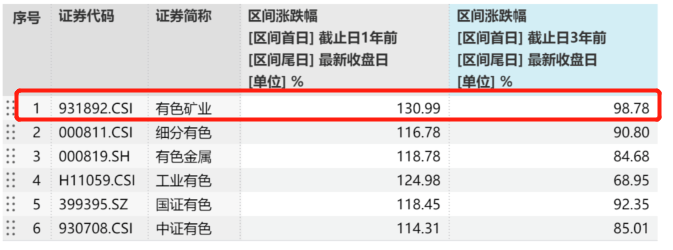
Group 1 - The core viewpoint of the articles highlights a significant increase in the non-ferrous metal sector, driven by rising prices of precious metals and industrial metals, as well as strong demand from various industries [1][2] - Precious metals, particularly gold and silver, have seen substantial price increases, with gold reaching $5183.62 per ounce and silver surpassing $88 per ounce, attributed to concerns over U.S. fiscal sustainability, geopolitical tensions, and inflation risks [1] - The analysis from Shenwan Hongyuan indicates that the strong performance of precious metals is supported by three main factors: concerns about U.S. fiscal sustainability, ongoing geopolitical tensions, and reinforced inflation hedging properties of gold [1] Group 2 - Changjiang Securities notes that domestic infrastructure projects, such as power grid upgrades and photovoltaic power station constructions, are driving rigid growth in demand for industrial metals like tin and nickel [2] - The recovery of production capacity in emerging fields such as electric vehicles and AI infrastructure is creating new demand growth points, with AI servers requiring significantly more tin than traditional equipment [2] - The non-ferrous mining ETF (159690) tracks an index focused on the upstream mining sector of the non-ferrous metal industry, showing strong price elasticity and higher beta values, making it aggressive in commodity bull markets or inflationary environments [2] Group 3 - The non-ferrous metal mining index has shown a remarkable performance, with a 131% increase over the past year and a 99% increase over the past three years, ranking first among mainstream non-ferrous indices [3]


摩根大通预警2026年铝市缺口23万吨,铜铝价格中枢或将大幅上移
Jin Rong Jie· 2026-02-23 11:09
Group 1 - The core viewpoint of the report is that the global aluminum market is expected to face a supply gap of approximately 230,000 tons by 2026, with an average price forecast of $3,200 per ton in the second quarter of 2026, and continued support for aluminum prices in the second half of the year [1] - The report also predicts a similar tightening in the copper market, estimating a supply gap of 130,000 tons by 2026, with price forecasts of $13,500 per ton in the second quarter and $13,000 per ton in the third quarter [1] - The demand structure for industrial metals like copper and aluminum is undergoing significant changes, driven by accelerated data center construction, upgrades in electrical infrastructure, and the expansion of the renewable energy sector, moving away from traditional real estate cycle dependency [1] Group 2 - On the supply side, the expansion of global electrolytic aluminum capacity is constrained by factors such as energy costs and environmental policies, leading to a slower pace of new capacity release [1] - Additionally, some resource-rich countries are tightening supply elasticity by increasing resource taxes and setting export quotas, further impacting the supply side [1] - These structural changes on both the supply and demand sides provide a strong foundation for long-term support of aluminum prices [1]
