
华夏大盘精选

Search documents
基金早班车丨2025年“翻倍基”达75只,硬科技主线成就主动权益高光
Sou Hu Cai Jing· 2026-01-06 00:31
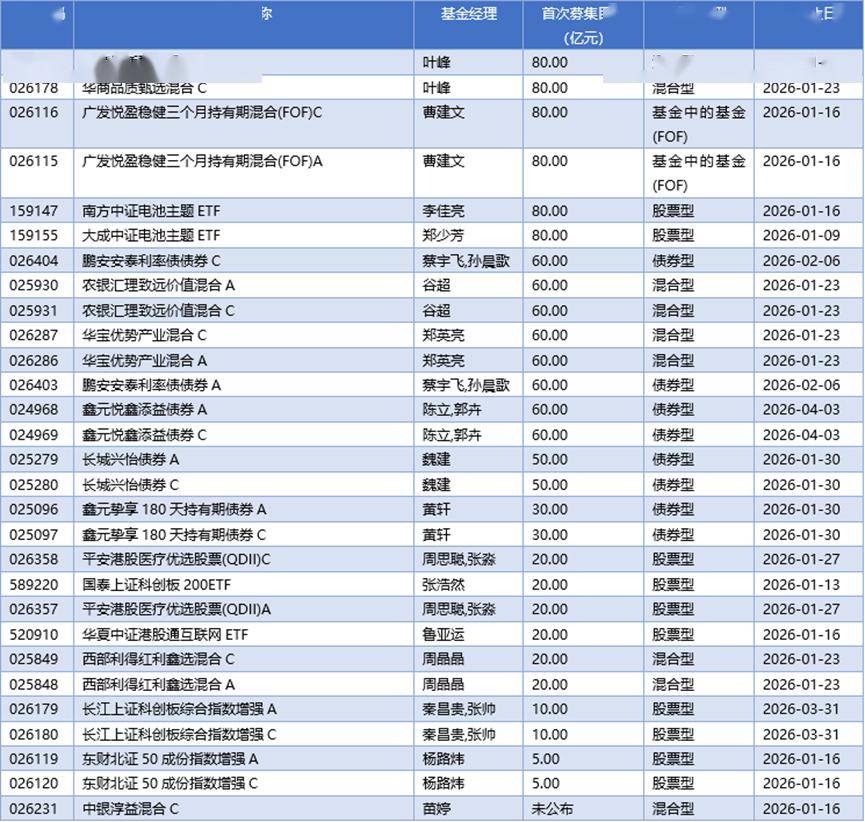
Market Overview - The Shanghai Composite Index closed above 4000 points, reaching a ten-year high, with A-share market capitalization surpassing 100 trillion yuan [1] - The structural bull market has led to a significant increase in active equity funds, with 75 products doubling their net value throughout the year, particularly in technology growth funds [1] - The market opened strong in 2026, with the Shanghai Composite Index gaining 1.38% to close at 4023.42 points, and over 4100 stocks rising, indicating broad market participation [1] Fund News - On January 5, 52 new funds were launched, primarily mixed and equity funds, with the Huashang Quality Selection Mixed Fund aiming to raise 8 billion yuan [2] - The ETF market has exceeded 6 trillion yuan, with the top five companies dominating the CSI A500 ETF, highlighting a significant concentration of assets [2] - The introduction of a long-term evaluation mechanism for the trillion-yuan pension fund is expected to reduce turnover rates and enhance the allocation of equity and alternative assets [2] Fund Performance - The 2025 public fund rankings revealed that Yongying Technology Selection achieved a record annual return of 233.29%, with 75 funds doubling their net value, primarily focusing on high-tech stocks [3] - Funds that invested in traditional sectors like finance and consumption faced significant losses, with performance gaps exceeding 250 percentage points [3] - The market style in 2026 is anticipated to become more balanced, with profit recovery being a core variable, emphasizing the importance of stock selection and industry allocation [3]

2025年公募“冠军基金”收益逾230%, “翻倍基金”达76只,多家研报看好后市
Yang Zi Wan Bao Wang· 2026-01-04 10:53
Group 1 - The A-share market closed 2025 with an annual increase of over 18%, and public fund performance reached a new record [1] - Yongying Technology's Smart Selection A became the "champion fund" of 2025 with an annual return of 233.29%, breaking the 18-year record previously held by Wang Yawei [1] - A total of 76 funds achieved over 100% annual returns, with E Fund alone accounting for 10 of these funds [1] Group 2 - Multiple positive factors are expected to sustain a long-term upward trend in the Chinese capital market, including low A-share valuations and improving quality of listed companies [1] - Increased dividends and buybacks are enhancing investor returns, while patient capital continues to flow into the market [1] - The Shanghai Composite Index ended December 2025 with an "11 consecutive days of gains," driven by a recovery in risk appetite and increased ETF volumes [1] Group 3 - The strong performance of the Hong Kong stock market during the New Year period is expected to positively influence A-shares post-holiday [2] - The historical strong correlation between Hong Kong and A-shares reinforces expectations for a strong A-share market following the New Year [2]
今年冠军基,打破18年纪录
财联社· 2025-12-30 14:09
Core Viewpoint - The 2025 public fund champion is expected to be Yongying Technology Select, managed by Ren Jie, with a return rate of 240.56%, significantly ahead of the second-place fund by 63 percentage points [2][4][7]. Fund Performance - As of December 29, 2025, the top-performing fund, Yongying Technology Select, has a return rate of 240.56%, while the second-place fund, AVIC Opportunity Navigator, has a return rate of 177.15% [8]. - A total of 91 funds have achieved a return rate of over 100% this year, indicating a highly competitive environment for fund performance [6]. Historical Context - The last 18 years have seen no one break the record set by Wang Yawei in 2007, when his fund achieved a return of 226.24% [3][12]. - The emergence of Yongying Technology Select marks the first instance of a "double fund" in the A-share market in 18 years [7]. Fund Manager Profile - Ren Jie, the fund manager of Yongying Technology Select, has a background in finance and has been with Yongying Fund since 2018. He has gained recognition for his performance this year [9][11]. - The fund has seen significant inflows, with over 10 billion yuan raised in just one quarter, reflecting strong market interest [9]. Market Trends - The A-share market has experienced a structural bull market, with the Shanghai Composite Index rising over 19% this year, driven by sectors such as humanoid robots and innovative pharmaceuticals [5]. - The competition among funds has intensified, with many funds achieving high returns, but the focus remains on long-term investment strategies rather than short-term gains [10][18].

港股仓位,成制胜秘诀?新老基金合同影响公募业绩格局
券商中国· 2025-08-11 02:16
Core Viewpoint - The differences in fund contracts between new and old products have led to a significant performance divergence in public funds, particularly influenced by the inclusion of Hong Kong stocks in investment strategies [1][2][4]. Group 1: Performance Impact of Fund Contracts - A-shares funds that have incorporated Hong Kong stock investments into their contracts have significantly outperformed the market, with all top 20 A-share funds achieving over 70% returns year-to-date as of August 10 [3]. - The top-performing funds, established mostly after 2018, allow for up to 50% of their stock positions to be allocated to Hong Kong stocks, which has been a key factor in their success [3]. - Conversely, funds that do not permit Hong Kong stock investments have generally underperformed, with over 90% of the bottom 10 A-share funds lacking such provisions in their contracts [3]. Group 2: Manager Performance and Contract Limitations - Star fund managers have shown a stark performance split between their new and old funds, with new funds performing well while older funds lag behind due to restrictive contracts [5][6]. - Many of these older funds, established between 2004 and 2014, do not include Hong Kong stocks in their investment scope, limiting their ability to adapt to market opportunities [6]. - For instance, fund managers like Wu Yuanyi have seen their newer products, which include Hong Kong stocks, perform significantly better than older products that do not [6]. Group 3: Contract Modification Considerations - Modifying fund contracts to include Hong Kong stocks could address performance disparities, but this approach is contentious and not universally beneficial for all fund managers [7][8]. - Some fund managers express reluctance to modify contracts, citing unfamiliarity with the Hong Kong market and potential risks associated with expanding investment scopes [8]. - The decision to modify contracts often depends on the individual fund manager's expertise and investment strategy, leading some firms to prefer launching new Hong Kong-themed funds instead of altering existing contracts [7][8].
提振产品业绩表现 基金合同增设港股投资并非万能
Zheng Quan Shi Bao· 2025-08-10 17:37
Group 1 - The performance differentiation of public funds is linked to the differences in fund contracts, particularly regarding the inclusion of Hong Kong stock investments [1][3][4] - As of August 10, 2025, the top 20 A-share funds have annual returns exceeding 70%, with over 90% of these funds established after 2018, allowing up to 50% allocation to Hong Kong stocks [2][3] - Funds that do not permit Hong Kong stock investments have significantly underperformed, with over 90% of the bottom 10 A-share funds lacking such provisions in their contracts [2][5] Group 2 - The contribution of Hong Kong stocks to fund performance is also evident in QDII funds, which have shown positive returns, contrasting with the stark performance divide in A-share funds [3][4] - Star fund managers managing both new and old funds exhibit a clear performance gap, with new funds outperforming due to broader investment mandates [4][6] - Modifying fund contracts to include Hong Kong stock investments is seen as a potential solution to performance discrepancies, but there are concerns about whether this approach suits all fund managers [6][7] Group 3 - Some fund managers express reluctance to modify contracts for Hong Kong investments, citing unfamiliarity with the market and potential risks [7] - The variability of Hong Kong market conditions raises questions about the sustainability of high returns achieved by A-share funds with Hong Kong stock allocations [7]