
即食产品

Search documents
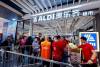
奥乐齐南京连开4家店,为发力全国市场准备?
Sou Hu Cai Jing· 2025-10-26 01:51
Core Insights - Aldi has signed a strategic cooperation agreement with Golden Eagle International Group to enter five shopping centers in Nanjing, marking its first partnership with a large commercial group in China [2][3] - This collaboration reflects Aldi's ambition for regional expansion in the Chinese market, aiming to accelerate its growth beyond Shanghai [2][3] Group 1: Strategic Expansion - Aldi's entry into Nanjing is a critical move in its expansion strategy, showcasing a "three-dimensional progression" approach with a high-density store layout across major areas in the city [3][5] - The company plans to establish a "Nanjing-Zhenjiang-Yangzhou" triangle hub to penetrate surrounding markets, leveraging Nanjing's position as a key consumer center in East China [5][8] - Aldi's strategy in Nanjing serves as a test for its broader national expansion plans, with the potential to replicate its model in southern markets like Guangzhou and Shenzhen [5][10] Group 2: Market Opportunities - The timing of Aldi's expansion coincides with a structural transformation in Nanjing's retail market, presenting a "window of opportunity" in the hard discount sector, which currently lacks a dominant player [7][8] - Nanjing's strong consumer base, with a projected per capita disposable income of 83,084 yuan in 2024, supports Aldi's value-oriented positioning [7][8] - The city's unique consumer behavior, characterized by a preference for quality without premium pricing, aligns well with Aldi's brand strategy [7][8] Group 3: Competitive Landscape - Nanjing is highly competitive, with local leader Su Guo and international brands like Sam's Club and Costco already established, posing challenges for Aldi to differentiate itself [10][11] - The hard discount market is becoming increasingly crowded, with numerous players entering the space, which may pressure Aldi's market entry [10][11] - Aldi's relatively smaller scale compared to local competitors could hinder its ability to compete effectively in the short term [10][11] Group 4: Localization Challenges - Aldi's success in Nanjing will depend on its ability to adapt to local tastes and preferences, as the city has a distinct culinary culture [11][12] - Despite achieving over 80% localization in supplier partnerships, Aldi must continue to enhance its market insights and product offerings to meet local demands [11][12] - Building brand recognition in Nanjing will require significant marketing efforts, as local consumers may not be familiar with Aldi's brand [11][12] Group 5: Conclusion - Aldi's entry into Nanjing represents a significant strategic move in the competitive landscape of Chinese retail, with a clear ambition to deepen its presence in East China and explore national expansion [14] - The challenges of localization and competition will test Aldi's operational capabilities, but the potential for consumer benefits through enhanced competition is evident [14]

预制菜国标讨论会参加者:预制菜的范围采用排除法,即食即配不算预制菜
Jing Ji Guan Cha Bao· 2025-09-15 10:30
Core Viewpoint - The upcoming national standard for prepared dishes in China will clarify the definition and scope of prepared dishes, excluding ready-to-eat and ready-to-assemble products from this category [1][2]. Group 1: Definition and Scope of Prepared Dishes - The national standard will adopt an exclusion method to define prepared dishes, stating that ready-to-eat and ready-to-assemble products do not qualify as prepared dishes [1]. - Prepared dishes are defined as those that undergo industrial pre-processing, such as washing, cutting, and cooking, and are intended to be consumed after heating or cooking [2]. - The current penetration rate of prepared dishes in China is only 10%-15%, with expectations to rise to 15%-20% by 2030, indicating significant market expansion potential [3]. Group 2: Industry Development and Regulation - Measures discussed to promote the development of the prepared dish industry include raising entry barriers for companies and requiring clear labeling of prepared dishes in restaurants [3]. - The China Chain Store & Franchise Association aims to collaborate with government departments to refine industry standards, particularly regarding the labeling of prepared dishes in the food service sector [3].
百年老字号攀“高”逐“新”
Xin Hua Ri Bao· 2025-08-13 22:58
Group 1: Core Objectives and Strategies - Jiangsu Hengshun Group aims to become a leading comprehensive food manufacturing enterprise in China, focusing on its main business and developing a health industry framework [1][4] - The company emphasizes the integration of party leadership with business operations to enhance development quality [1][2] Group 2: Talent Development - Hengshun Group has implemented a dual-hundred project to cultivate young talent, optimizing its leadership structure and enhancing creativity [2][3] - Over the past five years, the company has trained numerous talents, including representatives in national and provincial committees [2] Group 3: Technological Innovation - Hengshun Vinegar has been recognized for its innovative technology in vinegar production, enhancing flavor and health benefits [4] - The company has filed over 180 patents and received multiple awards for its technological advancements [4] Group 4: Reform and Green Development - Hengshun Group is advancing its digital transformation through smart manufacturing projects, achieving significant operational efficiencies [5] - The company integrates green development practices, including solar energy and wastewater treatment, to meet environmental standards [5] Group 5: ESG and Future Vision - The release of the 2024 ESG report marks a significant step in Hengshun's commitment to sustainability and corporate governance [6] - The company aims to establish itself as a global leader in health-oriented condiments, focusing on product lifecycle management and consumer safety [6]
