
压缩天然气(CNG)

Search documents
美国页岩气革命重塑全球天然气供需格局
Qi Huo Ri Bao Wang· 2026-01-14 02:54
Core Insights - The United States is the world's largest producer and consumer of natural gas, significantly influencing the global LNG market. The shale gas revolution has transformed the supply-demand dynamics, shifting the U.S. from a net importer to a net exporter of natural gas [1] Production Overview - U.S. natural gas production has steadily increased, surpassing Russia since 2011, with a global share of over 20% from 2015 to 2024, projected to reach approximately 25% in 2024 [2] - From 2014 to 2023, U.S. natural gas production rose from 27.1 trillion cubic feet to 37.8 trillion cubic feet, with a compound annual growth rate (CAGR) of 3.4% [2] - The shale gas revolution began in the late 1990s, making shale gas the largest source of U.S. natural gas, accounting for 77% of production in 2024 [3] Regional Production - Major U.S. natural gas production regions include the Appalachian, Permian, and Haynesville areas, contributing approximately 68% of total U.S. production in the first half of 2025 [4] - In 2023, the Appalachian region produced 33 billion cubic feet per day, ranking second globally, while the Permian and Haynesville regions ranked fifth and eighth, respectively [4] Import Dependency - The U.S. has reduced its natural gas import dependency to 7%-11% from 2015 to 2024, primarily importing pipeline gas from Canada and Mexico [5][6] - Canada remains the largest source of U.S. natural gas imports, accounting for over 96% of total imports, mainly through pipelines [6] Consumption Trends - The U.S. is also the largest consumer of natural gas, with consumption accounting for about 21% of global totals from 2015 to 2024 [7] - U.S. natural gas consumption grew from 27.2 trillion cubic feet in 2015 to 33.1 trillion cubic feet in 2024, with a CAGR of 2%, driven mainly by increased demand for natural gas in power generation [8] LNG Export Growth - Since 2017, the U.S. has become a net exporter of natural gas, with exports rising from 4.5% in 2010 to 18.9% in 2024, and total exports reaching a record 7.7 trillion cubic feet in 2024 [12] - LNG exports have surged, with volumes increasing from 16.7 billion cubic feet in 2015 to 4.37 trillion cubic feet in 2023, reflecting a CAGR of 74.4% [13] - In 2024, LNG exports accounted for 57% of total U.S. natural gas exports, with Europe being the primary destination, comprising 53% of LNG exports [14][15]

非洲天然气产业重心正在南移
Zhong Guo Hua Gong Bao· 2026-01-07 03:07
Core Insights - Natural gas is becoming the only fossil fuel expected to see significant growth in global primary energy consumption due to its low-carbon transition attributes and flexible applications, particularly driven by rising demand in Asian markets [1] - The natural gas market in sub-Saharan Africa is reshaping the continent's development landscape, with the focus shifting from traditional hubs in North Africa to sub-Saharan regions, which hold over 70% of Africa's recoverable natural gas resources [1] Group 1 - Sub-Saharan Africa is projected to be the core engine for natural gas production growth, with LNG exports expected to surge from 35.7 billion cubic meters in 2024 to 98 billion cubic meters by 2034, representing an increase of nearly 175% [1] - The "Gas Decade" initiative in Nigeria is advancing with over $8 billion in final investment decisions for natural gas projects in the past 18 months, supported by significant infrastructure developments [2] - The cross-border gas field development between Senegal and Mauritania is expected to yield over 150 trillion cubic feet of recoverable reserves, with LNG production and exports anticipated to commence by 2025 [2] Group 2 - Mozambique is emerging rapidly with over 150 trillion cubic feet of recoverable reserves, as TotalEnergies plans to restart a $20 billion LNG project, with Indian companies holding a 40% stake and securing sales rights [2] - The Tanzanian LNG project, backed by Shell and Norway's Equinor, aims for a production capacity of 10 million tons per year, with a target operational date in 2029 [2] - The maturation of the sub-Saharan LNG market is attributed to a combination of resource endowment, market demand, policy optimization, technological innovation, and regional cooperation, despite challenges such as regional instability and weak infrastructure [3]
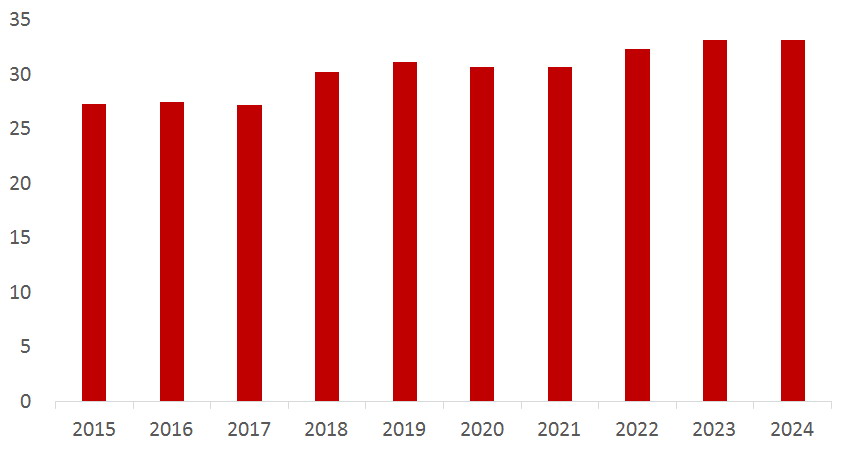
德黑兰时报编译版:伊朗新增8座天然气加气站
Shang Wu Bu Wang Zhan· 2025-11-17 07:32
Core Viewpoint - Iran has launched 8 new compressed natural gas (CNG) refueling stations to increase the share of CNG in the country's fuel structure and promote the use of clean energy [1] Group 1: Investment and Capacity - The total capacity of the newly launched CNG stations is 11,280 cubic meters per hour [1] - The investment for establishing these stations is approximately $122 million, funded through a collaboration between the government and the private sector [1]
洪通燃气: 新疆洪通燃气股份有限公司2025年半年度报告
Zheng Quan Zhi Xing· 2025-08-29 16:18
Core Viewpoint - The report highlights the financial performance and operational status of Xinjiang Hongtong Natural Gas Co., Ltd. for the first half of 2025, indicating significant growth in revenue and net profit, driven by increased sales of liquefied natural gas (LNG) and compressed natural gas (CNG) [2][3]. Financial Performance - The company's operating revenue for the first half of 2025 reached approximately 1.49 billion yuan, representing a 34.37% increase compared to the same period last year [3]. - The total profit amounted to approximately 85.23 million yuan, reflecting a 16.21% increase year-on-year [3]. - The net profit attributable to shareholders was approximately 72.89 million yuan, up by 15.98% from the previous year [3]. - The net cash flow from operating activities surged by 300.67%, reaching approximately 105.06 million yuan [3]. Key Financial Indicators - Basic earnings per share increased to 0.2595 yuan, a rise of 16.21% compared to the previous year [3]. - The weighted average return on equity improved to 3.73%, an increase of 0.30 percentage points [3]. - The company's total assets decreased by 4.03% to approximately 2.49 billion yuan, while net assets attributable to shareholders slightly decreased by 0.56% [3]. Industry Overview - The company operates within the gas production and supply industry, which is regulated by the Ministry of Housing and Urban-Rural Development and the Xinjiang Housing and Urban-Rural Development Department [4]. - The industry is encouraged by national policies focusing on the development of natural gas infrastructure, including LNG and CNG technologies, to promote cleaner energy consumption [4][6]. - The demand for LNG is expected to grow significantly due to its environmental benefits and the government's push for cleaner energy sources [6][12]. Market Trends - The report indicates a strong market trend towards the adoption of LNG as a vehicle fuel, with a projected increase in LNG consumption for transportation purposes [11][12]. - The natural gas vehicle market is expected to expand significantly, supported by government policies and the economic advantages of using natural gas over traditional fuels [13][14]. - The company is well-positioned to benefit from the increasing demand for LNG and CNG, particularly in the transportation sector, as the market for natural gas vehicles continues to grow [12][13].

印度提议征收统一的管输费率 促进CNG在交通运输中的使用
news flash· 2025-07-29 10:21
Core Insights - The Indian government is seeking to enhance the use of natural gas as an automotive fuel by proposing a uniform minimum transportation tariff for compressed natural gas (CNG) users across all transportation sectors [1] - This regulatory change could potentially lower retail natural gas prices by 3%-5%, improving its cost competitiveness against other fuels [1] Industry Impact - The proposal from the Petroleum and Natural Gas Regulatory Board (PNGRB) aims to standardize transportation costs regardless of the distance from the gas source [1] - A reduction in natural gas prices may lead to increased adoption of CNG in the automotive sector, benefiting both consumers and the environment [1]
皖天然气: 公司章程
Zheng Quan Zhi Xing· 2025-06-26 16:21
Core Points - The company is established in accordance with the Company Law and Securities Law of the People's Republic of China, with a registered capital of RMB 490,191,687 [2][6] - The company was approved by the China Securities Regulatory Commission for its initial public offering of 84,000,000 shares, which were listed on the Shanghai Stock Exchange on January 10, 2017 [2][3] - The company's business scope includes the construction, operation, and management of natural gas pipelines, as well as the development and sale of natural gas resources [4][5] Company Structure - The company is a permanent joint-stock company, with the chairman serving as the legal representative [3][4] - The company’s assets are divided into equal shares, and shareholders are liable for the company's debts only to the extent of their shareholdings [3][10] - The company has established a party organization to ensure the alignment of party building and corporate development [4] Business Objectives - The company's mission is to introduce advanced technology and modern management practices to promote the utilization and development of natural gas in Anhui Province [4][5] - The company aims to achieve satisfactory economic benefits for all parties involved [4] Share Issuance and Management - The company has issued a total of 490,191,687 shares, all of which are ordinary shares [6][7] - Share issuance must adhere to principles of openness, fairness, and justice, ensuring equal rights for all shareholders of the same class [5][6] - The company can increase its capital through various methods, including issuing shares to unspecified objects or existing shareholders [7][8] Shareholder Rights and Responsibilities - Shareholders have rights to dividends, voting, and participation in company management, as well as obligations to comply with laws and regulations [10][11] - The company must maintain a shareholder register to document ownership and rights [10][11] - Shareholders holding more than 5% of shares are subject to specific regulations regarding the sale and transfer of their shares [9][10] Governance and Decision-Making - The company’s governance structure includes a board of directors and a shareholder meeting, which are responsible for major decisions such as profit distribution and capital changes [16][17] - Shareholder meetings can be called under specific circumstances, and decisions require a majority or supermajority vote depending on the nature of the resolution [16][17][18] - The company must ensure transparency and compliance with legal requirements during shareholder meetings [21][22]
