
液化石油气(LPG)

Search documents
能源与碳中和季度报告:地缘冲突主导,二季度或中枢上移
Dong Zheng Qi Huo· 2026-03-31 14:41
1. Report Industry Investment Rating - The investment rating for liquefied petroleum gas (LPG) is "Bullish" [1] 2. Core Viewpoints of the Report - The current LPG market is dominated by geopolitical conflicts, and it is difficult to make judgments without considering the geopolitical situation. The development of the geopolitical situation will determine whether the Strait of Hormuz will be open for passage. As of March 31, 2026, the Strait of Hormuz remains blocked, and there is a possibility of further escalation of the conflict, which may drive LPG prices higher. The overall strategy is to go long at low prices. It is expected that the price of the domestic PG main contract will test the previous high again, with a reference target price of 7,400 yuan, and the reference target price for the overseas FEI main continuous contract is 1,000 US dollars. If the military conflict has a clear outcome, the Strait of Hormuz may open, leading to a price correction. However, even if the strait is解封, it will take time for the reduced associated LPG supply to return to the pre - conflict level, and the overall supply will still be tight year - on - year, making it difficult for the price center to return to the beginning - of - year level. In the medium term, if the geopolitical disturbances subside and the Middle East supply recovers well, the LPG price in the second quarter may be the annual high. In the second half of the year, as the US terminal export capacity expands and there is a possibility of combustion demand being replaced by other energy sources, the supply - demand margin will widen significantly compared to the second quarter under geopolitical conflicts [3][4][60] 3. Summary by Directory 3.1 2026 Q1 Liquefied Petroleum Gas Market Review - In Q1 2026, the LPG market was characterized by "unexpected" events. Geopolitical contradictions in the Middle East led to the obstruction of the Strait of Hormuz, causing the prices of energy and chemical products to rise and fluctuate sharply. From January to February, the market focused on the contradiction between the restocking demand of PDH plants in China under low - profit and low - inventory conditions and the sufficient shipments from the US and the Middle East. The prices of domestic and overseas markets fluctuated widely within a range. In March, the geopolitical conflict escalated, and the blockade of the Strait of Hormuz disrupted the global LPG trade structure, turning the market from oversupply to significant undersupply. The domestic PG contract followed the upward trend of energy and chemical products in March, but the market start was delayed. As the blockade continued, the domestic PG contract saw a supplementary increase [13][14] 3.2 Geopolitical Conflicts Reshape the H1 2026 Supply Pattern 3.2.1 US Terminal Constraints on Export Growth and Difficult Inventory Reduction - US LPG supply increased by 7.1% year - on - year from January to February, and the growth rate of oil and gas field LPG was 7.5%. The STEO report in March was too conservative in its production forecast. With the increase in crude oil prices in March, it is expected to stimulate more crude oil production and increase NGLs output. The weekly production of propane and propylene in the US reached a high of 2.89 million barrels per day in early March, a 3% increase from February. The overall US LPG supply is in line with the initial expectations, with an estimated annual production growth rate of 4.3% in 2026, slightly down 0.2%. The domestic demand in the US is normal. Due to the increase in supply and stable demand, the US propane inventory is difficult to reduce and may enter a stockpiling channel, with the absolute level 70% higher than the same period last year. The export in Q1 was normal, but the current terminal export capacity is insufficient, and the next terminal capacity expansion is not expected until June. It is estimated that the propane inventory will reach 100 million barrels in the middle of the year [21][22] 3.2.2 Uncertainty in Middle East Q2 Exports - As of March 22, 2026, the total LPG exports from the Middle East were 8.85 million tons, and the Q1 exports are expected to be around 9 million tons, a 20% year - on - year decrease. The blockade of the Strait of Hormuz has a huge impact on Middle East LPG exports, and it is difficult to bypass the strait. The subsequent export volume in the second quarter depends on the resumption of passage in the Strait of Hormuz. In addition, major oil - producing countries in the Middle East have reduced their crude oil production due to the inability to export. The total crude oil production reduction of four major Middle East oil - producing countries may reach up to 6.7 million barrels per day, accounting for nearly 7% of the global crude oil production. The LPG production of Qatar's gas fields is expected to be damaged by 13%, with a monthly production loss of about 100,000 tons. When the strait is blocked, the monthly export volume of the Middle East may be 550,000 - 730,000 tons. After the strait is解封 and before the crude oil production recovers, the estimated monthly export volume is about 3.6 million tons [33][34][35] 3.3 Q2 Demand Under Pressure, Performance Depends on Supply Recovery 3.3.1 Impact on Asian Demand Under Continuous Strait Blockade - Under the continuous blockade of the Strait of Hormuz, the Middle East LPG supply is cut off. Asian demand is significantly affected, mainly in India's combustion demand and China's chemical demand. India is the most affected country, with about 90% of its LPG imports from the Middle East and used for combustion. China imports about 50% of its LPG from the Middle East for chemical use. India's LPG arrivals have declined since March 15, and China's imports are expected to be affected in April. If the blockade persists, there is a possibility of permanent substitution of combustion demand by other energy sources and demand loss due to economic impact [38][39] 3.3.2 Good Demand Performance Excluding Geopolitical Impact - Excluding March, which was significantly affected by geopolitical events, the import volume of Asian countries in January and February showed stable growth, with a 3.4% year - on - year increase in the total imports of China, Japan, South Korea, and India. India's imports in January and February were in line with expectations, but were significantly affected in March. Japan and South Korea's imports increased by about 9% year - on - year in January and February but declined in March. China's imports were weak in January and February due to low PDH plant profits and low开工 rates. The PDH开工 rate is expected to drop to 50% in April, further reducing propane demand [45][46] 3.4 Supply - Demand Balance Summary 3.4.1 Significant Shortage Under Continuous Blockade - Under the continuous blockade of the Strait of Hormuz, the Middle East supply drops to about 650,000 tons per month, far lower than the monthly average of 4 million tons in 2025. Even with a 150,000 - ton - per - month increase in US exports in the first half of the year, the supply gap cannot be filled. To achieve supply - demand balance, demand destruction through high prices is necessary. India's minimum necessary import volume and available inventory days for LPG will determine the market's actual spot liquidity [57] 3.4.2 Market Balance in the Transition Phase After Strait Reopening - In the transition phase after the Strait of Hormuz is reopened, assuming the crude oil production reduction of major oil - producing countries remains at 6.7 million barrels per day, the Middle East supply will improve significantly to 3.6 million tons per month. Asian combustion demand can be fully met, and the balance mainly depends on the marginal adjustment of chemical demand. With the expected 50% PDH开工 rate in April, the reduction in propane demand is about 500,000 tons per month, which offsets the LPG supply loss in the Middle East. Coupled with the 150,000 - ton - per - month increase in US supply, there is room for a 5% increase in the PDH开工 rate or for major combustion - demand countries like India to replenish their safety inventories. However, if the geopolitical conflict intensifies and causes long - term damage to oil and gas facilities, the LPG supply loss in the Middle East needs to be further adjusted. It will take at least 1 - 2 weeks for the main Middle East supply to return to the market after the strait is reopened, and this period may be the most chaotic [58] 3.5 Summary and Outlook - In terms of supply, the US maintains a high - level export, but the terminal capacity bottleneck restricts further export growth, leading to inventory accumulation. Middle East supply is limited under the current strait blockade, and the actual supply level in the second quarter is highly uncertain. On the demand side, the current undersupplied market is testing India's minimum necessary LPG import volume for combustion and inventory levels, and China's PDH chemical demand is under pressure, with the开工 rate expected to drop to about 50% in April. The LPG price is expected to rise further if the conflict escalates, with the domestic PG main contract price testing the previous high of 7,400 yuan and the overseas FEI main continuous contract price reaching 1,000 US dollars. After the conflict is resolved and the strait is reopened, the price may correct, but the supply will remain tight year - on - year, and the price center may not return to the beginning - of - year level. In the medium term, if geopolitical disturbances subside, the second - quarter LPG price may be the annual high, and the supply - demand margin will widen in the second half of the year [59][60]
刚刚,集体拉升!马来西亚,突然宣布!涉及霍尔木兹海峡
券商中国· 2026-03-27 05:31
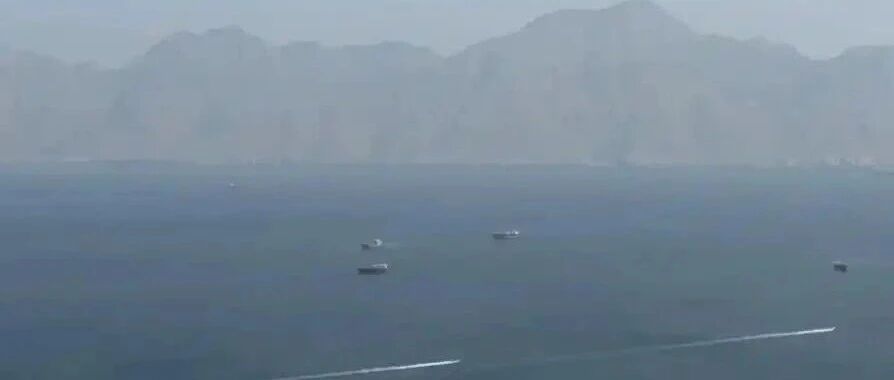
Core Viewpoint - The recent announcement from Malaysia regarding Iran allowing its oil tankers to pass through the Strait of Hormuz alleviates concerns about potential disruptions in energy supply due to the ongoing tensions in the region [1][3]. Group 1: Market Reactions - In the past 24 hours, there has been a slight increase in the number of vessels related to Iran attempting to pass through the Strait, primarily consisting of bulk carriers and liquefied petroleum gas (LPG) transport ships [2][4]. - Major stock indices showed significant gains, with the MSCI China A50 index rising by 1.20% and the Nikkei 225 futures increasing by over 2% [2]. - A-shares and Hong Kong stocks also experienced upward movement, with the ChiNext index up by over 1% and the Hang Seng Technology Index rising by 1.38% [2]. Group 2: Developments in the Strait of Hormuz - Malaysian Prime Minister Anwar announced that Iran would allow Malaysian vessels to pass through the Strait, which is crucial for Malaysia as it relies on this route for nearly half of its oil supply despite being an oil-producing country [3]. - The Strait of Hormuz is a vital artery for global oil circulation, with approximately one-fifth of the world's oil and gas passing through it [7]. Group 3: U.S. Government Actions - U.S. Treasury Secretary Mnuchin stated that an insurance plan aimed at facilitating shipping through the Strait of Hormuz would soon be launched, potentially restoring the flow of global oil and gas supplies [6]. - The U.S. has previously announced that the International Development Finance Corporation would provide insurance guarantees to ensure the safe passage of tankers through the Strait [7]. - U.S. Secretary of State Rubio mentioned that negotiations between the U.S. and Iran have made progress, although details remain undisclosed [8].

LPG早报-20260327
Yong An Qi Huo· 2026-03-27 01:25
Group 1: Report Industry Investment Rating - No information provided Group 2: Core Views of the Report - The rise in the Middle East situation, attacks on Iranian and Qatari gas fields, and compressor leaks have pushed up the PG futures market significantly. The current basis is weak, and the domestic market is in a contradiction between weak reality and strong expectations. The 4 - 5 month spread in the domestic market is in a delivery game and is expected to fluctuate greatly. In the future, there will likely be a shortage of goods in the second half of April in China, and if the Strait is interrupted for a longer time, the international market will face a more serious shortage, and the external market will remain strong [1] Group 3: Summary of Relevant Catalogs 1. Price Data - **Daily Price Changes**: From March 20 - 26, 2026, the prices of liquefied gas in South China, East China, and Shandong showed an overall upward trend. For example, the price of South China liquefied gas rose from 6300 on March 20 to 7220 on March 26 [1] - **Contract Data**: On March 26, the PG2605 contract closed at 6541 (-53) at 3 pm, with a 5 - 6 month spread of 199 (-43). The number of warrants was 1300 (-1800). The night session closed at 6550 (+9), with a 5 - 6 month spread of 14〈-11〉 [1] 2. Fundamental Data - **Inventory and Capacity Utilization**: Port inventory ratio is 35.84% (+0.79pct), enterprise storage capacity utilization is 26.05% (+1.11 pct), and PDH operating rate is 65.63% (+2.4pct) [1] - **Profit Situation**: Propylene spot profit has weakened slightly, and the paper - making profit of PDH to PP in East and South China has declined [1] 3. Spread and Basis Data - **Basis**: The latest basis is - 1057 (-736) [1] - **Month - to - Month Spread**: The 4 - 5 month spread is 64 (-68), and the FEI month - to - month spread is 112 US dollars (+28) [1] - **Price Difference**: The PG - FEI c1 is 35 (-15.5), the South China CP propane arrival discount is 501 (+108), and the FEI - MOPI price difference is - 76 (+52) [1]
花旗:昆仑能源去年纯利逊预期 零售天然气单位利润下跌
Zhi Tong Cai Jing· 2026-03-26 15:46
Core Viewpoint - Kunlun Energy reported a 9.4% year-on-year increase in natural gas sales volume to 59.26 billion cubic meters, despite a decline in retail gas sales for residential and commercial use [2][3] Group 1: Natural Gas Sales Performance - Total natural gas sales volume increased by 9.4% to 59.26 billion cubic meters, with retail gas volume growing by 2.3% to 33.51 billion cubic meters and distribution and trading gas volume rising by 20.2% to 25.75 billion cubic meters [2] - Industrial gas sales increased by 6.2% to 26.05 billion cubic meters, while residential gas sales decreased by 4.4% to 3.45 billion cubic meters, commercial gas sales fell by 2.3% to 2.92 billion cubic meters, and gas station sales dropped by 33.5% to 1.09 billion cubic meters [2] Group 2: Financial Performance - The company reported a 10.3% year-on-year decline in net profit to 5.346 billion RMB, which was 12% lower than market expectations [3] - Core profit decreased by 6.9% to 5.923 billion RMB, with the pre-tax profit from the natural gas sales business falling by 17.6% to 6.756 billion RMB [3] - The average unit gross profit decreased by 0.02 RMB to 0.45 RMB per cubic meter, while competitors saw an increase in unit gross profit [3] Group 3: Operational Metrics - The total gasification and loading volume at two LNG receiving stations increased by 3.7% to 16.527 billion cubic meters, with average utilization rate rising by 3.2 percentage points to 90.8% [2] - Processing volume at 14 LNG plants grew by 5.3% to 3.737 billion cubic meters, with average utilization rate increasing by 3.2 percentage points to 67.2%, although revenue fell by 11.8% to 3.88 billion RMB [2] - LPG sales volume increased by 6.3% to 6.15 million tons, but revenue decreased by 2% to 25.091 billion RMB [2] Group 4: Cash Flow and Debt Metrics - Operating cash flow for the year was 12.585 billion RMB, a slight decline of 1.2% year-on-year [2] - Capital expenditure decreased by 4.6% to 6.257 billion RMB, while the net debt ratio fell by 2.7 percentage points to 18.8% [2] - Average debt cost decreased to 2.54% [2]

瑞银:昆仑能源(00135)指引不低于五成派息率 目标价上调至10.7港元
智通财经网· 2026-03-26 08:39
Core Viewpoint - UBS reports that Kunlun Energy (00135) experienced a 7% year-on-year decline in core profit to 5.92 billion RMB, while the dividend payout ratio increased by 8 percentage points to 51% [1] Financial Performance - The company has guided that the dividend payout ratio for 2026 to 2028 will not be less than 50%, with total annual dividends expected to be at least at the 2025 level [1] - UBS has adjusted the earnings per share forecast for the company down by 3% to 5% for the years 2023 to 2028, while raising the target price from 9.7 HKD to 10.7 HKD, maintaining a "Buy" rating, which corresponds to a projected price-to-earnings ratio of 13 times [1] Sales and Operations - Retail natural gas sales grew by 2.3% last year, with industrial user sales increasing by 6.2%, while residential user sales fell by 4.4% [1] - The utilization rate of liquefied natural gas (LNG) processing plants increased to 67.2%, with pre-tax profits doubling, and the utilization rate of LNG receiving stations rose to 90.8% [1] - The company expects retail natural gas sales to grow by approximately 3% this year, with LPG sales projected at 5.8 million tons, and the utilization rate for LNG receiving stations is guided to be between 85% and 90% [1]
每日核心期货品种分析-20260325
Guan Tong Qi Huo· 2026-03-25 11:19
Report Summary 1. Report Industry Investment Rating No information provided. 2. Core Viewpoints - The domestic futures market had mixed performance on March 25, 2026, with some commodities rising and others falling. The market was significantly affected by the Middle - East situation, and the prices of energy - related commodities were highly volatile [6][7]. - For most commodities, the uncertainty of the Middle - East situation led to large price fluctuations, and it was recommended to be cautious when participating in the market, with some suggesting temporary exit and waiting for more stable market conditions [13][16][18]. 3. Summary by Related Catalogs 3.1. Commodity Performance - **Falling Commodities**: Liquefied petroleum gas (LPG) dropped by over 8%, fuel oil and container shipping on the European line dropped by over 6%, and ethylene glycol, PVC, low - sulfur fuel oil (LU), propylene, and plastic dropped by over 4% [6]. - **Rising Commodities**: Shanghai silver rose by over 7%, platinum and palladium rose by over 5%, and lithium carbonate and butadiene rubber rose by over 4%. Stock index futures and some treasury bond futures also had varying degrees of increase [6][7]. - **Fund Flows**: As of 15:25 on March 25, 2026, funds flowed into Shanghai gold 2606 (5.782 billion yuan), Shanghai silver 2606 (1.804 billion yuan), and butadiene rubber 2605 (1.097 billion yuan). Funds flowed out of CSI 1000 2606 (4.134 billion yuan), crude oil 2605 (783 million yuan), and iron ore 2605 (732 million yuan) [7]. 3.2. Market Analysis - **Copper**: In February 2026, China's copper concentrate imports increased year - on - year but decreased month - on - month. The shortage of copper resources supported the price. The substitution of recycled copper decreased, and the production of electrolytic copper increased. The demand in the copper product sector started to pick up, but the terminal data was not optimistic. The copper price rebounded due to the news of the possible cease - fire in the Middle - East, and caution was needed when chasing the rise [9]. - **Lithium Carbonate**: The price of lithium carbonate rose. In February 2026, China's lithium carbonate imports increased year - on - year but decreased month - on - month. The export of lithium ore in Zimbabwe was affected, and the subsequent resumption of production in domestic lithium mines was a potential negative factor. The inventory decreased slightly, and the overall demand growth showed a marginal weakening trend [11]. - **Crude Oil**: The EIA data showed that the US crude oil inventory increased more than expected, but the refined oil inventory decreased significantly. The Middle - East situation was the focus, and the suspension of navigation in the Strait of Hormuz led to production cuts in Middle - East oil - producing countries. Although some measures were taken to ease the supply pressure, the situation was still uncertain, and the oil price was highly volatile [12][13]. - **Asphalt**: The asphalt production rate decreased, and the downstream demand gradually recovered. The market was worried about the shortage of raw materials in domestic refineries due to the Middle - East situation. The supply - demand situation improved, but it was recommended to stay on the sidelines and pay attention to the development of the Middle - East situation [14]. - **PP**: The downstream demand for PP recovered slowly, and the enterprise production rate decreased. The cost was affected by the Middle - East situation. The domestic supply - demand pattern improved, but the downstream was resistant to high prices. It was recommended to pay attention to the downstream resumption of production and the Middle - East situation [16]. - **Plastic**: The plastic production rate decreased, and the downstream demand gradually recovered. The cost was affected by the Middle - East situation. The domestic supply - demand pattern improved, but the downstream was cautious in purchasing. It was recommended to pay attention to the downstream resumption of production and the Middle - East situation [17][18]. - **PVC**: The PVC production rate decreased, and the downstream demand gradually recovered. The export price increased, and the social inventory decreased for the first time after the Spring Festival. The PVC industry had the expectation of anti - involution, and the supply was expected to decrease if the Strait of Hormuz did not resume navigation. It was recommended to stay on the sidelines [19][21]. - **Coking Coal**: The domestic coal production resumed, and the downstream started to build up inventory. The price of coking coal was affected by the Middle - East situation, and the market volatility was high. The fundamental driving force was not strong, and caution was needed in operation [22]. - **Urea**: The market trading was average, and the factory price was stable. The high production and national reserve ensured the supply, and the downstream demand was weakening but still had some procurement. The inventory continued to decrease, and the price was in high - level shock [23].
花旗:昆仑能源(00135)去年纯利逊预期 零售天然气单位利润下跌
智通财经网· 2026-03-25 06:21
Group 1 - The core viewpoint of the report is that Citigroup maintains a "Buy" rating for Kunlun Energy (00135) with a target price of HKD 8.4 [1] - Kunlun Energy's net profit decreased by 10.3% year-on-year to RMB 5.346 billion, which is 12% lower than market expectations [1] - The core profit fell by 6.9% year-on-year to RMB 5.923 billion, while the annual dividend per share remained at 31.58 cents, with a payout ratio increasing by 5.2 percentage points to 51.1% [1] Group 2 - The pre-tax profit from natural gas sales dropped by 17.6% year-on-year to RMB 6.756 billion, with unit gross profit decreasing by RMB 0.02 to RMB 0.45 per cubic meter [1] - Natural gas sales volume increased by 9.4% year-on-year to 59.26 billion cubic meters, with retail gas volume growing by 2.3% to 33.51 billion cubic meters and distribution and trading gas volume rising by 20.2% to 25.75 billion cubic meters [1] - The average selling price of natural gas fell by RMB 0.11 to RMB 2.73 per cubic meter, while the average procurement cost decreased by RMB 0.09 to RMB 2.28 per cubic meter [1] Group 3 - The total gasification and loading volume of two LNG receiving stations increased by 3.7% year-on-year to 16.527 billion cubic meters, with the average utilization rate rising by 3.2 percentage points to 90.8% [2] - The processing volume of 14 LNG plants grew by 5.3% to 3.737 billion cubic meters, but revenue fell by 11.8% to RMB 3.88 billion due to a decline in average selling prices [2] - Operating cash flow for Kunlun Energy was RMB 12.585 billion, a slight decrease of 1.2% year-on-year, while capital expenditure reduced by 4.6% to RMB 6.257 billion [2]
摩根大通警告:全球石油供应缺口或持续在千万桶/日,政策工具很难跟上
华尔街见闻· 2026-03-24 11:09
Core Viewpoint - The global oil supply gap has reached 16 million barrels per day, expected to remain around 10 million barrels per day in April, significantly exceeding any historical supply disruption events [1][8] Group 1: Supply Gap and Uncertainties - The modeling of unprecedented events like the Iran conflict and the blockade of the Strait of Hormuz has pushed traditional analytical frameworks to their limits, with no historical precedent for the scale and complexity of this disruption [2] - The greatest uncertainty lies in the duration of the conflict, with mixed signals from the U.S. and Israel regarding its length, while Iran appears to believe time is on its side [2] - Even if hostilities cease, normal navigation through the Strait of Hormuz may not resume immediately, highlighting the structural impact of the disruption [2] Group 2: Regional Impact and Inventory - Southeast Asia is particularly vulnerable due to its heavy reliance on imports and limited domestic refining capacity, leading to a significant shortfall in crude and refined oil [3] - Countries like Indonesia, Thailand, and Sri Lanka may need to draw heavily on commercial product inventories, estimated at 129 million barrels, potentially contributing about 1 million barrels per day in supply relief over the coming months [3] Group 3: Floating Storage and Sanctions - Iran holds approximately 38 million barrels of floating oil and refined products, while Russia has about 17 million barrels, together potentially releasing around 500,000 barrels per day to the market [4] - However, the formal lifting of sanctions on Iranian and Russian oil may have limited marginal impact on actual supply, as these products have been flowing through alternative channels [5] - The significant aspect of lifting sanctions could be that it allows large state-owned refineries in India to engage in procurement more confidently, replacing more cautious private buyers [7] Group 4: Price Mechanisms and Demand Destruction - The only remaining adjustment mechanism in this context is rising prices, which are leading to demand destruction across various sectors [9] - The chemical, aviation, and agricultural industries are facing significant pressure due to supply constraints, with refineries reducing operating rates and product output declining sharply [10] - The impact of the blockade is particularly concentrated on naphtha, liquefied petroleum gas (LPG), and jet fuel, with about 5% of global ethylene capacity in Japan and South Korea already shut down [11][13] - The aviation sector is under pressure as jet fuel costs typically account for over 20% of operating expenses, leading airlines to cut routes, especially in Africa and Europe [14]

盘面连续大涨,LPG基差走低
Hua Tai Qi Huo· 2026-03-24 06:37
Group 1: Report Investment Rating - No investment rating provided in the report Group 2: Core View - The geopolitical situation remains tense, with the number of oil tankers (including LPG ships) passing through the Strait of Hormuz at an extremely low level, significantly tightening the supply of LPG in the Middle East. The war has also affected the oil and gas fields, leading to a reduction in production and a longer - lasting impact. Although the increase in US LPG exports can partially fill the Middle East gap, it is limited by export terminal capacity and actual shipments are lower than expected, further tightening the Asian LPG market and driving up the arrival price. The PG futures, which lagged in the early stage, have accelerated their rise. Considering the supply gap and the cancellation of warehouse receipts at the end of March, PG is expected to continue its strong performance. However, the situation in the Middle East is still unclear, the sector is greatly affected by news, and there is a negative feedback effect on downstream demand after the sharp rise in LPG prices, with the basis significantly decreasing. The market is highly volatile, and both long and short positions lack a safety margin, so caution is needed [1] Group 3: Market Analysis - On March 23, the regional prices were as follows: Shandong market, 6500 - 6600 yuan/ton; Northeast market, 5520 - 6010 yuan/ton; North China market, 6150 - 6550 yuan/ton; East China market, 6580 - 7090 yuan/ton; Yangtze River region market, 6650 - 6860 yuan/ton; Northwest market, 5900 - 6000 yuan/ton; South China market, 6950 - 7130 yuan/ton [1] - In the second half of April 2026, the arrival price of frozen LPG in East China was 1158 US dollars/ton for both propane and butane, down 1 US dollar/ton compared to the previous period. The RMB - converted price was 8802 yuan/ton for both propane and butane, up 11 yuan/ton [1] - In the second half of April 2026, the arrival price of frozen LPG in South China was 1158 US dollars/ton for both propane and butane, down 1 US dollar/ton compared to the previous period. The RMB - converted price was 8802 yuan/ton for both propane and butane, up 11 yuan/ton [1] Group 4: Strategy - Unilateral: Short - term, the market is expected to be volatile and slightly bullish. It is recommended to wait and see [2] - Inter - period: No strategy provided - Inter - variety: No strategy provided - Spot - futures: No strategy provided - Options: No strategy provided
印度石油天然气:此次与历史不同
citic securities· 2026-03-24 05:59
Investment Rating - The report indicates a cautious outlook for the Indian Oil and Natural Gas Corporation (ONGC) due to historical burdens and recent policy changes, but highlights potential catalysts for growth in the near term [2][4]. Core Insights - ONGC has been the worst-performing upstream oil and gas stock globally since the Russia-Ukraine conflict, primarily due to investor concerns over a new windfall tax policy and historical subsidy burdens [2][3]. - The new oilfield law passed by the Indian Parliament aims to improve the business environment and provide stability for exploration and development contracts, which may alleviate investor concerns regarding government intervention [4]. - Upcoming production from new gas fields is expected to increase natural gas output by 15% within the next 3-4 months, which could serve as a catalyst for stock price appreciation [2][5]. Summary by Sections Historical Burden - ONGC's stock has returned -5% this month, contrasting with a median gain of 13% for global upstream oil and gas stocks since the Gulf War [3]. - Historical subsidy burdens and the impact of windfall taxes during high oil prices have prevented ONGC from fully capitalizing on oil price increases, leading to a current stock price that implies a 40% discount to spot oil prices [3]. New Legislation and Government Commitment - The oilfield law amendment promises not to unilaterally alter lease conditions that could harm lessees, which is a significant shift from past practices [4]. - The Indian Oil Minister has publicly acknowledged that windfall taxes have undermined investor confidence and emphasized that the new law makes it difficult for the government to impose such taxes [4]. Catalysts for Growth - The anticipated increase in gas prices by over 50% starting April 1, linked to the Indian crude oil basket price, is expected to boost investor confidence in ONGC's earnings potential [5]. - The ramp-up in production from new gas fields in the second half of FY26 is identified as a key catalyst for stock price movement [6].