可灵(Kling)3.0

Search documents
AI漫剧2026:千亿深水区的工业化豪赌与审美突围
3 6 Ke· 2026-02-25 23:44
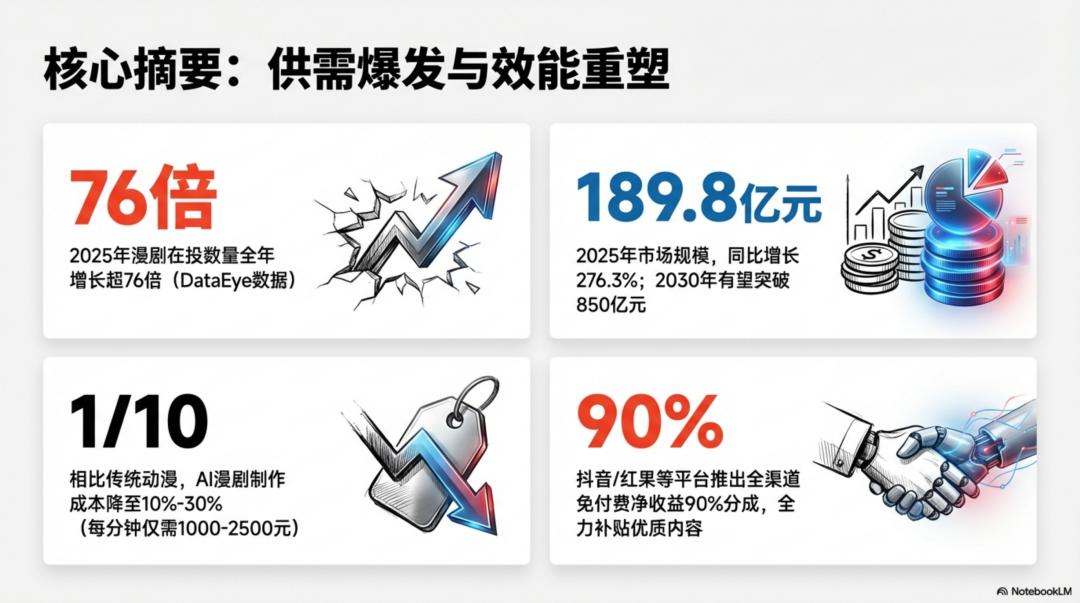
Core Insights - The AI comic industry has evolved from a novel experiment to a significant market segment, with projections indicating a market value of 243.6 billion yuan in 2026 and potential growth to 850 billion yuan by 2030 [1] - The production costs for AI comics have drastically decreased, allowing small teams to produce high-quality content efficiently, marking a shift from traditional animation methods [7][9] - The industry is experiencing a transformation in content monetization strategies, with a shift from pure pay models to ad-supported models, reflecting changing audience preferences [18][20] Group 1: Market Growth and Trends - The AI comic sector saw a staggering increase in production, with the number of comics produced growing over 76 times in 2025 [1] - The total viewership for AI comics on platforms like Douyin and Hongguo reached 700 billion views in 2025, a tenfold increase from the previous year [14] - The market is expected to reach 243.6 billion yuan in 2026, with optimistic forecasts suggesting it could grow to 850 billion yuan by 2030 [1] Group 2: Production Efficiency and Cost - Traditional animation production requires hundreds of collaborators and can take months, with costs per minute reaching tens of thousands of yuan [7] - In contrast, AI comic production costs have been reduced to between 1,000 and 2,500 yuan per minute, enabling small teams to produce high-quality content in a fraction of the time [9] - The emergence of new roles, such as "prompt engineers," has facilitated the translation of scripts into AI-understandable instructions, enhancing production efficiency [10] Group 3: Technological Advancements - The introduction of advanced AI technologies, such as Seedance 2.0, has significantly improved video generation quality, achieving millisecond-level synchronization between video and audio [11] - AI's ability to maintain character consistency across scenes has transformed the storytelling process, allowing for more complex narratives [13] - The adherence to physical laws in AI-generated content marks a departure from earlier, less sophisticated methods, indicating a maturation of the technology [13] Group 4: Monetization Strategies - The ROI for pure pay models has declined to around 1.1, with only the top 5% of companies maintaining a return above 1.2, prompting a shift to ad-supported models [18] - Platforms like Douyin and Hongguo are offering high revenue-sharing models to attract quality content, with guarantees reaching up to 5 million yuan per series [14] - Collaborations between brands and AI comics are emerging as a new revenue stream, with successful examples generating significant sales [20] Group 5: Intellectual Property and Market Dynamics - The AI comic industry is witnessing a reevaluation of dormant IPs, with major companies opening up extensive libraries for adaptation [21][23] - The adaptation of popular literary IPs into AI comics has become a significant trend, with over 60% of recent hits being adaptations [27] - Legal challenges regarding copyright and content originality are becoming more prevalent, highlighting the need for efficient dispute resolution mechanisms [29][31] Group 6: Global Expansion and Competitive Landscape - The international market for AI comics is projected to reach between 60 billion and 90 billion USD by 2026, with Chinese companies dominating the sector [32] - The ability to quickly adapt content for Western audiences using AI tools is providing a competitive edge for Chinese firms [34] - The shift towards a data-driven and AI-powered production model is intensifying competition in the global entertainment landscape [35] Group 7: Future Outlook - The evolution of AI from simple tools to "agentic AI" is expected to redefine the production and consumption of AI comics, enhancing interactivity and narrative depth [36] - The focus will shift towards emotional value and storytelling quality, as the barriers to entry for content creation diminish [36]

多模态“Deepseek时刻”下的大厂分化:字节拼“效率”,快手攻“专业”,阿里聚焦“电商”!
硬AI· 2026-02-12 15:44
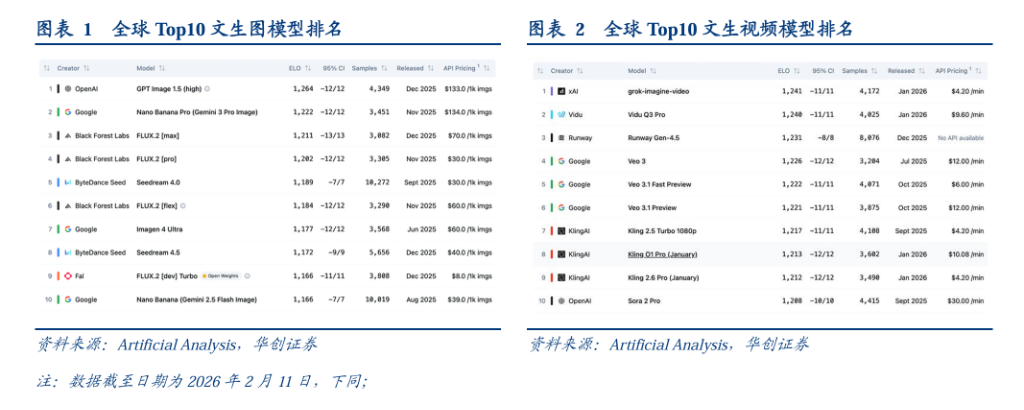
Core Viewpoint - The article discusses the evolution of AI video generation from entertainment to industrial production, emphasizing the importance of controllability and reduced waste rates in video production processes [1][2][5]. Group 1: AI Model Updates - The recent updates in domestic multimodal models, such as Keling 3.0 and Seedance 2.0, significantly enhance controllability, marking a shift in AI video from entertainment to industrial production [2][5]. - The upgrades focus on improving controllability over video generation, including consistency across scenes, adherence to complex instructions, and the ability to edit generated content, thereby reducing waste rates [5][10]. Group 2: Cost Structure and Commercialization - The report indicates that the marginal cost of video production is increasingly aligning with computational costs, driven by advancements in AI models that lower waste rates [2][20]. - The commercialization threshold has shifted from "can it be done" to "can it be delivered consistently," highlighting the importance of stability in output quality [8][20]. Group 3: Competitive Landscape - ByteDance focuses on efficiency and cost reduction in content production, Kuaishou emphasizes professional storytelling, and Alibaba targets vertical e-commerce applications, indicating distinct strategic paths among these companies [19]. - The competition is not solely based on performance rankings but rather on the strategic differentiation of each company's offerings [19]. Group 4: Supply-Side Revolution - The report predicts a supply-side revolution where the marginal cost of content production will increasingly resemble computational costs, leading to improved efficiency for marketing and e-commerce service providers [20]. - As content production becomes easier, the scarcity and pricing of intellectual property (IP) will become more pronounced, with top-tier IP and derivatives gaining higher value [20].

多模态“Deepseek时刻”下的大厂分化:字节拼“效率”,快手攻“专业”,阿里聚焦“电商”!
Hua Er Jie Jian Wen· 2026-02-12 06:35
Core Insights - The recent updates in AI video generation tools signify a shift from mere entertainment to becoming integral tools in workflows, indicating a move towards industrialized production [1] - The challenges in commercialization stem from high marginal costs due to the need for repeated generation and rework, leading to inefficiencies [1] Group 1: Product Developments - Kuaishou's Kling 3.0 and ByteDance's Seedance 2.0 upgrades focus on enhancing controllability over video generation, prioritizing consistency across scenes and complex instruction adherence [4][6] - Seedance 2.0 is positioned as an industrial tool, emphasizing physical realism, natural motion, and precise instruction understanding [9] - The new models aim to reduce waste rates in video production, shifting the focus from "can it be done" to "can it be delivered consistently" [5] Group 2: Competitive Landscape - ByteDance is pursuing a strategy focused on low-cost, generalized tools, while Kuaishou emphasizes high-quality narrative delivery, and Alibaba targets vertical applications in e-commerce [13] - The competition is not merely about performance rankings but rather about strategic differentiation among companies [13] Group 3: Economic Implications - The report suggests a "supply-side revolution" where the marginal costs of content production will increasingly align with computational costs, potentially leading to a surge in production capacity in short films and series [14] - As content production becomes easier, the value of intellectual property (IP) may become more concentrated, with top-tier IP gaining higher valuations [14]