可重复火箭

Search documents
铂力特:国家支持核心技术研发,公司如何把握政策机遇
Xin Lang Cai Jing· 2026-02-13 10:09
Group 1 - The company acknowledges the government's opening of national scientific research projects and sharing of major experimental facilities, which presents opportunities for the development of core technologies such as reusable rockets and smart satellites [1] - The company expresses gratitude for investor interest and emphasizes its commitment to leveraging these policy opportunities [1]

券商晨会精华 | 人形机器人板块持续反弹 布局窗口开启
智通财经网· 2025-12-02 00:31
Market Overview - The market experienced a rebound yesterday, with the Shanghai Composite Index returning above 3900 points, and both the Shenzhen Component Index and the ChiNext Index rising over 1% [1] - The total trading volume in the Shanghai and Shenzhen markets reached 1.87 trillion yuan, an increase of 288.1 billion yuan compared to the previous trading day [1] - By the end of the trading session, the Shanghai Composite Index rose by 0.65%, the Shenzhen Component Index increased by 1.25%, and the ChiNext Index gained 1.31% [1] Humanoid Robot Sector - The humanoid robot sector has shown significant rebound, with a noticeable inflow of funds and the overall index entering an upward channel [2] - The core driving factors include the nearing end of the sector's adjustment, sufficient risk release, and a more rational and unified industry outlook [2] - By 2026, humanoid robots are expected to enter mass production, with major companies entering the market and policy support and subsidies likely to materialize [2] Commercial Aerospace Development - The establishment of the Commercial Aerospace Office by the National Space Administration aims to enhance the efficiency of launch approvals and licensing, promoting standardized and large-scale development of the industry [3] - The "Action Plan for Promoting High-Quality and Safe Development of Commercial Aerospace (2025-2027)" outlines four core objectives, including support for low-cost technologies and the establishment of a national fund to optimize the industry ecosystem [3] - By 2025, the industry is expected to accelerate, with over 100 in-orbit satellites and private rocket companies entering the national satellite launch market [3] Space Computing and Perovskite Materials - Space computing is transitioning from concept to reality, with major overseas tech companies making significant investments [4] - The energy supply for space computing will heavily rely on photovoltaic technology, with perovskite materials emerging as a promising solution due to their high efficiency and low cost [4] - Since 2025, the industrialization of perovskite technology is expected to accelerate, with multiple GW-level production lines being launched, presenting investment opportunities in the perovskite sector [4]



中信建投:商业航天司落地及行动计划发布,我国商业航天高质量发展有望加速
Mei Ri Jing Ji Xin Wen· 2025-12-02 00:18
Core Viewpoint - The establishment of the Commercial Space Administration by the National Space Administration aims to enhance the efficiency of launch approvals and licensing, promoting the standardized and large-scale development of the commercial space industry [1] Group 1: Regulatory Developments - The Commercial Space Administration will serve as a dedicated regulatory body to improve the efficiency of launch approvals and licensing [1] - The release of the "Action Plan for Promoting High-Quality and Safe Development of Commercial Space (2025-2027)" outlines four core objectives [1] Group 2: Strategic Goals - The action plan includes support for low-cost technologies such as reusable rockets and smart satellites through open research projects [1] - It aims to promote the integration of civil and commercial standards by sharing national resources like measurement and control stations and testing grounds [1] - Establishment of a national fund to optimize the industrial ecosystem is also a key goal [1] - A comprehensive safety regulatory system covering the entire lifecycle of the industry will be constructed [1] Group 3: Industry Outlook - By 2025, the industry is expected to accelerate with over 100 in-orbit satellites from GW and Qianfan Constellation, and private rocket companies entering the national satellite launch market [1] - The Ministry of Industry and Information Technology will open satellite communication services to operators, promoting consumer-level applications of direct connection technology [1] - Following the clarification of the policy framework, commercial space is projected to enter a phase of high-frequency launches starting in 2026, with low Earth orbit satellite internet and the rocket launch supply chain becoming core beneficiary areas [1]
中信建投:商业航天司落地及行动计划发布 我国商业航天高质量发展有望加速
Di Yi Cai Jing· 2025-12-02 00:13
Core Viewpoint - The establishment of a dedicated Commercial Space Administration by the National Space Administration aims to enhance the efficiency of launch approvals and licensing, promoting the standardized and large-scale development of the commercial space industry [1] Group 1: Regulatory Developments - The newly formed Commercial Space Administration will serve as a specialized regulatory body to improve the efficiency of launch approvals and licensing [1] - The release of the "Action Plan for Promoting High-Quality and Safe Development of Commercial Space (2025-2027)" outlines four core objectives to support the industry [1] Group 2: Industry Goals and Initiatives - The action plan includes initiatives to support low-cost technologies such as reusable rockets and smart satellites through open research projects [1] - It emphasizes the integration of civil and commercial standards to share national resources like measurement and control stations and testing grounds [1] - The establishment of a national fund aims to optimize the industrial ecosystem and create a comprehensive safety regulation system throughout the lifecycle of space projects [1] Group 3: Market Outlook - By 2025, the industry is expected to accelerate, with over 100 in-orbit satellites from GW and Qianfan Constellation, and private rocket companies entering the national satellite launch market [1] - The Ministry of Industry and Information Technology will open satellite communication services to operators, promoting consumer-level applications of direct connection technology [1] - Following the clarification of the policy framework, commercial space is projected to enter a phase of high-frequency launches starting in 2026, with low Earth orbit satellite internet and the rocket launch supply chain becoming key beneficiary sectors [1]
“群星”闪耀 北京商业航天产业集群加速升空
Zhong Guo Xin Wen Wang· 2025-06-18 23:50
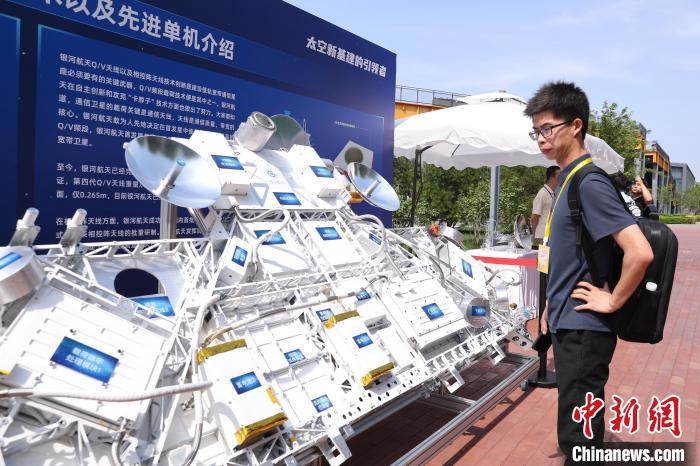
Core Insights - Beijing is emerging as a significant hub for commercial aerospace, with abundant innovation resources and a leading industrial foundation in China [1][2] - The city aims to enhance its global influence in commercial aerospace through various strategies, including tackling core technology bottlenecks and optimizing industrial layout [1] Industry Overview - Beijing is home to over 300 high-tech enterprises in the commercial aerospace sector, accounting for more than half of the national core R&D units and a majority of the country's aerospace infrastructure and specialized talent [2][3] - The commercial aerospace industry in Beijing encompasses the entire value chain, including rocket launch, satellite manufacturing, ground systems, and satellite application services, making it the most comprehensive in the country [3] Achievements and Innovations - In rocket launches, significant breakthroughs have been made, such as the successful vertical takeoff and landing test by Blue Arrow Aerospace and the normalization of disposable rocket launches, with 12 commercial rocket launches planned for 2024 [2][3] - Beijing has released plans for over 10 commercial satellite constellations, with Galaxy Aerospace successfully launching 8 low-orbit broadband communication satellites, marking a significant step in satellite internet applications [2][3] Market Potential - The commercial aerospace market is vast, with Galaxy Aerospace being the first unicorn in China's commercial aerospace and satellite internet sector, achieving multiple technological breakthroughs [4][6] - Galaxy Aerospace has successfully launched 25 advanced satellites, including China's first satellite with flexible solar wings, and is focused on reducing user costs through innovative technology [6][7] Future Directions - The development of space infrastructure is seen as a new engine for global economic growth, with satellite internet construction accelerating the arrival of the 6G era [7][8] - Galaxy Aerospace is advancing the research and development of satellite internet technology that allows direct mobile phone connections to satellites, creating significant market opportunities [7][8]