
合成数据

Search documents
李飞飞引领空间智能革命 五一视界(6651.HK)卡位物理AI赛道
Zhong Jin Zai Xian· 2026-01-14 07:33
Core Insights - The core focus of the news is on the advancements in spatial intelligence showcased by Li Fei-Fei at CES, highlighting the transition of AI from understanding text to interacting with the physical world, which has significant commercial implications for companies like 51WORLD [1][2][5] Company Overview - 51WORLD has established a comprehensive physical AI ecosystem that supports the large-scale application of spatial intelligence, leveraging its solid technical foundation and extensive practical experience [1][5] - The company has developed a full-chain closed-loop ecosystem encompassing synthetic data, spatial intelligence models, and simulation training platforms, positioning itself at the forefront of the industry [2][4] Technological Advancements - The quality of synthetic data is crucial for the value of the ecosystem, and 51WORLD has accumulated a vast library of high-quality 3D assets, mastering a comprehensive synthetic data technology path [3] - The synthetic data generated by 51WORLD adheres strictly to real-world physical laws, achieving a realism rate of 90% and ensuring high fidelity in various simulations, which supports the training of spatial intelligence models [3] Innovation in Spatial Intelligence - 51WORLD employs an innovative dual-engine architecture for spatial intelligence model construction, enabling the creation of high-fidelity digital twin environments and enhancing the capabilities of intelligent agents [4] - The Clonova spatial intelligence interaction platform launched by 51WORLD in August 2025 demonstrates advanced contextual awareness and personalized content generation, aligning with the core needs of physical world interaction [4] Industry Impact - The advancements in spatial intelligence are transitioning from conceptual technology to practical industry applications, with 51WORLD's physical AI ecosystem already demonstrating success in sectors such as intelligent driving, smart factories, and energy management [5] - As spatial intelligence emerges as a key area for AI's next chapter, 51WORLD is driving the large-scale application of physical AI, accelerating the realization of a "digital twin physical world" and intelligent interactive spaces [5]
智源《2026十大 AI技术趋势》:“技术泡沫”是假命题,具身智能将迎行业“出清”
Zhong Guo Jing Ying Bao· 2026-01-08 16:31
Core Insights - The focus of AI foundational model competition has shifted from "how large the parameters are" to "whether it can understand how the world operates," indicating a transition from merely predicting the next word to predicting the next state of the world [1] - AI is moving from "functional imitation" to "understanding the laws of the physical world," suggesting a clearer development path as it integrates into the real world [1] Group 1: 2026 AI Technology Trends - The ten major AI technology trends for 2026 include: 1. World models becoming a consensus direction for AGI, with Next State Prediction (NSP) potentially emerging as a new paradigm [2] 2. Embodied intelligence entering industry selection and implementation phases, moving beyond laboratory demonstrations [2] 3. Multi-agent systems determining application limits, with the initial formation of a "TCP/IP" for the Agent era [2] 4. AI's role in research evolving from a supportive tool to an autonomous "AI scientist," with domestic scientific foundational models quietly emerging [2] 5. A clearer new landscape for leading players in the AI era, with high-profit opportunities still available in vertical tracks [2] 6. Industry applications entering a "disillusionment valley," with a "V-shaped" recovery expected in the second half of 2026 [2] 7. The rising proportion of synthetic data, which is expected to break the "2026 depletion curse" [2] 8. Reasoning optimization has not yet peaked, and the "technology bubble" is a false proposition [2] 9. The open-source compiler ecosystem gathering collective intelligence, with heterogeneous full-stack foundations leading to inclusive computing power [2] 10. AI security evolving towards mechanisms that are explainable and self-evolving in response to deception [2] Group 2: Key Developments in AI - The report addresses the prevalent "bubble" debate in the industry, asserting that reasoning efficiency remains the core bottleneck and competitive focus for large-scale AI applications, with "technology bubble" being a false proposition [3] - Algorithmic innovation and hardware transformation are driving down reasoning costs and improving energy efficiency, making high-performance model deployment feasible at the resource-constrained edge [3] - Synthetic data is becoming the core fuel for model training, particularly in autonomous driving and robotics, supported by the "corrective expansion law" [3] Group 3: Transition to Physical World - The year 2026 is identified as a critical watershed for AI, marking the transition from the digital world to the physical world and from technical demonstrations to scalable value [4] - This transition is driven by three clear mainlines: 1. The "elevation" of cognitive paradigms, with AI beginning to learn physical laws, providing a new cognitive foundation for complex tasks like autonomous driving simulation and robot training [4] 2. The "embodiment" and "socialization" of intelligence, with humanoid robots entering real production scenarios, indicating that embodied intelligence is moving out of laboratories [4] 3. The "dual-track application" of value realization, with a super application portal forming on the consumer side and measurable commercial value products emerging in vertical fields on the enterprise side [4]
黄仁勋:未来10年,世界上大部分汽车将是自动驾驶丨直击CES
Xin Lang Cai Jing· 2026-01-06 02:01
Core Viewpoint - The CEO of Nvidia, Jensen Huang, predicts that a significant portion of cars will be highly autonomous in the next decade [1][3]. Group 1: Autonomous Driving - Huang emphasizes the importance of synthetic data for autonomous driving and robotic systems [1][3]. - He states that the fundamental technologies for generating and simulating synthetic data are applicable to various forms of robotic systems, including robots, joints, mechanical hands, mobile robots, and humanoid robots [1][3]. Group 2: Robotics - Huang believes that the next era for robotic systems will involve robots of various sizes [4]. - He showcased different forms of robots within the company's collaborative ecosystem during the event [4].


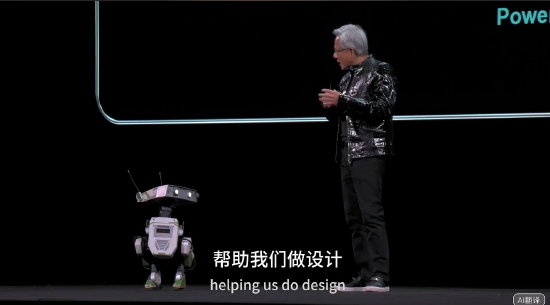
2025年全球及中国合成数据行业发展驱动因素、市场规模、投融资动态及未来趋势研判:大模型对高质量数据需求量日益增长,合成数据市场规模突破47亿元[图]
Chan Ye Xin Xi Wang· 2025-11-17 01:16
Core Insights - Synthetic data is generated through computer algorithms to simulate real-world data distributions and characteristics, addressing the growing demand for high-quality data in large model training while overcoming challenges related to data scarcity and quality [1][2][9] Group 1: Overview of Synthetic Data Industry - Synthetic data is created using various techniques, including LLMs, GANs, and statistical methods, often in a complementary manner to enhance data quality [2] - The global synthetic data market is expanding rapidly, with a projected growth from 1.18 billion yuan in 2021 to 4.76 billion yuan by 2025, reflecting a compound annual growth rate (CAGR) of 41.8% [9][10] Group 2: Market Dynamics and Penetration - North America and Europe have the highest penetration rates for synthetic data solutions, at 35%-40% and 25%-30% respectively, while China is experiencing the fastest growth with a penetration rate of approximately 20%-25% [11] - The Chinese synthetic data market is expected to exceed 700 million yuan in 2024, accounting for about 15% of the global market [13] Group 3: Investment and Financing Trends - Several synthetic data companies in China have secured funding since 2024, indicating early-stage development in the industry, with notable investments in angel and Pre-A rounds [14] - Key companies involved in synthetic data include Han Yi Co., Star Ring Technology, and others, highlighting a diverse ecosystem [2] Group 4: Future Trends and Projections - The synthetic data market is anticipated to maintain strong growth, with projections indicating a global market size exceeding 10 billion yuan by 2028 and over 20 billion yuan by 2030 [15][16] - Emerging technologies such as quantum computing and data twins are expected to revolutionize synthetic data generation, enhancing its realism, scalability, and efficiency [16]
