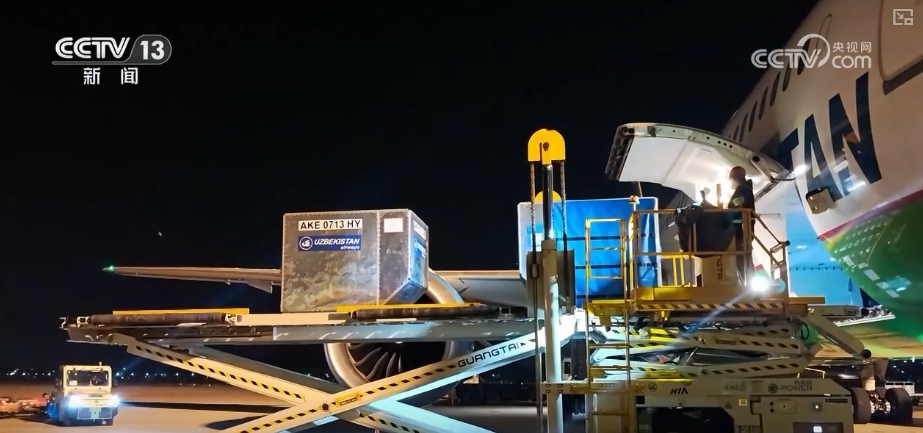
哈萨克斯坦小麦

Search documents
【工作动态】一箱哈麦的跨国之旅:解码江苏与中亚的贸易畅通密码
Sou Hu Cai Jing· 2026-01-22 09:28
Core Insights - A freight train carrying 1,767 tons of high-quality wheat from Kazakhstan has successfully arrived at the Lianyungang China-Kazakhstan logistics base, marking the resumption of direct supply routes to Vietnam after six years [1] - The "China-Central Asia Trade Facilitation Cooperation Platform" has enabled seamless logistics and trade connections, with a projected trade volume between China and Central Asian countries exceeding $100 billion by 2025 [1] - The platform has attracted over 20 Central Asian institutions since its establishment in June 2025, serving as a one-stop hub for market access [1] Trade Facilitation - The platform acts as a "super router," connecting exporters in Kazakhstan with importers and logistics providers in China, offering services such as food certification pre-review and cross-border RMB settlement [6] - In the first 11 months of 2025, Jiangsu's import and export volume with the five Central Asian countries reached 31.36 billion yuan, a year-on-year increase of 9.6% [6] - The platform's operational entity, Suhao Holding Group, reported a 12.1% year-on-year growth in trade volume with Central Asian countries [6] Market Expansion - Jiangsu enterprises are increasingly tapping into the Central Asian market, with companies like Changshu Longte Wear-Resistant Ball Co., Ltd. exporting wear-resistant balls worth over 478 million yuan to Kazakhstan in 2025 [8] - Various Jiangsu products, including sewing machines and polyester fibers, are being exported to Central Asia through the Jiangsu-Central Asia freight train [8] Cultural and Economic Exchange - The platform has evolved from a trade hub to a multi-faceted bridge, hosting events like the Jiangsu-Central Asia Youth Friendship Association and establishing a Central Asia Publishing Center [9] - The platform has facilitated cultural tourism cooperation, with a formal alliance established between the Yangtze River Delta and Central Asian tourism departments [9] Innovative Practices - Trade cooperation has led to innovative practices, with Jiangsu enterprises effectively signing contracts and engaging in direct business interactions [11] - At the 2025 Jiangsu (Astana) Import and Export Commodity Exhibition, over 60 Jiangsu companies signed contracts worth 800 million yuan, showcasing products that attracted significant interest from Central Asian buyers [12] Logistics and Trade Network Development - The logistics channel and trade network are continuously expanding, with Jiangsu operating 1,420 Central Asia freight trains in 2025, a 9.3% increase year-on-year [12] - A new cooperation framework has been established in Qinghai, enhancing service networks for better market access [12] - The year 2026 is designated as the "Year of High-Quality Development of China-Central Asia Cooperation," with plans to deepen cross-regional economic cooperation [12]

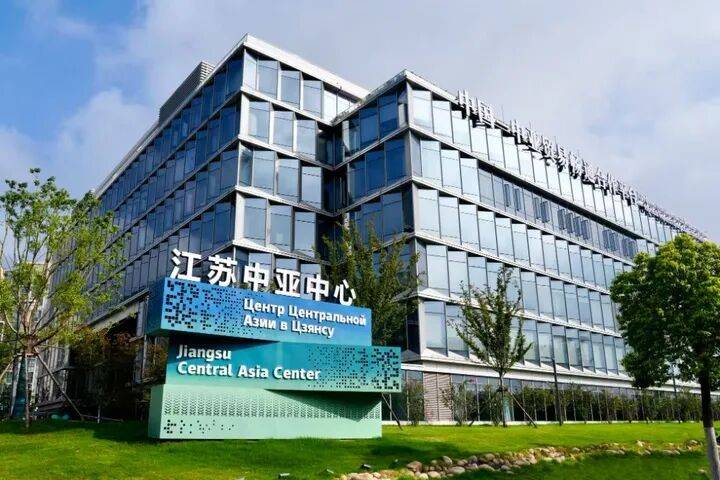
一箱哈麦的跨国之旅:解码江苏与中亚的贸易畅通密码
Sou Hu Cai Jing· 2026-01-16 09:19
Core Insights - A freight train carrying 1,767 tons of high-quality wheat from Kazakhstan has successfully arrived at the Lianyungang China-Kazakhstan Logistics Base, marking the resumption of direct supply routes to Vietnam after six years [1] - The "China-Central Asia Trade Facilitation Cooperation Platform" has enabled smoother trade and logistics, with a projected trade volume between China and Central Asian countries exceeding $100 billion by 2025 [1] - The platform has attracted over 20 Central Asian institutions, serving as a one-stop hub for market access [1] Trade Facilitation - The platform acts as a "super router," connecting exporters in Kazakhstan with importers and logistics providers in China, facilitating efficient trade operations [6] - The online "Suhao Cloud" e-commerce platform has onboarded over 550 domestic companies, enabling Jiangsu-made products to reach Central Asian markets [3][4] - In 2025, Jiangsu's import and export volume with the five Central Asian countries reached 31.36 billion yuan, a year-on-year increase of 9.6% [6] Industry Collaboration - Jiangsu enterprises are increasingly tapping into the Central Asian market, with companies like Longte Wear-Resistant Ball Co. exporting over 478 million yuan worth of products to Kazakhstan [7] - The cooperation extends beyond agriculture, with various Jiangsu products, including sewing machines and polyester fibers, being exported to Central Asia [7] Cultural and Educational Exchange - The platform has evolved into a multi-faceted bridge for cultural exchange, hosting events like the Jiangsu-Central Asia Youth Friendship Association and establishing a Central Asia Publishing Center [9] - Initiatives such as the Jiangsu (Central Asia) Import and Export Commodity Exhibition have facilitated significant trade agreements, showcasing over 60 Jiangsu enterprises [10] Future Prospects - The year 2026 is designated as the "Year of High-Quality Development of China-Central Asia Cooperation," with plans to enhance cross-regional economic collaboration and expand educational exchanges [11] - The logistics and trade networks are expected to continue expanding, with Jiangsu planning to operate 1,420 Central Asia trains in 2025, a 9.3% increase from the previous year [10]
多视角解码中哈(连云港)物流合作基地 陆海联动强枢纽激发外贸新动能
Yang Shi Wang· 2025-09-25 09:20
Core Insights - The China-Kazakhstan (Lianyungang) Logistics Cooperation Base is the first physical project under the Belt and Road Initiative, having operated since July 2014 and facilitating over 7,200 China-Europe (Asia) freight trains [1] - The base serves as an international economic platform for transit transportation, warehousing logistics, and trade among the five Central Asian countries, driven by green innovation to promote regional economic development [1] Group 1: Logistics Operations - The logistics base remains busy close to holidays, with a freight train carrying 100 standard containers of green energy products set to depart for Uzbekistan via the China-Kyrgyzstan-Uzbekistan rail link [4] - Since 2025, the line has maintained a stable frequency of two trains per month, with an increasing volume of renewable energy products like photovoltaic components being transported [6] - In the first eight months of 2025, the base operated 610 China-Europe (Asia) freight trains, with 2 to 3 trains departing or arriving daily [6] Group 2: Efficiency Improvements - To enhance customs clearance efficiency, Lianyungang Customs has innovated several operational models, such as the "ship-to-truck direct pickup" model, optimizing processes for transit goods [6] - The logistics base has upgraded its hardware, including electric container trucks that utilize an automatic battery replacement system, and a fully electric stacker that saves over 200,000 yuan in operating costs annually compared to fuel-powered alternatives [10] - The base has seen a 25% reduction in energy consumption per unit, aligning with the dual carbon goals [10] Group 3: Agricultural Logistics - The base plays a crucial role in the transit of agricultural products, including wheat from Kazakhstan, with the construction of the Lianyungang International Grain Distribution Center expected to enhance grain handling capacity significantly [13] - Upon completion by the end of 2025, the grain storage capacity will reach 500,000 tons, with an annual throughput capacity of 5.8 million tons, marking a nearly 30% increase [13] Group 4: Regional Economic Integration - The Lianyungang Logistics Cooperation Base is closely linked with the Shanghai Cooperation Organization (SCO) International Logistics Park, which has developed a capacity to handle 1,200 standard containers annually for Uzbek automotive parts [15] - Both the logistics base and the SCO International Logistics Park are evolving to strengthen connections between road, rail, and maritime transport, stimulating new foreign trade dynamics and benefiting the people of various countries [15]

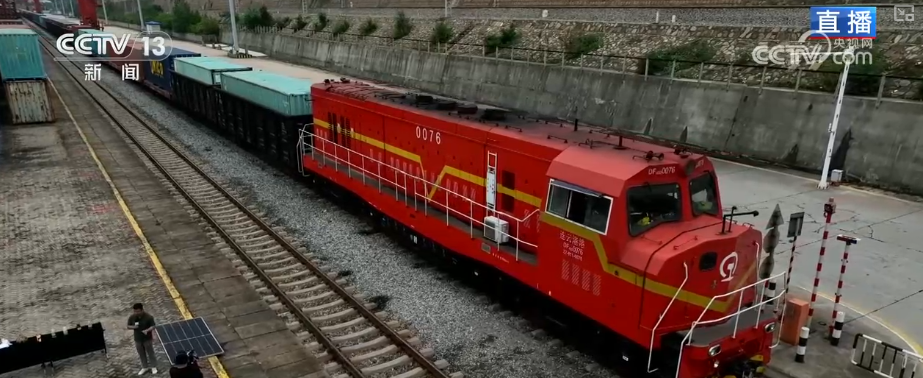
共逐现代化之梦,中国中亚偕行致远(寰宇平)
Ren Min Ri Bao· 2025-06-16 21:58
Core Points - The second China-Central Asia Summit marks a new journey for cooperation in modernization and building a community with a shared future between China and Central Asian countries [1][2] - The summit aims to enhance mutual support and collaboration in the face of global challenges, reinforcing the commitment to mutual benefit and shared achievements [1][3] Strategic Choices - The deepening of China-Central Asia cooperation is described as a strategic choice that aligns with global trends and the aspirations of the people [2] - The establishment of the China-Central Asia mechanism five years ago and its elevation to a summit level in 2023 signifies a commitment to a shared future [2][3] Historical Context and Current Relations - The relationship between China and Central Asian countries has evolved over 30 years from friendly neighbors to strategic partners, culminating in a community of shared destiny [3] - The comprehensive strategic partnership is characterized by mutual support on core interests, showcasing a strong foundation of trust and friendship [3] Practical Cooperation - The cooperation between China and Central Asia is exemplified by agricultural exchanges and technological advancements, enhancing mutual benefits [4][5] - The trade volume between China and Central Asia is projected to reach a record $94.8 billion by 2024, indicating robust economic ties [5] Industrial Collaboration - China is a major source of investment in Central Asia, with over $30 billion invested, facilitating industrialization and local development [5][6] - Collaborative projects in renewable energy and agriculture are transforming local economies and enhancing self-sufficiency [5][6] Technological and Knowledge Sharing - China and Central Asia are focusing on sharing technological innovations and development experiences to bridge gaps in capabilities [6] - The cooperation model emphasizes practical outcomes, enhancing the quality of life for citizens through shared resources and mutual empowerment [6] Multilateral Cooperation and Global Governance - The China-Central Asia mechanism promotes multilateralism and opposes unilateralism, aiming to maintain a fair international order [7][8] - The countries are committed to upholding the principles of the United Nations and fostering a more just global governance system [8]
鲜果、重庆小面、汽车配件……中亚好物乘坐“钢铁驼队”跑出新机遇
Yang Shi Wang· 2025-06-16 07:54
Core Viewpoint - The upcoming China-Central Asia Summit in Kazakhstan highlights the deepening economic and trade relations between China and Central Asian countries, with significant growth in bilateral trade and imports of agricultural products from the region [1]. Trade Growth - From January to May 2025, China's imports and exports to the five Central Asian countries reached 286.42 billion yuan, marking a historical high for the same period [1]. - Agricultural imports from Central Asia amounted to 4.36 billion yuan, reflecting a 26.9% increase, which meets the diverse food demands of Chinese consumers and provides economic growth opportunities for Central Asian nations [1]. Logistics and Transportation - The China-Kazakhstan (Lianyungang) Logistics Cooperation Base has facilitated over 570,000 standard containers since its inception in 2014, serving as a critical hub for trade between China and Central Asia [9]. - Regular freight trains have been established to enhance cross-border logistics, with a focus on fixed schedules and routes, improving efficiency and reducing costs for inland enterprises [12]. Product Diversification - A variety of Chinese products, including home appliances and automotive parts, are increasingly being exported to Central Asia, while high-quality wheat from Kazakhstan is being imported to China for local consumption [10][16]. - The "China-Kyrgyzstan-Uzbekistan" international freight train has been instrumental in connecting the Greater Bay Area with Central Asia, providing a more convenient and cost-effective transportation route [19]. Efficiency Improvements - The introduction of a "one-stop" multi-modal transport model for the Greater Bay Area—"China-Kyrgyzstan-Uzbekistan" train has significantly streamlined customs processes, enhancing overall logistics efficiency by over 30% [21]. - The new logistics routes have reduced transportation time by approximately 5 days and cut costs by 30%, making it easier for products from the Greater Bay Area to access the Eurasian market [18][21].