
四机一脑

Search documents
“以奖代补”保障有力 我国年规范回收拆解废弃“四机一脑”能力约1.8亿台
Zhong Guo Jing Ji Wang· 2025-12-01 05:14
Group 1 - The central government emphasizes the importance of standardized dismantling and resource recovery of waste electromechanical products and equipment, with over 90 dismantling enterprises supported by special funds, achieving an annual standardized dismantling capacity of approximately 180 million units [1] - In 2024, the standardized dismantling of waste "four machines and one brain" is expected to reach about 95 million units, with actual dismantling volume around half of the capacity, yielding nearly 2 million tons of recycled resources [1] - From January to October this year, approximately 86 million units were standardized for dismantling, resulting in about 1.9 million tons of recycled resources [1] Group 2 - There are over 1,900 qualified waste motor vehicle recycling and dismantling enterprises nationwide, with a projected recycling volume of 846,000 vehicles in 2024, representing a 64% year-on-year increase [2] - The recycling and utilization capacity for "new three types" of retired equipment, such as power batteries, photovoltaic panels, and wind turbine blades, has improved rapidly, but there are significant discrepancies in future predictions due to secondary market utilization [2] - By 2030, it is estimated that waste photovoltaic components will reach 1.5 to 2 million tons, waste wind turbine blades about 500,000 tons, and waste power batteries around 1 million tons, with recycling demand gradually increasing [2] Group 3 - The Ministry of Ecology and Environment plans to enhance environmental supervision and promote standardized recycling and dismantling of waste electromechanical products to prevent environmental pollution and encourage resource recovery [2] - The government is working on improving pollution control technology standards, including revising existing guidelines and developing new ones for various waste products [3] - There will be increased enforcement against environmental violations and a focus on integrating illegal dismantling activities into broader solid waste management initiatives [3]
百万吨“新三样”退役潮将至
21世纪经济报道· 2025-11-30 10:18
Core Viewpoint - The article discusses the upcoming wave of waste from new energy equipment in China, including electric vehicle batteries, solar panels, and wind turbine blades, and highlights the country's increasing recycling capabilities for these materials [1][3]. Group 1: Waste Generation and Recycling Capacity - By 2030, it is estimated that China will generate approximately 1.5 to 2 million tons of waste solar panels, 500,000 tons of waste wind turbine blades, and 1 million tons of waste batteries [1][3]. - The recycling capacity for waste solar panels and wind turbine blades is around 2 million tons and 1 million tons, respectively, while the capacity for waste batteries from 148 qualified recycling enterprises reaches 2.5 million tons [3]. - The recycling capabilities exceed the actual waste generation, leading to situations where recycling companies often face underutilization [3]. Group 2: Regulatory and Financial Support - Since January 1, 2022, the "Four Machines and One Brain" fund has been suspended, but the Ministry of Finance continues to allocate special funds to support compliant dismantling enterprises through a reward and subsidy approach [3][5]. - Over 90 dismantling enterprises are supported by special financial funds, with a standardized dismantling capacity of approximately 180 million units [5]. - The Ministry of Ecology and Environment plans to enhance environmental supervision and promote the standardized recycling and dismantling of waste electrical and electronic products [6]. Group 3: New Pollutants Management - The Ministry of Ecology and Environment is actively working on new pollutants management, having approved the registration of 802 new chemical substances since 2022 [10][11]. - A comprehensive survey covering 122 industries and over 70,000 enterprises has identified more than 1,000 chemical substances with potential high environmental risks [9]. - The Ministry aims to establish a nationwide monitoring network for new pollutants and strengthen risk warning systems [11].

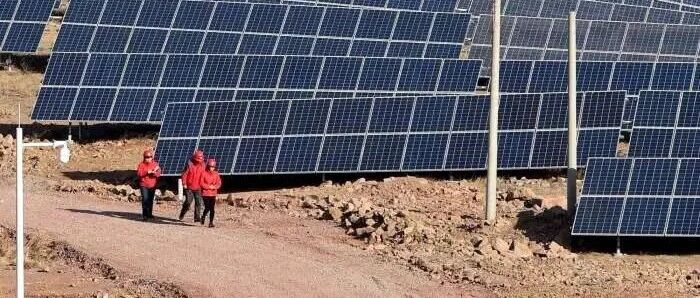
百万吨“新三样”退役潮将至 监管:回收企业仍“吃不饱”
2 1 Shi Ji Jing Ji Bao Dao· 2025-11-28 23:29
Core Insights - The upcoming retirement of new energy equipment, including waste power batteries, solar panels, and wind turbine blades, is projected to create significant waste management challenges in China by 2030, with estimates of 1.5 to 2 million tons of waste solar panels, 500,000 tons of waste wind turbine blades, and 1 million tons of waste power batteries [1][2][3] Waste Management and Recycling Capacity - China's recycling capacity for waste solar panels and wind turbine blades is approximately 2 million tons and 1 million tons, respectively, which exceeds the projected retirement volumes, leading to a situation where recycling companies often face underutilization [2][3] - The Ministry of Ecology and Environment (MEE) has reported that there are 148 qualified companies for comprehensive utilization of waste power batteries, with a total recycling capacity of 2.5 million tons [2] Regulatory Framework and Support - Since the suspension of the "Four Machines and One Brain" fund on January 1, 2022, the Ministry of Finance has continued to allocate special funds to support compliant dismantling enterprises through a reward and subsidy mechanism [2][3] - The MEE is enhancing regulatory oversight of dismantling enterprises to prevent environmental pollution and promote resource recovery [5][8] New Pollutant Management Initiatives - The MEE is actively implementing the New Pollutant Governance Action Plan, which includes the establishment of a coordination mechanism among 15 national departments and the formation of an expert committee to address new pollutants [6][7] - As of 2022, the MEE has approved the registration of 802 new chemical substances and has proposed 1,365 environmental risk control measures to mitigate the generation of new pollutants [7][9] Future Directions - The MEE plans to strengthen environmental supervision and enhance the regulatory framework for new pollutants, including the establishment of a national monitoring network and a collaborative governance structure [8][9] - The ministry aims to improve the capacity for managing new pollutants and ensure the effective implementation of environmental risk assessments and control measures [9]
我国将促进“四机一脑”等退役装备规范拆解和回收利用
Xin Hua Wang· 2025-11-28 13:55
Core Viewpoint - The article highlights the increasing regulation and recovery efforts for retired electronic products and vehicles in China, driven by the implementation of the "Two New" policies and the rapid development of the renewable energy industry [1][2]. Group 1: Regulatory Measures - The Ministry of Ecology and Environment is enhancing regulatory measures to promote the standardized dismantling and recycling of retired equipment, including "Four Machines and One Brain," scrapped vehicles, and "New Three Items" [1][3]. - Illegal dismantling of waste electrical products is being included in a special rectification campaign against illegal dumping of solid waste [1][3]. Group 2: Financial Support and Recovery Capacity - Since the suspension of the "Four Machines and One Brain" fund on January 1 of last year, the Ministry of Finance has continued to allocate special funds to support compliant dismantling enterprises through a reward-based subsidy system [2]. - Over 90 dismantling enterprises are supported by special financial funds, achieving an annual standardized recovery and dismantling capacity of approximately 180 million units of "Four Machines and One Brain" [2]. Group 3: Recycling Statistics - In 2024, it is projected that approximately 95 million units of "Four Machines and One Brain" will be standardized for dismantling, with an actual dismantling volume accounting for about half of the capacity, yielding nearly 200,000 tons of recycled resources [2]. - From January to October this year, around 86 million units were standardized for dismantling, resulting in approximately 190,000 tons of recycled resources [2]. - The number of scrapped vehicles being recovered and processed is rapidly increasing, with over 1,900 qualified scrapped vehicle recovery and dismantling enterprises currently in operation [2]. Group 4: Environmental Protection Efforts - The Ministry of Ecology and Environment aims to enhance environmental supervision to prevent pollution and promote resource recovery and recycling [3]. - Continuous improvement of pollution control technical standards and regular enforcement monitoring of dismantling enterprises will be prioritized to combat environmental violations [3].
百万吨“新三样” 退役潮将至 监管:回收企业仍“吃不饱”
2 1 Shi Ji Jing Ji Bao Dao· 2025-11-28 12:21
Core Viewpoint - The upcoming retirement of clean energy equipment in China, including electric vehicle batteries, solar panels, and wind turbine blades, poses significant waste management challenges, but the recycling capabilities have improved, exceeding the actual retirement volumes, leading to a situation where recycling companies often face underutilization [1][2]. Group 1: Waste Management and Recycling Capabilities - By 2030, it is projected that China will face approximately 150-200 million tons of waste solar panels, 50 million tons of waste wind turbine blades, and 100 million tons of waste batteries [1][2]. - The recycling capacity for waste solar panels and wind turbine blades is estimated at 200 million tons and 100 million tons, respectively, while the capacity for waste batteries is around 250 million tons, indicating that recycling capabilities surpass the expected waste generation [2][3]. - The Ministry of Ecology and Environment has implemented financial incentives to support compliant dismantling enterprises, ensuring orderly recycling and dismantling processes [2][3]. Group 2: Regulatory Framework and Environmental Protection - The Ministry of Ecology and Environment is enhancing regulatory oversight of dismantling enterprises to prevent environmental pollution and promote resource recovery [3][5]. - There are over 1,900 qualified enterprises for the recycling and dismantling of scrapped vehicles, with a projected recovery of 8.46 million vehicles in 2024, marking a 64% increase year-on-year [4]. - The Ministry is also revising pollution control technical standards for various waste categories, including waste lithium-ion batteries and waste photovoltaic equipment, to strengthen environmental management [4][8]. Group 3: New Pollutants Management - The Ministry of Ecology and Environment is actively working on new pollutants management, having approved the registration of 802 new chemical substances since 2022, and is implementing risk control measures for 14 categories of key pollutants [6][7]. - A comprehensive survey of chemical substances across 122 industries has identified over 1,000 substances with potential high environmental risks, which will be targeted for future assessments [7][9]. - The Ministry is establishing a national monitoring network for new pollutants and enhancing the regulatory framework to address the challenges posed by these substances [8][9].
生态环境部:“新三样”退役装备回收利用能力提升较快
Zhong Guo Xin Wen Wang· 2025-11-28 10:24
Core Insights - The Ministry of Ecology and Environment has made significant progress in solid waste and chemical management, focusing on illegal dumping, heavy metal safety, and the construction of "waste-free cities" [1][2][3] Group 1: Solid Waste and Chemical Management - The Ministry has implemented four special rectification actions approved by the State Council, including illegal dumping of solid waste and heavy metal safety [1] - The "waste-free city" initiative is being advanced with high standards, and there is a focus on enhancing information-based environmental supervision for hazardous waste [1][2] - The Ministry has established a comprehensive management system for solid waste and chemicals, continuously improving its capabilities [1] Group 2: Heavy Metal Pollution Management - A new action plan for heavy metal safety inspections has been launched, targeting seven key heavy metals, with a focus on five provinces and 21 cities [2] - As of November 17, 2023, a total of 20,670 pollution sources have been identified, with a 72% inspection rate achieved [2] - The Ministry aims to complete the remediation of high-risk pollution sources by the end of 2027, with Guangxi province leading the efforts [2] Group 3: Hazardous Waste Management - The national capacity for hazardous waste disposal is approximately 220 million tons per year, meeting the country's disposal needs [3] - Over 1,400 small-scale collection pilot units have been established, increasing coverage and reducing environmental risks [3] - The annual production of incineration ash from municipal waste is about 13 million tons, with comprehensive utilization capacity reaching 4.3 million tons [3] Group 4: Recycling of Retired Equipment - The recycling capacity for retired "four machines and one brain" and vehicles has significantly increased, with over 90 dismantling enterprises supported by special funds [3][4] - In 2024, approximately 95 million units of retired equipment are expected to be dismantled, producing nearly 200,000 tons of recycled resources [3] - The recycling capabilities for waste photovoltaic components and wind turbine blades are approximately 200,000 tons and 100,000 tons, respectively [4]