
资源回收利用

Search documents
2026年中国钢渣处理行业发展历程、产业链、利用规模、重点企业及趋势研判:环保要求提升处理需求,钢渣利用规模将进一步扩张[图]
Chan Ye Xin Xi Wang· 2026-02-25 01:20
Core Viewpoint - The comprehensive utilization of steel slag in China is gaining momentum due to increased emphasis on environmental protection and resource recycling, with significant implications for the steel industry's sustainable development and cost reduction [1][11]. Group 1: Industry Overview - The steel slag treatment industry is essential for managing by-products from steel production, which contain valuable metals and harmful substances [3][4]. - Steel slag treatment methods include magnetic separation, gravity separation, particle size classification, and acid washing, all aimed at reducing environmental pollution and recovering valuable resources [3][4]. Group 2: Industry Development History - The development of China's steel slag treatment industry can be divided into three phases: the initial phase (1950-1980) with negligible resource utilization, the preliminary development phase (1980-2005) with basic recovery methods, and the rapid development phase starting in 2015 [4][5]. Group 3: Industry Chain - The steel slag treatment industry chain consists of upstream steel production generating slag, midstream treatment companies converting slag into reusable resources, and downstream applications in construction materials, agriculture, and environmental remediation [7][8]. Group 4: Current Industry Status - China produces over 100 million tons of steel slag annually, with a projected production of approximately 151 million tons by 2025, despite a low resource utilization rate leading to significant environmental concerns [10][11]. - The steel slag stockpile is expected to reach about 1.656 billion tons by 2025, highlighting the urgent need for effective treatment and utilization [10][11]. Group 5: Key Companies in the Industry - Notable companies in the steel slag treatment sector include Zhengzhou Water Energy Saving Technology Co., Jiangsu Ronda New Materials Co., and Shanghai Zhongcai Environmental Engineering Technology Co., among others, focusing on innovative and efficient treatment solutions [2][12]. Group 6: Industry Development Trends - The steel slag treatment industry is expected to evolve towards high-value and refined resource utilization, emphasizing the extraction of valuable metals and the production of high-performance materials [14]. - There is a growing focus on low-carbon and environmentally friendly processes, integrating treatment with steel production to minimize carbon footprints [15]. - The adoption of smart technologies, including IoT and AI, is anticipated to enhance treatment efficiency and resource recovery rates [16].


东方钽业(000962) - 000962东方钽业投资者关系管理信息20260212
2026-02-12 05:56
Group 1: Company Overview - Ningxia Dongfang Tantalum Industry Co., Ltd. is involved in the research, production, sales, and import-export of tantalum and niobium products [1][7] - The company has established a global procurement system for tantalum and niobium concentrate, ensuring a stable supply of core raw materials [2][3] Group 2: Supply Chain and Procurement - The company has secured a long-term partnership with reputable domestic and international traders for raw material sourcing [3] - A significant acquisition was made in April 2025, where the company purchased a stake in Taboca Mining Company in Brazil, with a contract to procure approximately 3,000 tons of iron niobium tantalum alloy, valued at around 540 million RMB [3] Group 3: Production and Recycling - The company implements a closed-loop recycling model across its production processes, enhancing resource utilization efficiency [3] - It focuses on systematic recovery and utilization of tantalum and niobium metal waste generated during production [3] Group 4: Pricing Strategy - Product pricing is determined based on raw material price fluctuations, customer demand, and production costs, with a cost-plus pricing model being utilized [4] - The pricing negotiation process involves considering the average raw material prices prior to contract signing, leading to a lag in price transmission due to market competition and customer relations [4] Group 5: Future Plans - The company aims to focus on its core tantalum and niobium business, optimizing its industrial layout and enhancing technological innovation and lean management [5][6] - Currently, there are no plans for further acquisitions of shares in Xicai Institute [6] Group 6: Application Fields - Tantalum and niobium products are widely used in electronics, communications, aerospace, metallurgy, petroleum, chemical, lighting, medical, and nuclear energy sectors [7] - The company produces a full range of tantalum powder and wire, with products meeting international standards in technology and quality [7]

沪电股份:公司已陆续投入酸碱性蚀刻废液回收设施、低铜电解回收设施等
Zheng Quan Ri Bao Wang· 2026-02-09 13:21
Core Viewpoint - The company emphasizes the importance of resource recycling and utilization in the PCB industry, considering it a crucial measure for resource conservation and efficiency improvement [1] Group 1: Company Initiatives - The company has invested in various recycling facilities, including those for acid and alkaline etching waste liquid, low copper electrolysis, copper powder, waste PCB crushing, gold and silver electrolysis, and resin recovery [1]

格林美:回收黄金等贵金属的回收处理能力达到吨级以上
Zheng Quan Ri Bao Wang· 2026-02-04 11:14
Group 1 - The core point of the article is that the company, Greeenmei (002340), has achieved a recovery processing capacity for gold and other precious metals that exceeds ton-level [1] Group 2 - The company responded to investor inquiries on an interactive platform, indicating its capabilities in precious metal recovery [1]

格林美20260130
2026-02-02 02:22
Summary of the Conference Call for Greenme (格林美) Company Overview - **Company**: Greenme (格林美) - **Industry**: Nickel and Cobalt Recycling, Tungsten Recovery, Battery Recycling Key Points and Arguments Nickel Project Performance - The Indonesian MHP project shipped over 110,000 tons in 2025, with the company's equity share around 50%-55% and costs controlled between $8,500 and $9,000 per ton. Nickel price increases have ensured project profitability, with total shipments expected to reach 140,000-150,000 tons by 2026, and the company's equity share projected at 75,000-80,000 tons [2][4][8] Tungsten Recovery Business - The tungsten recovery business is expected to grow significantly, with recovery volume projected to increase to around 10,000 tons by 2025, driven by rising tungsten prices. This segment's revenue is anticipated to improve substantially due to price increases and capacity expansion [2][4][8] Strategic Adjustments - The company is adjusting its precursor strategy by reducing low-margin products and shifting focus to high-nickel and ultra-high-nickel products. The cobalt tetroxide business is expected to grow steadily, with annual shipments of over 20,000 tons and a normal growth rate of 5%-10% anticipated for 2026 [2][4][8] Appliance Recycling and Scrap Vehicle Business - The appliance recycling business is expected to be divested in 2026, with an estimated loss of over 100 million yuan impacting 2025 profits. The scrap vehicle business is reducing losses, projected to decrease from over 150 million yuan in 2023 to below 100 million yuan in 2024, and is expected to synergize with the battery recycling business [5][6] Battery Recycling Business - The battery recycling segment has maintained profitability and is expanding, with a nearly 50% year-on-year increase in recovery volume expected in 2025. The business is projected to continue its strong profitability in 2026 due to rising lithium prices [7][8] Nickel Price Forecast - The company expects nickel prices to stabilize in the range of $18,000-$19,000 per ton in 2026, with a projected increase of about 20% compared to 2025. The Indonesian government is implementing quota controls to stabilize the nickel resource market [3][10][15][16] Financial Costs and Impact - Financial costs are calculated based on investment intensity, working capital needs, and turnover rates. The company faces higher costs in foreign operations due to dollar-denominated expenses [9] Market Dynamics and Government Regulations - The Indonesian government controls approximately 60% of global nickel resources and aims to prevent significant price drops through regulatory measures. This aligns with the government's goal of promoting the development of new energy applications through industrial upgrades [16][17] New Capacity and Project Progress - New projects in collaboration with Vale began construction in 2025, with an expected completion date by the end of 2026. However, potential policy adjustments may delay the timeline [18][19] Recovery Business Details - The company recycles various products, including scrap tools and hard alloys, primarily containing tungsten and cobalt. The annual shipment volume is expected to reach 10,000 tons by 2026, with a gross margin maintained between 15%-20% [20][21] Market Share and Competitive Position - The market share for the company's APP terminal products is estimated to be between 10%-20%, although specific data requires confirmation from business departments [23] Pricing Strategies - The company has established long-term pricing agreements with suppliers, with coverage ratios between 60%-70%. The pricing for long-term contracts has increased compared to the previous year [26] Impact of Competitors - The new projects by Qingshan Company are not expected to significantly impact Greenme, as Qingshan's supply to Greenme is minimal [28] Production Capacity - The company’s maximum production capacity is 150,000 tons, with quarterly production expected to range between 36,000 to 39,000 tons, limiting the potential for significant overproduction [29] Inventory Management - Inventory absorption is expected in the third and fourth quarters, primarily through nickel-cobalt hydroxide rather than raw material sales due to tight raw material supplies [30]
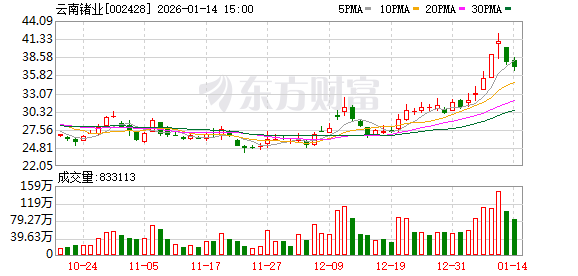
云南锗业:公司及子公司会将自身及客户生产过程中产生的锗废料进行回收利用
Zheng Quan Ri Bao· 2026-01-14 13:44
Group 1 - The company, Yunnan Geology, is committed to the efficient utilization of resources [2] - The company and its subsidiaries recycle germanium waste generated during production processes [2] - The company also extracts germanium metal from waste slag [2]

振华股份20260108
2026-01-08 16:02
Summary of Zhihua Co., Ltd. Conference Call Company Overview - **Company**: Zhihua Co., Ltd. - **Industry**: Chromium salt production Key Points Investment and Expansion Plans - Zhihua Co. plans to invest **30 billion CNY** in a new chromium salt base in Chongqing, aiming to become the world's largest single chromium salt plant, enhancing device advancement and optimizing product structure [2][3] - The new base will include a sulfuric acid project that utilizes liquid sulfur to produce sulfuric acid, generating steam as a byproduct, which will lower production costs and improve economic efficiency through cogeneration [2][4] - The company has a unique process for producing chromium oxide green from sodium dichromate waste, expected to yield **74,000 tons** annually, maximizing resource utilization and enhancing economic benefits [2][7] Production Capacity and Market Dynamics - The design capacity for sodium dichromate at the Chongqing base is **200,000 tons**, which is crucial for downstream compound production and accounts for **70%-80%** of production costs [3] - The company anticipates a **33,000 tons** production and sales volume for sodium dichromate in 2026, with a projected doubling of elemental chromium production compared to the previous year [3][21] - Current production capacity is approximately **2,000 tons** of elemental chromium per month, but there are challenges in delivery due to inventory and raw material requirements [3][15] Pricing Strategy - The company adjusts product prices based on market fundamentals, with rapid price decreases and slower increases. As of December, most compound prices have met expectations, but metal chromium prices have not yet reached anticipated levels due to social inventory and low-price orders [2][12][13] Market Conditions - The chemical market has shown no significant changes recently, with high operating rates and tight supply due to new demand. However, the market remains somewhat chaotic, requiring further observation for clarity [11][14] - Social inventory is currently around **60%-70%** of normal monthly levels, indicating a tight supply situation [15] Unique Technological Advantages - Zhihua Co. possesses a unique process for producing high-purity chromium oxide green, which is not patented to maintain its competitive edge. This process has been successfully applied for over two years [7][8] - The sulfuric acid facility is critical for the new base, producing significant amounts of steam necessary for initial product preparation, thus reducing costs [5] Management and Strategic Direction - The company has undergone management changes, with a younger generation taking leadership roles, focusing on quality improvement and new energy product development [16] - The company emphasizes advanced processes and cost control as key competitive barriers, rather than regulatory restrictions [22][23] Future Outlook - The company plans to expand production of single chromium in the first half of 2026, which is expected to increase overseas raw material demand [24] - The outlook for the chromium oxide green export volume is optimistic, with expectations of significant increases due to rising global demand [24] Customer Base and Applications - Zhihua Co. has made inroads into the commercial aerospace sector, with clients involved in high-temperature alloy products for space applications [25] Financial Instruments - The company is considering extending the trading period for its convertible bonds to enhance trading opportunities and improve market recognition [26]

方大炭素:终止参与杉杉集团合并重整;龙蟠科技:拟20亿元投建正极项目 | 新能源早参
Mei Ri Jing Ji Xin Wen· 2026-01-04 23:09
Group 1: GreeenMei - Company has established a demonstration line for recycling 50,000 tons of lithium iron phosphate black powder, capable of producing high-quality battery-grade lithium iron phosphate [1] - The recycled battery-grade lithium iron phosphate matches the core performance of commercially produced products, offering advantages in production costs and green premium as a recycled material [1] - This initiative is expected to enhance resource utilization efficiency and profit resilience, solidifying the company's position as a leader in global power battery recycling amid price fluctuations and stricter ESG requirements [1] Group 2: Longpan Technology - Longpan Technology plans to invest up to 2 billion yuan in a high-performance lithium battery cathode material project, with the first phase aiming for a production capacity of 120,000 tons of lithium iron phosphate [2] - The expansion aligns with long-term contracts from leading battery customers, which will help improve delivery capabilities and optimize cost structure [2] - However, the project faces risks related to approvals, construction progress, and investment amounts, necessitating ongoing attention to capacity utilization and price trends [2] Group 3: Fangda Carbon - Fangda Carbon has decided to terminate its participation in the substantive merger and restructuring of the Shanshan Group and its wholly-owned subsidiary due to insufficient due diligence time and inability to reasonably assess the value of the target assets [3] - The decision reflects a strategic reassessment in line with the company's plans in new materials and new energy sectors, reinforcing a cautious investment approach [3] - This move is not expected to adversely affect the company's production operations or financial status [3]


芳源股份:已经把提升回收料在原材料结构中的占比确立为经营战略目标之一
Zheng Quan Ri Bao Wang· 2025-12-30 13:14
Group 1 - The company has established the enhancement of recycled materials' proportion in its raw material structure as one of its strategic business goals [1] - The company is gradually increasing the procurement and use of battery waste and recycled materials containing nickel, cobalt, and lithium [1] - This year, the company's products such as cobalt sulfate and lithium carbonate have primarily utilized recycled materials for production [1] Group 2 - The company will balance the use of recycled materials and mineral materials based on the price advantages of different types of raw materials [1]

13个重点领域294项国家标准发布 “两新”标准提升行动圆满收官
Xin Hua Wang· 2025-12-26 11:42
Core Viewpoint - The release of 294 national standards across 13 key areas marks the successful completion of the "Two New" standard enhancement initiative, aimed at improving energy consumption, product quality, and recycling standards in China [1]. Group 1: Energy Consumption and Emission Standards - The initiative focuses on upgrading energy consumption and emission standards, with 113 national standards published to guide industries like thermal power, steel, and construction materials in energy efficiency [1]. - A new mandatory standard for coal-fired power generation aims to reduce average coal consumption to below 302 grams per kilowatt-hour by 2030, potentially decreasing carbon dioxide emissions by approximately 160 million tons [1]. Group 2: Quality and Safety Standards - The establishment of 18 national standards for greenhouse gas emissions accounting provides a unified framework for companies to implement energy-saving and carbon reduction measures [2]. - A total of 115 national standards have been revised in sectors such as automotive, home appliances, and emerging consumption, enhancing product quality and safety, thereby increasing consumer confidence [2]. - Significant advancements in electric vehicle battery safety standards now mandate that batteries must not catch fire or explode, promoting better battery design and thermal management [2]. Group 3: Recycling and Resource Utilization Standards - The initiative includes 66 national standards for the recycling, disassembly, and reuse of products, ensuring that product design considers recyclability and that recycling processes are scientifically managed [2][3]. - A mandatory standard for information clearance in electronic products has been introduced to ensure the safety and privacy of second-hand product circulation [3]. - The establishment of 12 national standards for battery recycling promotes efficient recovery of strategic resources like nickel, cobalt, and lithium [3]. Group 4: Market Impact and Consumer Behavior - The implementation of these standards supports the "old for new" consumption policy, with over 128 million home appliances replaced in the first 11 months of the year, generating sales exceeding 2.5 trillion yuan [3]. - Standards for home appliance recycling have improved the efficiency of waste appliance recovery, with approximately 8.6 million units processed, yielding around 1.9 million tons of recycled resources [3].