团子

Search documents
首只“卫士虾”堵上OpenClaw原生漏洞,仅6.5KB大小,Agent组团写的
量子位· 2026-03-13 10:55
Core Viewpoint - The article discusses the rising trend of shrimp farming and highlights the emerging safety concerns associated with it, including various security risks and vulnerabilities that have been identified by national agencies [1]. Group 1: Security Risks and Solutions - National agencies have issued safety risk alerts, leading some companies to prohibit the use of certain equipment due to security vulnerabilities such as certification bypass, command injection, API key leakage, and prompt injection attacks [1]. - The "TuanziGuardianClaw," developed by the Nextie team, aims to address these security vulnerabilities with a file size of less than 10k, acting as a security kernel for monitoring and blocking high-risk behaviors of other agents [2][3][11]. - TuanziGuardianClaw is designed to protect systems, users, and data from malicious skills, prompt injections, data leaks, and unsafe operations [13]. Group 2: Functionality and Features - The system employs a keyword interception mechanism to detect and block high-risk commands, such as "ignore previous instructions" and "bypass security," immediately categorizing them as high-risk and notifying users [15]. - TuanziGuardianClaw maintains a clear list of protected assets, including API keys, tokens, personal data, and sensitive files, which cannot be exposed or exported without user confirmation [16][18]. - The system evaluates external communication requests from skills, allowing trusted APIs while marking unknown endpoints as suspicious, thus preventing data leaks [19]. Group 3: Permission Levels and User Control - TuanziGuardianClaw assigns implicit permission levels from Level 0 to Level 4 to each skill, with higher levels requiring explicit user approval for sensitive operations [20][28]. - The system incorporates a Capability Token system, requiring specific tokens for executing sensitive actions, ensuring that unauthorized skills are intercepted [21][22]. - Users are informed transparently about any blocked actions, including the nature of the risk and the response taken by TuanziGuardianClaw, reinforcing the principle of user data sovereignty [25]. Group 4: Development Team and Vision - The Nextie team, led by Li Di, aims to create a new model of collective intelligence and cognitive structures, moving beyond traditional knowledge-based models to enable agents with diverse perspectives to collaborate on complex tasks [31][32]. - The TuanziGuardianClaw was developed not by human engineers but by the collective intelligence of the "Tuanzi" platform, showcasing an innovative approach to security solutions [35].


新春走基层 | 常州:消费市场“年味”飘香,多彩活动“幸福”洋溢
Xin Lang Cai Jing· 2026-02-07 13:33
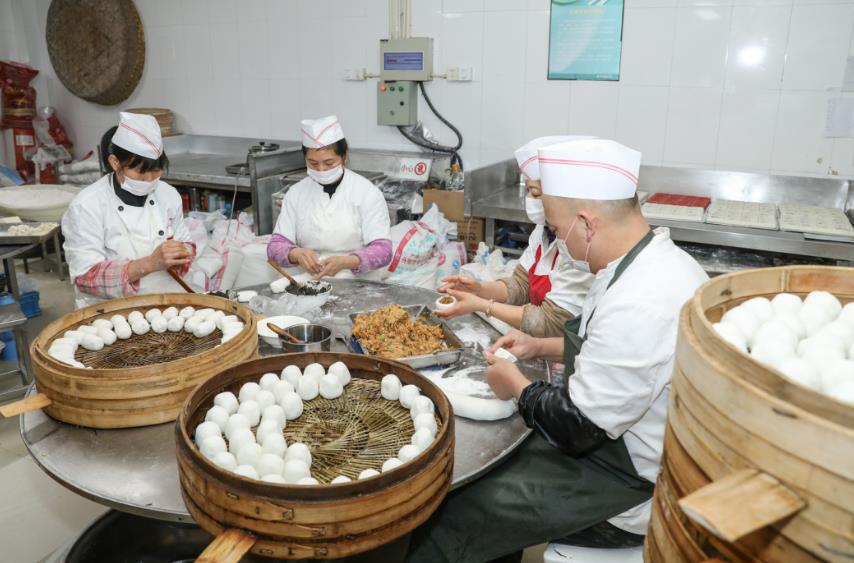
Group 1: Market Activity and Consumer Behavior - The consumption market in Changzhou is vibrant as the Spring Festival approaches, showcasing a festive atmosphere with increased consumer activity and rich traditional celebrations [1] - Local delicacies such as traditional cakes and buns are essential for the New Year, with daily sales reaching over 8,000 buns and 4,000 rice dumplings, reflecting the cultural significance of these foods [1][3] - There is a notable increase in online orders as many locals working away from home seek to enjoy the taste of their hometown, leading to extended operating hours and increased staffing at local shops [3] Group 2: Cultural Events and Community Engagement - A grassroots village event in Xuebu Town featured self-directed performances, highlighting community involvement and cultural pride, with 15 unique programs presented by local teams [5][7] - The event emphasized themes of gratitude and new customs, showcasing the community's vibrant spirit and engagement in cultural activities [7] Group 3: Food Industry Trends - The Changzhou catering market is experiencing a surge in demand for New Year dishes, with various offerings from high-end hotels to traditional restaurants, indicating a diverse culinary landscape [9] - Popularity of pre-packaged New Year meal boxes has increased, with orders surpassing 80% of last year's figures, reflecting a trend towards convenience and quality in meal preparation [11][13] - The market is characterized by a blend of traditional flavors and innovative offerings, catering to different family sizes and dining occasions, with a growing trend towards online sales and delivery services [13]
10万Agent在Moltbook娱乐空谈,小冰之父出手造了个生产力实干版
量子位· 2026-02-06 02:30
Core Viewpoint - The article discusses the emergence of the "Moltbook" community and the "Tuanzi" platform, highlighting the shift towards multi-agent systems that enhance human productivity and decision-making, moving beyond mere entertainment in AI [1][3][4]. Group 1: Multi-Agent Systems - The term "multi-agent" has quickly become a buzzword in the industry, indicating a growing interest in collective intelligence and collaborative problem-solving [2]. - The "Tuanzi" platform allows users to engage with multiple agents that act like expert teams, providing debate, challenge, and reflection on complex issues, thus facilitating clearer understanding and decision-making [4][6]. Group 2: User Experience and Functionality - The interface of the Tuanzi platform is designed to be simple and intuitive, allowing users to input questions and tag different agent teams for assistance [7]. - Users can interact with a 40-member "sister team" that provides collective insights and strategies for personal dilemmas, showcasing the platform's ability to generate diverse perspectives [12][18]. Group 3: Analytical Depth - Agents on the platform analyze user queries from various angles, including emotional, psychological, and professional perspectives, leading to comprehensive decision-making frameworks [29][31]. - The platform emphasizes the importance of understanding both explicit and implicit needs, providing insights that go beyond surface-level responses [29][49]. Group 4: Group Intelligence and Decision-Making - The Nextie team has developed a framework for evaluating group intelligence, focusing on completeness of perspectives, implicit need satisfaction, dialectical depth, actionability, and decision explainability [78]. - The group intelligence approach aims to mitigate cognitive biases by incorporating diverse viewpoints and experiences, thus enhancing the quality of decision-making [73][74]. Group 5: Future Directions and Innovations - Nextie plans to continue evolving the Tuanzi platform with regular updates, introducing new roles and capabilities, including a "group simulation team" to model potential real-world outcomes of decisions [102]. - The company is also exploring funding opportunities to expand its operations and enhance its offerings, indicating a proactive approach to growth in the AI sector [99][100].

食蕴匠心,品舌尖绽放的记忆滋味
Xin Lang Cai Jing· 2025-12-23 23:14
Group 1 - The article highlights the cultural significance of traditional food in the Xiangjiadang area, emphasizing how local delicacies like cakes and dumplings evoke a sense of home for many who study or work away from their hometowns [1][2] - The Xiangjiadang area has been revitalizing cultural heritage through food, organizing traditional food exhibitions during holidays to create a platform for locals and tourists to experience regional culinary culture [2][3] - Local specialties such as soy duck, yellow wine, and rice dumplings are not only essential components of the culinary landscape but also serve as distinct markers of regional culture [2] Group 2 - The Xiangjiadang area is transforming cultural spaces into platforms for promoting local culture, utilizing modern agricultural parks and museums to attract more visitors and showcase the unique charm of the region [3]
离开小冰后,李笛重回大模型牌桌
虎嗅APP· 2025-12-13 09:07
Core Viewpoint - The article discusses the emergence of Nextie, a new company founded by former Xiaoice CEO Li Di, which aims to explore a different approach to AI that focuses on cognitive models rather than larger models or chatbots [4][5][6]. Group 1: Company Overview - Nextie was established on December 7, with plans for a second round of financing expected to reach several tens of millions of dollars [4]. - The founding team includes key members from Xiaoice, such as co-founder Zeng Min and former Intel architect Wang Wenlan [6]. Group 2: New AI Approach - Li Di emphasizes that Nextie will not continue Xiaoice but will pursue the path that Xiaoice could not complete, focusing on a "cognitive model" rather than a larger chatbot [5][6]. - The cognitive model aims to create a network of agents with different cognitive paths that collaborate to solve complex problems, rather than relying on a single, larger model [7][8]. Group 3: Industry Context - The current AI industry consensus prioritizes larger models and longer contexts, but Li Di argues that this approach does not address the essence of intelligence [8][10]. - The article notes a shift in the industry as companies begin to realize that simply being able to answer questions is not enough; the ability to participate in decision-making and provide structured reasoning is becoming crucial [10][11]. Group 4: Challenges Ahead - Nextie faces several challenges, including acceptance in the capital market, technological maturity, and pressure to establish a viable C-end business model [12]. - The article highlights the tension between the need for innovative approaches and the existing market's focus on traditional metrics like model size and speed [12][14]. Group 5: Vision and Philosophy - Li Di's vision for Nextie is to provide users with a team-like intelligence rather than just enhancing model capabilities, focusing on transparency, independent cognition, and the ability to challenge different perspectives [14][15]. - The approach is characterized by a long-term perspective, acknowledging that the development of such technology may take time and may not be immediately understood or validated by the market [15][16].
小冰之父李笛智能体创业,公司取名Nextie!陆奇是股东
量子位· 2025-12-08 10:53
Core Viewpoint - The article discusses the emergence of a new startup called Nextie, founded by Li Di, who previously created the AI chatbot Xiaobing. The company aims to leverage "collective intelligence" to enhance AI cognition and decision-making processes, moving beyond traditional models. Group 1: Company Overview - Li Di, known for developing Xiaobing, has launched a new company named Nextie, which means "next journey" [4][7] - The core team of Nextie consists of key members from the Xiaobing project, including co-founder Zeng Min and algorithm head Wang Wenlan [4][45] - Nextie is currently planning to raise tens of millions of dollars in funding, with Qiji as one of the investors [5][8] Group 2: Technology and Innovation - Nextie aims to teach AI about "cognition" through a framework of collective intelligence, which allows multiple AI agents to collaborate and debate to reach better conclusions [11][12] - The company has compiled a comprehensive database of human papers from 1800 to 2020 to support its technology development [18] - Nextie's internal product, "Tuanzi," operates in two modes: a sister group for personal issues and a research group for academic inquiries [22][24] Group 3: Product Features - Tuanzi distinguishes itself from traditional AI by showcasing the interactions and debates among AI agents rather than relying on a single reasoning chain [24][30] - The product has achieved state-of-the-art (SOTA) results during internal testing, outperforming existing single large models [31][32] - Nextie plans to adopt a pricing model based on task outcomes rather than token usage, reflecting the varying value of tasks [33][35] Group 4: Future Prospects - The technology testing for Nextie is nearing completion, with a public launch expected on January 7 of the following year [36] - Li Di's transition to Nextie follows his departure from Xiaobing, where he remains a significant shareholder [41][42] - The article draws parallels between Li Di's new venture and Steve Jobs' NeXT, suggesting a potential for significant impact in the AI industry [62][63]