
白切鸡

Search documents
中国人的年味
Xin Lang Cai Jing· 2026-02-13 17:28
Group 1 - The article highlights the diverse ways of celebrating the New Year across different regions in China, emphasizing the unique cultural practices and culinary traditions that characterize each area [2][3][4]. - In the northern regions, particularly Northeast China, the New Year is marked by hearty meals and family gatherings, with traditional foods like dumplings symbolizing wealth and prosperity [2]. - In Jiangnan, the celebration features sweet dishes such as rice cakes and a rich soup made with preserved meats and bamboo shoots, symbolizing growth and abundance [3]. - In Lingnan, the festivities are vibrant and lively, with flower markets and a focus on auspicious foods like roast pig and chicken, reflecting a desire for good fortune in the coming year [4]. Group 2 - A common thread throughout these celebrations is the theme of "reunion," where the culmination of a year's hard work is celebrated with family, emphasizing the emotional connection and warmth shared during the New Year [5].
2026广东年菜进上海首战告捷,带动销售破两千万元丨广货行天下
Nan Fang Nong Cun Bao· 2026-02-05 13:05
Core Viewpoint - The 2026 Guangdong New Year Dish event in Shanghai has successfully generated over 20 million yuan in sales, showcasing the strong market potential for Guangdong cuisine in the East China region [5][30]. Group 1: Event Overview - The event has been held successfully under the Oriental Pearl Tower in Shanghai, leveraging media partnerships to promote Guangdong New Year dishes [3][4]. - The event featured the launch of the "Top Ten Guangdong New Year Dishes," which attracted significant consumer interest [12][14]. - Innovative marketing strategies, including an online mini-program, have contributed to high engagement, with over 100,000 visits in the first week [16][19]. Group 2: Sales Performance - The event's sales performance was impressive, with Guangdong New Year dishes and related products achieving sales exceeding 20 million yuan in the Shanghai area [30]. - Popular products included pigeon, meatballs, and traditional Guangdong desserts, which saw high demand during the event [21][22]. Group 3: Channel Expansion - The event successfully connected with over 60 local high-end supermarkets, chain restaurants, and e-commerce platforms in Shanghai, establishing a foundation for long-term market presence [33][38]. - Several partnerships were formed during the event, including procurement agreements with local companies, enhancing the supply chain for Guangdong New Year dishes [35][37]. Group 4: Brand and Market Impact - Participating companies reported increased brand recognition and market value, with many establishing initial collaborations with distributors and restaurant groups in East China [41][45]. - The event is seen as a significant step in promoting Guangdong cuisine beyond its traditional boundaries, highlighting the potential for market expansion [46][56]. Group 5: Cultural and Industry Collaboration - The event serves as a vital link for cultural and industrial cooperation between Guangdong and Shanghai, injecting new vitality into the festive consumption market [51][53]. - It is anticipated that feedback from the Shanghai market will lead to improvements in product taste, packaging, and supply chain for Guangdong dishes [53][54].


广西年猪宴:藏在人间烟火里的年味
Xin Lang Cai Jing· 2026-01-31 14:20
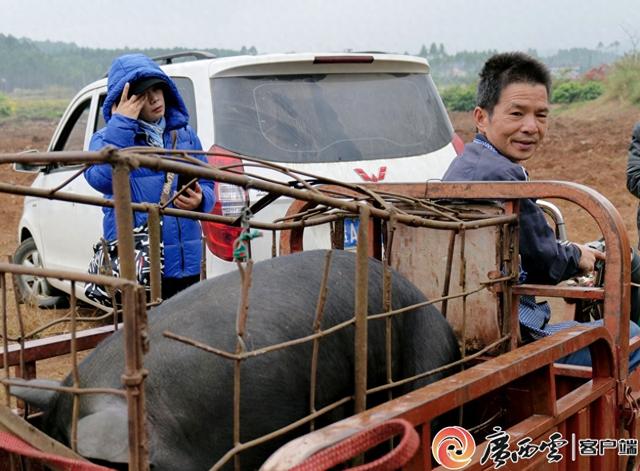
Group 1 - The annual pig feast, known as "年猪宴," is a traditional celebration in rural Guangxi, characterized by lively gatherings and a festive atmosphere [3][12] - The preparation of dishes such as fatty pork, white-cut chicken, and pig soup highlights the culinary traditions associated with the feast, emphasizing the rich flavors and communal dining experience [5][10] - The event serves as a cultural touchstone, bringing together family and friends, and evoking a sense of nostalgia for those living in urban areas [8][12] Group 2 - Modern technology, such as smartphones, has replaced traditional methods of calling guests to the table, reflecting changes in social practices while maintaining the essence of the celebration [3] - The feast not only focuses on food but also fosters social interactions, with guests sharing stories about city life and rural harvests, enhancing community bonds [5][8] - The aroma of the dishes, combined with the warmth of the gathering, creates a comforting atmosphere that resonates with the longing for traditional rural life among urban dwellers [8][12]
“粤式年味”飘香上海滩,广东年菜十大名品,这个春节不可错过的经典美食!
Nan Fang Nong Cun Bao· 2026-01-22 12:06
Core Viewpoint - The article highlights the rising popularity of Guangdong New Year dishes in Shanghai, emphasizing their cultural significance and the substantial sales growth expected in the coming years [2][63]. Group 1: Market Trends - Guangdong New Year dishes are experiencing a surge in sales in Shanghai, with a nearly 200% increase expected from 2023 to 2025, and projected sales surpassing 100 billion yuan by 2025 [4][63]. - The "Guangdong New Year Dish Festival" is set to launch in Shanghai, showcasing the "Top Ten New Year Dishes" to attract consumers [5]. Group 2: Popular Dishes - The article details several iconic Guangdong dishes, such as: - **Big Bowl Dish**: Symbolizes abundance and has shifted from restaurants to home consumption, driven by demand through live streaming and community group buying [14][63]. - **Roast Goose**: A traditional dish representing health and prosperity, adapting to modern logistics while retaining its classic flavor [18][19]. - **Steamed Golden Pomfret**: Known for its delicate taste and nutritional value, it can be delivered fresh to consumers within 24 hours [23][24]. - **White Cut Chicken**: A staple in Guangdong banquets, symbolizing auspiciousness and simplicity, aligning with health-conscious eating trends [27][28]. - **Braised Pigeon**: A dish that combines flavor and nutrition, becoming a highlight in festive meals [31][33]. - **Turnip Cake**: Evolved from a home-cooked dish to a must-have for New Year's Eve, symbolizing reunion and good fortune [35][38]. - **Oyster Sauce Braised Pork Knuckle**: Represents wealth and prosperity, now a common dish in family celebrations [41][42]. - **Boiled South American White Prawns**: A dish that showcases the precision of Cantonese cooking, emphasizing the freshness of ingredients [46][49]. - **Scallop Soup**: A luxurious dish that embodies the essence of Cantonese cuisine, often served at significant gatherings [51][56]. - **Claypot Rice with Preserved Meats**: A beloved winter dish that has become a comforting choice for family gatherings during the New Year [59][62]. Group 3: Cultural Significance - The integration of Guangdong New Year dishes into Shanghai's culinary scene represents a deep cultural exchange and a response to urban consumer trends, redefining traditional festive consumption [63][70].
下架、召回!广东官方通告:20批次食品不合格!有白切鸡菌落超标
Nan Fang Du Shi Bao· 2026-01-12 14:05
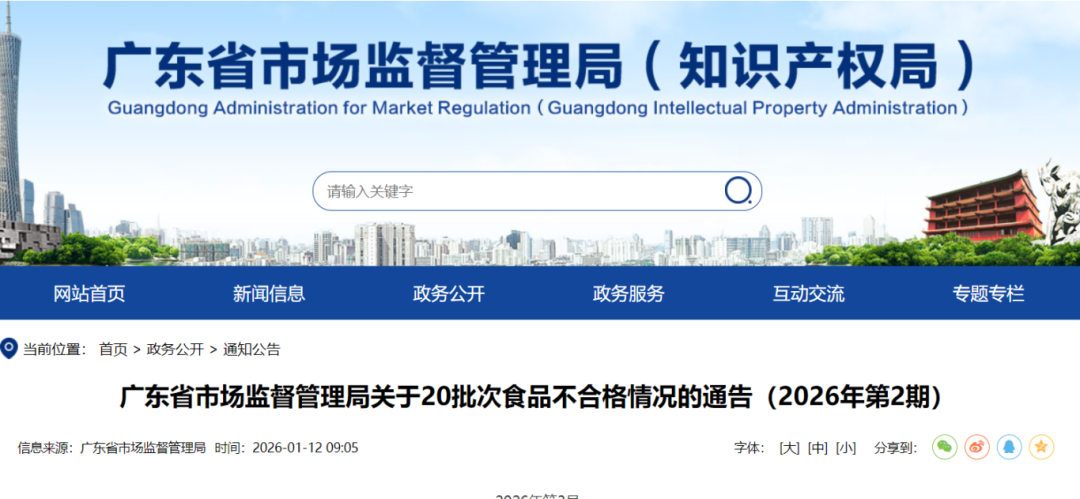
Core Viewpoint - The Guangdong Provincial Market Supervision Administration conducted a food safety inspection, revealing that out of 1193 food samples tested, 20 were found to be non-compliant with safety standards, highlighting ongoing concerns regarding food safety in the region [1]. Group 1: Inspection Results - A total of 1193 food samples were tested across 8 categories, including grain products, condiments, beverages, and health foods [1]. - Out of the samples, 1173 were compliant, while 20 samples failed to meet safety standards, indicating a non-compliance rate of approximately 1.67% [1]. Group 2: Types of Non-Compliance - Microbial contamination was identified in several products, including bottled water and cakes, with specific instances of non-compliance due to the presence of harmful bacteria such as Pseudomonas aeruginosa [3][5]. - Residues of agricultural and veterinary drugs were detected in certain food items, such as long beans and fish, which did not meet safety standards [4][6]. - Heavy metal contamination was reported in products like seasoning powders and bean sprouts, with lead and mercury levels exceeding permissible limits [4]. - The use of food additives beyond the allowed limits was noted in products like snacks and dietary supplements, raising concerns about consumer safety [4][7]. Group 3: Regulatory Actions - The Guangdong Provincial Market Supervision Administration has mandated local regulatory bodies to investigate the non-compliant products and their suppliers, requiring corrective actions such as product recalls and risk control measures [7]. - Companies found to be selling non-compliant products will have their information recorded in food safety credit files, which will be publicly disclosed [7]. Group 4: Consumer Guidance - Consumers are advised to purchase food from reliable sources and to check for proper labeling, including production dates and safety certifications [8]. - The administration encourages public participation in food safety oversight and provides contact information for reporting non-compliant products [8].
食蕴匠心,品舌尖绽放的记忆滋味
Xin Lang Cai Jing· 2025-12-23 23:14
Group 1 - The article highlights the cultural significance of traditional food in the Xiangjiadang area, emphasizing how local delicacies like cakes and dumplings evoke a sense of home for many who study or work away from their hometowns [1][2] - The Xiangjiadang area has been revitalizing cultural heritage through food, organizing traditional food exhibitions during holidays to create a platform for locals and tourists to experience regional culinary culture [2][3] - Local specialties such as soy duck, yellow wine, and rice dumplings are not only essential components of the culinary landscape but also serve as distinct markers of regional culture [2] Group 2 - The Xiangjiadang area is transforming cultural spaces into platforms for promoting local culture, utilizing modern agricultural parks and museums to attract more visitors and showcase the unique charm of the region [3]
最忆湛江年
Xin Lang Cai Jing· 2025-12-22 23:27
Core Viewpoint - The article highlights the unique cultural and culinary experiences of celebrating the Spring Festival in Zhanjiang, a coastal city in southern China, contrasting it with the colder climate of the author's hometown in Hunan [1][4]. Group 1: Cultural Experience - Zhanjiang's Spring Festival is characterized by a blend of Cantonese culture, Leizhou customs, and maritime features, creating a distinctive festive atmosphere [3]. - The lively market scene during the festival showcases a variety of traditional goods, including fresh seafood, fruits, and festive snacks, contributing to the local flavor of the celebration [2][3]. Group 2: Culinary Highlights - The local delicacies, such as rice rolls and grilled oysters, are emphasized as must-try dishes, reflecting the region's culinary heritage [2][3]. - The bustling seafood market is a focal point, with fresh catches like crabs, shrimp, and oysters, illustrating the abundance of local marine resources [2]. Group 3: Community and Festivities - Traditional activities, such as the "You Shen" folk event, involve community participation and are marked by vibrant sounds of drums and firecrackers, enhancing the festive spirit [3]. - The article describes the overall atmosphere of celebration that extends from the lunar month to the New Year, highlighting the communal joy and cultural significance of the festivities [3].
港澳度冬至:最是团圆暖意浓
Xin Lang Cai Jing· 2025-12-21 14:32
Group 1 - The article highlights the cultural significance of the winter solstice in Hong Kong and Macau, where it is celebrated with various traditional foods and family gatherings, reflecting the importance of cultural heritage and community bonding [1][2][3] - In Hong Kong, there is a noticeable increase in market activity as residents prepare for the winter solstice, with seafood, meats, and vegetables seeing a surge in demand, indicating a recovery in consumer confidence [1][2] - The restaurant industry in Hong Kong is experiencing a boom, with many establishments fully booked for winter solstice dinners, showcasing the diverse dining options available to consumers [1][2] Group 2 - In Macau, the winter solstice is also a public holiday, with many residents engaging in festive activities and dining experiences, further boosting local commerce [3] - The article mentions promotional activities in supermarkets and restaurants, such as discounts on traditional foods like tangyuan (sweet rice balls), which are popular during this festive season [3] - The influx of visitors in Macau, with over 390,000 entries and exits recorded on the day of the winter solstice, indicates a vibrant tourism sector and a strong interest in local celebrations [3]
广宁县首佳农业专业合作社:用手机养跑山鸡,年产值突破2000万元㉓丨聚焦兴农“新”力量
Nan Fang Nong Cun Bao· 2025-10-17 02:33
Core Viewpoint - The article highlights the success of the Shoujia Agricultural Cooperative in Guangning County, which utilizes technology and ecological practices to achieve significant production and income growth in poultry farming, specifically the "Phoenix Chicken" [1][5][41]. Group 1: Business Model and Production - The cooperative produces over 1 million "Phoenix Chickens" annually, generating an annual output value exceeding 20 million yuan, and involves 513 farming households [6][50]. - It employs an integrated model of "company + cooperative + farmers," achieving a closed-loop of "breeding - planting - processing - sales" [8][41]. - The cooperative has invested in a pre-prepared food production line, introducing new products like salt-baked chicken and white-cut chicken to capitalize on the growing market for prepared foods [42]. Group 2: Technological Integration - The cooperative uses IoT sensors to monitor 15 environmental parameters in chicken coops, allowing for remote management via a mobile app [2][3]. - Collaboration with South China Agricultural University has led to advancements in disease prevention and genetic selection, improving chick survival rates from 82% to 96% [25][26]. Group 3: Ecological Practices - The cooperative practices natural free-range farming, allowing chickens to roam in a 680-acre area of orchards and bamboo forests, which enhances their quality and taste [18][22]. - Chicken manure is converted into organic fertilizer, with an annual production of 3,000 tons, reducing chemical fertilizer use by 80% and increasing soil organic matter by 25% [35][36]. Group 4: Market Expansion and Brand Development - The cooperative has established a strong market presence by promoting "Guangning High Mountain Free-Range Chicken" and other local products through various high-end channels [43][46]. - It utilizes a "product + influencer + live streaming" model to enhance sales and brand awareness, leading to increased demand for its products [45][46]. Group 5: Community Impact - The cooperative has significantly improved local livelihoods, with an average income increase of 28,000 yuan per household for the 513 participating families [50]. - It has created 320 job opportunities, attracting young returnees to the agricultural sector and providing stable employment for local residents [52][53].
全红婵哥哥输了,广东人却只顾着心疼白切鸡
Hu Xiu· 2025-09-17 01:22
Core Viewpoint - The controversy surrounding the culinary competition involving Quan Jinhua, the brother of Olympic champion Quan Hongchan, highlights the clash of regional culinary preferences and the subjective nature of food appreciation in China [2][4][6]. Group 1: Event Background - Quan Jinhua, a self-identified "new farmer" and social media influencer, participated in the cooking show "Hot Game: Hundred Chefs Battle," where he presented a traditional white-cut chicken dish from his hometown of Zhanjiang, Guangdong [2][3]. - The dish was criticized by judges for its texture, leading to a heated debate about regional taste preferences, particularly between Guangdong and other regions [3][4]. Group 2: Public Reaction - The judges' comments sparked a backlash, with many viewers from Guangdong supporting Quan Jinhua's approach to cooking, emphasizing the importance of using free-range chickens raised for longer periods to achieve the desired texture and flavor [3][4][6]. - Conversely, critics argued that the focus should be on culinary skills rather than just the ingredients, suggesting that Quan Jinhua misinterpreted the judges' feedback [4][6]. Group 3: Cultural Implications - The incident reflects a broader issue of regional culinary identity in China, where differing tastes and cooking philosophies often lead to misunderstandings and conflicts [5][8]. - The debate illustrates the challenges of accommodating diverse culinary standards and the tendency for individuals to assert their own regional preferences as the "authentic" standard [5][10]. Group 4: Broader Culinary Trends - The discussion around the white-cut chicken serves as a microcosm of the ongoing "authenticity" debate in the culinary world, where traditional recipes and modern interpretations often clash [10][11]. - The rise of social media has transformed everyone into a food critic, complicating the appreciation of diverse culinary traditions and leading to a more polarized view of what constitutes "good" food [11][12].