
地域文化

Search documents
来口青海老点心
Xin Lang Cai Jing· 2026-02-27 22:33
Group 1 - The core idea of the articles revolves around the revival and popularity of traditional Qinghai pastries, particularly during the festive season, highlighting their cultural significance and evolving consumer preferences [1][2][3] - The Tai Xing De pastry shop in Xining, Qinghai, offers a variety of traditional pastries, with the best-selling item being the Qinghai-style flaky pastry, which features a simple appearance but rich flavors [1] - The shop's sales manager noted that the flaky pastry is favored for its delicate texture and diverse fillings, appealing to both traditional tastes and modern consumers [1] Group 2 - Cheng Huiqin, a master pastry chef with nearly 40 years of experience, emphasizes the importance of traditional handcrafting methods in preserving the authentic flavors of the pastries, which has become a driving force for the business [2] - The company has expanded to four branches, becoming a notable player in Qinghai's cultural tourism sector, while also adapting recipes to attract younger consumers [2] - Qinghai province has been actively promoting its traditional food products, exemplified by the 2026 Qinghai Old Brand Carnival, which aims to enhance cultural heritage and consumer engagement through various festive activities [2]
千里寄年货 情深意更浓
Xin Lang Cai Jing· 2026-02-27 07:06
Group 1 - The article highlights the cultural significance of sending local delicacies as gifts during the Spring Festival, showcasing the warmth and sincerity of friendships across regions [1][2] - It emphasizes the role of efficient logistics networks and 5G technology in facilitating the sharing of regional specialties, enhancing cultural confidence and social connections [2] - The popularity of "friendship brand" gifts reflects a new interpretation of traditional customs among young people, indicating the enduring relevance of these practices in modern society [2][3] Group 2 - The article notes various heartwarming interactions over the past year, illustrating a culture of kindness and support within communities [3] - It suggests that genuine interactions and shared experiences contribute to social progress and national development, forming a strong foundation for collective aspirations [3] - The narrative encourages a unified effort towards achieving great dreams, drawing strength from shared values and mutual support [3]
过年返乡,一场大型的方言水平测试 | 编辑部聊天室
Xin Lang Cai Jing· 2026-02-22 03:30
Group 1 - The article discusses the impact of dialects on identity and social interactions, particularly during family gatherings and cultural exchanges [2][4][5] - It highlights the generational differences in language use, where younger individuals often feel pressure to adapt to standard Mandarin in urban settings while older generations may prefer their local dialects [2][6] - The article notes that dialects can carry social connotations, with some being perceived as fashionable while others are seen as less sophisticated, reflecting broader societal values [5][6][9] Group 2 - The discussion includes how dialects are represented in media and entertainment, with dialect films and regional music gaining popularity, showcasing local culture [14][24][25] - It emphasizes the role of social media in reshaping perceptions of dialects, allowing for a more diverse representation of regional identities [9][24] - The article also touches on the preservation of dialects in contemporary society, noting that while some dialects are thriving, others are at risk of fading due to urbanization and the dominance of standard Mandarin [31][32][34] Group 3 - The article explores the evolution of dialects in artistic expressions, such as films and music, where dialects are used to convey cultural narratives and local experiences [14][25][27] - It discusses the significance of dialects in expressing personal and communal identities, particularly in the context of regional pride and cultural heritage [27][29] - The article concludes with examples of how dialects have entered mainstream language, illustrating their adaptability and relevance in modern communication [34][36][37]

为什么我们总是怀念儿时的年
Xin Lang Cai Jing· 2026-02-21 15:13
Core Viewpoint - The article reflects on the nostalgic memories of celebrating the Spring Festival in Shaoguan, highlighting the cultural significance and family traditions associated with the holiday, contrasting past experiences with contemporary practices. Group 1: Personal Memories and Traditions - The author reminisces about the tradition of buying new clothes for the Spring Festival, emphasizing the emotional connection to these garments despite their impracticality due to growth [1][2] - The family cleaning ritual before the New Year is described as a significant event that fosters family unity, contrasting with modern practices of hiring cleaning services [3][7] - The preparation of traditional snacks, such as "糖角" and "蛋散," is highlighted as a cherished family activity, emphasizing the importance of homemade treats during the festival [4][5][6] Group 2: Cultural Reflections - The article discusses the blending of different cultural influences in Shaoguan, particularly the coexistence of Cantonese and Hakka cultures, which shapes local customs and language [6] - It notes the evolution of consumer habits, where children today have constant access to new clothes and snacks, diminishing the uniqueness of the Spring Festival experience [2][7] - The author reflects on the emotional significance of family gatherings during the New Year, suggesting that the essence of the celebration lies in togetherness and shared hopes for the future [7]
巢湖南岸有处“庐江赤壁”
Xin Lang Cai Jing· 2026-01-16 17:04
Core Viewpoint - The article highlights the significance of "Liujiang Chibi" as a cultural landmark in Liujiang County, which, despite not being the historical site of the famous Battle of Chibi, is deeply intertwined with local legends and the cultural memory of the Three Kingdoms period [3][4][5][6]. Group 1: Cultural Significance - "Liujiang Chibi" serves as a unique cultural memory carrier, reflecting local legends associated with the historical figure Zhou Yu [6]. - The area has been transformed into a scenic park, becoming a distinctive part of the Chaohu scenic area, attracting visitors for its natural beauty and historical resonance [3][6]. Group 2: Local Legends and Historical Context - Local residents believe that Zhou Yu practiced military tactics in this area, despite the lack of historical documentation [4][5]. - The region was part of the Wu Kingdom during the Three Kingdoms period, and various battles occurred nearby, contributing to the local lore surrounding Zhou Yu and Sun Quan [5][6]. Group 3: Expert Insights - Cultural historian Wu Shouchun emphasizes the importance of distinguishing between "historical reality" and "cultural reality," noting that while the actual Battle of Chibi may not have taken place here, the site embodies the community's reverence for historical figures and local culture [6]. - The naming of "Liujiang Chibi" reflects a broader cultural phenomenon where places across the country adopt names associated with significant historical events, integrating them into local cultural narratives [6].

归农商城丨归农电商:地域特色农产品名片
Sou Hu Cai Jing· 2026-01-07 09:50
Core Insights - Regional specialty agricultural products serve as cultural symbols and economic pillars for local communities in China, showcasing the country's diverse heritage and natural beauty [1][3][4] Group 1: Regional Agricultural Products - Each region in China has unique agricultural products that reflect local history, culture, and geography, such as Northeast rice, Jiangnan tea, Northwest goji berries, and Southeast seafood [1][3] - Specialty products like Sichuan hotpot base and Shanxi aged vinegar embody the passion and craftsmanship of their respective regions, enhancing their market competitiveness [3] Group 2: Cultural Significance - Regional products act as cultural transmitters, connecting people to the traditions and stories of their origins, thus fostering curiosity and interest in local tourism [3][4] - Globalization has positioned these regional specialty products as important cultural ambassadors for China, allowing the world to appreciate the country's agricultural diversity and cultural soft power [3][4] Group 3: Economic Impact - The development of regional specialty products not only enriches local cuisine but also promotes tourism, as consumers are drawn to experience the local culture associated with these products [3][4] - The exploration of these products can lead to a deeper understanding of the cultural narratives and histories behind them, contributing to their global recognition [4]


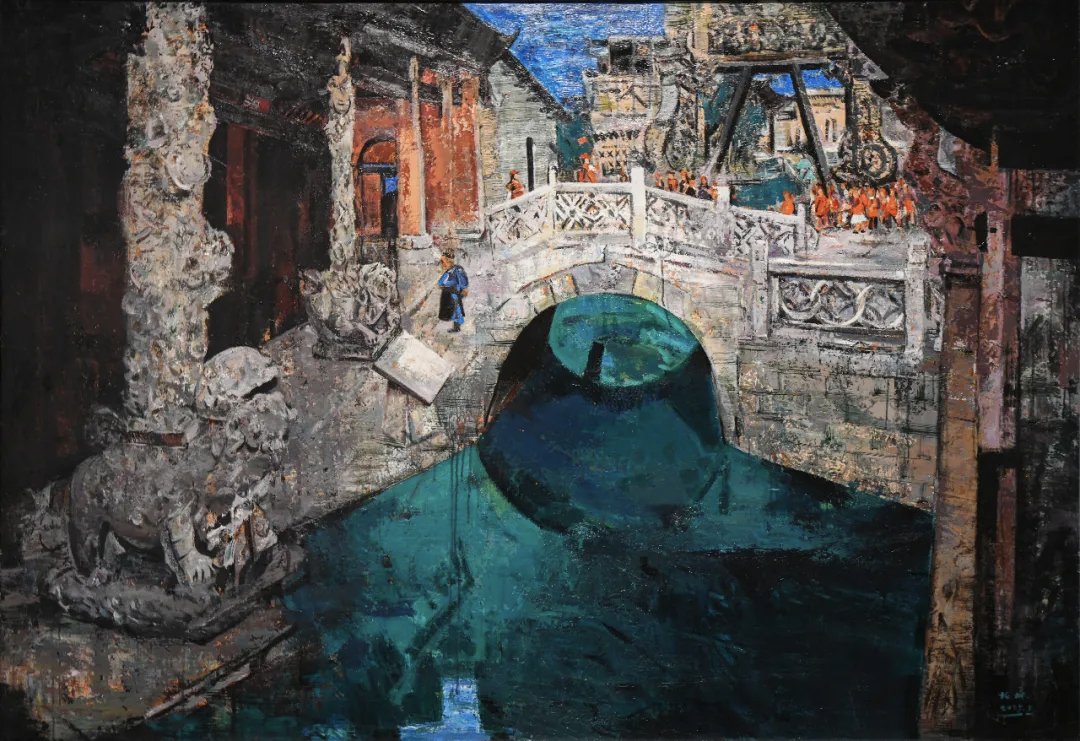
展看贵州|油画《安顺文庙忆弦歌》,超越单纯的景象记录
Xin Lang Cai Jing· 2026-01-05 09:28
Core Viewpoint - The article highlights the significance of the Anshun Confucian Temple as a historical and cultural landmark in Guizhou, showcasing its artistic representation through Yang Lin's oil painting "Anshun Wenmiao Yi Xian Ge" and emphasizing the importance of cultural heritage in contemporary art [1][3]. Group 1: Anshun Confucian Temple - The Anshun Confucian Temple, located in Anshun City, Guizhou Province, has a history of over 600 years, established during the early Ming Dynasty [1]. - The temple is recognized as a national key cultural relic protection unit, symbolizing the spread of Confucian culture in border areas [1]. - The temple complex features 22 existing buildings and covers an area of 8,750 square meters, renowned for its stone carving art [1]. Group 2: Yang Lin's Artistic Contribution - Yang Lin, a teacher at Anshun Vocational and Technical College and a member of the China Artists Association, aims to express contemporary societal developments and ethnic culture through his art [3]. - His work "Anshun Wenmiao Yi Xian Ge" creatively incorporates elements of the temple, using color and form to connect the ancient architecture with contemporary life [1][3]. - The juxtaposition of the elderly and young student in the painting symbolizes the transmission and evolution of traditional Chinese culture [1]. Group 3: Cultural Heritage Exhibition - The "2024-2025 Colorful Guizhou Cultural Heritage Theme Youth Art Exhibition" focuses on Guizhou's rich cultural heritage and is part of the annual key work of the "Colorful Guizhou" cultural project [7]. - The exhibition features four thematic sections, showcasing red historical sites, world-class cultural heritage, and historical cultural cities and villages [7]. - The exhibition is open to the public for free until January 11, 2026 [7].
山东推动科学家精神与地域文化深度融合
Da Zhong Ri Bao· 2026-01-03 01:15
Core Viewpoint - Shandong Province is promoting the integration of the spirit of scientists with local culture through unique initiatives, creating a localized expression of scientific spirit known as the "Qilu Path" [2][3]. Group 1: Initiatives and Activities - Shandong has developed a core brand "Walking Towards Light - The Spirit of Scientists Shining in Qilu" and is conducting activities across 16 cities tailored to local characteristics [2]. - The province has established a systematic "1+2+3+4" work framework to promote the spirit of scientists, including nearly 500 speakers who have delivered over 160 presentations [2][3]. - Various cities are implementing specific actions, such as Qingdao's three-year action plan focusing on marine scientists and Zaozhuang's annual Mozi-Luban Science and Technology Culture Festival [3]. Group 2: Cultural Integration - The spirit of scientists is being deeply rooted in local cultural contexts, with initiatives like the establishment of ten ideological education bases for scientific workers in Linyi, integrating the Red Gene into scientific exploration [3]. - Shandong is actively exploring the historical contributions of ancient scientists like Mozi and Luban, while also collecting academic growth materials from 35 academicians and experts [3]. Group 3: Art and Media Engagement - The integration of science and art is another pathway being explored, with over 600 creative works produced through a themed competition, involving more than 300 artists [4]. - Online media initiatives have reached nearly 30 million people, including a new media column "Walking Towards Light - Promoting the Spirit of Scientists" and a popular science program that achieved high viewership among youth [4].
食蕴匠心,品舌尖绽放的记忆滋味
Xin Lang Cai Jing· 2025-12-23 23:14
Group 1 - The article highlights the cultural significance of traditional food in the Xiangjiadang area, emphasizing how local delicacies like cakes and dumplings evoke a sense of home for many who study or work away from their hometowns [1][2] - The Xiangjiadang area has been revitalizing cultural heritage through food, organizing traditional food exhibitions during holidays to create a platform for locals and tourists to experience regional culinary culture [2][3] - Local specialties such as soy duck, yellow wine, and rice dumplings are not only essential components of the culinary landscape but also serve as distinct markers of regional culture [2] Group 2 - The Xiangjiadang area is transforming cultural spaces into platforms for promoting local culture, utilizing modern agricultural parks and museums to attract more visitors and showcase the unique charm of the region [3]
深耕地域特色 龙江舞台佳作获国家级资助
Xin Lang Cai Jing· 2025-12-20 23:09
Core Insights - Five stage art works from Heilongjiang Province have been selected for the National Art Fund's 2026 "Large Stage Drama and Work Creation Funding Project," showcasing distinct regional characteristics and cultural depth [1][4] Group 1: Selected Works - The new modern Peking opera "Binjiang Secret War" by Heilongjiang Peking Opera Theatre depicts the struggles of Chinese Communists and ordinary citizens during the Anti-Japanese War, blending traditional Peking opera with modern aesthetics [1][4] - The ethnic opera "Hulan Qingzhifu" from Heilongjiang Song and Dance Theatre is the only opera from Northeast China selected for the funding, highlighting the integrity of a Qing Dynasty official and set to premiere in Harbin in late 2026 [2][4] - The acrobatic drama "Heilongjiang Legend" emphasizes the unique "Ice Show" brand, integrating traditional acrobatics with ice performances to convey the spirit of resilience and cultural values [2][4] - The symphonic work "Civilization Ode," created by Harbin Symphony Orchestra, combines various musical traditions to reflect the dialogue between civilizations, set to premiere in 2025 [3][4] - The ethnic orchestral piece "Fengming Dongfang" from Harbin Music Academy features a six-movement structure that explores Chinese civilization and contemporary spirit through traditional and modern musical elements [3][4] Group 2: Significance of Selection - The selection of these works signifies national recognition of Heilongjiang's artistic creation capabilities and highlights the province's commitment to regional cultural development and artistic excellence [4]