固定纯债产品

Search documents
50万亿存款去哪儿了?
Xin Lang Cai Jing· 2026-01-22 00:44
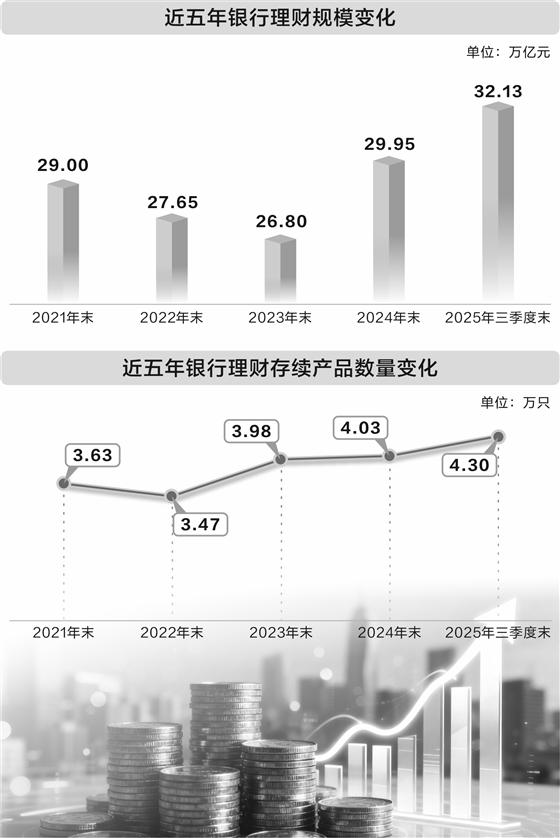
Core Viewpoint - The article discusses the significant shift of funds from bank deposits to other investment channels, termed "deposit migration," which is driven by low interest rates and has led to a surge in the A-share market, with the Shanghai Composite Index rising by 49.65% since the new policy on September 24, 2024 [1][3]. Group 1: Deposit Migration - "Deposit migration" refers to the trend of residents withdrawing large amounts of savings from banks to invest in other channels [1]. - According to estimates, over 30 trillion yuan of 2-5 year fixed deposits will mature by 2026, with over 50 trillion yuan of 2-year fixed deposits also maturing [1][3]. - The People's Bank of China reported that new RMB loans for the year 2025 will total 26.41 trillion yuan, with non-bank financial institutions seeing a record increase of 6.41 trillion yuan in deposits [1][3]. Group 2: Low Interest Rates - The decline in bank deposit rates, with major banks offering rates as low as 1.1% for 1-year deposits and 1.55% for 3-year deposits, has prompted depositors to seek better returns elsewhere [3]. - Historical instances of "deposit migration" have previously led to significant economic impacts, such as increased consumer spending and real estate market activity [3][5]. Group 3: Investment Trends - The current trend indicates that a portion of the migrated funds is likely to flow into the A-share market, with trading volumes exceeding 3.7 trillion yuan and a significant increase in margin financing [5][6]. - The number of new A-share accounts reached 27.44 million in 2025, marking a 10% year-on-year increase, indicating heightened investor interest [6]. Group 4: Alternative Investment Channels - With low interest rates in banks, many investors are turning to bank wealth management products, which have seen a growth in scale, reaching 34 trillion yuan by the end of 2025 [11][12]. - "Fixed income plus" products, which combine low-risk assets with a portion of higher-risk investments, have gained popularity, with a 39.5% year-on-year growth in their scale [17]. Group 5: Broader Economic Implications - Despite the large sums involved in deposit migration, the overall impact on consumer spending and the real estate market remains limited, as consumer demand is not robust [24][26]. - The article suggests that the current phase of deposit migration is more about adjusting asset allocation rather than a significant change in risk appetite among residents [24][26].


14家银行理财,规模增约3万亿元!
Zheng Quan Shi Bao· 2026-01-15 07:32
Core Insights - The banking wealth management industry experienced significant growth in 2025, with 14 major wealth management companies increasing their total assets under management by nearly 3 trillion yuan, reaching a record high by year-end [1][2] Group 1: Industry Growth - By the end of December 2025, the total scale of the 14 major wealth management companies was 25.41 trillion yuan, reflecting a year-on-year growth of approximately 13.3% and an annual increase of 2.98 trillion yuan [2] - The peak industry scale reached nearly 34 trillion yuan in November 2025, marking a historical high with an increase of over 4 trillion yuan since the beginning of the year [2] - The growth in the industry was primarily driven by fixed pure bond products and enhanced fixed-income equity products, which added 1.64 trillion yuan and 1.27 trillion yuan, respectively [3] Group 2: Market Dynamics - The bond market has been volatile, with the yield on 10-year government bonds fluctuating around 1.60% to 1.80% throughout 2025, impacting the yields of wealth management products [4] - The average annualized yield for open-ended fixed-income products dropped to 2.32% and 2.25% for six months and one year, respectively, indicating a downward trend [4] - As deposit rates hit historical lows, many customers are shifting their maturing fixed deposits into wealth management products, reflecting a change in risk appetite [4] Group 3: Future Opportunities - In 2026, wealth management institutions are expected to benefit from multi-asset layouts and a further decline in household savings rates, potentially attracting 2 trillion to 4 trillion yuan of "activated funds" into non-deposit investments [5] - The industry is moving towards a multi-asset and multi-strategy approach to enhance returns, with a focus on diversifying asset allocation beyond traditional equity [6] - Collaboration with public funds is emphasized as a strategy for wealth management companies to enhance their product offerings and risk management capabilities [7]
14家银行理财,规模增约3万亿元!
证券时报· 2026-01-15 07:31
Core Viewpoint - The banking wealth management industry has experienced significant growth in 2025, reaching a record scale despite a slight monthly contraction due to seasonal factors. The total industry scale peaked at 34 trillion yuan in November 2025, with a year-end total of approximately 33 trillion yuan expected for 2026 [1][3][7]. Group 1: Industry Growth and Performance - The 14 major wealth management companies, managing over 1 trillion yuan each, collectively grew by nearly 3 trillion yuan in 2025, with a total scale of 25.41 trillion yuan by the end of December 2025, reflecting a year-on-year increase of approximately 13.3% [2][3]. - The primary contributors to the industry's growth were fixed pure bond products and enhanced fixed-income equity products, which added 1.64 trillion yuan and 1.27 trillion yuan, respectively, during the year [3][4]. - Mixed-asset wealth management products saw a turnaround, growing by over 300 billion yuan in 2025, with several products achieving annualized returns exceeding 20% [4]. Group 2: Market Trends and Client Behavior - As fixed deposit rates declined and deposits matured, there was a noticeable shift in risk appetite among ordinary clients, leading to increased allocations in wealth management products [6][7]. - Analysts predict that the wealth management sector will continue to attract 2 trillion to 4 trillion yuan of "activated funds" from deposits moving into non-fixed investment areas in 2026 [7]. Group 3: Strategic Shifts in Asset Management - Wealth management firms are increasingly adopting multi-asset and multi-strategy approaches to enhance returns, moving beyond traditional asset management models [9][11]. - Collaboration with public funds is emphasized as a key strategy, allowing wealth management companies to focus on asset allocation and risk management while leveraging external expertise for specific investment strategies [11]. - It is anticipated that wealth management will contribute an additional 150 billion to 300 billion yuan in stock asset allocations in 2026 [10].

14家银行理财,规模增约3万亿!
券商中国· 2026-01-15 00:55
Core Viewpoint - The banking wealth management industry experienced significant growth in 2025, reaching a record high in total assets under management despite a slight monthly contraction due to seasonal factors at the end of the year [1][2]. Group 1: Industry Growth and Performance - In 2025, 14 major wealth management companies, including 6 state-owned and 8 joint-stock banks, saw their total assets grow by nearly 3 trillion yuan, reaching a peak of 34 trillion yuan in November [2][3]. - By the end of December 2025, the total assets of these companies amounted to 25.41 trillion yuan, reflecting a year-on-year increase of approximately 13.3% and an annual growth of 2.98 trillion yuan [3]. - The growth was primarily driven by fixed pure bond products and enhanced fixed-income equity products, which added 1.64 trillion yuan and 1.27 trillion yuan, respectively [4]. Group 2: Market Trends and Client Behavior - As fixed deposit rates declined and matured deposits were reinvested, there was a noticeable shift in client risk preferences, with many opting for wealth management products as a conservative investment choice [5][6]. - The average annualized yield for open-ended fixed-income products dropped to 2.32% and 2.25% for the past six months and one year, respectively, indicating a challenging environment for fixed-income investments [5]. Group 3: Future Outlook and Strategies - The wealth management industry is expected to embrace a multi-asset and multi-strategy approach to enhance returns, moving away from traditional asset management models [7][8]. - Collaboration with public funds is emphasized as a key strategy, allowing wealth management companies to focus on asset allocation and risk management while leveraging external expertise for specific investment strategies [8]. - Predictions suggest that the wealth management sector could attract an additional 1.5 trillion to 3 trillion yuan in equity asset allocation funds in 2026 [7].

银行理财规模创历史新高 净值震荡难挡增量资金涌入
Zheng Quan Shi Bao· 2026-01-14 17:36
Core Viewpoint - The banking wealth management industry has experienced significant growth in 2025, with the total scale reaching a record high, despite a slight monthly contraction at the end of the year due to seasonal factors [2][3]. Group 1: Industry Growth - By the end of December 2025, the top 14 wealth management companies had a combined management scale of 25.41 trillion yuan, reflecting a year-on-year growth of approximately 13.3% and an annual increase of 2.98 trillion yuan [3]. - The overall industry scale peaked at nearly 34 trillion yuan in November 2025, marking an increase of over 4 trillion yuan since the beginning of the year [3]. - The growth in wealth management products was primarily driven by fixed pure debt products and enhanced fixed-income equity products, which added 1.64 trillion yuan and 1.27 trillion yuan, respectively, since the beginning of 2025 [4]. Group 2: Market Dynamics - The decline in fixed deposit rates and the maturity of these deposits have led to a migration of low-risk preference funds towards bank wealth management products [3][5]. - As of the end of 2025, mixed wealth management products saw a significant increase of over 300 billion yuan, reversing a previous trend of decline [4]. - Analysts expect the bond market to remain volatile in 2026, which may impact the yields of fixed-income products offered by wealth management companies [5]. Group 3: Future Opportunities - The wealth management sector is anticipated to benefit from a further decline in household savings rates and an increase in risk appetite among residents, potentially leading to an influx of 2 trillion to 4 trillion yuan into non-deposit investment areas [6]. - Companies are expected to adopt multi-asset and multi-strategy approaches to enhance returns, moving beyond traditional asset management models [7]. - There is a growing emphasis on expanding the range of products to include equity assets and index funds, while also maintaining a solid base of low-risk, fixed-income products [8].