国证能源可持续发展指数

Search documents
九部门联合印发《企业可持续披露准则第1号—气候(试行)》,欧盟减碳进程受产业现实阻滞
Xinda Securities· 2025-12-27 15:34
Investment Rating - The report does not specify a clear investment rating for the industry [2] Core Insights - The report highlights the issuance of the "Corporate Sustainability Disclosure Standards No. 1 - Climate (Trial)" by nine departments in China, which mandates companies to disclose their greenhouse gas emissions across different scopes [12][3] - The EU's carbon reduction process is facing challenges, leading to adjustments in the automotive sector's emissions targets, allowing for a 90% reduction in carbon emissions by 2035 compared to 2021 levels, rather than a complete ban on fuel vehicles [3][17] - The report indicates a significant growth in ESG financial products, with a total of 3,882 ESG bonds issued in China, amounting to a market size of 5.74 trillion RMB, with green bonds making up 62.11% of this total [4][28] - The report notes that the ESG public fund market consists of 947 products with a total net value of 116.67 billion RMB, where ESG strategy products account for 45.01% [4][33] - The report emphasizes the importance of technological innovation in achieving carbon neutrality, identifying key challenges and opportunities in the energy transition [8][41] Summary by Sections Domestic Focus - The "Corporate Sustainability Disclosure Standards No. 1 - Climate (Trial)" requires companies to disclose their greenhouse gas emissions, with a phased approach from voluntary to mandatory disclosures [12] - Beijing's green finance policy aims to support the construction of green factories, focusing on energy-saving and carbon-reduction projects [12] International Focus - The EU's adjustment to its automotive emissions targets reflects a shift in its green transportation strategy, allowing for continued sales of certain traditional fuel vehicles [3][17] - The EU is also coordinating new rules for plastic recycling to address challenges in the recycling market [19] ESG Financial Products Tracking - The report details the growth of ESG bonds, public funds, and bank wealth management products, highlighting their respective market sizes and issuance volumes [4][28][39] Index Tracking - Major ESG indices have shown varying performance, with the Shenzhen ESG 300 index leading in growth over the past year [40] Expert Opinions - Insights from experts emphasize the need for strategic information disclosure and the role of technology in the transition to carbon neutrality, identifying significant opportunities in the energy sector [8][41]
“国证能源可持续发展指数”在北京发布
Zhong Guo Xin Wen Wang· 2025-12-25 15:29
Group 1 - The "CNI Energy Sustainable Development Index" was officially launched at the "Energy Sustainable Development Seminar" held in Beijing, developed by the China Energy Research Society and Shenzhen Securities Information Co., Ltd [1][2] - The index includes 50 sample companies selected based on high ESG scores and strong profitability and growth potential, with a total market capitalization of 5.9 trillion yuan and an average market capitalization of 118.2 billion yuan [1] - The top ten companies by weight in the index account for a combined 65% of the total weight, including major players like China Yangtze Power, China Shenhua, and China Petroleum [1] Group 2 - The index serves as a "barometer" for measuring the sustainable development level of the energy industry and aims to connect industrial transformation with capital empowerment [2] - Future plans include the creation of ESG index funds (ETFs) that track the index, establishing a complete ecosystem of "standards leading - index representation - fund empowerment" to position the index as a core benchmark for ESG investment in the energy sector [2]
“能源ESG”指数正式发布,累计收益率达40%
2 1 Shi Ji Jing Ji Bao Dao· 2025-12-25 13:39
Core Viewpoint - The "CNI Energy Sustainable Development Index" (referred to as "Energy ESG") has been officially launched, aiming to fill the gap in the market for a specialized index focusing on the sustainable development of the energy sector, thereby guiding capital towards key areas such as renewable energy and green technology innovation [1][3]. Group 1: Index Overview - The "Energy ESG" index comprises 50 sample companies selected based on their ESG scores, profitability, and growth potential, with a total market capitalization of 5.9 trillion yuan and an average market capitalization of 118.2 billion yuan [2]. - The top ten companies in the index, including Changjiang Electric Power and China Shenhua, account for 65% of the index's weight [2]. - Since its base date of June 29, 2018, the index has achieved a cumulative return of 40%, with an annualized return of 5%, outperforming major market indices like the CSI 300 and CSI 500 [2]. Group 2: Trends in Energy Sustainability - The energy transition is entering a critical phase, with increasing attention from capital markets on the sustainable development capabilities of energy companies [3]. - Six major trends in energy sustainability have been identified, including the evolution of energy supply and demand patterns, with coal's share in power generation expected to drop below 50% by 2030 [3][4]. - The need for enhanced system regulation and energy storage capabilities is emphasized, with new types of storage solutions becoming increasingly important [4]. - The emergence of new industries and business models in the energy sector is driven by technological advancements, leading to rapid growth in areas such as smart microgrids and green manufacturing [4]. - The collaboration between electricity and carbon markets is being strengthened, with new policies being introduced to enhance resource allocation [4][5]. - The economic implications of energy transition are becoming more pronounced, necessitating a focus on optimizing system economics while ensuring a successful transition [5]. - International competition and cooperation in energy are evolving, with increased global interconnectivity and trade in new energy products like hydrogen [5]. Group 3: Company Initiatives - Changjiang Electric Power has set a target for its six hydropower stations to generate 2,959 billion kilowatt-hours by June 2024, which is projected to reduce carbon emissions by 243 million tons [6]. - China Shenhua has implemented a "mining while rehabilitating" model in its mining operations, achieving a 100% rehabilitation rate over 3,300 hectares, with vegetation coverage increasing from 20% to 80% [6].





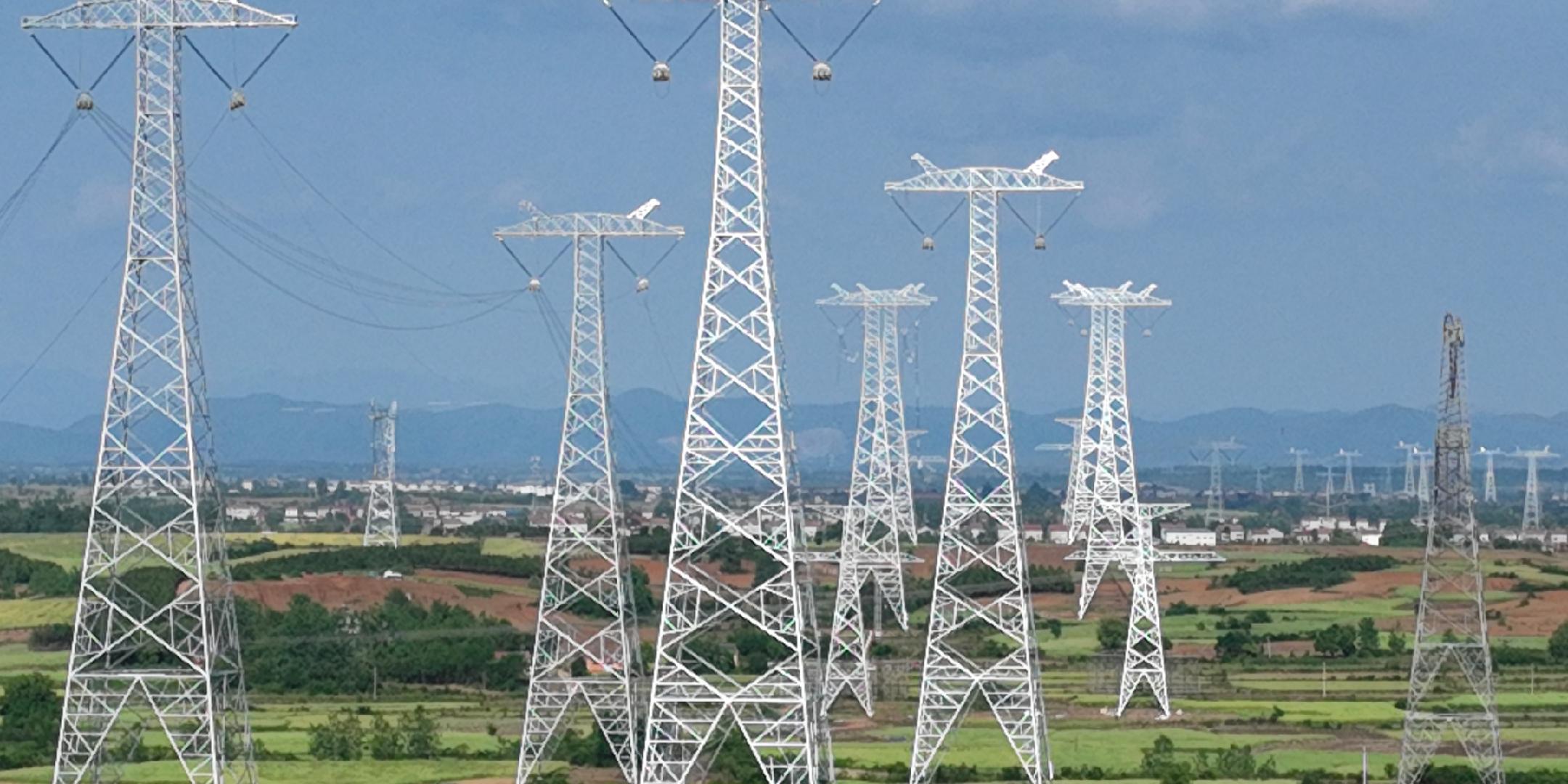
中电联张琳:“十五五”期间电力系统调节成本预计达到万亿元级
Jing Ji Guan Cha Wang· 2025-12-25 13:33
Group 1 - The core viewpoint of the article emphasizes the importance of ensuring energy security and adjusting the supply structure during the 14th Five-Year Plan, which will drive rapid growth in electricity investment [2] - The penetration rate of domestic renewable energy increased from 3.3% to 22% between the 13th and 14th Five-Year Plans, with expectations to reach 30% by 2030 and a total installed capacity of 360 million kilowatts by 2035, adding over 20 million kilowatts annually [2] - The large-scale development of wind and solar power has led to challenges in grid absorption, with some provinces experiencing utilization rates below 90% [2] Group 2 - To address the challenges of renewable energy absorption, it is necessary to enhance the installation of grid-side or shared energy storage and improve storage utilization efficiency [3] - Hydrogen energy technology, while currently not cost-competitive, is expected to be a key development area during the 14th Five-Year Plan, with renewable energy hydrogen production seen as a solution to energy absorption issues [3] Group 3 - Coal power remains the dominant source of electricity supply in China, serving as a stabilizing force for energy security [4] - The proportion of coal power generation is predicted to decrease to 50% of total generation during the 14th Five-Year Plan, with a shift towards system regulation and security supply functions [5] Group 4 - The development of hydropower in key river basins is essential, aiming for an installed capacity of 410 million kilowatts by 2030, alongside the safe and orderly development of nuclear power [6] - Achieving reasonable absorption of renewable energy requires multiple targets, including increasing the share of flexible regulation power sources to 30% by 2030 and enhancing cross-regional power flexibility to over 40 million kilowatts [6] Group 5 - Strengthening grid construction is also a crucial measure to solve renewable energy absorption issues [7] - The construction of inter-provincial flexible mutual assistance projects is expected to be completed during the 14th Five-Year Plan, with the "West-to-East Power Transmission" project anticipated to exceed 460 million kilowatts by 2030 [8]

能源企业ESG行业标准等成果在2025中国能源研究会年会发布,专家共议能源合规管理与法治建设
Zhong Guo Fa Zhan Wang· 2025-12-05 10:09
Core Viewpoint - The China Energy Research Association is leading the development of industry standards to promote green transformation and sustainable development in the energy sector, aligning with the national "dual carbon" goals [3][4]. Group 1: Industry Standards and Implementation - The industry standard titled "Disclosure Index System and Evaluation Guidelines for Environmental Protection, Social Responsibility, and Corporate Governance of Energy Enterprises" has been approved by the National Energy Administration and will be implemented on March 28, 2026 [3][4]. - This standard includes 80 evaluation indicators, comprising 37 quantitative and 43 qualitative indicators, with quantitative indicators accounting for 80% of the weight, aimed at creating a scientific and objective ESG performance evaluation system for energy enterprises [4]. Group 2: ESG Evaluation and Reporting - The China Energy Research Association has conducted ESG evaluations for 632 listed energy companies, releasing the "2025 China Energy Listed Companies Sustainable Development (ESG) Evaluation Report" and a list of the top 200 companies, with 27 companies rated the highest "A" level [5]. - The establishment of the "National Certificate Energy Sustainable Development Index" is in collaboration with Shenzhen Securities Information Co., focusing on listed companies in traditional and renewable energy sectors, with a total market capitalization of approximately 5.49 trillion yuan [7]. Group 3: Legal Framework and Compliance - The implementation of the Energy Law has shown significant effects in four dimensions: authoritative declaration, systemic institutional restructuring, positive regulatory practice response, and exploration in judicial practice [8]. - Challenges include the need for specific rules for enforcement, improving regulatory efficiency, and revising supporting laws to adapt to the new environment created by the Energy Law [8][9]. Group 4: Future Directions and Industry Participation - Future energy legislation should focus on green, market-oriented, and systematic approaches, ensuring the promotion of renewable energy and providing space for new technologies and business models [14][15]. - There is a call for deeper industry participation in the legislative process to ensure that laws are practical and reflect industry realities, particularly in addressing emerging cross-cutting issues such as AI in energy governance [15].