
墨汁

Search documents
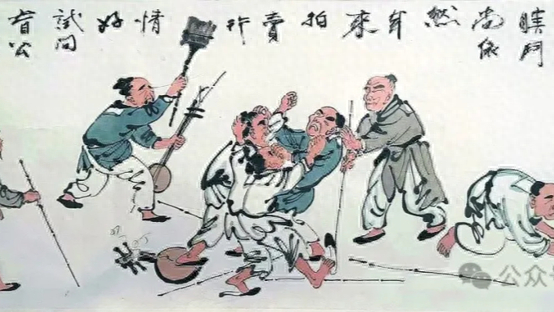
磨墨隆隆然——和小学生们谈《口技》
Xin Lang Cai Jing· 2026-02-20 04:11
Group 1 - The article discusses a traditional Chinese storytelling technique known as "kouji," which involves sound effects and voice manipulation to create an immersive experience for the audience [6][12][16] - The narrative centers around a female character who sells medicine and uses the art of "kouji" to deceive villagers into believing in her healing abilities [4][7][10] - The setting is crucial for the performance, as it creates an atmosphere conducive to the audience's suspension of disbelief, allowing them to be captivated by the auditory experience [6][8][9] Group 2 - The use of sound effects in the performance, such as the grinding of ink and the rustling of paper, enhances the storytelling and engages the audience's imagination [12][15][16] - The article highlights the psychological aspects of the performance, where the audience's anticipation and fear contribute to the effectiveness of the deception [4][7][10] - The character's ability to manipulate sounds and create a vivid auditory scene reflects the broader cultural significance of oral traditions in Chinese storytelling [6][12][16]

文化引领 创新铺路中华老字号焕新“破圈”点燃国货新潮
Xin Lang Cai Jing· 2026-01-11 21:22
Core Viewpoint - The article highlights the resurgence of traditional Chinese brands (老字号) through innovative collaborations and cultural empowerment, leading to a strong wave of domestic product enthusiasm among consumers. Group 1: Market Trends and Consumer Behavior - Traditional brands are increasingly popular among young consumers, with products like Beijing Daoxiangcun's innovative cakes and cultural merchandise gaining traction [2][3] - The "福运小马" mousse cake and "马上有钱" creative phone chain from Beijing Daoxiangcun exemplify how traditional brands are appealing to younger demographics through modern marketing strategies [2] - The overall market for traditional brands is thriving, with a reported revenue of over 2 trillion yuan and profits exceeding 350 billion yuan in 2024 [6] Group 2: Innovation and Product Development - Companies like Huaren Jiangzhong are launching health-oriented products that blend traditional Chinese medicine with modern consumer needs, showcasing the adaptability of old brands [3] - Scene innovation is a key strategy, with brands like Qingdao Beer and Chongqing's Chen Changyin Ma Hua creating immersive experiences that engage consumers [3][4] - The commitment to traditional craftsmanship and cultural heritage is crucial for maintaining brand integrity while appealing to modern consumers [5] Group 3: Policy and Ecosystem Support - Government policies are increasingly supportive of traditional brands, with initiatives aimed at fostering innovation and enhancing brand visibility [8][9] - Collaborative ecosystems involving policy, platforms, and enterprises are essential for the sustainable development of traditional brands, ensuring they remain competitive in the market [7][9] - The integration of various stakeholders in the ecosystem is seen as a way to strengthen the long-term viability of traditional brands while preserving their cultural significance [9]
老字号博物馆的创新消费密码
Bei Jing Shang Bao· 2025-09-25 16:53
Group 1: Core Insights - The salon focused on the theme of "finding the consumption power of time-honored brands," highlighting the transition of these brands from product innovation to cultural systematization [1] - The concept of "living heritage" is emphasized as a key differentiator for time-honored brands operating museums, which leverage unique products, deep cultural roots, and craftsmanship [3][4] - The integration of cultural and commercial attributes in museums presents both opportunities and challenges for time-honored brands [6] Group 2: Museum Strategies - The Yanjing Eight Wonders Museum has established two registered museums and three venues, hosting over 100 cultural events annually, showcasing the importance of active cultural engagement [3] - The "museum-store integration" model adopted by Cai Bai Gold Jewelry Museum allows for a seamless connection between cultural experiences and consumer engagement [7][8] - The One-Character Pavilion aims to enhance brand storytelling and promote consumption through innovative approaches, including customized products and modern packaging designs [9]

中国文房四宝协会墨专业委员会举办线上国标宣贯会
Xiao Fei Ri Bao Wang· 2025-06-19 02:50
Core Viewpoint - The meeting organized by the China Writing Brush Association's Ink Professional Committee aims to promote the effective implementation of national standards in the ink industry, ensuring high-quality development and standardization in the sector [1][6]. Group 1: National Standards Implementation - The meeting focused on the online promotion of two national standards: GB/T34853-2017 for ink sticks and GB/T34851-2017 for ink, gathering nearly 60 industry representatives to discuss the path towards standardization and quality improvement in the ink industry [1][6]. - The standards are seen as a "yardstick" for industry development, providing a framework for product specifications, quality requirements, and testing methods, which are essential for guiding production and quality control [3][4]. Group 2: Standard Development Process - The standard development process involves extensive market research, collection of technical data, and consultation with major production areas to ensure the standards are necessary, feasible, advanced, and coordinated [2][3]. - A dynamic management approach will be adopted, with a review of standards every five years, allowing for adjustments based on market feedback and technological advancements [2][7]. Group 3: Industry Impact and Future Vision - The implementation of ink standards is crucial for ensuring product quality, promoting industry upgrades, and preserving cultural heritage, while also facilitating fair competition and enhancing consumer confidence [4][5]. - The Ink Professional Committee aims to lead the industry towards a vision of "safe ink, cultural ink, and world ink," integrating traditional craftsmanship with modern quality systems to achieve standardization and internationalization [4][7].