天垓系列芯片

Search documents
GPU四小龙,春节不打盹儿
第一财经· 2026-02-14 14:37
Core Viewpoint - The article highlights the rapid advancements in domestic GPU technology and its integration with large AI models, emphasizing the importance of timely adaptation to stay competitive in the AI landscape [3][11]. Group 1: Domestic GPU Developments - Domestic GPU companies, referred to as the "four little dragons," including Moer Technology, Muxi Co., TianShu ZhiXin, and Biran Technology, are actively adapting to new large AI models released during the Spring Festival [3][6]. - Moer Technology's MTTS5000 and Muxi's XiYun C series have successfully adapted to the new GLM-5 model from Zhipu AI, showcasing the efficiency of GPU architecture in model adaptation [5][6]. - The adaptation process is crucial as it enhances the performance of AI models on specific hardware, with GPU architectures allowing for quicker adjustments compared to specialized architectures like NPU [6][11]. Group 2: AI Model Releases - ByteDance's Seedance 2.0, a video generation model, has blurred the lines between reality and virtuality, paving the way for large-scale applications in AI-generated content [7]. - Alibaba's Qwen-Image-2.0 has shown competitive performance in image generation, ranking just below models from Google and OpenAI in benchmark tests [7]. - MiniMax's MiniMax-M2.5 model is notable for its cost-effectiveness, allowing continuous operation at a low cost, which could drive broader adoption in productivity scenarios [7][8]. Group 3: Market Dynamics and Trends - The release of DeepSeek's models has significantly impacted the AI landscape, boosting confidence in domestic AI applications and prompting a shift in how companies approach model training and deployment [11][12]. - The demand for GPU capabilities in inference tasks is increasing, with domestic companies like Muxi and Moer Technology positioned to compete with NVIDIA, especially as the latter's products face restrictions in China [13][21]. - The collaboration between domestic chip manufacturers and AI model developers is becoming more routine, with strategic partnerships being formed to enhance compatibility and performance [16][18]. Group 4: Future Outlook - The expectation for future releases from DeepSeek could stimulate further deployment of AI models in various sectors, particularly in state-owned enterprises [17]. - Domestic chip companies are accelerating their product iterations to meet the growing demand for AI capabilities, with plans for multiple new architectures and products in the coming years [18][19]. - The overall sentiment is optimistic regarding the ability of domestic firms to close the gap with international competitors, with a focus on practical applications and performance differentiation [21].


GPU四小龙,春节不打盹儿
Di Yi Cai Jing· 2026-02-14 10:23
Core Insights - The collaboration between domestic GPUs and large models is improving significantly, with multiple companies launching new models around the Spring Festival period [1][9] - Domestic GPU companies are adapting quickly to new large models, indicating a competitive landscape where timely adaptation is crucial for success [2][4] Group 1: Domestic GPU Developments - Major domestic GPU companies, including Moore Threads, Muxi, and Tensu Zhixin, have successfully adapted to new large models like GLM-5 and Seedance 2.0 [2][3] - The adaptation process involves optimizing performance from initial capabilities, which can vary significantly based on the architecture used [2][7] - The rapid response of these companies during the Spring Festival highlights their commitment to staying competitive in the AI landscape [5][6] Group 2: Large Model Innovations - ByteDance's Seedance 2.0 and Alibaba's Qwen-Image-2.0 are notable advancements in video and image generation, respectively, with capabilities approaching those of leading global models [3][6] - MiniMax's M2.5 model offers cost-effective solutions for productivity applications, showcasing the potential for widespread adoption in various sectors [3][9] - The release of these models is expected to drive further integration of AI technologies in domestic industries, enhancing the overall market landscape [9][10] Group 3: Market Dynamics and Future Outlook - The release of DeepSeek's models has significantly impacted the AI market, prompting a shift in how companies perceive and utilize large models [6][12] - Domestic chip manufacturers are increasingly forming strategic partnerships with large model developers, indicating a trend towards closer collaboration [9][11] - The anticipated advancements in model capabilities are expected to stimulate further deployment in various sectors, particularly in state-owned enterprises [9][10]
GPU四小龙,春节不打盹儿 | 海斌访谈
第一财经网· 2026-02-14 10:16
Core Viewpoint - Companies that do not take action in the AI wave, particularly in the release of large models and domestic chip enterprises, may fall behind in the industry Group 1: Domestic GPU and Model Development - Domestic GPUs are increasingly well-matched with domestic models, with a surge in large model releases around the Spring Festival [2] - ByteDance launched the video generation model Seedance 2.0, while Zhizhu and MiniMax released their respective models GLM-5 and MiniMax-M2.5 [5][6] - Domestic GPU companies are on standby during the Spring Festival to quickly adapt to new models, indicating the fast-paced nature of AI technology [2][4] Group 2: Model Adaptation and Performance - Companies like Moer Thread and Nuxi have successfully adapted new models to their GPUs, with Moer Thread's MTTS5000 and Nuxi's Xiyun C series being highlighted [4] - Adapting models to run efficiently on GPUs can significantly improve performance, with general GPU architectures allowing for quicker adjustments compared to specialized architectures like NPU [4] - The adaptation process is crucial for ensuring that large models perform optimally on domestic chips, which is essential for competitive positioning [4] Group 3: Market Dynamics and Future Expectations - The release of DeepSeek's models has raised expectations for domestic AI capabilities, with significant improvements noted in the past year [9][10] - Domestic chip companies are increasingly collaborating with large model enterprises, establishing a routine for Day 0 adaptations [14] - The anticipated release of new models from DeepSeek could further stimulate deployment efforts among state-owned enterprises, expanding market opportunities for domestic GPU companies [14] Group 4: Competitive Landscape and Technological Advancements - Domestic GPU companies are beginning to compete with international firms like NVIDIA, particularly in inference tasks where performance requirements are less stringent [11] - The rapid iteration of domestic chips is driven by the growing demand for AI computing power, with companies like Moer Thread and Nuxi accelerating their product development cycles [15][16] - The industry is optimistic about overcoming existing technological gaps, with a belief that domestic firms will eventually achieve parity with international competitors [16]

480亿,“瑞幸操盘手”黎辉押注,最后一家“国产GPU四小龙”上市了
创业邦· 2026-01-08 07:25
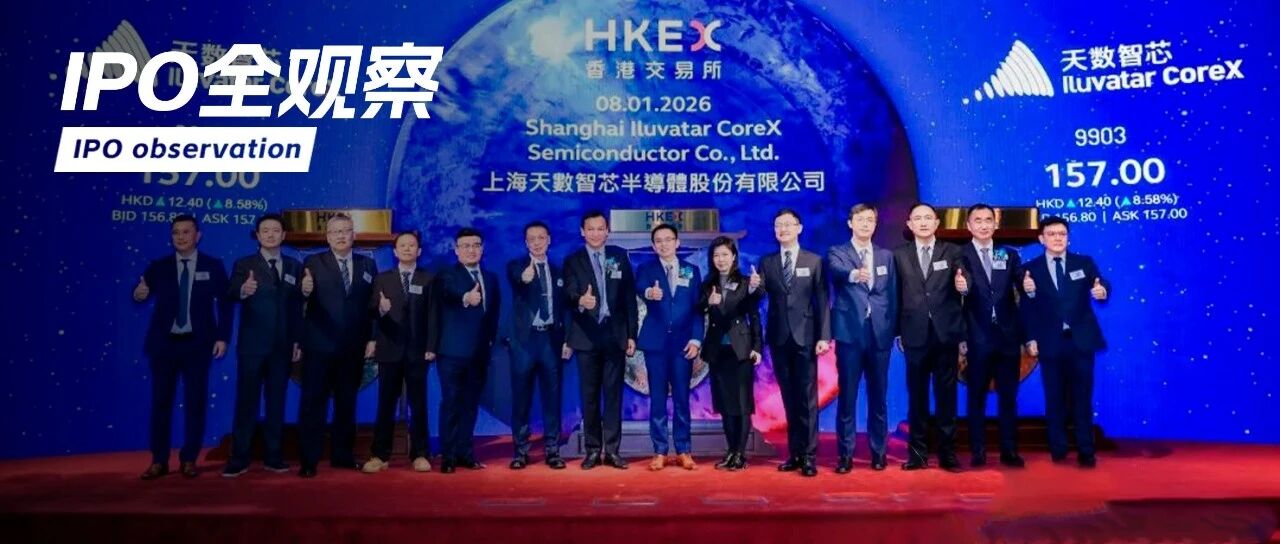
Core Viewpoint - TianShu ZhiXin, a general-purpose GPU company, has successfully listed on the Hong Kong Stock Exchange, opening at HKD 190.2, a 31.54% increase from its issue price of HKD 144.60, with a total market capitalization of HKD 48.37 billion [2][3]. Group 1: Company Overview - TianShu ZhiXin is the fourth general-purpose GPU company to go public recently, following MoEr Thread, MuXi, and BiRan [4]. - The company is recognized as one of the earliest domestic general-purpose GPU developers, although it has lagged behind its competitors in terms of capital progress and social attention [4]. - By June 2025, TianShu ZhiXin had delivered over 52,000 general-purpose GPU products, with projected revenue of CNY 540 million in 2024, comparable to its peers [4][30]. Group 2: Financial Performance - The company has shown strong financial data, with a revenue growth from CNY 189 million in 2022 to CNY 540 million in 2024, representing a compound annual growth rate of 69% [30][31]. - The net loss rate has improved from 292% in 2022 to 165% in 2024, indicating a trend towards better profitability [30][31]. - The customer base has diversified, with the top five customers accounting for less than 40% of revenue by mid-2025, down from 94.2% in 2022 [27][28]. Group 3: Investment and Shareholder Structure - The largest external shareholder, DaZheng Capital, holds a 20.62% stake, valued at nearly CNY 10 billion, with a return multiple of 6.7 times [5][24]. - Other significant investors include YunBo Capital (3.38%), Sequoia China (1.16%), Guosheng Capital (1.14%), and YuanHe Holdings (0.67%), with respective returns of 5.4, 2.8, 5.5, and 3.2 times [5][24]. - DaZheng Capital has played a crucial role in TianShu ZhiXin's development, having invested over CNY 1.5 billion since its early stages [21][22]. Group 4: Management and Strategic Changes - The founder, Li Yunpeng, transitioned from a software platform to hardware development, marking a strategic shift in 2018 as the AI industry grew [10][12]. - Significant management changes occurred in 2021 and 2022, with the appointment of Diao Shijing and later Gai Lujian, reflecting investor confidence in government-backed leadership during critical commercialization phases [17][18]. - Despite management changes, the company has continued to innovate, launching the TianHua Gen 2 in 2023 and planning for Gen 3 in 2026 [18]. Group 5: Competitive Landscape - TianShu ZhiXin is positioned as a leader in the domestic GPU market, having achieved milestones such as the first mass production of general-purpose GPUs and a comprehensive self-research technology system [25][29]. - Compared to competitors like MoEr Thread and MuXi, TianShu ZhiXin has a more pragmatic approach, focusing on product delivery and customer base expansion rather than solely on brand recognition [31][32]. - The competitive landscape is evolving, with the "Four Little Dragons" of domestic GPUs now publicly listed, indicating a shift towards a more complex market dynamic where product performance and sustainable profitability will be key [33][34].
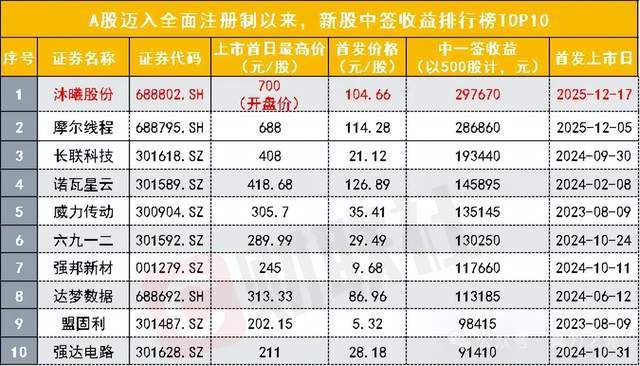
沐曦上市首日暴涨568%,国产GPU“财报竞争”时代开启
Sou Hu Cai Jing· 2025-12-17 05:54
Core Viewpoint - Muxi Integrated Circuit (Shanghai) Co., Ltd. successfully listed on the STAR Market, with a remarkable opening performance, achieving a 568.8% increase in stock price, reaching 700 yuan, and a market capitalization exceeding 280 billion yuan, making it a popular new stock [1][2]. Company Overview - Muxi was established in September 2020 in Shanghai, with R&D centers in seven locations including Beijing, Nanjing, and Chengdu. The core team has an average of nearly 20 years of experience in GPU production, positioning the company as a leader in the domestic high-performance general-purpose GPU sector [3]. Product Development - Muxi follows a "one generation in production, one in research, one in planning" strategy. The company has successfully mass-produced the Xisi N100 (for inference) and Xiyun C500 (for training and inference), while the Xiyun C600 is in research and development, aiming to compete with NVIDIA's H100 [4]. Competitive Landscape - Muxi and Moore Threads represent two of the most watched domestic GPU companies, each adopting different technical routes and business models. Muxi focuses on general computing and AI, while Moore Threads pursues a full-feature GPU approach. Muxi's Xiyun C500 utilizes advanced packaging technology, claiming superior bandwidth compared to GDDR6 solutions, and has developed the MXMACA software stack for compatibility with mainstream CUDA applications [5]. Financial Performance - In the first half of 2025, Muxi reported revenue of 915 million yuan, surpassing its total revenue for 2024. The company has maintained a high R&D expense ratio of over 70%, emphasizing a high yield rate for its products. In comparison, Moore Threads reported approximately 700 million yuan in revenue during the same period [6]. Industry Trends - The successful listing of Muxi signifies a shift in the domestic GPU competition from "laboratory research" to "financial statement validation." Companies that can quickly achieve scale revenue and expand ecosystem compatibility are likely to attract capital market interest. The long-term success of these companies will depend on their ability to build a self-sustaining application ecosystem that breaks through CUDA barriers and secure stable high-end process capacity [7]. Market Dynamics - The capital landscape for domestic GPU companies is evolving, with Muxi's listing accelerating the capitalization processes of other leading firms. The market is increasingly driven by policies that emphasize domestic production, with orders concentrating on mature technologies and reliable products from leading enterprises [9].