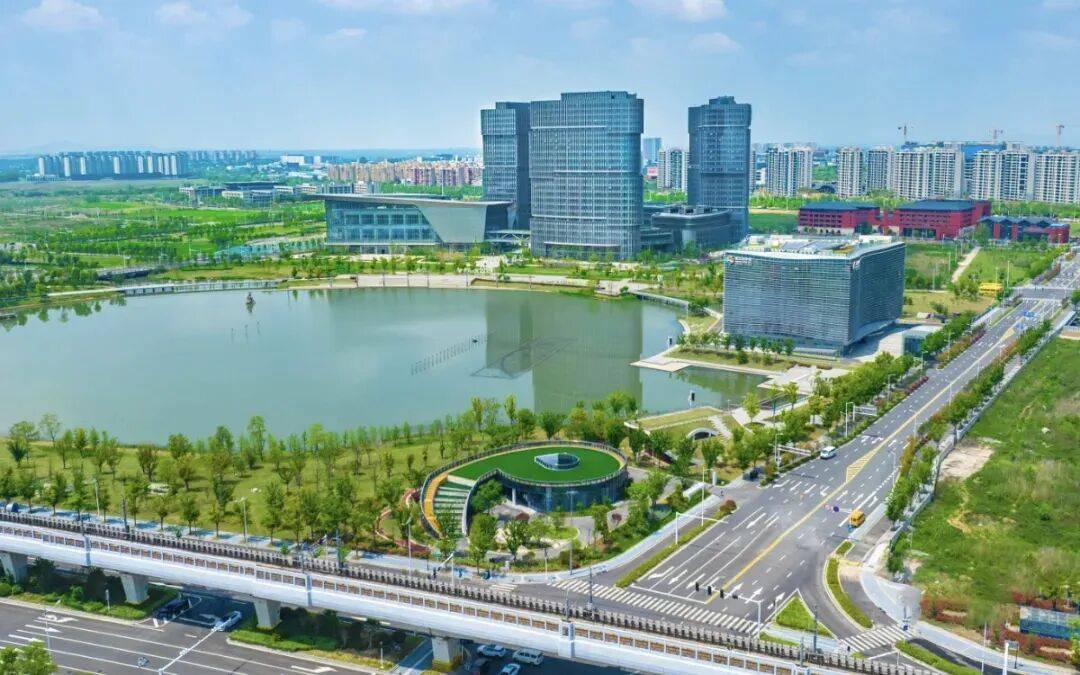
曦云C600

Search documents
AI算力竞速(中):国产GPU企业的集体冲锋与隐忧
3 6 Ke· 2026-02-11 05:44
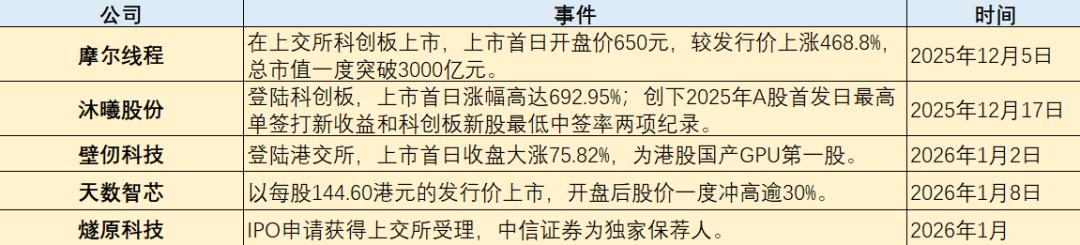
Core Insights - The Chinese GPU industry is experiencing significant growth, with the market size projected to increase from 38.5 billion yuan in 2020 to 163.8 billion yuan in 2024, and expected to reach 1.4 trillion yuan by 2029, capturing 38% of the global market share [1] - The rise of domestic GPU manufacturers is driven by both the demand for AI computing power and the need for supply chain security due to export controls on high-performance AI chips [1] - Government policies are actively supporting the development of AI chips and intelligent computing infrastructure, creating a favorable environment for domestic companies [1] Company Developments - Several domestic GPU companies have recently gone public, including Moore Threads, which saw its stock price rise by 468.8% on its debut, and Muxi Technology, which achieved a 692.95% increase on its first day of trading [2] - The IPOs of these companies reflect an accelerated domestic substitution process in response to the dual pressures of AI computing demand and supply chain security [2] - Companies like Tenstorrent and Suiyuan Technology are also making strides in the market, with Tenstorrent being the first to achieve mass production of general-purpose GPU chips using 7nm technology [5][6] Technological Strategies - Chinese manufacturers are adopting a pragmatic approach by balancing compatibility with existing ecosystems and independent innovation, exemplified by Moore Threads' MUSA architecture, which maintains compatibility with the CUDA ecosystem [3] - This strategy allows developers to transition to domestic platforms with minimal costs, addressing the challenge of starting from scratch in a new ecosystem [3] - The focus on building a compatible and self-controlled software ecosystem is evident in companies like Muxi Technology, which aims to protect existing code assets and reduce customer switching concerns [3] Product Development - Domestic GPU companies are rapidly developing comprehensive product lines to compete with global giants, as seen with Muxi Technology's four product series targeting various AI applications [4] - Wallen Technology is focusing on high-end data center chips, with 85% of its IPO funds allocated to R&D, indicating a commitment to challenging core markets [4] - The diverse product strategies reflect a shift from niche market focus to a complete computing product system, catering to various industry needs [5] Capital Market Dynamics - The recent wave of IPOs among GPU companies highlights a critical commercial logic, as these firms seek to secure funding for ongoing R&D in a capital-intensive industry [6] - The transition to public companies enhances brand credibility and customer confidence, as evidenced by Tenstorrent's rapid expansion in client numbers following its IPO [7] - However, the significant losses reported by these companies raise concerns about their profitability and the sustainability of their business models in a competitive market [8]

接连上市,上海 “芯” 势力崛起
Zhong Guo Jing Ji Wang· 2026-01-13 06:41
Core Insights - The recent surge in Shanghai's semiconductor companies listing on the Hong Kong Stock Exchange signifies a robust "Shanghai phenomenon" driven by strong innovation and a favorable ecosystem [1][11] - Companies like TianShu, BiRan, MuXi, and SuiYuan are leading the charge in AI and integrated circuits, showcasing Shanghai's rising influence in these sectors [1][11] Innovation Capability - TianShu's "TianGai" series has delivered over 52,000 units to more than 290 clients, emphasizing the importance of mass production in their strategy [2] - SuiYuan has achieved significant milestones, including over 100,000 units shipped of its AI acceleration card, maintaining a leading position in the domestic market [2] - MuXi's GPU products are deployed in over 10 intelligent computing clusters, with a focus on developing next-generation GPU products [3] - MiniMax, a rapidly growing AI company, has developed a model that ranks among the top five globally in key areas, demonstrating exceptional performance and cost efficiency [3] Development Speed - Companies in Shanghai exhibit rapid growth, with MiniMax going from establishment to listing in just four years [4] - ZhiYuan Robotics achieved a production milestone of 5,000 units of its general-purpose robot in under two years, setting industry records [4] - XiZhi Technology is on track to deploy its distributed optical switching GPU at a large scale, showcasing the fast-paced innovation in the sector [4] Ecosystem Construction - Shanghai's supportive government policies and effective market mechanisms have created a "tropical rainforest" ecosystem conducive to innovation [8] - The city has implemented subsidies for model training costs, significantly reducing the financial burden on AI companies [8] - Shanghai has attracted a significant portion of the national integrated circuit talent and resources, fostering a collaborative environment for innovation [9] - The establishment of specialized industrial parks has facilitated close collaboration among companies, enhancing the overall ecosystem [9] Application Scenarios - Shanghai is actively creating real-world application scenarios for AI technologies, enhancing their practical utility [10] - The city has initiated projects that connect industry challenges with scientific solutions, promoting collaborative innovation [10] - Strategic investments from state-owned enterprises have supported leading companies in the AI and semiconductor sectors, ensuring their growth and sustainability [10] Future Outlook - Shanghai aims to continue its focus on innovation across the entire industry chain, aspiring to develop a world-class integrated circuit and AI industry cluster [11][12] - The city is committed to creating an environment where innovative ideas can thrive and advanced technologies can flourish, positioning itself as a global leader in these fields [12]
东海证券晨会纪要-20260109
Donghai Securities· 2026-01-09 05:32
Group 1 - The semiconductor industry continues to recover with rising prices, driven by AI demand and structural opportunities in AI computing, AIOT, semiconductor equipment, key components, and storage price increases [5][7][11] - In December, global semiconductor demand improved, with slight growth in PCs and smartphones, and rapid growth in TWS headphones, wearable devices, smart home products, AI servers, and new energy vehicles [5][7] - The supply side shows high inventory levels, but AI-driven demand in certain segments has led to price increases from upstream wafer foundries, while memory price hikes may slow down shipments of consumer electronics [5][7][11] Group 2 - The mechanical equipment industry has seen some export chain companies announce profit increases for the year, with companies like Juxing Technology and Taotao Automotive projecting significant profit growth [13][14] - Juxing Technology expects a net profit of 2.419 to 2.764 billion yuan for 2025, reflecting a growth of 5% to 20% year-on-year, while Taotao Automotive anticipates a net profit of 800 to 850 million yuan, representing an increase of 85.5% to 97.1% [13][14] - Siemens is undergoing a strategic transformation to integrate industrial AI into its operations, aiming for revenue growth of 6% to 9% in the medium term [15][16] Group 3 - The A-share market showed slight fluctuations, with the Shanghai Composite Index closing down 0.07% at 4082 points, while the Shenzhen Component and ChiNext indices also experienced declines [21][22] - The military equipment sector saw a significant increase of 4.83%, leading the industry gains, while sectors like insurance and securities faced declines [23][25] - The semiconductor sector's valuation remains high, with a PE ratio of 91.50% and a PB ratio of 72.94%, indicating strong market interest despite potential risks [6][7]
上海GPU“四小龙”聚齐,世界级芯片集群呼之欲出
Guo Ji Jin Rong Bao· 2026-01-08 13:59
Group 1: Industry Growth and Performance - Shanghai's integrated circuit industry revenue reached 391.2 billion yuan from January to November 2025, marking a year-on-year growth of 23.72%, with an expected annual scale exceeding 460 billion yuan, a 24% increase [1] - The AI chip industry cluster in Shanghai has significantly contributed to this growth, with the "Four Little Dragons" of GPU chips making a strong entry into the capital market [3][4] - The revenue of the AI chip companies is on the rise, with Muxi Technology's revenue expected to exceed 700 million yuan in 2024 and 915 million yuan in the first half of 2025, while Wallen Technology and Tensu Zhixin also show rapid growth [4] Group 2: Capital Market Activity - The "Four Little Dragons" of Shanghai's GPU chips have recently listed on capital markets, with Tensu Zhixin raising 3.7 billion HKD through its IPO, achieving an oversubscription of 414.24 times in the public offering [3][4] - Muxi Technology and Wallen Technology have also made significant strides in the capital market, with Muxi being the first to list on the Shanghai Stock Exchange's Sci-Tech Innovation Board [3] Group 3: Technological Advancements - Tensu Zhixin has achieved several breakthroughs in the domestic GPU industry, launching the first training-specific and inference-specific general-purpose GPU products, filling gaps in the domestic chip market [4] - Muxi Technology has developed a series of GPUs for intelligent computing, with its products already deployed in over ten intelligent computing clusters, showcasing significant commercial application [8] Group 4: Industry Ecosystem and Support - Shanghai has established a robust ecosystem for integrated circuits, ranking fourth globally and first in mainland China, with over 1,200 integrated circuit companies and a significant concentration of talent and innovation resources [7] - The city has implemented supportive policies for the integrated circuit industry, providing funding and resources to companies at various stages of development, exemplified by Muxi Technology's early-stage funding and strategic investments [7][8] Group 5: Future Outlook - The AI chip market in China is projected to grow significantly, with an expected shipment of 2.5 million units in 2024 and a compound annual growth rate of 32.1% until 2029, indicating substantial potential for domestic companies [4] - Shanghai aims to continue leading in the integrated circuit industry, focusing on innovation, talent cultivation, and comprehensive service support to enhance its competitive edge in the global market [9]
上海AI“芯”势力抢滩资本赛道
Shang Hai Zheng Quan Bao· 2026-01-06 17:56
Core Insights - Shanghai's integrated circuit industry revenue reached 391.2 billion yuan from January to November 2025, marking a year-on-year growth of 23.72%, with an expected annual revenue exceeding 460 billion yuan, reflecting a growth of 24% [1][2] - The city has over 1,200 integrated circuit companies, accounting for approximately 40% of national talent and nearly 50% of innovation resources in the industry [1][5] - Shanghai ranks fourth globally and first domestically in the latest global integrated circuit industry competitiveness ranking [1] Industry Developments - The AI chip sector in Shanghai is experiencing a surge in IPO activity, with companies like Biran Technology and Muxi Co. recently going public, and Tensu Zhixin set to list on January 8, 2026 [2][3] - Tensu Zhixin has achieved significant milestones, including the development of the first domestic training-specific and inference-specific general-purpose GPU products, filling gaps in high-end training and inference scenarios [3][4] - Muxi Co. has deployed its GPU products in over ten intelligent computing clusters, achieving large-scale commercialization [3] Investment and Support - Shanghai's government has established a comprehensive industrial ecosystem, supporting companies through financial incentives and talent acquisition policies [4][5] - Shanghai Guotou Company plays a pivotal role in the integrated circuit sector by establishing multiple industrial merger funds focused on equipment, materials, and design [6] - The city aims to maintain its leadership position by focusing on innovation breakthroughs across the entire industry chain and nurturing leading enterprises [7]
壁仞、沐曦等国产GPU“上桌”之前,这家公司搭起自主算力底座 | 电厂
Xin Lang Cai Jing· 2026-01-06 11:49
Core Insights - The domestic GPU companies are entering a critical phase as they prepare for significant market opportunities, with several companies like Birran Technology and Moer Thread successfully listing on stock exchanges [1][2] - The collaboration among these companies is essential for building a robust domestic computing and model ecosystem, with projections indicating rapid growth in GPU supply by 2026 [2][3] Group 1: Market Developments - Birran Technology officially listed on the Hong Kong Stock Exchange on January 2, 2025, following successful listings of other companies like Moer Thread and Muxi Technology [1] - The domestic AI sector is no longer limited to a few key players, as companies like SenseTime and Cambricon are now joined by others, expanding the investment landscape [1] Group 2: Industry Collaboration - The companies are not isolated entities but are part of a collaborative effort to enhance the domestic computing ecosystem, with a focus on integrating AI across various industries [2] - SenseTime has established a comprehensive collaboration system with major domestic chip manufacturers, ensuring compatibility and optimizing the application of AI technologies [5][6] Group 3: Technological Advancements - SenseTime's SenseCore platform has achieved full compatibility with several leading domestic chips, facilitating a complete cooperation framework from computing supply to application deployment [5] - The company has developed innovative frameworks like LightX2V, which significantly enhance the efficiency of model training and adaptation to various hardware [7] Group 4: Performance Metrics - SenseTime's Seko model demonstrates competitive performance against international counterparts, achieving similar results in video generation with domestic chips [8] - The Seko platform has rapidly gained traction, surpassing 200,000 creators within six months of launch, indicating strong market acceptance [8] Group 5: Strategic Initiatives - SenseTime has established a "three-in-one" strategy focusing on large devices, models, and applications, which has led to a significant increase in its generative AI business [15] - The company plans to raise funds through a new share placement to expand its AIDC capabilities and increase the domestic production ratio [16]

南京“耐心资本”助力751个重点产业项目
Xin Hua Ri Bao· 2025-12-21 23:29
Group 1 - The core viewpoint of the articles highlights the emergence of Nanjing as a hub for artificial intelligence and the successful listing of Muxi Co., marking it as a significant player in the domestic GPU market [1][2][7] - Muxi Co. received approximately 800 million yuan in investments from municipal and district funds over five years, showcasing the city's commitment to fostering innovation in emerging industries [1][3] - The company launched its first domestically produced general-purpose GPU, the Xiyun C600, in September, representing a historic breakthrough in high-performance GPU technology in China [2] Group 2 - Nanjing has established itself as a national AI innovation application pilot zone, focusing on key elements such as algorithms, computing power, data, and ecosystem development [2][5] - The Nanjing municipal government has set up various funds to support emerging industries, with a total of 153 sub-funds established since 2016, investing in 751 local projects [3] - The city plans to integrate resources to form a fund cluster exceeding 200 billion yuan, aimed at supporting major projects and key industry developments [3] Group 3 - Nanjing is enhancing its industrial ecosystem by reforming factor guarantees, which includes the construction of new headquarters for companies like Haowei Technology, aimed at improving operational efficiency [4] - The city is also focused on building high-quality data sets and trustworthy data spaces, issuing up to 50 million yuan annually in "computing power vouchers" to support AI enterprises [5] - Talent acquisition is a priority, with initiatives to attract top talent in AI, offering substantial financial support and services to meet their needs [6]
陈维良造芯五年打造国产GPU标杆 沐曦股份营收12亿创3000亿造富神话
Chang Jiang Shang Bao· 2025-12-21 23:26
Core Viewpoint - The company, Muxi Co., Ltd., has rapidly gained attention in the GPU market, achieving a market capitalization exceeding 300 billion yuan shortly after its IPO, despite currently operating at a loss [2][8]. Company Overview - Muxi Co., Ltd. was founded by Chen Weiliang, a former AMD executive, who aimed to fill the gap in the domestic GPU market [3][4]. - The company has positioned itself as the "Chinese version of AMD," focusing on high-performance general-purpose GPU computing [2][3]. Financial Performance - On its first trading day, Muxi's stock price surged nearly 7 times, closing at 829.90 yuan per share, and later settled at 715.6 yuan, still reflecting a nearly 6-fold increase from the issue price [2][8]. - For the first three quarters of 2025, Muxi reported revenues of 1.236 billion yuan, with a net loss of 346 million yuan, marking a 55.79% reduction in losses year-on-year [2][7]. Product Development - Muxi's first intelligent computing inference chip, Xisi N100, was successfully mass-produced in April 2023, marking a significant milestone in the company's journey [6]. - The company launched the Xiyun C500 series in 2024, which significantly improved its market competitiveness, contributing to 97.87% of revenue in the first quarter of 2025 [7]. Market Strategy - Muxi has chosen to focus on the B-end data center market rather than the competitive consumer graphics card market, adopting a "compatibility + self-research" technology route [4][6]. - The company has engaged in extensive fundraising efforts, attracting over 120 institutional investors prior to its IPO [8]. Future Outlook - Muxi has set a target to achieve breakeven by 2026, acknowledging the capital and technology-intensive nature of the GPU industry [9].

从寒武纪到沐曦,超1.5万亿算力军团,谁是背后隐秘捕手?
创业邦· 2025-12-19 14:57
Core Insights - The article discusses the strategic investment approach of Lenovo Capital, which has successfully positioned itself as a key player in the AI computing sector by investing in four leading companies: Cambricon, Hygon, Moore Threads, and Muxi [3][5][36] - Lenovo Capital's foresight in recognizing the impending demand for computing power has allowed it to capture significant market opportunities, with its investments in companies that have collectively surpassed a market value of 1.5 trillion RMB [5][36] Investment Strategy - Lenovo Capital began its systematic investment in AI computing as early as 2017, when AI chips were still largely experimental, demonstrating a commitment to long-term industry insights rather than following market trends [9][10] - The firm made significant investments in Cambricon, Hygon, Moore Threads, and Muxi, with a clear understanding of the evolving landscape of computing needs driven by AI applications [10][11] Complementary Technology Ecosystem - The four companies represent a complementary technology ecosystem rather than direct competitors, each fulfilling distinct roles in the AI computing landscape [12][13] - Cambricon is positioned as a specialized unit with its MLU chips designed for AI computing efficiency, while Hygon serves as a mainstream player with its x86-compatible CPUs [14][15] - Moore Threads aims to create a versatile GPU architecture, and Muxi focuses on high-performance GPUs specifically optimized for AI training and inference [19][20] Collaborative Synergy - Lenovo Capital's investments have fostered a collaborative environment where the companies can leverage Lenovo's resources for real-world applications, enhancing their product development and market validation [26][28] - The partnership between Lenovo and these companies has evolved from simple supply relationships to co-developing integrated solutions, exemplified by the "DeepSeek" AI integrated machine [28] Future Outlook - Lenovo Capital is not resting on its laurels; it is actively exploring next-generation computing paradigms, including quantum computing and RISC-V architecture, to stay ahead in the rapidly evolving tech landscape [33][34] - The firm’s strategic investments in emerging technologies reflect a comprehensive vision for the future of computing, aiming to overcome traditional limitations and redefine the industry [35][36]




沐曦股份上市,南京国资成大赢家,浦口区“人财两得”,凭什么?
Sou Hu Cai Jing· 2025-12-18 10:26
Core Viewpoint - Muxi Co., Ltd. has successfully listed on the A-share market with a market capitalization exceeding 300 billion yuan, marking a significant milestone for its investors, including notable institutions like Sequoia China and the unexpected major shareholder, He Li Guo Xin Zhi Xin, a fund with Nanjing state-owned background [1][2]. Group 1: Investment and Financial Performance - He Li Guo Xin Zhi Xin, backed by Nanjing state capital, has achieved a floating profit of nearly 4 billion yuan from its investment in Muxi, with an average investment cost of approximately 8 yuan per share [3][4]. - The fund has participated in multiple funding rounds, ultimately holding 3.59% of Muxi's shares, making it the largest external shareholder prior to the IPO [4]. - Muxi's subsidiary in Nanjing, established shortly after the company's founding, has become a key player in its product development, contributing significantly to the company's revenue [6]. Group 2: Strategic Importance and Market Position - Muxi focuses on the development of high-performance GPU chips and computing platforms, positioning itself as a critical player in the digital economy and benefiting from favorable national policies for the integrated circuit industry [5]. - The establishment of Muxi in Nanjing aligns with the city's strategic goal of becoming a "chip city," supported by local government policies aimed at fostering the integrated circuit sector [5][6]. - Muxi's recent launch of the fully domestically produced general-purpose GPU, Xi Yun C600, represents a significant advancement in China's high-performance computing capabilities [6]. Group 3: Government and Institutional Support - The Nanjing government has demonstrated a proactive approach in supporting Muxi through early-stage investments and policies that facilitate capital infusion into emerging industries [8]. - The collaboration between Nanjing's Jiangbei New Area and Pukou District has led to a unified development strategy, enhancing the region's ability to attract and nurture high-tech enterprises like Muxi [9].