
天禧AI

Search documents
联想刘军:从队友到AI Twin,天禧AI将沿“三大轴线”进化
Huan Qiu Wang· 2026-02-24 08:44
Core Insights - Lenovo Group reported a double-digit growth in overall revenue and profit contribution in the China region for Q3 of FY 2025/26, with a year-on-year increase of 15% and 20% respectively [1] - The Tianxi AI has been upgraded to version 3.5, enhancing multi-modal experiences across devices and ecosystems, transitioning from an "assistant" to a "teammate" [1] Group 1: AI Development Strategy - Lenovo aims to leverage local computing resources more effectively as the cost of tokens for AI usage increases, promoting a hybrid architecture of "end-edge-cloud" for better user experience and cost balance [3] - The Tianxi ecosystem has seen significant growth, with over 3,200 AI applications and nearly 10,000 active developers, marking a 50% quarter-on-quarter increase [3] Group 2: User Engagement and Experience - The average weekly active rates for Tianxi AI on Lenovo AI PCs and AI phones reached 42% and 61% respectively, with an accelerating trend [4] - The company plans to continuously iterate on the personal super intelligent agent to enhance user engagement and leverage hardware advantages for ecosystem service momentum [4]


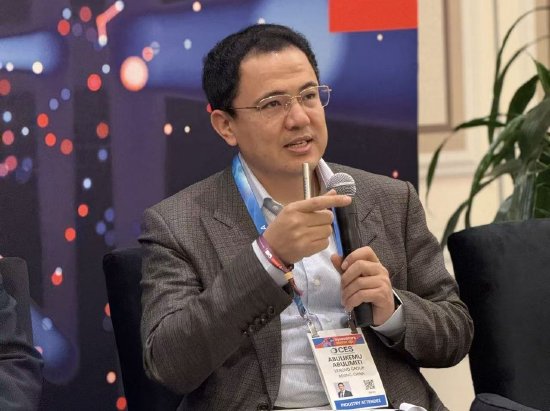
联想集团副总裁阿木:正研发面向企业的“个人超级智能体”
Xin Lang Cai Jing· 2026-01-09 06:54
Core Insights - Lenovo is developing an enterprise-focused "personal super intelligent agent" named "Tianxi AI Pro" to enhance smart collaboration from individuals to enterprises [1][4][7] - The launch of Lenovo Qira, known as Tianxi AI in China, marks the global implementation of Lenovo's personal AI strategy, which is part of a broader hybrid AI initiative [3][6] - The integration of personal and enterprise AI aims to create a smart network that connects individual creativity with corporate intelligence, evolving from "using AI" to "co-creating AI" [3][6] Group 1 - Lenovo's Tianxi AI represents a personal intelligent agent that aligns with individual interests, while enterprises will deploy enterprise-level intelligent agents to enhance employee efficiency and external communication [3][6] - The intersection of personal and enterprise intelligent agents occurs at AI terminals purchased by enterprises, allowing personal agents to leverage enterprise capabilities alongside individual knowledge [3][6] - Tianxi AI can utilize personal data for AI services and will eventually integrate with Lenovo's enterprise-level intelligent agent, "Lexiang," to assist in decision-making processes [3][6] Group 2 - Lenovo has been developing and testing the Tianxi AI Pro version since last year, enabling enterprises to purchase and assign work versions of personal intelligent agents to employees [4][7] - The company's hybrid AI strategy, significant R&D investment, and open ecosystem are foundational for deep collaboration between personal and enterprise AI [4][7]
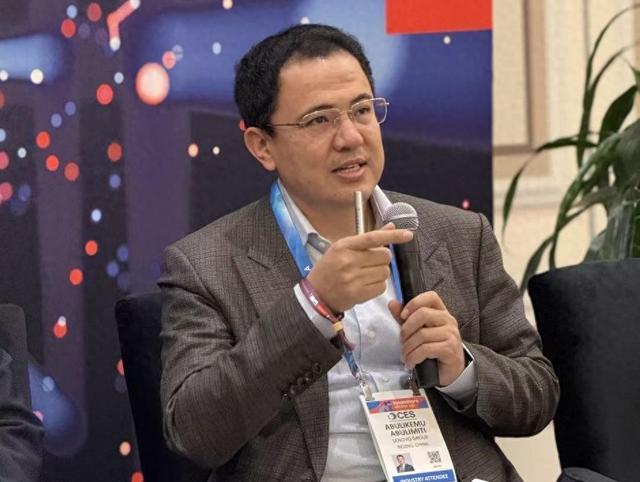
CES 2026|联想阿木透露:天禧AI不止有“个人版”未来也有“专业版”
Huan Qiu Wang· 2026-01-09 05:59
Core Viewpoint - Lenovo is developing an enterprise-focused "personal super intelligent agent" named "Tianxi AI Pro" to enhance smart collaboration from individuals to enterprises [1][4]. Group 1: Product Development - Lenovo officially launched its global personal super intelligent agent, Lenovo Qira, also known as Tianxi AI in China, during its Innovation Technology Conference [3]. - The personal AI is part of Lenovo's hybrid AI strategy, which aims to create a smart network connecting personal creativity with enterprise intelligence [3]. - The Tianxi AI can utilize personal data to provide AI services and will eventually integrate with Lenovo's enterprise-level intelligent agents to assist in work decisions [3]. Group 2: Strategic Goals - Lenovo aims to enable enterprises to purchase the Tianxi AI Pro version for employee deployment, enhancing work efficiency and external communication [4]. - The company emphasizes its three main advantages: hybrid AI strategy, substantial R&D investment, and an open ecosystem, which are foundational for deep collaboration between personal and enterprise AI [4].
再造一个联想?AI业务成增长新引擎
Feng Huang Wang· 2026-01-07 04:34
Group 1 - Lenovo is transforming its business processes through the integration of over 200 AI agents, creating a network that enhances operational efficiency [2][3] - The company has adopted a three-step approach for AI integration: re-evaluating processes, upgrading to an AI foundation, and fostering talent and cultural change [3] - Lenovo's AI product matrix includes personal and enterprise-level solutions, demonstrating a comprehensive strategy for AI deployment [3] Group 2 - Lenovo's "One Engine, Four Ships" model supports the large-scale implementation of AI, with the "One Engine" being the Qingtian Engine 4.0 and the "Four Ships" comprising various AI solutions [4] - The Baijing AI platform has improved customer acquisition efficiency by over 30% and IT operations efficiency by approximately 50% [4] - Lenovo aims to expand its AI offerings into vertical markets, enhancing service delivery for small and medium enterprises [4] Group 3 - The Tianxi AI has evolved to version 3.5, establishing a significant advantage in multi-device collaboration, with over 10,000 developers and 5,000 partners in its ecosystem [5] - Lenovo's AI PC market share reached 42% in China, with the tablet business entering the top tier of the market [5] - The core architecture of Tianxi AI includes modules for perception, understanding, memory, planning, and scheduling, enabling cross-device interaction [5] Group 4 - Lenovo plans to launch version 4.0 of Tianxi AI in May 2026, achieving L3-level capabilities for complex task automation and personalization [6] - The company is focusing on four device categories for 2026: AI PCs, AI tablets, AI smartphones, and AIoT solutions [6] - Lenovo's server business has seen a 172% year-on-year growth, indicating strong demand for AI infrastructure [6] Group 5 - The demand for reasoning computing power is expected to surge as AI agents upgrade to L2 and L3 levels, with increased requirements for cost control and stability [7] - The LeXiang Super AI is positioned as a unified interface for external engagement, contributing to 30% of Lenovo's online sales [7] - Employees will transition to roles as knowledge experts and error correctors, collaborating with AI agents rather than being replaced [7] Group 6 - Lenovo's AI differentiation is based on strategic foresight, research and development investment, and an open ecosystem [9] - The company has established a mixed AI strategy, launching various AI products ahead of competitors [9] - Lenovo's AI ecosystem is designed to be open and cross-platform, fostering collaboration with numerous independent software vendors [9] Group 7 - Lenovo is evolving from a traditional hardware manufacturer to an AI-driven solution provider, offering a model for transformation in the tech industry [10]
联想的超级智能体,要打“安全牌”
Hua Er Jie Jian Wen· 2025-12-31 13:45
Group 1 - The core focus of the news is the increasing attention and investment in AI agents, highlighted by Meta's acquisition of Manus' parent company for billions of dollars, signaling a significant market shift towards AI technology [1] - Major domestic companies are launching their own AI agents, with DingTalk introducing the "Agent OS," claimed to be the world's first AI-focused work operating system, and Alibaba's Tongyi Lab releasing an open-source GUI AI agent for cross-application operations on AI phones [2] - Lenovo announced an upgrade to its Tianxi AI agent to version 3.5 at the 2025 Tianxi AI Ecosystem Partner Conference, enhancing personalization, actionability, and interaction experience, and embedding Tianxi AI into various devices including AI PCs, phones, tablets, and AIoT [3] Group 2 - Lenovo's Tianxi AI is designed with a focus on security, featuring a hardware-level encryption framework that ensures algorithm and data isolation to prevent unauthorized access, and employs homomorphic encryption to keep data usable yet invisible [4] - The comparison between Tianxi and Doubao by Lenovo's management emphasizes Tianxi's security advantages, which may help the company capture a larger market share in AI terminal products [4]
联想陈学桂:未来AI产业一定是网状结构,而不是孤岛
Xin Lang Cai Jing· 2025-12-31 11:11
Core Insights - The transition from "public AI" to "personal AI" is a critical turning point, with AI technologies being implemented in the form of AI agents, allowing users to experience the true potential of AI [1][3] - The understanding of AI agents among Chinese users has increased by 24% this year, with nearly 50% of users having actually used AI agents [1][3] - Users are increasingly aware that public AI lacks personalization, raises privacy concerns, and has limited cross-platform capabilities, leading to a demand for "trustworthy AI twins" instead of generic solutions [1][3] Industry Trends - The distinction between public AI and personal AI is likened to the difference between public transportation and private cars, emphasizing the autonomy that personal AI provides [4] - Lenovo's strategy in the personal AI sector is to integrate Tianxi AI across various devices, including AI PCs, AI smartphones, AI tablets, and AIoT [4] - By 2025, over 65% of end users in China will prioritize "personal data security and privacy protection" when using AI agents [2][4] Ecosystem Development - The arrival of the personal AI era is reshaping the industry landscape, shifting the focus from traditional operating systems and commercial platforms to personal super intelligent agents [2][4] - Lenovo is positioned advantageously as a terminal manufacturer, capable of connecting intelligent agent services with ecosystems and components [2][4] - The development of communication standards for AI agents (like A2A) and tool invocation standards (like MCP) is crucial for creating a connected AI ecosystem, akin to "HTTP protocols" and "USB interfaces" [5]
联想:天禧AI生态月活跃用户已突破 2.8亿,开发者注册人数超23万
Xin Lang Cai Jing· 2025-12-29 12:17
Core Insights - Lenovo has established a consensus with numerous AI developers that personal AI is a key direction for future innovation and inclusivity. The company's strategy in the personal AI sector is "Tianxi AI One Body Multi-End," aiming to provide every individual with their own AI Twin, which acts as a personalized AI companion [1][4]. Group 1: Strategic Vision and Implementation - Lenovo's vision for personal AI includes four main aspects: a human-centered approach with Tianxi AI representing individual interests; a new hybrid architecture of "AI terminal + trusted personal cloud" to address user trust, cost, and response speed; cross-platform ecosystem and OS connectivity to break service barriers; and a focus on "personal AI sovereignty" ensuring data, knowledge, and memory belong to the individual, with elastic computing power and encrypted processing [1][4]. Group 2: Ecosystem Growth and User Engagement - Over the past three years, the Tianxi AI ecosystem has grown significantly, with monthly active users surpassing 280 million, primarily consisting of university students aged 18-24 and working professionals aged 25-34, who together account for over 70% of the user base. The distribution volume is expected to exceed 4 billion by 2025 [2][5]. - The developer community has also expanded, with over 230,000 registered developers, including 1,800 new AI developers, leading to the creation of more than 5,000 intelligent agents and AI applications [2][5]. Group 3: Technological Advancements - Tianxi AI has been upgraded to version 3.5, achieving three major advancements: personalized responses through "always-on proactive memory" technology combined with a comprehensive knowledge base; enhanced action capabilities via collaborative multi-agent systems; and improved user interaction experiences with multi-end collaborative perception and a unified AUI [2][5]. Group 4: Developer Support Initiatives - Lenovo, in collaboration with Volcano Engine, launched the "Tianxi AI Ecosystem Intelligent Agent Pilot Program," offering early-stage developers attractive support, including 100 million tokens for development and a guarantee that all profits generated by intelligent agents will go to developers for the next 12 months. Partnerships have been established with major platforms such as Douzi, Baidu Wenxin, and Orion [3][6].
吴晓波:打造“端云一体”AI体验,才能真正构建个人超级智能体
Huan Qiu Wang· 2025-12-29 06:39
Core Insights - The event "AI Shining China 2025" highlighted the importance of creating an "end-cloud integration" AI experience to build personal superintelligent agents [1] Group 1 - Wu Xiaobo emphasized the need for seamless interaction and local processing capabilities in AI PCs, showcasing Lenovo's first AI PC with five key features that exceed expectations in response speed [3] - Lenovo has established over 30 manufacturing bases globally to rapidly develop AI products in the AI era [3] Group 2 - The Tianxi personal superintelligent agent (Tianxi AI) is embedded in various devices such as AI PCs, smartphones, tablets, and AIoT, utilizing a personal model and a comprehensive knowledge base [3] - Tianxi AI can record user interactions across different devices, deeply understand user habits, and autonomously manage tasks and execution [3] - The Tianxi AI 3.5 personal knowledge base enhances fragmented information into a unified personal knowledge graph through precise content extraction and intelligent knowledge association [3]
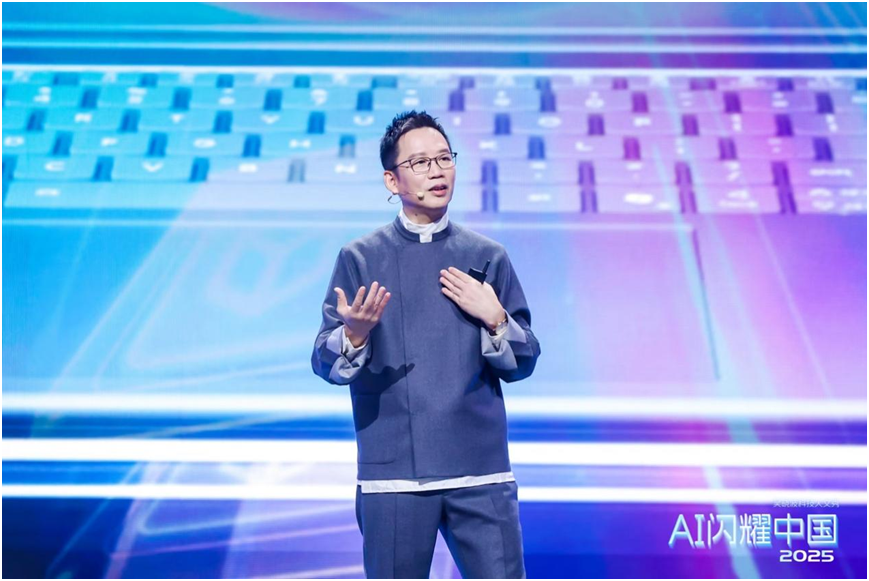
吴晓波:联想布局全球制造,才能在AI时代第一时间打造AI产品
Xin Lang Cai Jing· 2025-12-29 04:19
Core Insights - The event "AI Shining China 2025" featured a speech by Wu Xiaobo, emphasizing the importance of creating an "end-cloud integrated" AI experience to build personal superintelligent agents [1][3] - Wu Xiaobo highlighted his firsthand experience with Lenovo's AI PC, which possesses five key features, showcasing intuitive natural interaction and local document summarization without relying on the cloud [1][3] - Lenovo has established over 30 manufacturing bases globally, enabling it to rapidly develop AI products in the AI era [1][3] - The company has a 40-year history of leading PC generational upgrades and aims to integrate intelligence into everyday life through personalized user experiences [1][3] - The Tianxi AI is expected to evolve into an expert-level intelligent agent, ultimately achieving a fully autonomous AI twin that surpasses human expertise [1][3] Company and Industry Summary - Tianxi personal superintelligent agent (Tianxi AI) is embedded in various devices such as AI PCs, smartphones, tablets, and AIoT, utilizing a personal model and a comprehensive knowledge base [2][4] - Tianxi AI can record user interactions across different devices in real-time, deeply understand user habits, and autonomously manage tasks [2][4] - The super connectivity of Tianxi AI breaks device boundaries, allowing for real-time transfer of files, data, and information, and manages the entire lifecycle of a "personal knowledge base" [2][4]
联想深度参与赛事直转播等核心环节
Zheng Quan Ri Bao Wang· 2025-12-29 03:44
Group 1 - Lenovo is the official technology partner for the 2026 FIFA World Cup, engaging deeply in content production, smart operations, and live broadcasting to enhance fan experience [1] - The launch of "Your World Cup Viewing Buddy" - Lenovo Tianxi AI Football Smart Agent World Cup Edition, aims to provide interactive and professional analysis for fans [1][2] - The Tianxi AI integrates across various devices, creating a personal knowledge base that manages user interactions and tasks seamlessly [2][3] Group 2 - Tianxi AI has developed a secure architecture for personal data protection, receiving the first "Excellence" certification for generative AI security from the China Academy of Information and Communications Technology [2] - Lenovo's strategy of "Tianxi AI One Body Multi-End" is driving the implementation of advanced AI experiences, with over 5000 applications in its ecosystem [3] - The transition from "Device AI" to "Personal AI" signifies a technological evolution that will reshape industry dynamics and ecosystems [3] Group 3 - Lenovo's Tech World event at CES 2026 will define the direction for AI technology, emphasizing the importance of user-centric design in AI applications [4] - The ongoing exploration of AI aims to enhance its understanding and service to humans, moving towards a future that is clearer and more empathetic [4]