天行底盘

Search documents
未来钱要花在哪里?蔚来李斌:核心就在充换电基础设施领域
Xin Lang Cai Jing· 2025-12-09 11:54
Core Viewpoint - The 2025 China Entrepreneur Influence Entrepreneur Annual Conference emphasizes the theme of "Emergence·Infinity - Co-creating New Forms of Intelligent Business" and highlights the importance of technological innovation in the electric vehicle industry, as articulated by NIO's founder, Li Bin [1][6]. Group 1: Investment in R&D - NIO has invested over 65 billion RMB in research and development over the past 11 years, with a global R&D team of more than 11,000 people and nearly 10,000 project patents [3][8]. - The company maintains a quarterly R&D expenditure of approximately 3 billion RMB, with total R&D spending of 13 billion RMB last year and 13.4 billion RMB the year before, positioning it among the highest in the automotive industry [3][8]. Group 2: Technological Innovations - NIO's intelligent electric vehicles represent a systemic innovation involving three major industries, rather than isolated advancements [3][8]. - The company has developed the world's first 5-nanometer automotive-grade chip, featuring over 50 billion transistors, which was completed and integrated into vehicles ahead of NVIDIA's flagship chip [3][8]. - NIO's self-developed vehicle operating system manages all onboard chips, creating a comprehensive "nervous system" for the vehicle [3][8]. - The company has pioneered the implementation of steer-by-wire technology in its vehicles, enhancing safety and performance with the ability to make 1,000 adjustments per second [3][8]. Group 3: Charging and Battery Swap Infrastructure - NIO has invested over 18 billion RMB in building a unique "charge, swap, and upgrade" service system, with more than 3,600 battery swap stations deployed nationwide [4][9]. - The company offers a "3-minute battery swap" service, with daily swap services reaching hundreds of thousands and a cumulative total of nearly 94 million battery swaps [4][9]. Group 4: Industry Outlook - The automotive industry is identified as a strategic pillar industry, with the intelligent electric vehicle sector representing a new high point for technological innovation [4][9]. - Li Bin acknowledges the pressures facing the industry and emphasizes the need for sustained innovation and operational efficiency to rebound from current challenges [4][9].


智能底盘,L3的“AI安全员”?
3 6 Ke· 2025-11-03 05:02
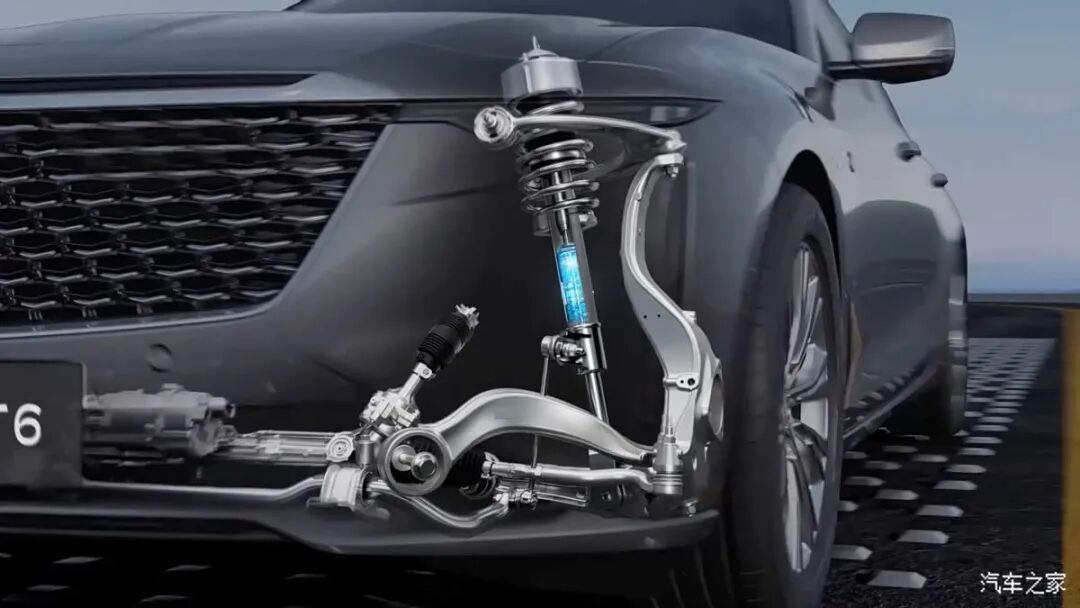
Group 1 - Cadillac has introduced the new CT6 flagship model priced at 329,000 yuan, featuring the fourth-generation MRC electromagnetic suspension, which is typically found in luxury cars like the Ferrari SF90 priced at 5 million yuan [1] - The active suspension system is part of a broader trend in the automotive industry, with many smart chassis technologies emerging in the Chinese market, including systems from Huawei, BYD, NIO, and SAIC [3] - The smart chassis market for passenger vehicles in China is projected to exceed 50 billion yuan by 2025 and could surpass 100 billion yuan by 2027, indicating significant growth potential [5] Group 2 - The smart chassis integrates various subsystems such as steering, braking, driving, and suspension, playing a crucial role in vehicle dynamics and performance [11] - Smart chassis technology enhances vehicle stability, comfort, and safety by allowing for real-time adjustments based on driving conditions and user demands [13] - The integration of smart chassis with autonomous driving systems is essential for improving vehicle safety and reliability, as both systems are critical for the overall safety of intelligent electric vehicles [16][20] Group 3 - The lack of communication between the smart chassis and autonomous driving systems can lead to safety incidents, particularly in adverse weather conditions [18] - A seamless integration of smart chassis and autonomous driving systems is necessary to ensure safe and efficient vehicle operation, with a focus on creating a closed-loop system for information exchange [23] - Industry experts predict that the full integration of smart chassis and autonomous driving technologies will be achieved within the next three to five years, enhancing the safety of autonomous driving [26]
李斌提出“新三大件”,蔚来2025能否画出上升曲线?
3 6 Ke· 2025-04-25 16:21
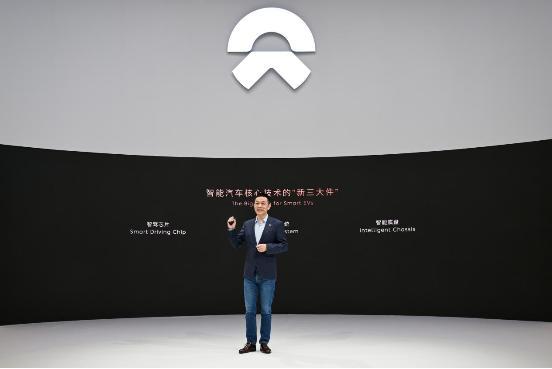
Core Insights - The rapid advancement of intelligent electric vehicles has led to a diminishing competitive edge for Chinese automakers, as traditional Japanese and German brands have caught up in high-end intelligent driving and cockpit technologies [1][4] - NIO's founder, Li Bin, emphasizes the importance of core technologies that are not immediately visible to users, such as intelligent driving chips, operating systems, and smart chassis, which he refers to as the "new three essentials" of intelligent vehicles [3][11] - NIO has invested over 10 billion yuan annually in R&D for three consecutive years, focusing on self-developed technologies to establish a strong technological foundation for the intelligent electric vehicle era [8][19] Industry Trends - The Shanghai Auto Show has shifted focus from flashy marketing to genuine technological innovation, with industry leaders prioritizing core technology advancements over mere brand visibility [6][19] - NIO's strategic approach includes a multi-brand strategy, integrating resources across its three brands—NIO, ONVO, and firefly—to enhance operational efficiency and market competitiveness [19][20] Product Development - NIO plans to launch nine new models across its three brands by 2025, with a steady release schedule that includes the ET5, ET5T, ES6, and EC6 in the second quarter, and the third-generation ES8 in the fourth quarter [12][13] - The firefly brand has introduced a new model priced at 119,800 yuan, targeting the high-end small car market and set to enter multiple international markets [13][15] Technological Innovations - The self-developed 5nm intelligent driving chip, NX9031, is a significant advancement for NIO, providing superior performance compared to competitors' chips and enabling cost savings in production [3][11] - NIO's SkyOS operating system integrates various functionalities, reducing reliance on third-party systems and further lowering operational costs [11][20] Infrastructure Development - NIO aims to establish a comprehensive battery swap network by the end of 2025, covering over 2,800 county-level administrative regions in China, while also expanding its fast-charging infrastructure [16][19] - Li Bin argues that battery swapping and fast charging are complementary rather than opposing technologies, highlighting the advantages of battery swapping in terms of user experience and efficiency [16][17]