头等舱机票

Search documents
美国中产阶层经济信心下滑,消费趋势现两极分化
Sou Hu Cai Jing· 2025-09-01 20:57
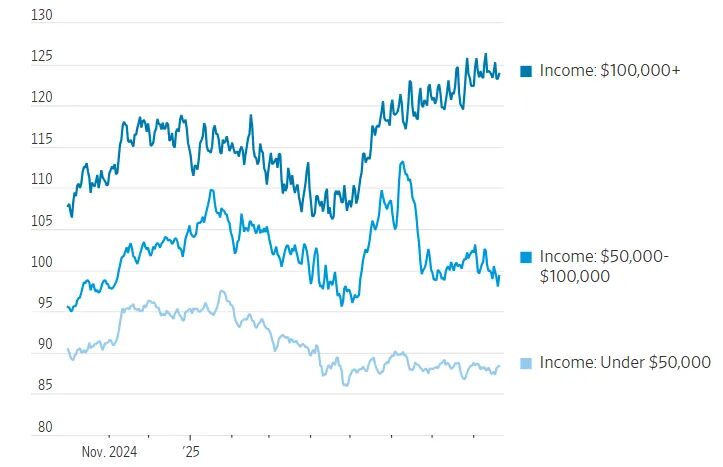
Group 1: Consumer Confidence and Spending Behavior - The consumer confidence index reported by the University of Michigan dropped nearly 6% in August compared to the previous month, reversing the slight recovery seen in June and July, indicating increasing concerns about the economic outlook [1] - Over 70% of respondents in a survey indicated plans to reduce purchases of items with significant price increases over the next year, particularly in retail and dining sectors [3] - Households with annual incomes between $50,000 and $100,000, which had shown optimism earlier, quickly shifted to a more pessimistic outlook, aligning with lower-income groups [1][3] Group 2: Retail and Dining Sector Trends - Walmart observed a decrease in the proportion of non-essential items in the shopping baskets of middle and low-income customers [3] - Kohl's reported that customers are increasingly opting for more affordable clothing and home goods, with the CEO noting that middle and low-income customers face the greatest challenges [3] - Dining establishments like IHOP and Denny's are seeing customers reduce beverage consumption and choose promotional items, reflecting a shift towards budget-friendly options [3] Group 3: High-Income Consumer Resilience - High-income consumers continue to engage in luxury spending, such as purchasing first-class airline tickets and high-end sneakers, showing resilience in their consumption patterns [3] - Swiss sneaker brand On reported a 32% revenue growth in the second quarter and raised its annual sales forecast, indicating strong demand in the high-end market [4] - United Airlines reported a 5.6% revenue increase in premium cabin sales, while economy class revenues experienced a decline, highlighting a clear divide in consumer spending behavior [4] Group 4: Impact on Other Industries - The medical aesthetics industry is witnessing a trend where consumers earning $150,000 or less are extending treatment intervals or reducing dosage, indicating significant impact from economic pressures [4] - Discount brands like Crocs are experiencing a slowdown in sales, contrasting with the performance of premium brands [4]

美国中产阶层信心降温
Guo Ji Jin Rong Bao· 2025-09-01 10:31
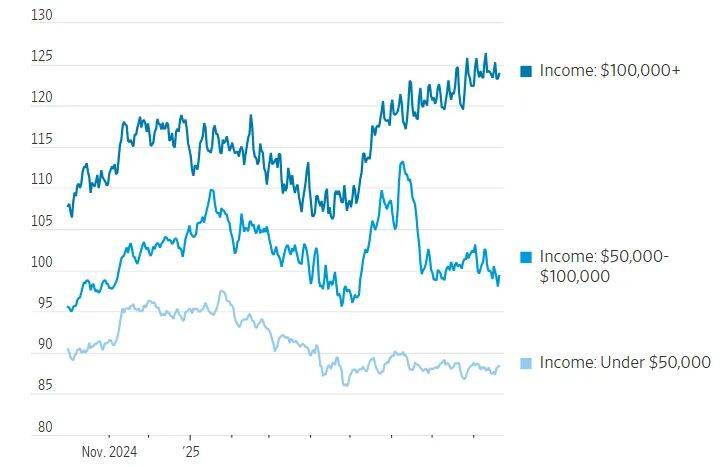
Group 1 - The middle class in the U.S. is experiencing a decline in economic confidence due to high inflation, tariff uncertainties, and decreasing income expectations, which is affecting consumer behavior across various industries [1][2] - The University of Michigan's consumer confidence index dropped nearly 6% in August, reversing the upward trend seen in June and July [1][4] - A significant portion of consumers, over 70%, plan to reduce spending on items with high price increases in the coming year [4] Group 2 - Retail and dining sectors are particularly impacted, with Walmart noting a decrease in non-essential purchases among lower-income customers [5] - Fast-food chains like IHOP and Denny's are seeing customers opt for cheaper menu items, while McDonald's benefits from reduced spending at more expensive restaurants by the middle class [5][6] - High-income consumers continue to show strong spending behavior, purchasing luxury items and services, as evidenced by a 32% revenue growth for the Swiss sneaker brand On [6][7] Group 3 - The beauty and medical aesthetics industry is also witnessing a shift, with lower-income customers extending treatment intervals or reducing dosage, indicating economic pressure on this demographic [7]