
美国消费者信心

Search documents
US consumer sentiment rises in January, though worries over prices, jobs persist
Invezz· 2026-01-23 17:24
Core Insights - US consumer sentiment showed a modest improvement in January, with the University of Michigan's Consumer Sentiment Index rising to a final reading of 56 [1] Demographic Insights - Gains in consumer sentiment were observed across various demographic groups, indicating a broad-based improvement despite ongoing concerns [1] Economic Concerns - Despite the increase in sentiment, Americans continue to express unease regarding high prices, job prospects, and the overall economic outlook [1]


美国消费者信心连续第五个月下滑 就业看法更趋悲观
Xin Lang Cai Jing· 2025-12-23 20:27
Group 1 - The consumer confidence index in the U.S. has declined for the fifth consecutive month, dropping from 92.9 to 89.1, marking the longest decline since 2008 [2][6] - The current conditions index fell to 116.8, the lowest level since February 2021, while the expectations index for the next six months remained unchanged in December [2][6] - Concerns over inflation, tariffs, and the political situation continue to suppress consumer confidence, with high prices and labor market worries persisting throughout the year [4][8] Group 2 - Economists had initially expected a rebound in consumer confidence following the end of a record government shutdown, but the report indicates ongoing declines [4][8] - Job growth remains weak, the unemployment rate is rising, and inflation is still above the Federal Reserve's target, which may continue to drag down consumer confidence [4][8] - The proportion of consumers who believe "jobs are hard to find" has increased, while those who think "jobs are plentiful" has decreased, narrowing the gap to the lowest level since early 2021 [4][8] Group 3 - Respondents' assessment of their current financial situation has declined, with this indicator falling into negative territory for the first time in nearly four years [4][8] - There has been a decrease in purchasing plans for major appliances, housing, and automobiles, as well as a decline in the proportion of consumers planning to travel [4][8]

美国消费者信心连续第五个月下滑 对就业的看法更趋悲观
Xin Lang Cai Jing· 2025-12-23 15:20
Core Insights - The consumer confidence index in the U.S. has declined for the fifth consecutive month, dropping from 92.9 to 89.1, marking the longest decline since 2008 [1][2] - The current conditions index fell to 116.8, the lowest level since February 2021, while the expectations index for the next six months remained unchanged in December [1][2] - High inflation and concerns about the labor market have suppressed consumer confidence throughout the year, with the index hovering near pandemic lows [1][2] Economic Outlook - Employment growth remains weak, with rising unemployment rates and inflation still above the Federal Reserve's target [1][2] - Economists predict that hiring activity will remain moderate next year, with limited improvement in the unemployment rate, which may continue to drag down consumer confidence [1][2] - Wage growth is expected to slow further by 2026, potentially exacerbating consumption disparities among different income groups [1][2]
金油神策:黄金小幅上涨回落 原油谨防触底回升
Xin Lang Cai Jing· 2025-12-21 11:47
Group 1: Gold Market - The gold market strengthened ahead of the weekend, with prices reaching daily highs due to a decline in U.S. consumer confidence and a decrease in inflation expectations [1][4] - The overall trend for gold remains bullish, with prices above key moving averages and higher highs and lows indicating an intact upward trend [2][5] - Key resistance is noted at around $4360, with potential to test historical highs of $4381 and further target $4400 if broken [2][5] Group 2: Oil Market - Oil prices experienced a brief rebound after hitting a low of $54.98 per barrel, closing at $56.54 for WTI and $60.47 for Brent, influenced by geopolitical uncertainties [3][6] - The technical structure for oil remains bearish, with prices within a mid-term descending channel and significant resistance between $57.5 and $58.5 [3][6] - Key support is identified in the $55 to $55.5 range, with risks of further declines if this level is breached [3][6]
金晟富:11.22黄金本周完美把握!下周黄金行情解析
Sou Hu Cai Jing· 2025-11-22 04:42
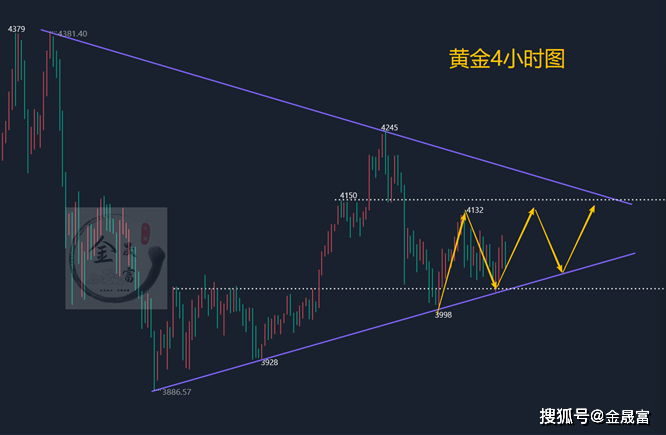
Group 1 - The core viewpoint of the articles revolves around the fluctuating gold prices influenced by Federal Reserve signals and economic data, with a focus on potential interest rate cuts in December [1][2] - Recent statements from hawkish Federal Reserve officials have significantly reduced market confidence in a rate cut, with the implied probability dropping from 90% to 27% [2] - The upcoming PCE inflation data is expected to play a crucial role in shaping market expectations regarding the Fed's policy actions, with a soft reading potentially reigniting rate cut bets [1][2] Group 2 - Gold prices have been oscillating between $4000 and $4100, indicating a lack of clear direction, with analysts suggesting a cautious approach to trading within this range [3][5] - Technical analysis indicates that if gold breaks out of its current triangular consolidation, it could see a price movement of approximately $250 [5] - Suggested trading strategies include short positions near $4100 and long positions near $4020, with specific stop-loss and target levels outlined for traders [6][7]
调查:美国消费者信心降至近三年半最低
Zhong Guo Xin Wen Wang· 2025-11-10 23:31
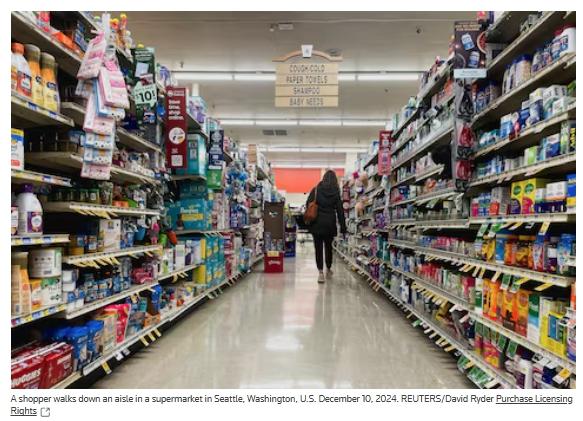
Core Insights - The consumer confidence index in the U.S. dropped to 50.3 in November, the lowest level since June 2022, down from 53.6 in October, and below the forecast of 53.2 [1][2] - Concerns about the prolonged government shutdown are affecting households across different political affiliations, leading to fears about its negative impact on the economy [1] - Millions of low-income families have seen welfare benefits, including food stamps, cut due to the government shutdown, and hundreds of thousands of federal workers are either furloughed or working without pay [1] Labor Market Concerns - The proportion of American households expecting an increase in unemployment over the next year rose from 52% in October to 62%, the highest level since 1980 [2] - A survey by the New York Federal Reserve indicated that respondents expect unemployment to rise in the coming year and believe it will be difficult to find a job if they become unemployed [2]
美国联邦政府停摆天数即将刷新纪录,牵动全球投资者神经
Bei Ke Cai Jing· 2025-11-05 06:37
Core Points - The U.S. government is facing an unprecedented shutdown, potentially becoming the longest in history, which began on October 1 [1] - The shutdown is expected to have significant negative impacts on the U.S. economy, particularly in sectors like aviation, food, and healthcare, raising the risk of an economic hard landing [1] - The Congressional Budget Office estimates that the shutdown could reduce the U.S. GDP growth rate by 1-2 percentage points in Q4, with potential losses of $7 billion to $14 billion depending on the duration of the shutdown [2] - Consumer confidence is likely to be directly impacted, with delayed payments to federal employees and contractors exacerbating the situation, especially if the shutdown extends into the holiday season [2] - The shutdown poses a threat to U.S. sovereign credit ratings, with agencies like Scope Ratings downgrading the U.S. rating from "AA" to "AA-" due to deteriorating public finances and rising debt levels [3][4] - The shutdown has created a data vacuum, complicating economic assessments and policy decisions, which could lead to increased market volatility and uncertainty regarding future interest rate paths [5][6] - The liquidity tightening caused by the shutdown has led to a significant reduction in the Federal Reserve's reserve balances, further straining financial conditions and increasing borrowing costs [7]
美国中产阶层信心降温
Guo Ji Jin Rong Bao· 2025-09-01 10:31
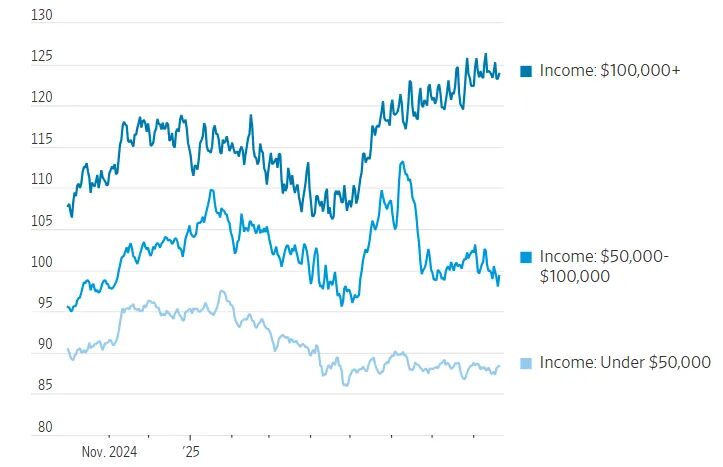
Group 1 - The middle class in the U.S. is experiencing a decline in economic confidence due to high inflation, tariff uncertainties, and decreasing income expectations, which is affecting consumer behavior across various industries [1][2] - The University of Michigan's consumer confidence index dropped nearly 6% in August, reversing the upward trend seen in June and July [1][4] - A significant portion of consumers, over 70%, plan to reduce spending on items with high price increases in the coming year [4] Group 2 - Retail and dining sectors are particularly impacted, with Walmart noting a decrease in non-essential purchases among lower-income customers [5] - Fast-food chains like IHOP and Denny's are seeing customers opt for cheaper menu items, while McDonald's benefits from reduced spending at more expensive restaurants by the middle class [5][6] - High-income consumers continue to show strong spending behavior, purchasing luxury items and services, as evidenced by a 32% revenue growth for the Swiss sneaker brand On [6][7] Group 3 - The beauty and medical aesthetics industry is also witnessing a shift, with lower-income customers extending treatment intervals or reducing dosage, indicating economic pressure on this demographic [7]
美国消费者信心连续第二个月上升 但整体乐观程度仍处历史低位
智通财经网· 2025-08-01 15:33
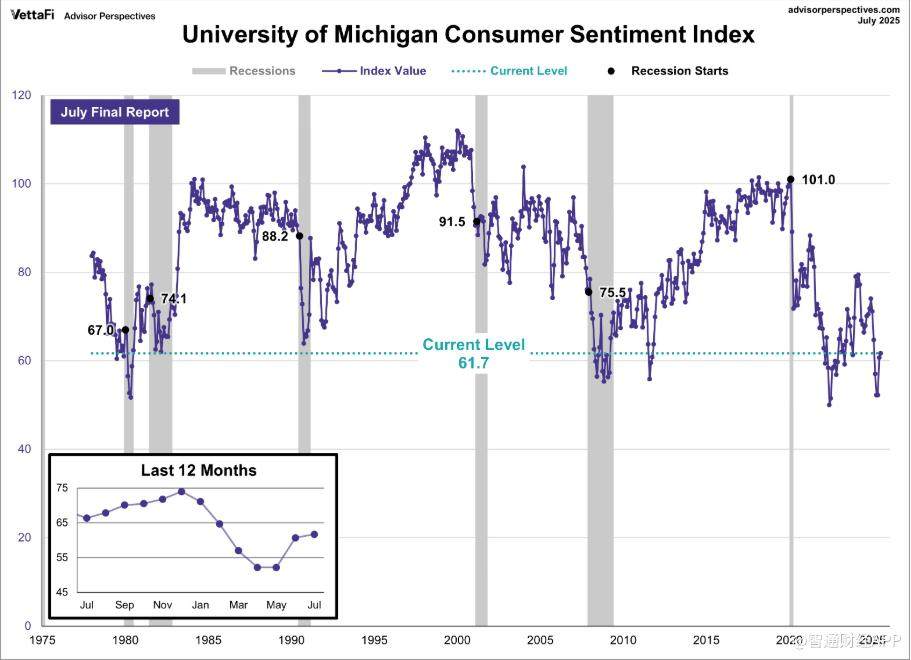
Core Viewpoint - In July, U.S. consumer confidence rose for the second consecutive month, but overall optimism remains at historically low levels, with the Michigan Consumer Sentiment Index increasing by 1.6% to 61.7, the highest since February of this year, yet down 7.1% year-over-year [1][3]. Group 1: Consumer Sentiment Index - The Michigan Consumer Sentiment Index measures consumer confidence regarding the economy, personal financial situation, business environment, and willingness to spend, with a monthly release of preliminary and final values [3]. - The Current Economic Conditions Index (CECI) rose nearly 5% to 68.0, marking the highest level since January, while the Consumer Expectations Index (CEI) slightly declined to 57.7, the first drop since April [3][6]. - Historical data shows that the current index of 61.7 is significantly below the average of 84.4 since 1978, indicating a low level of consumer confidence [3][4]. Group 2: Economic Correlation and Trends - The Michigan Consumer Sentiment Index has a moderate monthly fluctuation average of 3.1 points, with the current 1.0 point change being considered mild [4]. - The index is correlated with U.S. GDP, with a three-month moving average trend aligning with economic fundamentals [4]. - The survey indicates that consumer sentiment changes are more closely related to economic conditions rather than political party affiliation [6]. Group 3: Inflation Expectations - Consumer inflation expectations for the next year decreased for the second consecutive month from 5.0% in June to 4.5%, the lowest since February, although still higher than post-election levels [8]. - Long-term inflation expectations also fell for the third month in a row from 4.0% in June to 3.4%, the lowest since January, yet still elevated compared to the end of last year [8].
美国消费者整体信心有所回升 但对劳动力市场前景的信心不及去年
news flash· 2025-08-01 14:19
Group 1 - The overall consumer confidence in the U.S. has improved in July, but confidence regarding the labor market outlook is lower than last year [1] - Approximately 57% of respondents expect the unemployment rate to rise, compared to 35% in the same period last year [1] - Consumers remain skeptical about whether the risks of accelerating inflation have passed [1] Group 2 - The current conditions index has risen to a six-month high of 68, while the expectations index has declined to 57.7 [1] - There is a prevailing pessimism regarding the business environment, with high concerns about unemployment [1] - Consumers believe they may be personally affected by economic risks, leading to potentially cautious financial behavior and a slowdown in spending [1]