孔子学院

Search documents
保加利亚媒体:中国软实力在巴尔干地区日益增强
Huan Qiu Wang· 2026-02-12 23:05
Group 1 - The article discusses how China is expanding its influence in the Balkans through educational exchanges and the experiences shared by students studying in China, creating a more sustainable form of soft power [1][2] - Many foreign students are sharing their study experiences on social media, which is attracting significant attention and changing perceptions about China, particularly among the youth in the Balkans [1] - Research indicates that local young people are increasingly viewing China as a friendly and responsible global power, which complements China's growing political and economic presence in the region [1][2] Group 2 - The soft power gained through educational programs and social media is showing early results, with local youth increasingly seeing studying in China as a valuable opportunity to broaden their educational and economic perspectives [2] - Personal experiences shared by students who have studied in China have a genuine impact on the attitudes of their peers back home, leading to a more positive perception of China [2] - Serbia is highlighted as the region's most engaged partner in educational cooperation with China, featuring three Confucius Institutes and Chinese language programs in numerous schools [2]
五百孔院惠八方
Ren Min Ri Bao Hai Wai Ban· 2025-11-26 23:09
Core Viewpoint - The Confucius Institute has evolved into a globally recognized platform for educational and cultural cooperation, significantly contributing to the international demand for Chinese language learning and cultural exchange [10][11]. Group 1: Development and Expansion - As of October 31, 2025, there will be 510 Confucius Institutes established in 164 countries and regions, with 16 new institutes and classrooms opened this year, injecting new vitality into the global network [8]. - The first Confucius Institute was established in Uzbekistan in 2004, marking the beginning of a global initiative that has grown significantly over the past 20 years [7]. Group 2: Cultural Exchange and Impact - Confucius Institutes serve as platforms for cultural exchange, showcasing Chinese culture while also introducing local cultures to China, thus promoting dialogue between different civilizations [10]. - Numerous stories of cultural exchange, such as ceramic painting classes in Austria and traditional music performances in Togo, highlight the dual cultural engagement facilitated by these institutes [10]. Group 3: Educational Innovations - The current trend in international Chinese education is shifting from purely language instruction to a dual focus on language education and skill development, with many institutes offering vocational training courses [12]. - Examples include "Chinese + Agriculture" programs that not only teach the language but also provide agricultural skills, contributing to local agricultural development [12][13]. Group 4: Future Directions - The establishment of a global alliance for agricultural-focused Confucius Institutes aims to enhance cooperation in agricultural technology and poverty alleviation [15]. - Future initiatives will focus on deepening local integration and addressing diverse educational needs, with an emphasis on creating tailored teaching content and cultural projects [15]. Group 5: Digital Transformation - The integration of digital technology in Chinese education is expanding opportunities, with interactive apps and AI-driven platforms enhancing the learning experience [16][17]. - The upcoming release of a comprehensive digital Chinese language curriculum reflects the commitment to modernizing educational resources and improving teaching quality [18].


海合会国家积极拥抱“一带一路”(环球热点)
Ren Min Ri Bao Hai Wai Ban· 2025-11-18 23:05
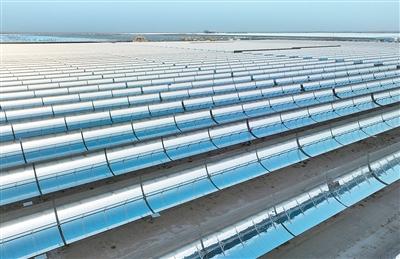
Core Insights - The trade volume between six Gulf countries (UAE, Saudi Arabia, Qatar, Kuwait, Oman, and Bahrain) and China is projected to reach $257 billion in 2024, surpassing the combined trade with the US, UK, and Eurozone, which is estimated at $256 billion. By 2028, this trade volume is expected to grow to $375 billion [4][5][6]. Group 1: Trade and Economic Cooperation - The cooperation between China and Gulf countries has expanded from a focus on energy to include technology, infrastructure, green energy, and aerospace [5][6]. - The implementation of visa-free policies for Gulf countries has facilitated increased personnel exchanges and multi-sector cooperation [5][6]. - The trade volume between China and Gulf countries continues to grow, becoming a significant pillar of cooperation [6][7]. Group 2: Areas of Collaboration - Energy cooperation has shown significant results, with advancements in clean energy technologies such as hydrogen, storage, wind, and solar power [6][7]. - Investment cooperation is on the rise, with Gulf countries increasing their investments in China, showcasing the resilience and potential of their partnership [6][7]. - Innovation cooperation is leading the way in emerging fields like artificial intelligence, 5G, and big data, establishing benchmark cases for multi-sector collaboration [6][7]. Group 3: Strategic Initiatives - All six Gulf countries have signed cooperation documents for the Belt and Road Initiative, with numerous projects underway, such as the Mohammed bin Rashid Al Maktoum Solar Park in the UAE, which has created nearly 50,000 jobs [8][9]. - The mutual benefits of the Belt and Road Initiative are highlighted by the complementary strengths of Gulf countries and China, aiming for economic development and strategic alignment [9][10]. - The cooperation framework has evolved to include multi-level mechanisms such as summits and ministerial meetings, enhancing stability and efficiency in collaboration [7][10]. Group 4: Cultural and Human Exchange - Cultural exchanges are deepening, with initiatives like the establishment of Confucius Institutes in Saudi Arabia and cultural centers in Kuwait, fostering mutual understanding [6][7]. - The cooperation between China and Gulf countries serves as a model for collaboration among countries with different political systems, providing valuable experience for global South cooperation [12][13].
睦邻友好之道 发展共赢之路(国际论道)
Ren Min Ri Bao Hai Wai Ban· 2025-06-20 21:21
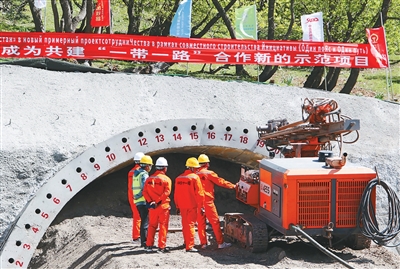
Core Points - The second China-Central Asia Summit held in Astana, Kazakhstan, is expected to deepen cooperation between China and Central Asian countries, enhancing their relationships and creating broader opportunities [2][3] - The summit is recognized as one of the most significant diplomatic events for Central Asian countries this year, reflecting their desire to strengthen ties with China [2] - China's approach emphasizes peaceful cooperation, which has garnered trust from Central Asian nations, facilitating the implementation of the Belt and Road Initiative [2][4] Mechanism Improvement and Cooperation Platforms - The China-Central Asia mechanism has become a successful model for regional cooperation, with ongoing improvements and expanding coverage across various sectors [3][4] - Since the first summit in 2023, practical cooperation between Kazakhstan and China has accelerated, with a focus on stability and sustainable development [3] - The mechanism's influence is growing, covering key areas such as trade, security, culture, and sustainable development, demonstrating its systematic and effective construction [3][4] Mutual Cooperation and Development - China has proposed four key principles for building a stable, prosperous, harmonious, and interconnected Central Asia, which have received widespread recognition [4] - The cooperation between China and Central Asian countries has yielded tangible results in agriculture, infrastructure, security, and cultural exchanges [4][9] - The China-Central Asia mechanism is evolving from a state-level framework to grassroots community ties, enhancing cooperation in education, poverty alleviation, healthcare, and culture [7][8] Economic and Trade Growth - The bilateral trade volume between China and Central Asia has been growing rapidly, with a reported trade value of $94.8 billion in 2024, making China the primary trading partner for the region [9][10] - Kazakhstan's agricultural exports to China have surpassed $1 billion for the first time, indicating deepening cooperation across various sectors [9][10] - Infrastructure projects like the China-Kyrgyzstan-Uzbekistan railway and the Aktao port container hub are significantly improving regional logistics and creating numerous job opportunities [10][11] Emerging Fields and Future Prospects - The summit is expected to stimulate further collaboration in emerging sectors such as digital economy and green energy, enhancing regional connectivity [11] - The joint development of the "Middle Corridor" is anticipated to elevate the level of interconnectivity in the region, reflecting the high-quality development of the Belt and Road Initiative [11]