安全鞋

Search documents
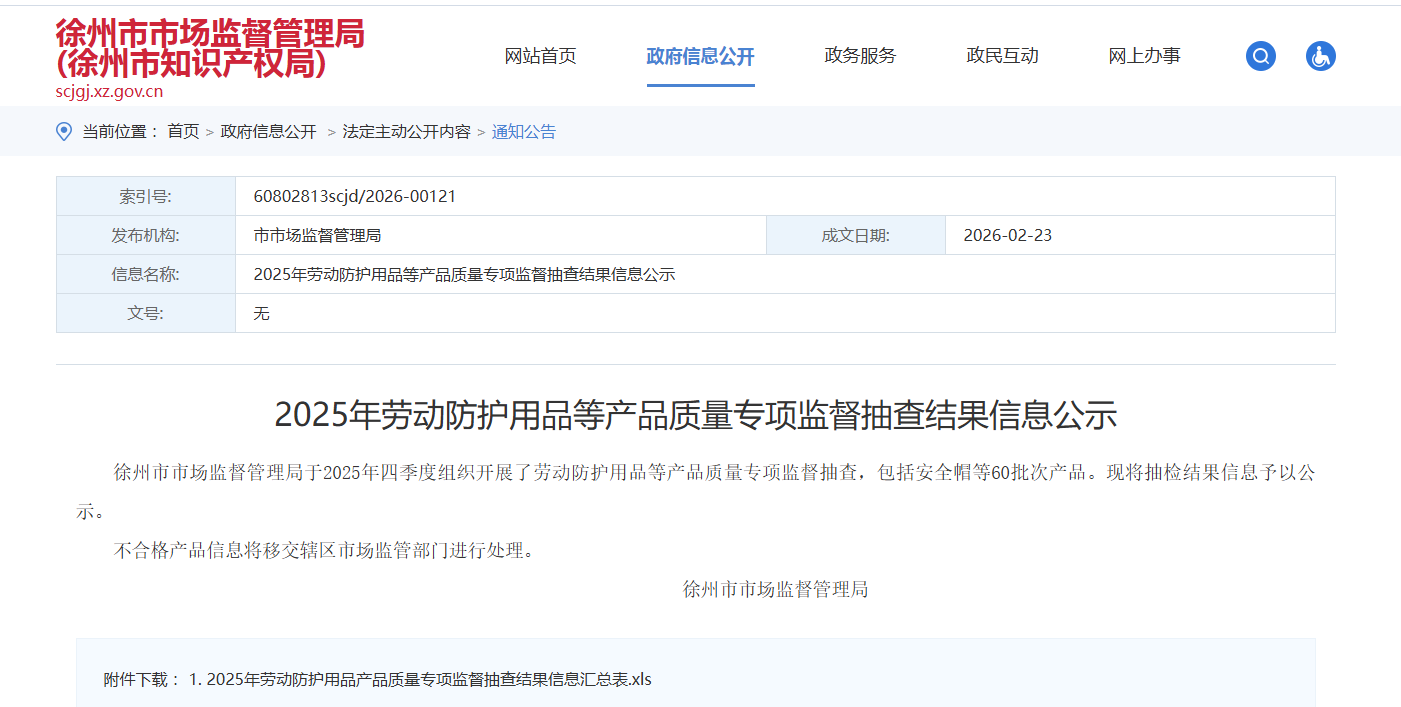
江苏省徐州市市场监督管理局公布2025年劳动防护用品等产品质量专项监督抽查结果
Zhong Guo Zhi Liang Xin Wen Wang· 2026-02-27 07:49
Group 1 - Jiangsu Province Xuzhou City Market Supervision Administration announced the results of the special quality supervision and random inspection of labor protection products for 2025, which included 60 batches of products such as safety helmets [3][4] - The inspection results will be publicly disclosed, and any non-compliant products will be handed over to the local market supervision departments for further action [4][5] Group 2 - The inspection covered various products, including safety helmets and anti-static clothing, with specific details on the brands, specifications, production dates, and manufacturers provided in the summary table [5][6] - Several products were found to be non-compliant, with issues such as insufficient chin strap strength and other quality concerns noted in the inspection results [6][7]

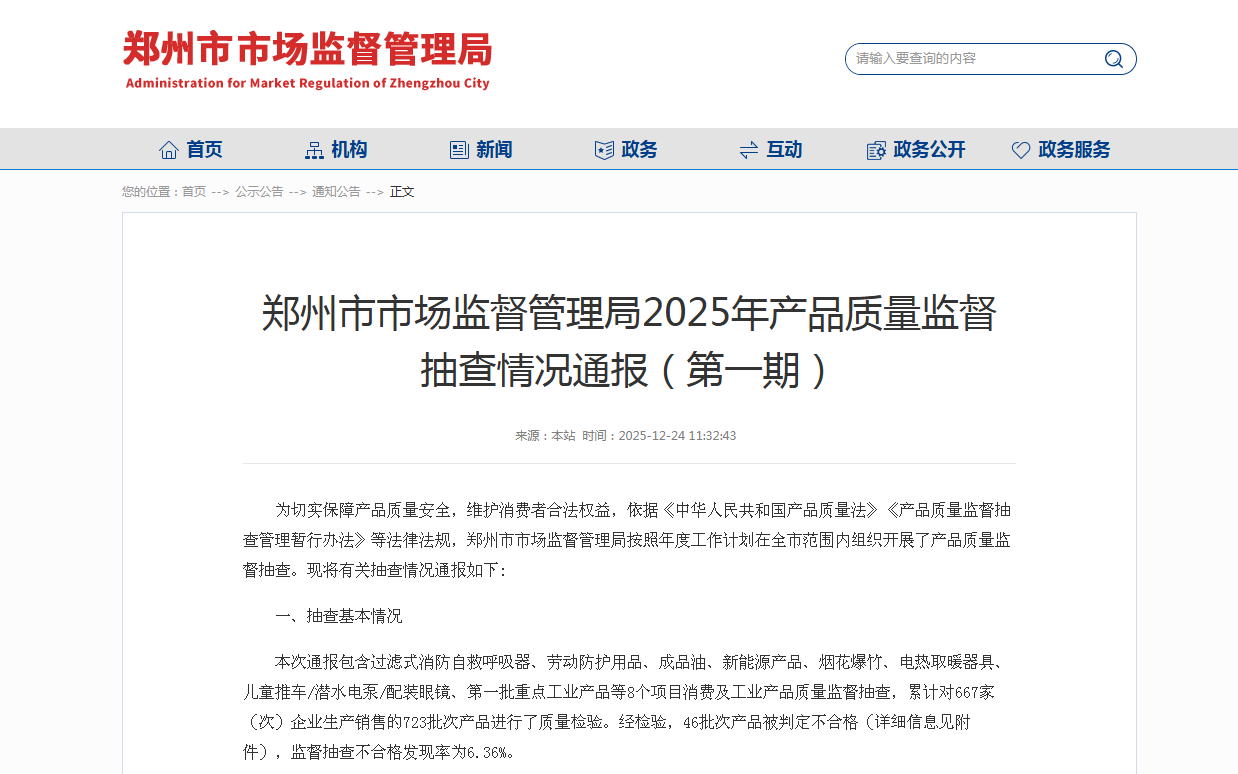
郑州市市场监督管理局发布2025年产品质量监督抽查情况通报(第一期)
Zhong Guo Zhi Liang Xin Wen Wang· 2026-01-08 08:53
Summary of Key Points Core Viewpoint The Zhengzhou Market Supervision Administration has conducted a product quality supervision and inspection, revealing a 6.36% non-compliance rate among 723 batches of products tested across various categories, emphasizing the need for improved product quality and consumer safety. Group 1: Inspection Overview - The inspection covered eight categories of products, including firefighting equipment, labor protection products, finished oil, new energy products, fireworks, electric heating appliances, children's strollers, and key industrial products, involving 667 enterprises [1]. - A total of 723 batches of products were tested, with 46 batches found to be non-compliant, resulting in a non-compliance rate of 6.36% [1]. Group 2: Specific Inspection Results - **Firefighting Equipment**: 10 batches from 9 enterprises were tested, with no non-compliant products found [2]. - **Labor Protection Products**: 33 batches from 31 enterprises were tested, with 14 batches deemed non-compliant, including 4 safety helmets and 3 safety nets [3]. - **Finished Oil**: 100 batches from 79 enterprises were tested, with 2 batches found non-compliant [4]. - **New Energy Products**: 10 batches from 10 enterprises were tested, with 2 batches of electric vehicle charging piles deemed non-compliant [5]. - **Fireworks**: 20 batches from 10 enterprises were tested, with 3 batches found non-compliant [6]. - **Electric Heating Appliances**: 80 batches from 80 enterprises were tested, with 6 batches deemed non-compliant [8]. - **Children's Strollers**: 120 batches from 120 enterprises were tested, with 5 batches found non-compliant [9]. - **Key Industrial Products**: 350 batches from 328 enterprises were tested, with 14 batches found non-compliant across various categories [10]. Group 3: Measures for Non-compliant Products - The Zhengzhou Market Supervision Administration has mandated local regulatory bodies to take strict actions against enterprises found to be non-compliant, ensuring adherence to product quality standards [11].
山东31家国家级中小企业特色集群集聚企业近6万家,总产值超4万亿元
Da Zhong Ri Bao· 2025-11-29 01:14
Group 1 - Shandong has 31 national-level characteristic industrial clusters, housing nearly 60,000 enterprises with a total output value exceeding 4 trillion yuan [1][4] - The industrial clusters are concentrated in various sectors, with a focus on local strengths, exemplified by the beauty eyelash industry in Pingdu, which holds 70% of the global market share [3][6] - The clusters have evolved from traditional industries, creating a local economic cycle that supports employment and income generation [3][4] Group 2 - The clusters serve as innovation hubs, with over 100 national-level innovation platforms and more than 500 provincial-level platforms established within these clusters [5] - Shandong's approach emphasizes the integration of small and medium enterprises (SMEs) into the industrial chain, facilitating collaboration with larger enterprises [6][7] - The province is enhancing policies to support information sharing, technical support, talent cultivation, and market expansion for these clusters [7][8] Group 3 - The clusters are characterized by their self-evolution capabilities, with successful practices emerging from within the market [7] - Market-oriented operations are encouraged to strengthen the clusters' self-improvement abilities, promoting professional development and competition [8] - Collaborative mechanisms involving government, state-owned enterprises, and industry associations are being explored to enhance financing and operational efficiency for cluster enterprises [7][8]
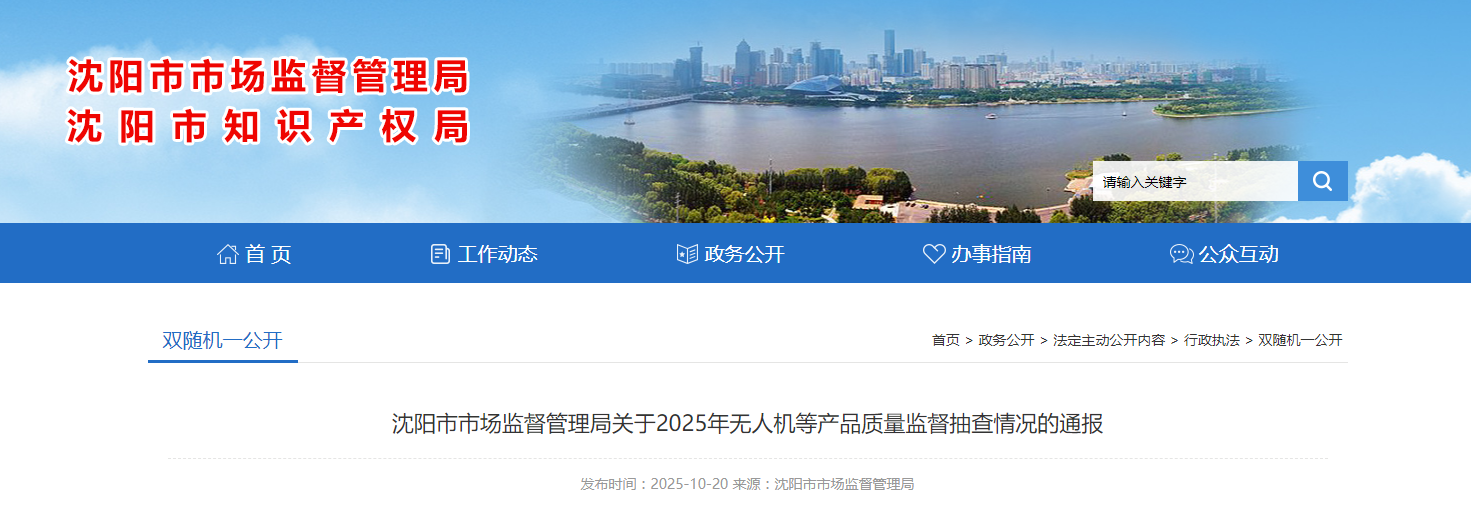
辽宁省沈阳市市场监督管理局发布特种劳动防护用品产品抽查结果
Zhong Guo Zhi Liang Xin Wen Wang· 2025-10-22 08:34
Core Insights - The report from the Shenyang Market Supervision Administration indicates that out of 20 batches of special labor protection products tested, 1 batch was found to be non-compliant with quality standards [3][4]. Summary by Category Quality Inspection Results - A total of 20 batches of special labor protection products were inspected in Shenyang, with only 1 batch failing to meet quality standards [3][4]. - The specific non-compliant product was a self-absorbing filter mask from Shenyang Baian Da Special Labor Protection Products Co., Ltd., which was tested in April 2025 [4]. Compliance Details - The inspection covered various manufacturers, including Shenyang Di Lun Clothing Co., Ltd. and Shenyang Xinyuan Garment Co., Ltd., with most products passing the quality checks [4][5]. - The non-compliant product was identified as a KN100 self-absorbing filter mask, indicating potential issues in manufacturing or material quality [4].
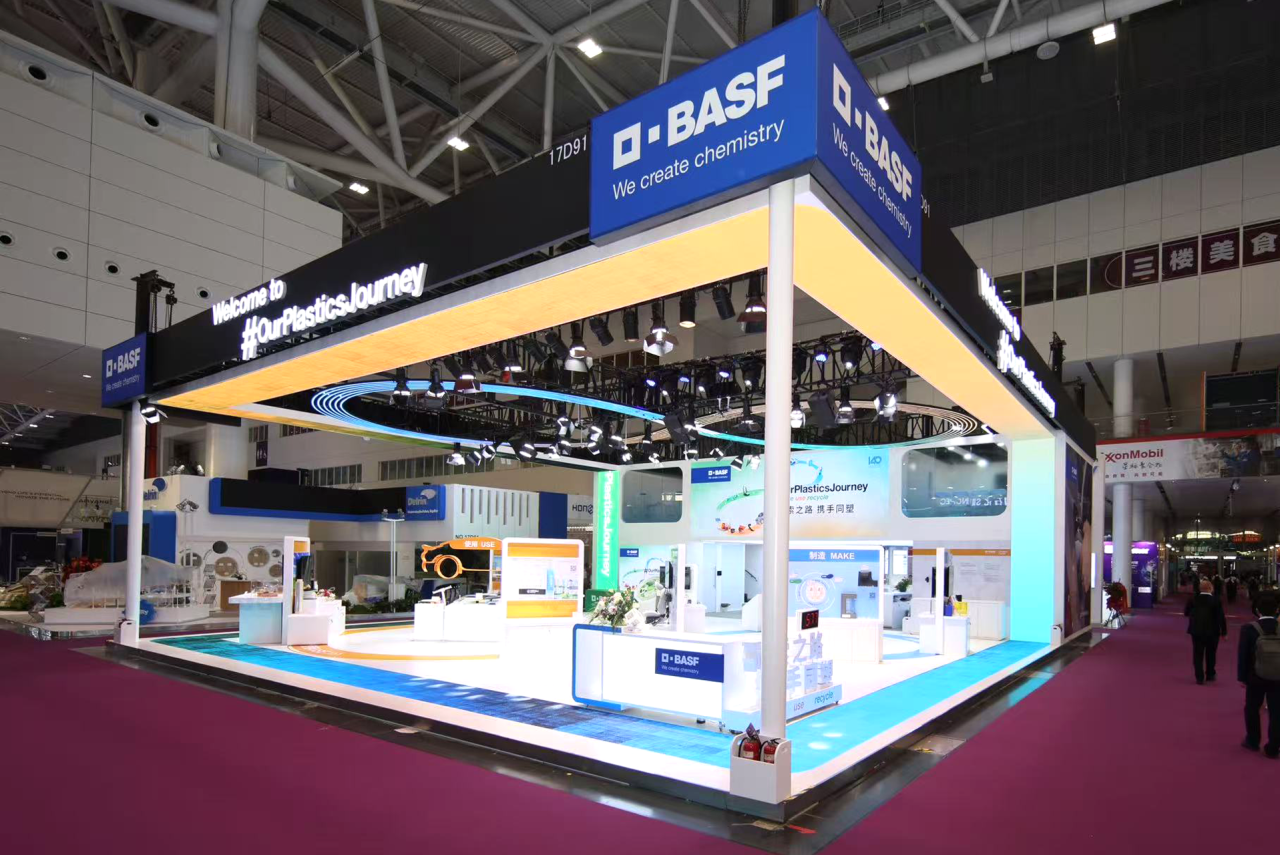
中国循环经济万亿级市场待启:商业化仍是难题,巴斯夫打算这样参与
Di Yi Cai Jing· 2025-04-30 13:42
Core Viewpoint - BASF is focusing on the gradual realization of waste material recycling through quality balance methods, emphasizing the importance of collaboration across the supply chain and strict government regulation [1][3]. Group 1: Sustainable Development and Innovation - BASF aims to showcase its efforts and achievements in sustainability and green environment at the CHINAPLAS 2025 exhibition, highlighting the commercialization of plastic waste recycling in downstream products through co-creation with customers [1]. - The company's notable exhibits include safety shoes developed in collaboration with KPR and a new automotive connector created with TE Connectivity, marking a transition from technical validation to formal commercialization of material recycling [1]. Group 2: Challenges in Recycling Technology - Despite the technical feasibility of various recycling paths, the commercial viability remains a challenge due to limited upstream suppliers and insufficient material supply, leading to high costs and narrow choices for recycled materials [3]. - The lack of effective waste sorting and classification upstream complicates the recycling capacity, necessitating collaboration across the entire industry chain and ecosystem for effective waste material recycling [3]. Group 3: Government Regulation and Economic Opportunities - Many countries have implemented Extended Producer Responsibility (EPR) systems, which extend producers' environmental responsibilities throughout the product lifecycle, including design, circulation, consumption, recycling, and waste disposal [3]. - China's 14th Five-Year Plan for Circular Economy Development aims for a resource recycling industry output value of 5 trillion yuan by 2025, indicating significant economic opportunities in resource recycling [3]. Group 4: National Initiatives and Market Trends - The establishment of the China Resource Recycling Group, with a registered capital of 100 billion yuan, marks a new phase in the domestic circular economy, integrating resources from major state-owned enterprises [4]. - By 2030, the domestic resource recycling industry scale is expected to approach 10 trillion yuan, reflecting the evolution of the circular economy from mere recycling to a high-tech, high-quality new industry [4]. Group 5: Focus on Automotive and Renewable Energy Sectors - BASF's investment strategy in China is primarily directed towards the automotive and renewable energy sectors, with the automotive industry representing nearly half of its specialty materials business [5]. - The shift towards electric vehicles is evident, as BASF's material supply is increasingly directed towards new energy vehicles, aligning with China's accelerated construction of a new power system [5].