
洗涤剂

Search documents
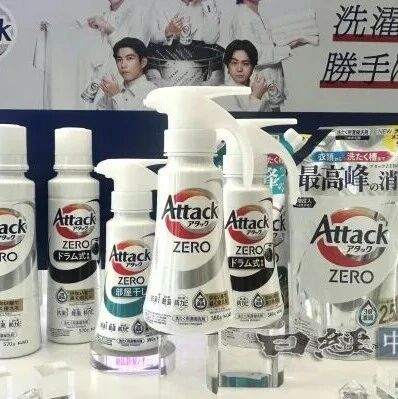
花王新款洗衣液:洗衣同时洗净洗衣机内筒
日经中文网· 2026-03-13 03:08
Core Viewpoint - Kao has launched a new product, "Attack ZERO," which not only cleans clothes but also cleans the washing machine drum, addressing consumer needs for convenience and hygiene in the laundry process [2][4]. Group 1: Product Features and Market Position - The new "Attack ZERO" is a liquid detergent available in three types: for pulsator washing machines, for drum washing machines, and for indoor drying odor prevention, all priced at 650 yen (approximately 28.12 RMB) [2][4]. - The product utilizes technology to decompose bacteria and biofilm that cause odor and slipperiness in the washing machine drum [4]. - Kao's market share in the Japanese laundry detergent market is approximately 40%, competing closely with Procter & Gamble (P&G) [5]. Group 2: Consumer Insights and Strategic Focus - A survey indicated that by 2025, 47% of consumers prioritize "preventing odor from air drying," surpassing the 46% who prioritize "stain removal," highlighting a shift in consumer preferences [5]. - Kao aims to reduce the cleaning burden of washing machines as a selling point, particularly targeting dual-income households [5]. Group 3: Competitive Strategy and Organizational Changes - To differentiate from P&G, Kao restructured its detergent business in 2022, shifting to a collaborative "Scrum model" for product development [5]. - Kao has established a dual product line strategy focusing on both premium and mass-market products, with the premium line emphasizing ease of use and time-saving features [5]. Group 4: Market Performance and Future Outlook - The speed of new product launches has increased by approximately three times compared to 2021, with a projected market share exceeding 44% in 2024-2025, leading P&G by 6-7 percentage points [6]. - The fabric and home care business, centered on detergents, is expected to achieve a consolidated sales growth of 3% in the fiscal year 2025, reaching 389.1 billion yen, with 90% of sales coming from the domestic market [6].


2025年中国合成洗涤剂产量为1211.2万吨 累计下降0.1%
Chan Ye Xin Xi Wang· 2026-01-31 02:37
Core Viewpoint - The report highlights the trends and future outlook of the detergent industry in China, indicating a slight decline in production despite a modest year-on-year growth in December 2025 [1]. Industry Summary - In December 2025, China's synthetic detergent production reached 1.21 million tons, reflecting a year-on-year increase of 1.9% [1]. - The total synthetic detergent production for the entire year of 2025 was 12.112 million tons, showing a cumulative decrease of 0.1% compared to the previous year [1]. - The report is based on data from the National Bureau of Statistics and is compiled by Zhiyan Consulting, a leading industry research institution in China [1].

2025年1-11月中国合成洗涤剂产量为1089.1万吨 累计下降0.6%
Chan Ye Xin Xi Wang· 2026-01-11 01:43
Core Viewpoint - The report highlights a decline in the production of synthetic detergents in China, indicating a potential downturn in the industry and its implications for listed companies involved in this sector [1]. Industry Summary - In November 2025, China's synthetic detergent production was 110,000 tons, representing a year-on-year decrease of 2% [1]. - From January to November 2025, the cumulative production of synthetic detergents in China reached 1,089.1 million tons, showing a cumulative decline of 0.6% [1]. - The data suggests a trend of decreasing production in the synthetic detergent market, which may affect market dynamics and investment opportunities [1]. Company Summary - Listed companies in the synthetic detergent sector include Mingchen Health (002919), Guangzhou Langqi (000523), Lafang Jiahua (603630), and Taimian Needle (600249) [1]. - These companies may face challenges due to the declining production trends in the industry, which could impact their financial performance and market positioning [1].

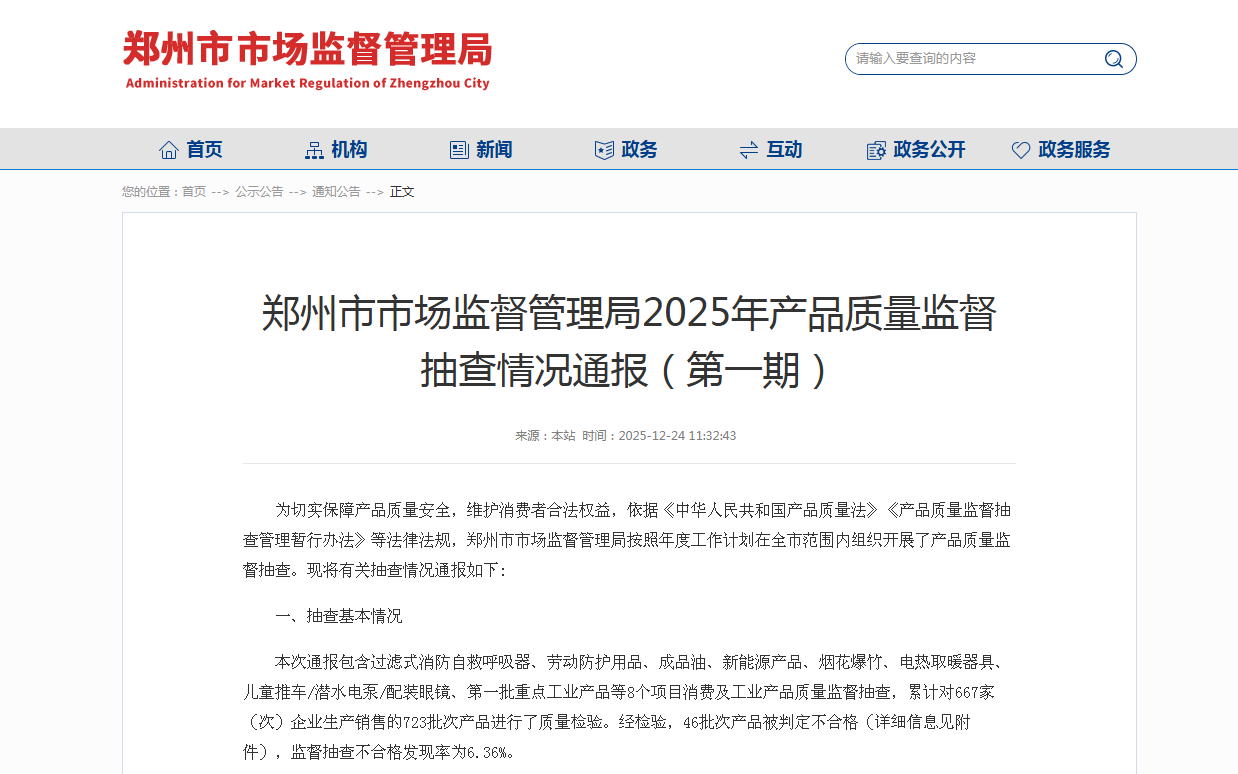
郑州市市场监督管理局发布2025年产品质量监督抽查情况通报(第一期)
Zhong Guo Zhi Liang Xin Wen Wang· 2026-01-08 08:53
Summary of Key Points Core Viewpoint The Zhengzhou Market Supervision Administration has conducted a product quality supervision and inspection, revealing a 6.36% non-compliance rate among 723 batches of products tested across various categories, emphasizing the need for improved product quality and consumer safety. Group 1: Inspection Overview - The inspection covered eight categories of products, including firefighting equipment, labor protection products, finished oil, new energy products, fireworks, electric heating appliances, children's strollers, and key industrial products, involving 667 enterprises [1]. - A total of 723 batches of products were tested, with 46 batches found to be non-compliant, resulting in a non-compliance rate of 6.36% [1]. Group 2: Specific Inspection Results - **Firefighting Equipment**: 10 batches from 9 enterprises were tested, with no non-compliant products found [2]. - **Labor Protection Products**: 33 batches from 31 enterprises were tested, with 14 batches deemed non-compliant, including 4 safety helmets and 3 safety nets [3]. - **Finished Oil**: 100 batches from 79 enterprises were tested, with 2 batches found non-compliant [4]. - **New Energy Products**: 10 batches from 10 enterprises were tested, with 2 batches of electric vehicle charging piles deemed non-compliant [5]. - **Fireworks**: 20 batches from 10 enterprises were tested, with 3 batches found non-compliant [6]. - **Electric Heating Appliances**: 80 batches from 80 enterprises were tested, with 6 batches deemed non-compliant [8]. - **Children's Strollers**: 120 batches from 120 enterprises were tested, with 5 batches found non-compliant [9]. - **Key Industrial Products**: 350 batches from 328 enterprises were tested, with 14 batches found non-compliant across various categories [10]. Group 3: Measures for Non-compliant Products - The Zhengzhou Market Supervision Administration has mandated local regulatory bodies to take strict actions against enterprises found to be non-compliant, ensuring adherence to product quality standards [11].
2025年1-10月中国合成洗涤剂产量为982.2万吨 累计增长1.5%
Chan Ye Xin Xi Wang· 2025-12-19 03:18
Core Insights - The report highlights a projected decline in China's synthetic detergent production in October 2025, with an expected output of 1.1 million tons, representing a year-on-year decrease of 1.1% [1] - Cumulative production from January to October 2025 is estimated at 9.822 million tons, showing a cumulative growth of 1.5% [1] Company Insights - Listed companies in the detergent sector include Mingchen Health (002919), Guangzhou Langqi (000523), Lafang Jiahua (603630), and Taimian Needle (600249) [1] Industry Insights - The report titled "2025-2031 China Detergent Industry Market Operation Pattern and Prospect Strategic Research Report" by Zhiyan Consulting provides an in-depth analysis of the detergent market [1] - Zhiyan Consulting is recognized as a leading industry consulting firm in China, specializing in comprehensive industry research reports and tailored consulting services [2]

“打通全国统一大市场堵点卡点”热点问题探析|破局“内卷” 开拓蓝海
Jing Ji Ri Bao· 2025-12-15 03:45
Core Viewpoint - The letter from Huang Ping, Chairman of Guangdong Youkai Technology Co., highlights the detrimental effects of vicious competition in the detergent industry, where low-quality products with less than 5% active ingredient content are capturing market share through low prices, putting quality products at a disadvantage [1] Group 1: Industry Challenges - The phenomenon of "involution" is causing irrational competition across various industries, leading to intensified price wars, shrinking profit margins, reduced innovation investment, and rising quality and safety risks [1][2] - Over 20 national and local industry associations have publicly called for a "counter-involution" approach, addressing issues in sectors such as steel, automotive, photovoltaic, catering, finance, and logistics [2] Group 2: Strategic Shifts - Companies like China Resources Beer have closed 40 factories and reduced over 5 million tons of redundant capacity, emphasizing a shift from "scale supremacy" to focusing on "good enterprises, good products, and good brands" [3] - The construction of a unified national market is essential for efficient market operation and removing barriers to fair competition, which is crucial for high-quality development [2] Group 3: Innovation Focus - Traditional manufacturing must break free from path dependence and scale bottlenecks by leveraging technology and innovation, as highlighted by companies like Weiqiao Chuangye Group, which collaborates with research institutions and utilizes AI for product development [4] - New Hope Group has innovated in the dairy industry by utilizing cold chain logistics and AI to ensure fresh products reach consumers quickly, demonstrating the importance of innovation in meeting consumer demands [4][5] Group 4: Brand Value - In a market with information asymmetry, low-quality products often mislead consumers, necessitating a focus on rebuilding trust in "quality for price" mechanisms to enhance user experience and brand value [6] - The shift in consumer preferences towards personalized and emotionally resonant experiences indicates that businesses must transition from merely providing functional value to creating meaningful connections with users [7] Group 5: Global Expansion - The construction of a unified national market should promote an open market that encourages companies to expand globally, alleviating domestic competition pressures and enhancing competitiveness in international markets [8] - Companies like Jack Technology and Miniso are successfully implementing global strategies that integrate local insights with global aesthetics, demonstrating the potential for Chinese brands to resonate with international consumers [8] Group 6: Future Outlook - The collective sentiment among industry leaders emphasizes that companies must focus on innovation, brand building, and global engagement to escape internal competition and drive China's economy towards high-quality development [9]
“打通全国统一大市场堵点卡点”热点问题探析:破局“内卷” 开拓蓝海
Jing Ji Ri Bao· 2025-12-15 03:27
Core Viewpoint - The article discusses the challenges of "involution" in various industries, highlighting the detrimental effects of irrational competition and price wars on quality, innovation, and market stability. It emphasizes the need for a unified national market to promote high-quality development and break free from this cycle of competition [1][2][3]. Group 1: Industry Challenges - The washing powder industry is facing severe issues due to low-quality products with less than 5% active ingredient content capturing market share through low prices, putting quality products at a disadvantage [1]. - Industries from steel to solar energy are experiencing intensified price wars, leading to compressed profit margins and reduced innovation investments, which in turn increases quality and safety risks [1][2]. - Over 20 national and local industry associations have publicly called for a "反内卷" (anti-involution) movement, indicating a widespread recognition of the problem across sectors such as steel, automotive, solar, catering, finance, and logistics [3]. Group 2: Solutions and Strategies - To address the structural issues of involution, a collaborative approach between government and market forces is necessary, focusing on supply-side structural reforms [3]. - Companies like China Resources Beer have closed 40 factories and reduced over 5 million tons of redundant capacity, demonstrating a shift from a "scale-first" mentality to prioritizing quality and brand development [3]. - Innovation is crucial for traditional manufacturing to break free from path dependence and scale limitations, with companies encouraged to collaborate with research institutions and invest in new technologies [4][5]. Group 3: Brand and Market Positioning - The article highlights the importance of rebuilding trust in quality and value, as low-quality products often mislead consumers in an information-asymmetric market [6]. - Companies are urged to focus on user experience and brand value, shifting from a transactional approach to one that emphasizes emotional and meaningful connections with consumers [6]. - The narrative of "Chinese manufacturing" is evolving, with domestic brands gaining recognition and demand both locally and internationally, reflecting a shift in consumer perception [6]. Group 4: Global Expansion - The construction of a unified national market is seen as a means to create a fairer and more efficient competitive environment, encouraging companies to expand globally to alleviate domestic competition pressures [7]. - Companies like Jack Technology are establishing production bases in various regions to cater to local markets, while Miniso emphasizes cultural integration in its global strategy [7]. - The article concludes that companies must focus on innovation, brand strength, and global outreach to escape internal competition and contribute to high-quality economic development [8].
经济日报头版连发重磅文章 聚焦全国统一大市场堵点卡点
Zhong Guo Jing Ji Wang· 2025-12-15 02:11
Group 1 - The letter from the chairman of Guangdong Youkai Technology Co., Ltd. highlights the chaotic competition in the detergent industry, where low-quality products with less than 5% active ingredient content are capturing market share through low prices, putting quality products at a disadvantage [1][3] - The phenomenon of "involution" is affecting multiple industries, leading to intensified price wars, shrinking profit margins, reduced innovation investment, and rising quality and safety risks [1][5] - The need to break free from this "mud pit" of competition and promote high-quality development through the construction of a unified national market is emphasized [1][11] Group 2 - Over 20 national and local industry associations have publicly called for a "reverse involution" in various sectors, including steel, automotive, photovoltaic, catering, finance, logistics, and beauty services, indicating widespread concern about the issue [5] - The procurement market is identified as a crucial component of the unified national market and an important driver for its construction, serving as a policy tool to guide the quality and direction of industrial development [6] - The competition among local governments for investment has led to the emergence of various unfair "small policies" and "local policies," creating tax loopholes that burden local finances and exacerbate unfair competition [7] Group 3 - Promoting the integration of domestic and foreign trade is crucial for economic development, expanding domestic demand, and stabilizing enterprises, especially in the context of a complex international trade environment [9] - The construction of a unified national market requires addressing substantial and fundamental issues, with a focus on moving beyond mere market forces to achieve effective regulation [10] - The ongoing push for a unified national market is seen as both an urgent necessity and a strategic move in the face of significant global changes and trade protectionism [11]
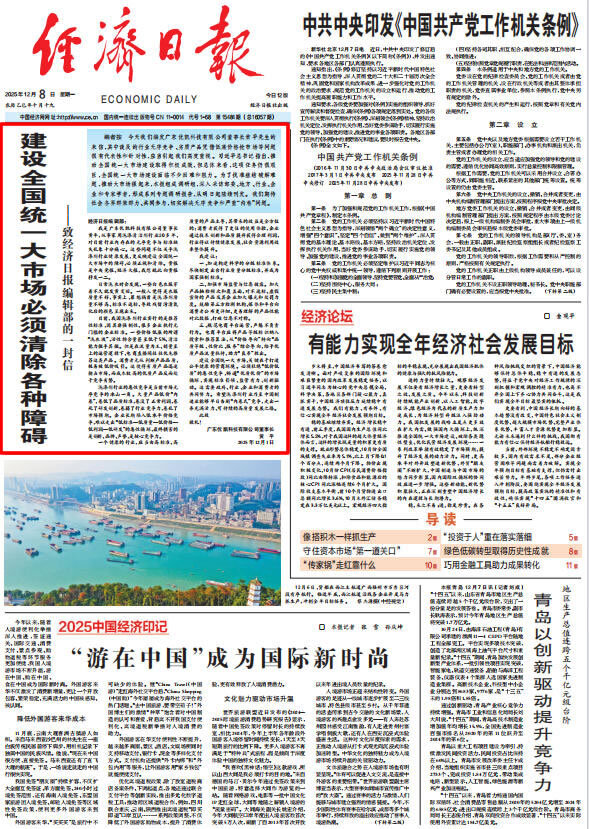
【“打通全国统一大市场堵点卡点”热点问题探析⑦】破局“内卷” 开拓蓝海
Jing Ji Ri Bao· 2025-12-14 22:51
Core Viewpoint - The article highlights the detrimental effects of "involution" competition across various industries, leading to price wars, reduced profit margins, and increased quality and safety risks. It emphasizes the need for a unified national market to promote high-quality development in enterprises and industries [1][3][7]. Group 1: Industry Challenges - The washing detergent industry is facing severe competition from low-quality products with less than 5% active ingredient content, which are capturing market share through low pricing, putting quality products at a disadvantage [1]. - "Involution" competition is characterized by irrational competition due to market mechanism failures, where companies resort to price wars instead of leveraging differentiation or technological advantages, resulting in "increased production without increased revenue" [2]. - Various industries, including steel, photovoltaics, automotive, and catering, are experiencing similar challenges due to intense price competition, leading to a consensus among over 20 industry associations to advocate for "anti-involution" measures [3]. Group 2: Solutions and Strategies - To enhance market efficiency, it is essential to eliminate barriers to fair competition, which is a key aspect of building a unified national market. This will help stabilize the commercial ecosystem and address supply-demand imbalances [3]. - Companies are encouraged to abandon the outdated "scale-first" mentality and focus on creating value through quality products and strong brands. For instance, China Resources Beer closed 40 factories and reduced over 5 million tons of redundant capacity to focus on value creation [3]. - Innovation is crucial for traditional manufacturing to break free from path dependence and scale bottlenecks. Companies like Weiqiao Venture Group are collaborating with research institutions and adopting new technologies to transform their business models [4]. Group 3: Brand and Market Positioning - In a market characterized by information asymmetry, low-quality products often mislead consumers, necessitating a shift towards rebuilding trust in "quality for price" mechanisms and enhancing user experience and brand value [5]. - The home appliance industry has maintained a relatively rational approach due to years of system development, with a shift in market power from companies to consumers, who now seek personalized and emotionally resonant experiences [5]. - Companies like Hisense are witnessing a reversal in consumer behavior, with domestic brands gaining recognition for quality, indicating a shift towards "Chinese manufacturing" being associated with technological premium [5]. Group 4: Global Expansion - The construction of a unified national market is not a closed "internal cycle" but an open market that encourages both domestic and international engagement. Companies are urged to expand globally to alleviate domestic competition pressures and enhance competitiveness [6]. - Jack Technology has entered a global leadership phase, establishing production bases tailored to regional markets, while Miniso emphasizes cultural integration in its global strategy, showcasing the importance of local insights in international expansion [6]. Group 5: Future Outlook - Building a unified national market aims to create fairer, more efficient, and more valuable competition. Companies must focus on innovation, brand strength, and global presence to escape internal strife and contribute to China's high-quality economic development [7].


破局“内卷” 开拓蓝海——企业界人士建言全国统一大市场建设
Jing Ji Ri Bao· 2025-12-14 22:34
Core Viewpoint - The letter from the chairman of Guangdong Youkai Technology highlights the detrimental effects of vicious competition in the detergent industry, where low-quality products with less than 5% active ingredients are capturing market share through low prices, putting quality products at a disadvantage [1] Group 1: Industry Challenges - The phenomenon of "involution" is causing severe price wars across various industries, leading to compressed profit margins, reduced innovation investment, and increased quality and safety risks [1][2] - Over 20 national and local industry associations have publicly called for a "counter-involution" approach, addressing issues in sectors such as steel, automotive, photovoltaic, catering, finance, and logistics [3] Group 2: Market Efficiency and Fair Competition - The construction of a unified national market aims to eliminate barriers to fair competition, addressing the imbalance between supply and demand and enhancing overall market stability [3] - Companies are encouraged to abandon the outdated "scale supremacy" mindset and focus on creating value through quality products and brands, as demonstrated by China Resources Beer, which closed 40 factories and reduced over 5 million tons of redundant capacity [3] Group 3: Innovation as a Key Driver - Traditional manufacturing must break free from path dependence and scale bottlenecks by leveraging technology and innovation, as emphasized by Weiqiao Chuangye Group's collaboration with research institutions and the establishment of an industrial technology research institute [4] - New Hope Group has utilized cold chain logistics and AI to innovate in the dairy industry, achieving same-day production and delivery to over 1 million stores [4] Group 4: Brand Value and Consumer Trust - In a market characterized by information asymmetry, low-quality products often mislead consumers, necessitating a shift towards rebuilding trust in high-quality products and enhancing user experience [5] - The home appliance industry has maintained a rational approach due to years of systemic development, with a focus on creating emotional and meaningful connections with consumers [5] Group 5: Global Expansion and Market Opportunities - The unified national market is seen as an open market that encourages companies to expand globally, alleviating domestic competition pressures and enhancing competitiveness in international markets [6] - Companies like Jack Technology and Miniso are adopting global strategies that integrate local insights and cultural fusion, demonstrating the importance of global perspectives in business expansion [6] Group 6: Future Directions for Companies - Companies are urged to focus on innovation, brand building, and global outreach to escape internal competition and contribute to high-quality economic development in China [7]