实验性药物

Search documents
加科思-B涨超5% 机构强调中国创新药板块投资价值 集团上半年收入4566.4万元人民币
Zhi Tong Cai Jing· 2025-09-12 06:55
Group 1 - The stock of 加科思-B (01167) increased by over 5%, reaching an 8.61% rise to 11.23 HKD with a trading volume of 117 million HKD [1] - A report from The New York Times indicates that the Trump administration is considering an executive order to limit U.S. pharmaceutical companies from acquiring innovative drugs developed in China, which could disrupt the supply chain [1] - According to Shenwan Hongyuan's research report, the likelihood of this draft being implemented is very low, emphasizing the investment value of China's innovative drug sector supported by "innovation upgrade + profit inflection point + normalization of overseas business development" [1] Group 2 - 加科思 reported a mid-term revenue of 45.664 million RMB, compared to zero revenue in the same period last year [1] - The company recorded a loss attributable to owners of 58.994 million RMB, a year-on-year reduction of 65.1% [1] - The revenue growth is primarily attributed to milestone payments from the Elysium licensing agreement [1]
A股、港股医药股大跌
第一财经· 2025-09-11 03:23
Core Viewpoint - The article discusses the significant decline in Chinese pharmaceutical stocks due to potential U.S. government restrictions on experimental drugs and clinical data from China, which could impact the international expansion of Chinese innovative drugs [3][5]. Group 1: Market Reaction - Following reports of U.S. government plans to impose strict regulations, A-shares and Hong Kong stocks in the pharmaceutical sector saw a notable drop, with over 80% of innovative drug stocks in A-shares declining and around 50 stocks in Hong Kong dropping more than 4% [3]. - Leading companies such as BeiGene and Hengrui Medicine experienced stock price declines exceeding 4% in both A-shares and Hong Kong markets [3]. Group 2: Global Pharmaceutical Transactions - In the first half of 2025, global pharmaceutical transactions reached 456, a 32% year-on-year increase, with total upfront payments soaring to $11.8 billion, up 136% [4]. - The total transaction value hit $130.4 billion, reflecting a 58% year-on-year growth, with Chinese companies contributing nearly 50% of the total value and over 30% of the transaction volume [4]. Group 3: Implications of U.S. Regulations - If the rumored U.S. regulations are implemented, it would negatively affect both Chinese and U.S. pharmaceutical sectors, as Chinese companies rely on expanding into larger markets while U.S. firms may face increased costs and slower drug development [5][6]. - The potential restrictions could hinder U.S. pharmaceutical companies' access to lower-cost innovative drug pipelines from China, leading to competitive disadvantages against European firms [6]. Group 4: Future Challenges and Opportunities - The article highlights that the path for Chinese innovative drugs to penetrate the U.S. market is becoming increasingly challenging, necessitating a focus on expanding the domestic market [7]. - Despite the challenges posed by potential U.S. regulations, the long-term trend suggests that Chinese pharmaceutical companies may reduce their dependency on the U.S. market due to domestic policy reforms and the release of potential demand [8].



美国媒体称:特朗普正计划通过行政令限制来自中国的药品
Haitong Securities International· 2025-09-10 15:10
Investment Rating - The report does not explicitly state an investment rating for the healthcare industry, but it implies a positive long-term outlook for Chinese pharmaceutical companies as key players in the global market [6][14]. Core Insights - The report highlights that China's pharmaceutical innovation capabilities are beginning to reshape the global landscape, with Chinese drugmakers facing challenges in product development, clinical trials, commercialization, and geopolitical dynamics [6][14]. - The report notes that the primary contradiction in China's innovative drug industry is shifting from internal competition to external competition with the U.S. in maintaining biotech leadership [6][14]. - It emphasizes the increasing number of clinical trials in China and Shanghai's emergence as a global pharmaceutical hub, indicating global recognition of the quality of Chinese pharmaceutical assets [6][14]. Summary by Sections Section on U.S. Media Claims - U.S. media reported that Trump is considering a crackdown on medicines from China, which could impact the biopharmaceutical industry [10]. Section on Biopharmaceutical Industry - Prominent investors and executives believe China's biotechnology poses a threat to the U.S. and advocate for decisive measures [11]. - U.S. investors face risks due to illiquid stakes in startups that struggle to keep pace with China's advancements [11]. - Global pharmaceutical companies have been acquiring low-cost experimental drugs from China, while U.S. biotech firms are being overlooked [11]. - Both political parties in the U.S. view reliance on Chinese pharmaceuticals as a national security vulnerability [11]. - China conducts more clinical trials for new drugs than the U.S., and the U.S. biotech industry is experiencing a prolonged slump [11]. - Shanghai is poised to replace traditional biotech hubs in the U.S. due to higher drug development costs in those regions [11]. - A significant portion of major deals in the first half of the year involved drugs developed in China, a stark contrast to the previous decade [11]. Section on Potential Executive Order - The core of the potential restrictions is a drafted executive order that threatens to cut off the supply chain of drugs developed in China [11]. - The draft calls for increasing U.S. production of various medicines and prioritizing domestic products in government procurement [11]. - Transactions involving U.S. pharmaceutical companies purchasing drug rights from Chinese firms would face stricter scrutiny [11]. - The draft proposes more rigorous FDA reviews and discourages reliance on clinical trial data from Chinese patients [11]. - The Trump administration is considering measures beyond the executive order to expedite FDA approval processes [11]. Section on Challenges and Outlook - The report identifies challenges such as judicial review, interest group lobbying, implementation difficulties, and medical ethics concerns regarding the executive order [12][16]. - It asserts that while short-term performance may be influenced by sentiment, the long-term outlook for Chinese pharmaceutical companies remains positive due to their improving product quality and global competitiveness [12][16].
美股三大指数小幅收涨 英伟达财报前走强 礼来大涨近6%
Di Yi Cai Jing· 2025-08-26 23:26
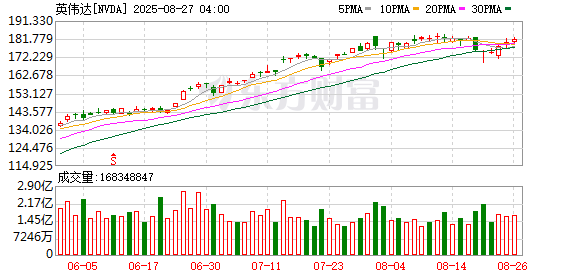
Group 1 - The S&P 500 index rose by 0.41% to close at 6465.94 points, nearing its record high from August 14, driven by gains in Nvidia and Eli Lilly stocks [2] - Nvidia's stock increased by 1.1% ahead of its quarterly earnings report, with investors focused on whether its performance can sustain the momentum in AI-related stocks [2] - Eli Lilly's stock surged by 5.9% after announcing that its experimental drug led to an average weight loss of 10.5% for diabetes patients, boosting investor interest in the pharmaceutical sector [3] Group 2 - AMD's stock rose by 2% following an upgrade from Truist Securities, which changed its rating from "hold" to "buy" [2] - The Nasdaq China Golden Dragon Index increased by 0.73%, with notable gains from companies like Hesai Technology (up over 14%) and NIO (up over 10%) [3] - Concerns about the independence of the Federal Reserve were raised after President Trump announced the dismissal of Fed Governor Lisa Cook, although short-term market reactions were muted [4] Group 3 - The S&P 500's current expected price-to-earnings ratio has risen to approximately 23 times, marking a four-year high, which increases reliance on the performance of leading tech and pharmaceutical stocks [4] - International oil prices fell, with WTI crude down 2.39% to $63.25 per barrel and Brent crude down 2.23% to $66.70 per barrel [4] - Gold prices saw a slight increase, with COMEX gold rising by 0.45% to $3433 per ounce [4]